 Michele Lorenzi

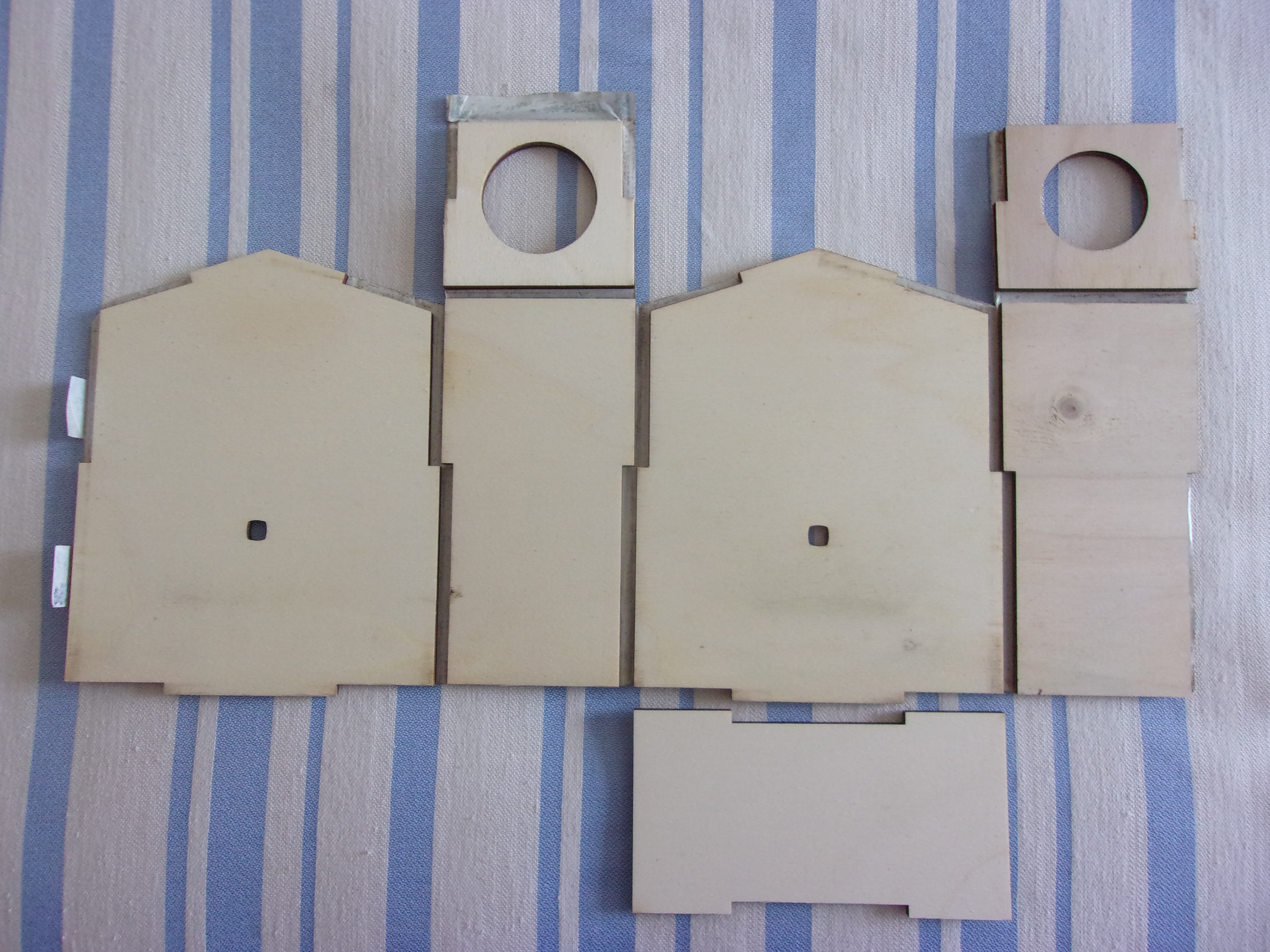
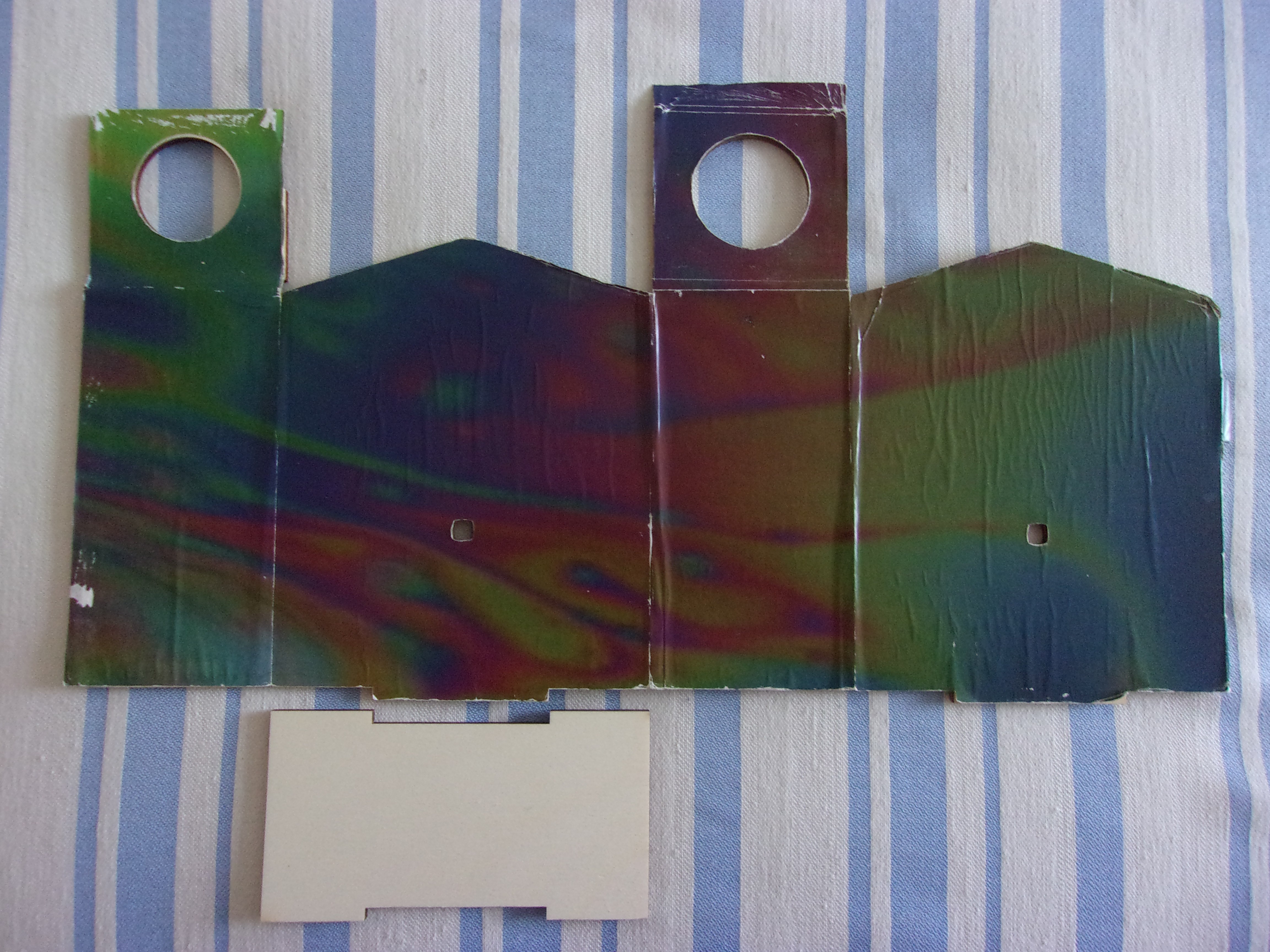
Image 1: The laser-cut plywood net of the box, flat before assembly. The interlocking tabs and slots allow the structure to fold and click together without glue. The circular apertures at the top accommodate the flashlight and the soap film holder.
Image 2: The same plywood net, now laminated with the adhesive iridescent paper sheet that will become the outer skin of the assembled box. The paper serves a dual purpose: it holds the structure together and gives the lamp its distinctive visual identity - even before it's switched on.
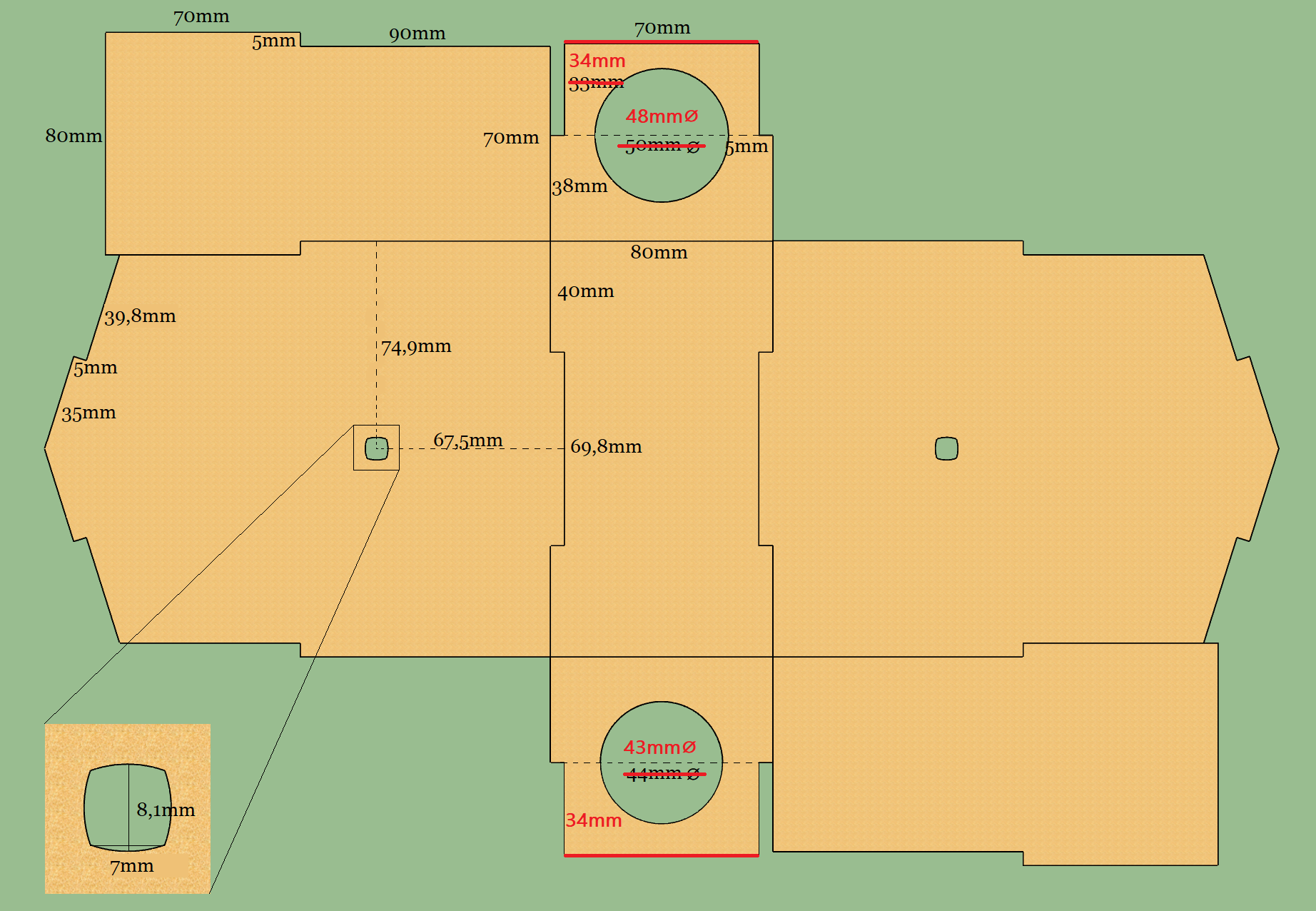
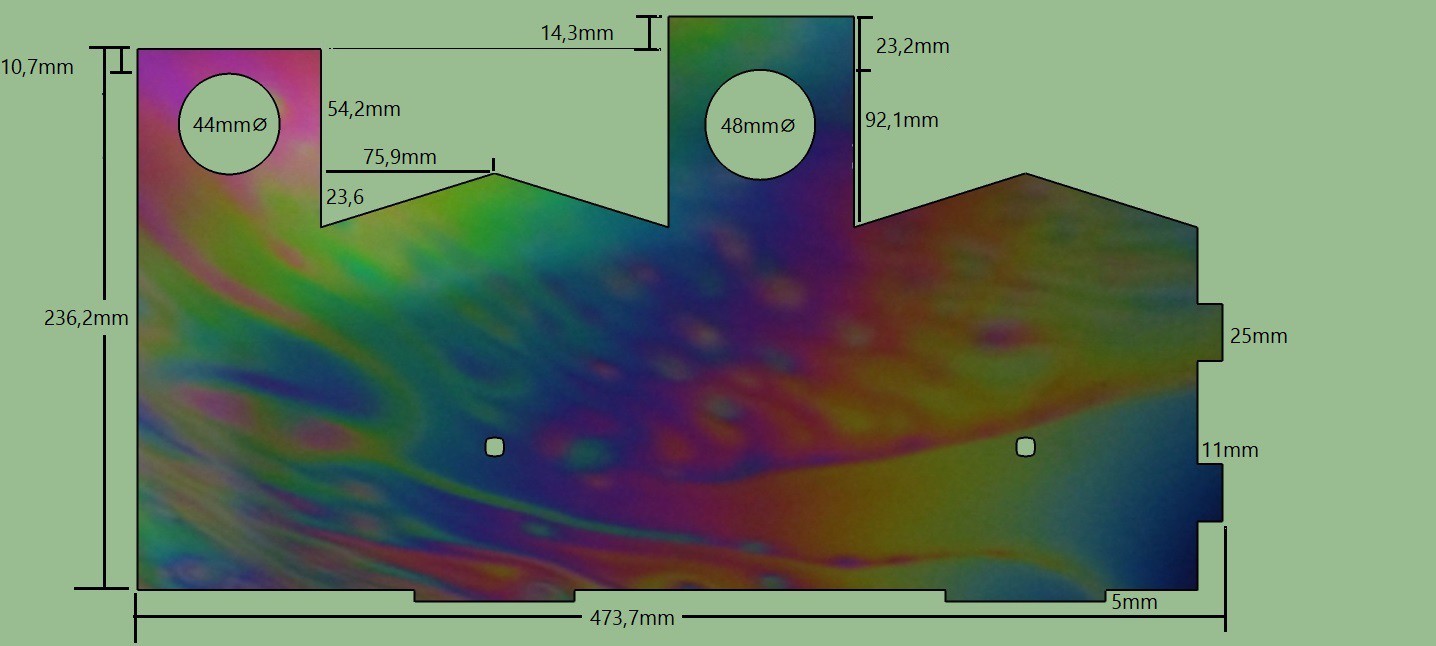
Image 3: Plywood laser-cut net.
Image 4: Adhesive sticker template.
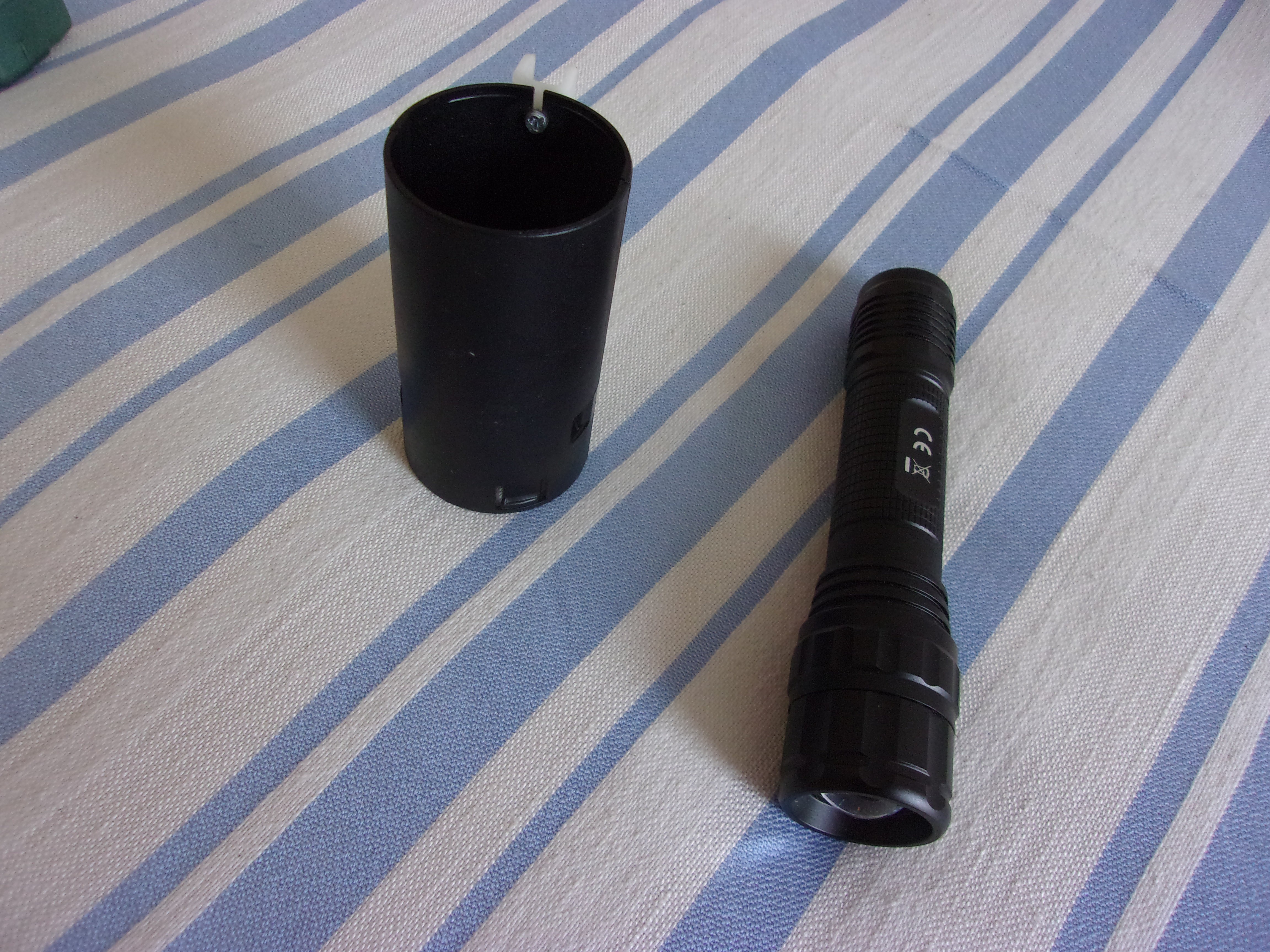
Image 5: Left: the lens holder — a cylindrical tube (3D-printable) that houses the projection lens and allows the distance between lens and soap film to be adjusted, bringing the projected image into focus. Right: an 800-lumen tactical flashlight with a zoom function — this last feature is not optional. The ability to concentrate the beam onto a small area is what gives the soap film the intensity it needs to produce vivid, saturated colour on the projection surface.
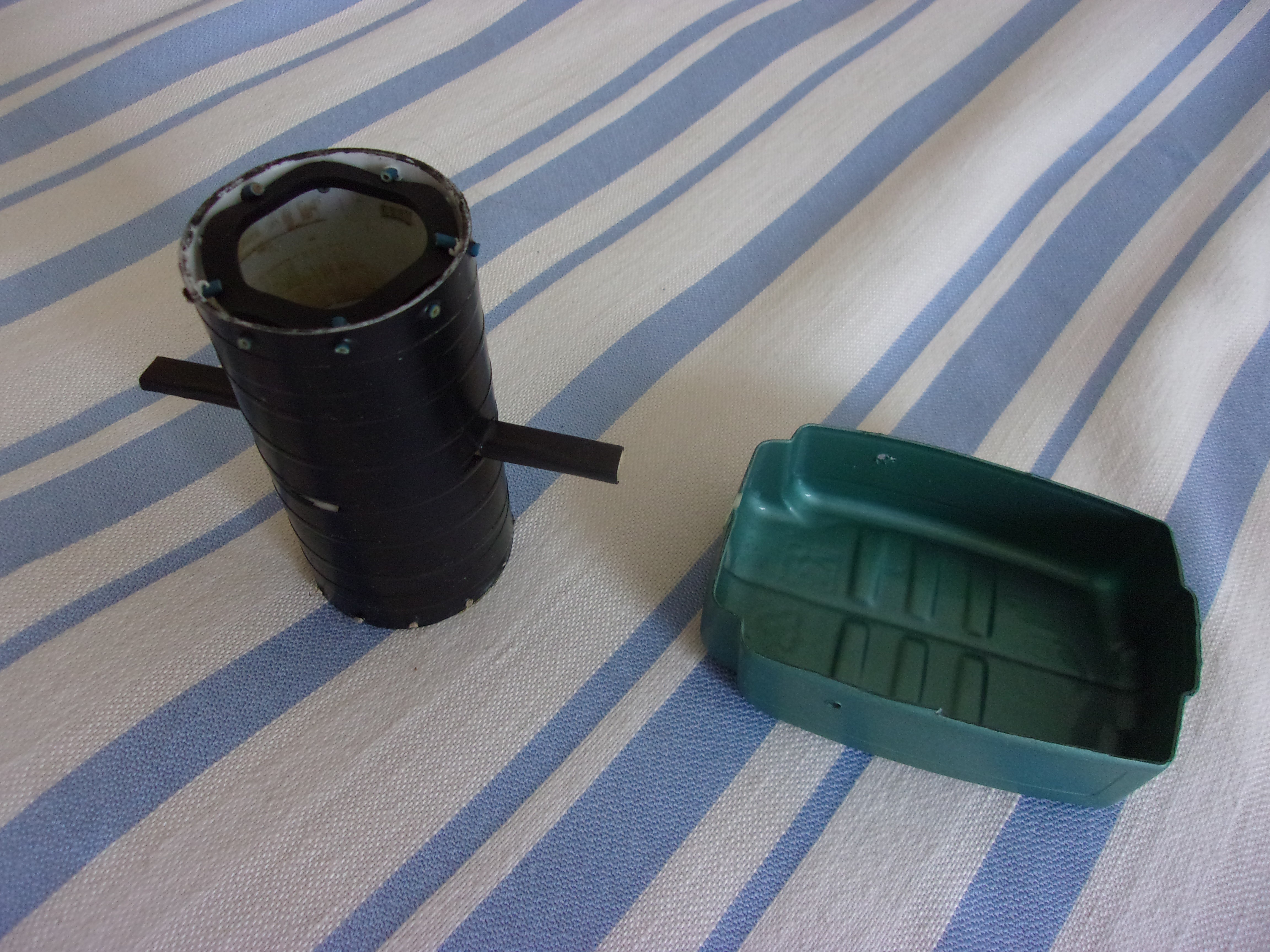
Image 6: The film generation system. Left: the soap film holder — a 50mm diameter, 100mm long plastic tube with a cross-shaped pin that sticks out of each side of the box. At the top, a gasket is mounted in a deliberately undulating (rather than flat) configuration; this subtle waviness in the film surface adds complexity to the projected image, producing richer and more varied colour patterns. To charge the film, the tube is briefly dipped into the soapy water tank (right) then raised and placed vertically. A fresh soap film forms across the gasket, and the show begins.
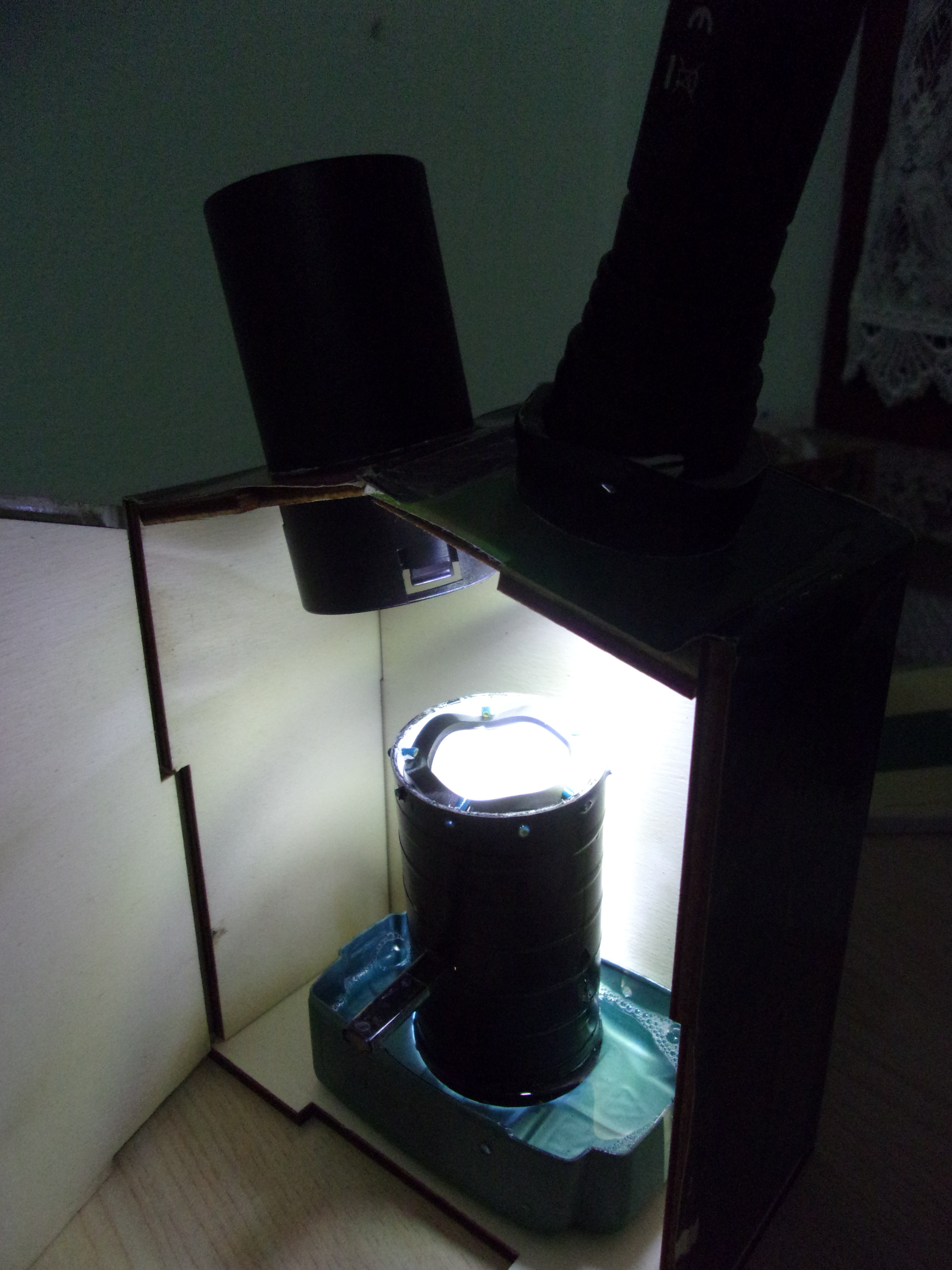
Image 7: The lamp fully assembled, with one side panel opened to reveal the internal layout. The soap film holder sits inside the soapy water tank at the bottom of the box, with the freshly formed film glowing brilliantly under the focused flashlight beam from above. The lens tube (top left aperture) is positioned directly above the film, ready to project the interference pattern outward. The interior walls are lined with white paper to maximise internal light reflection and prevent stray light from degrading the projection. Once the final panel is closed, the box becomes a dark chamber — and the show begins on the wall.
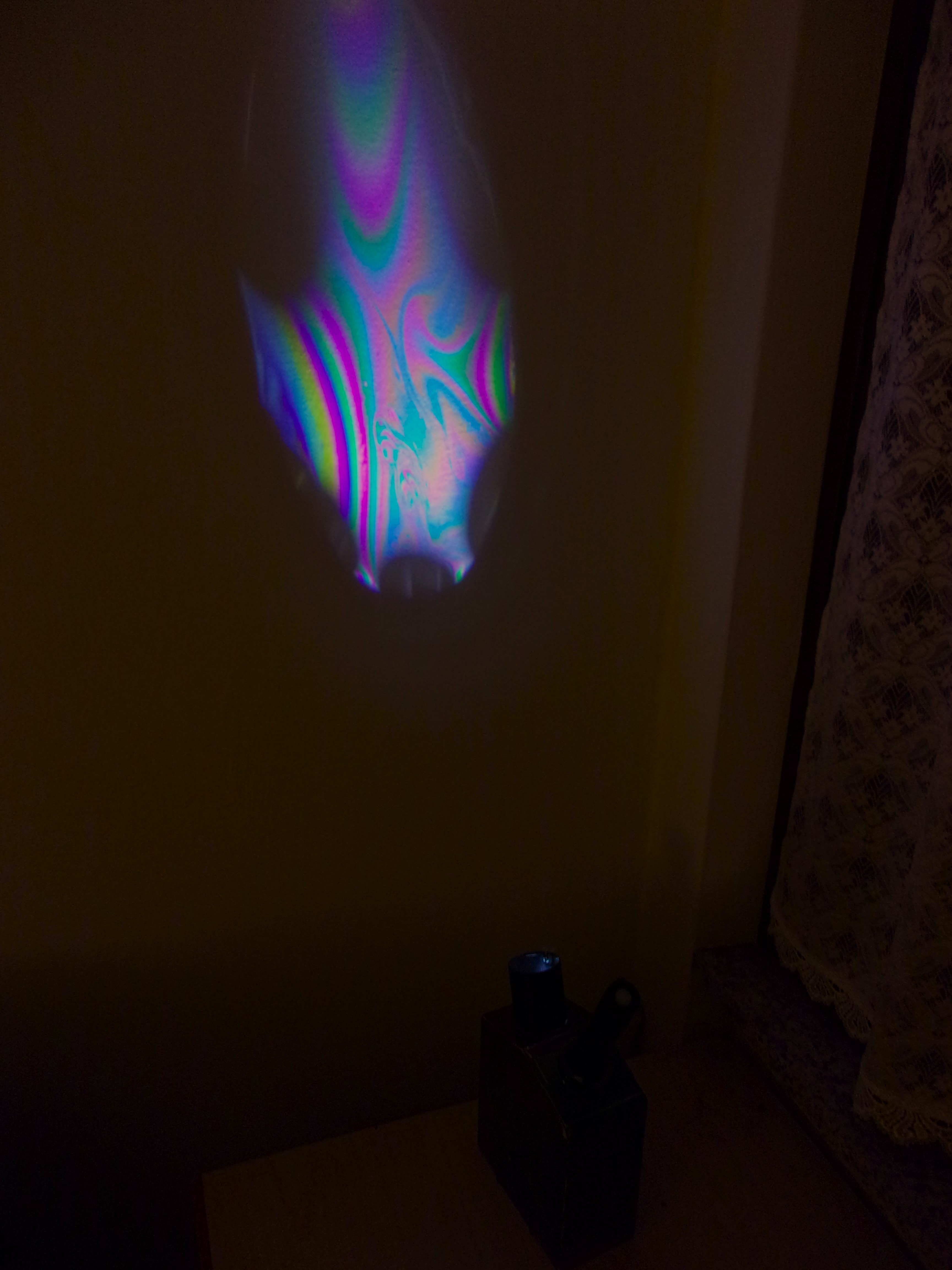 Image 8: The Maelstrom in action. The lamp sits almost invisible in the darkness below while its projection blooms on the wall above - a flame-like column of shifting colour that seems to have no mechanical origin