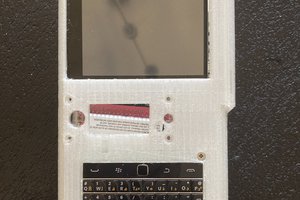
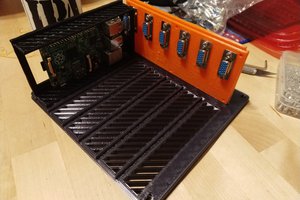
This project is a fully custom command console built around the Raspberry Pi 5, designed from the ground up for FDM printability and real world assembly reliability. Every design decision from the internal rail system to the thermal chimney geometry was made to solve a specific manufacturing or usability problem.
The three core engineering challenges this build addresses:
1. Hardware obsolescence: solved with the Agnostic Grid internal rail system, which lets you swap dev boards by printing a new adapter plate instead of redesigning the whole case.
2. Latch design for FDM: integrated over-center clamshell latches use M3 pins as hinge axles, eliminating the flat surface requirement of metal draw latches.
3. Thermal management: slots pattern creates a natural airflow cooling effect.
Full engineering breakdown in the project logs
What happens when sci-fi aesthetics collide with real-world manufacturing physics? For this project, I set out to design a heavy-duty, field-ready command console. I didn’t just want a cool 3D render—I wanted a piece of tactical hardware that bridged the gap between a beautiful concept and a physically deployable product.
Beating Hardware Obsolescence A major flaw in the tech industry is that when a new dev board is released, custom enclosures instantly become e-waste. I wanted to solve that. Instead of hard-mounting the electronics, I engineered an internal "Agnostic Grid"—a universal rail system built into the floor of the chassis. Now, if you upgrade your Raspberry Pi or IoT board, you don't throw away the case. You just print a new $2 adapter plate that snaps directly onto the rails.
Design for Manufacturing (DFM) A good design survives the factory floor. I strictly optimized this chassis for Fused Deposition Modeling (FDM) 3D printing. Standard metal draw-latches look cool, but they crack curved plastic corners under heavy tension. My solution? I engineered custom, 3D-printable clamshell latches directly into the lower base. This eliminates metal stress, drops hardware sourcing costs.
Impact Architecture Every millimeter was calculated. I replaced standard through-holes with 6.0mm recessed counterbores for the corner shock-bumpers, leaving a solid shelf of plastic to absorb the clamping force. Inside the chassis, pilot holes were dialed in at exactly 2.5mm—giving standard M3 screws exactly 0.5mm of interference to tap their own permanent paths without splitting the printed layer lines.
The Tactical Wedge isn't just an enclosure; it’s a statement on how IoT and DIY electronics should be packaged. By combining heavy protective chamfers, modular internals, and strict assembly tolerances, we turned a fragile stack of circuit boards into a deployable, military-grade command station.
Known limitation: the long screw bosses could break under tension, ribs would be added in the second revision, the top-down assembly alignment between the keypad housing and the main chassis created tolerance stack issues I'd tighten in a second revision.