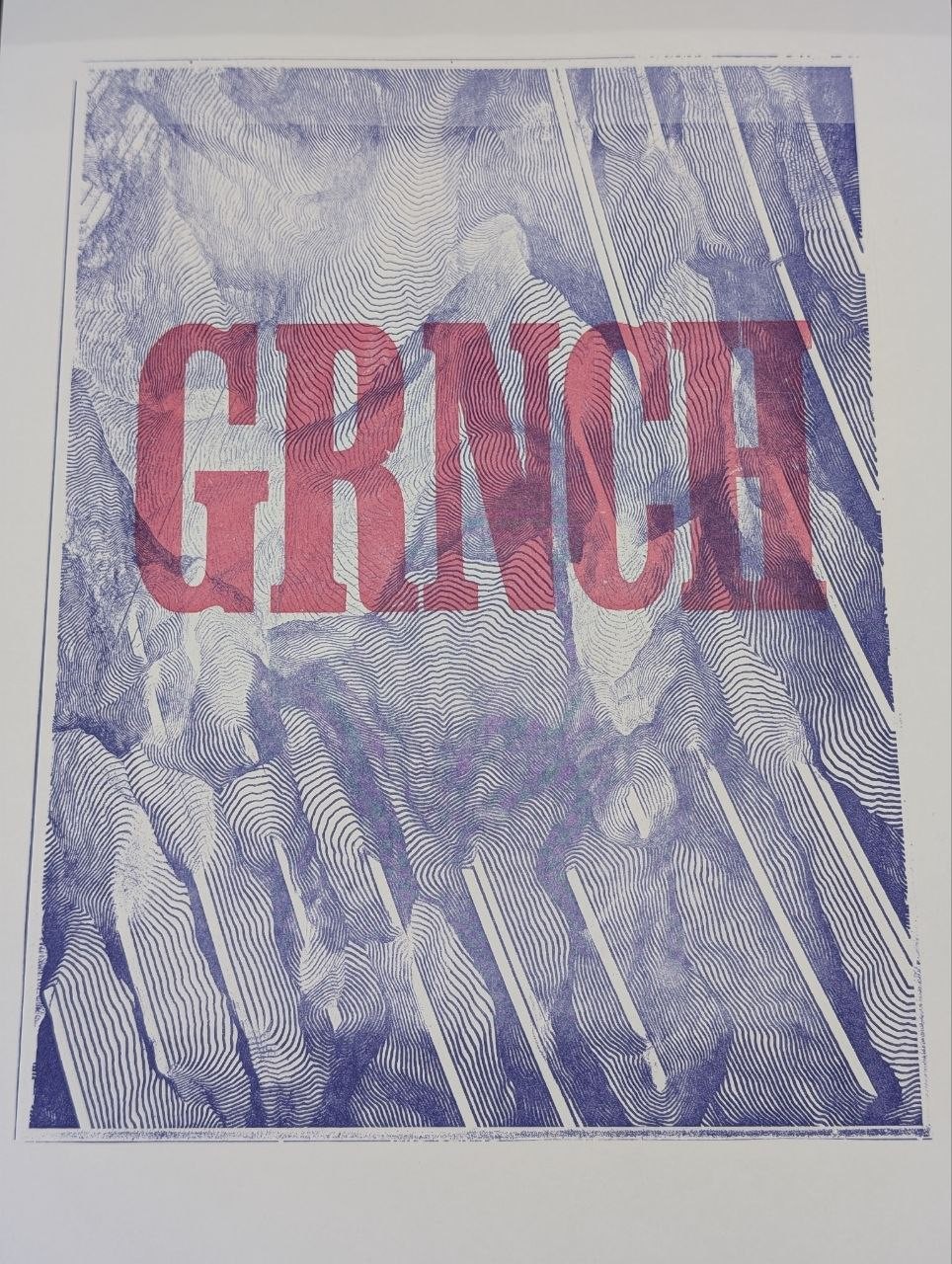
GRNCH
GRNCH

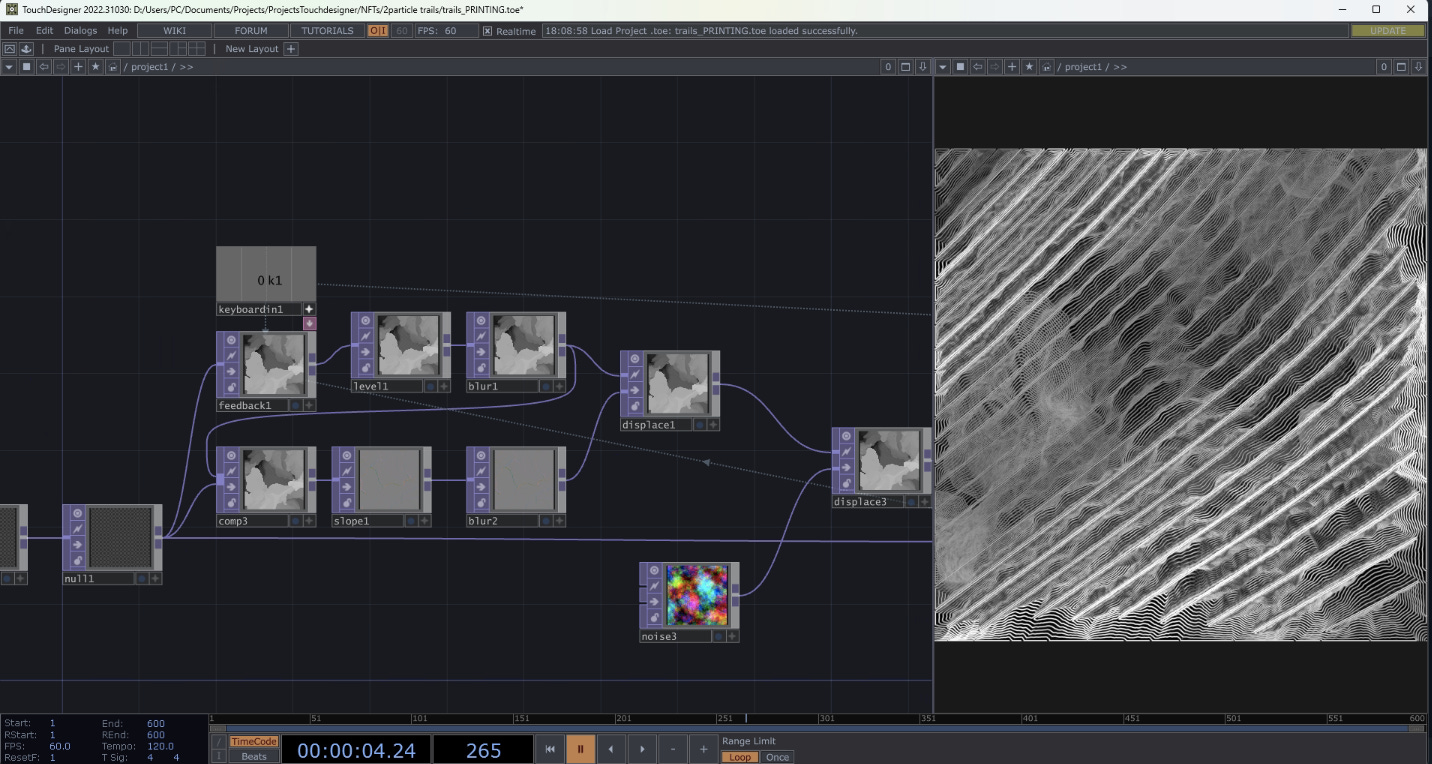
 The source system runs in TouchDesigner as two nested feedback loops working in harmony to create convincing landscape illusions. The first loop starts with animated noise, extracts its edges, and uses feedback to build up trails over time; like a long exposure of moving light sources. The second loop watches this evolution, detects the edges of those accumulated trails, and feeds them into its own feedback system to create persistent line networks. It is feedback watching feedback.

The nested structure is crucial. Without the second loop tracking the first, you get flowing organic shapes but no coherent structure. Without the first loop creating trails, the second has nothing meaningful to track. Together they create the illusion of contour lines mapping elevation changes across a landscape that exists only in mathematics. The first creates organic flowing forms that cluster and separate like watersheds. The second traces these formations creating line networks that follow the ridges and valleys of the evolving patterns. A keyboard input triggers resets on both loops simultaneously. When the composition hits the right balance between detail and legibility the frame is captured.
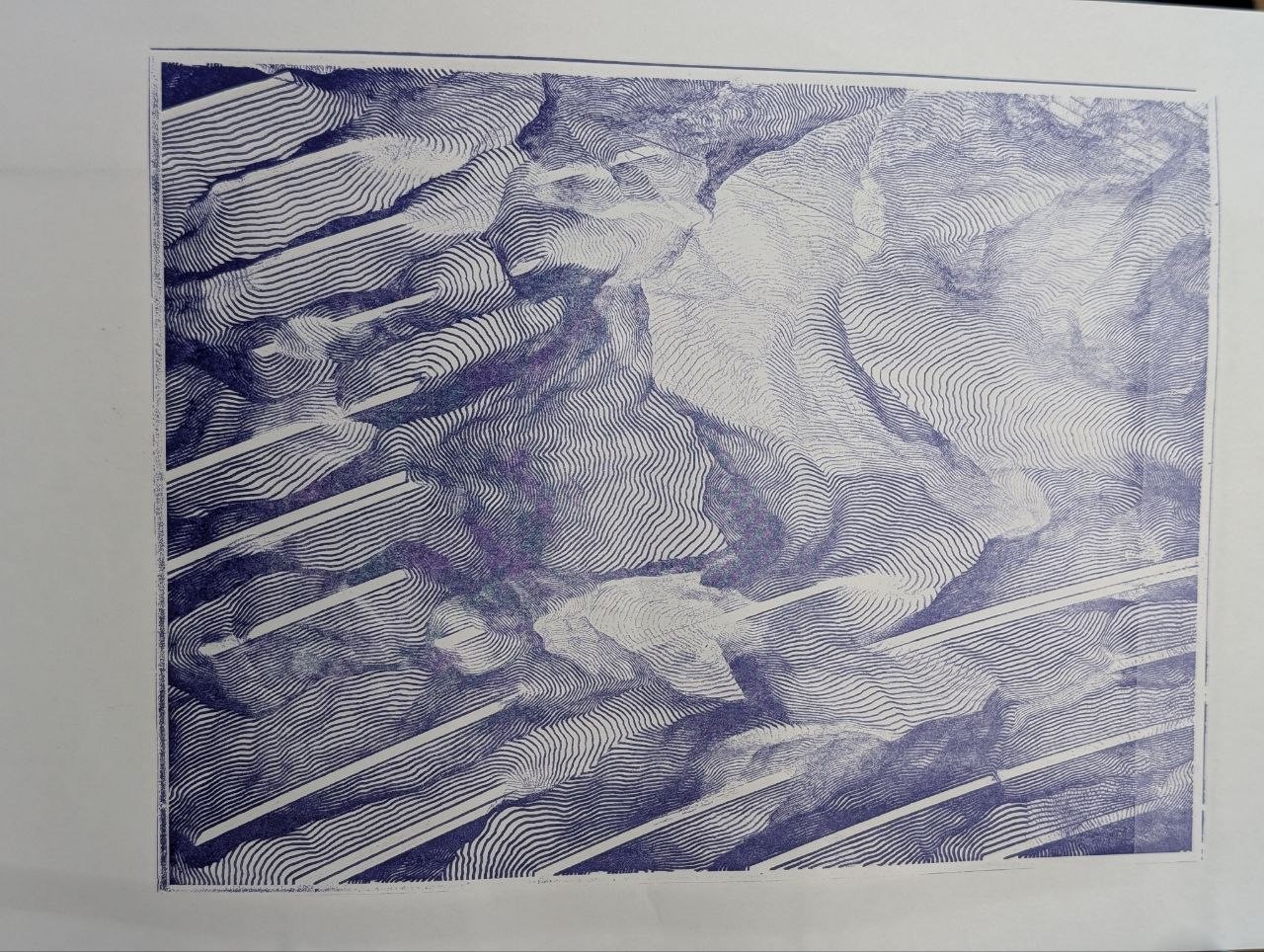
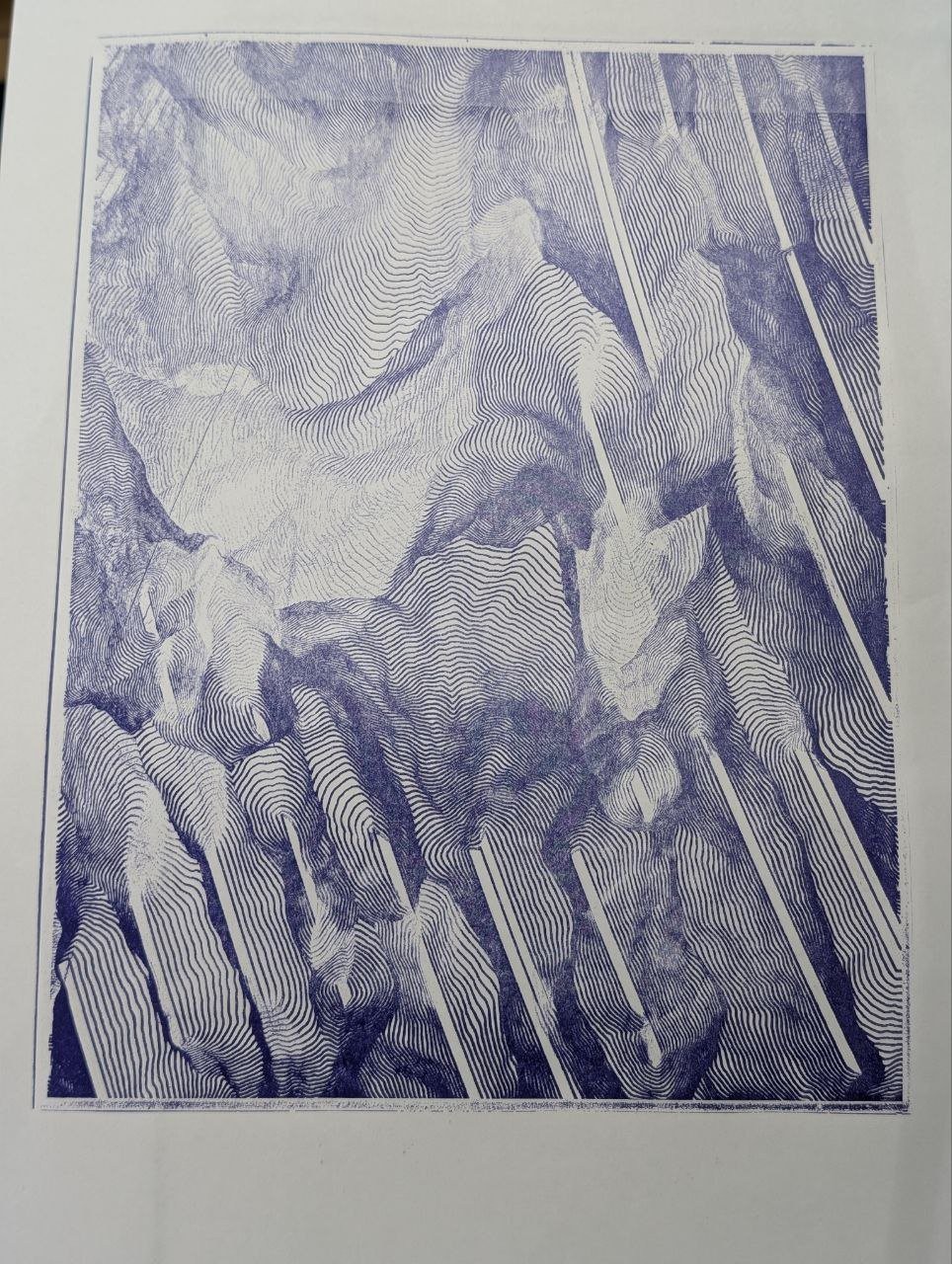
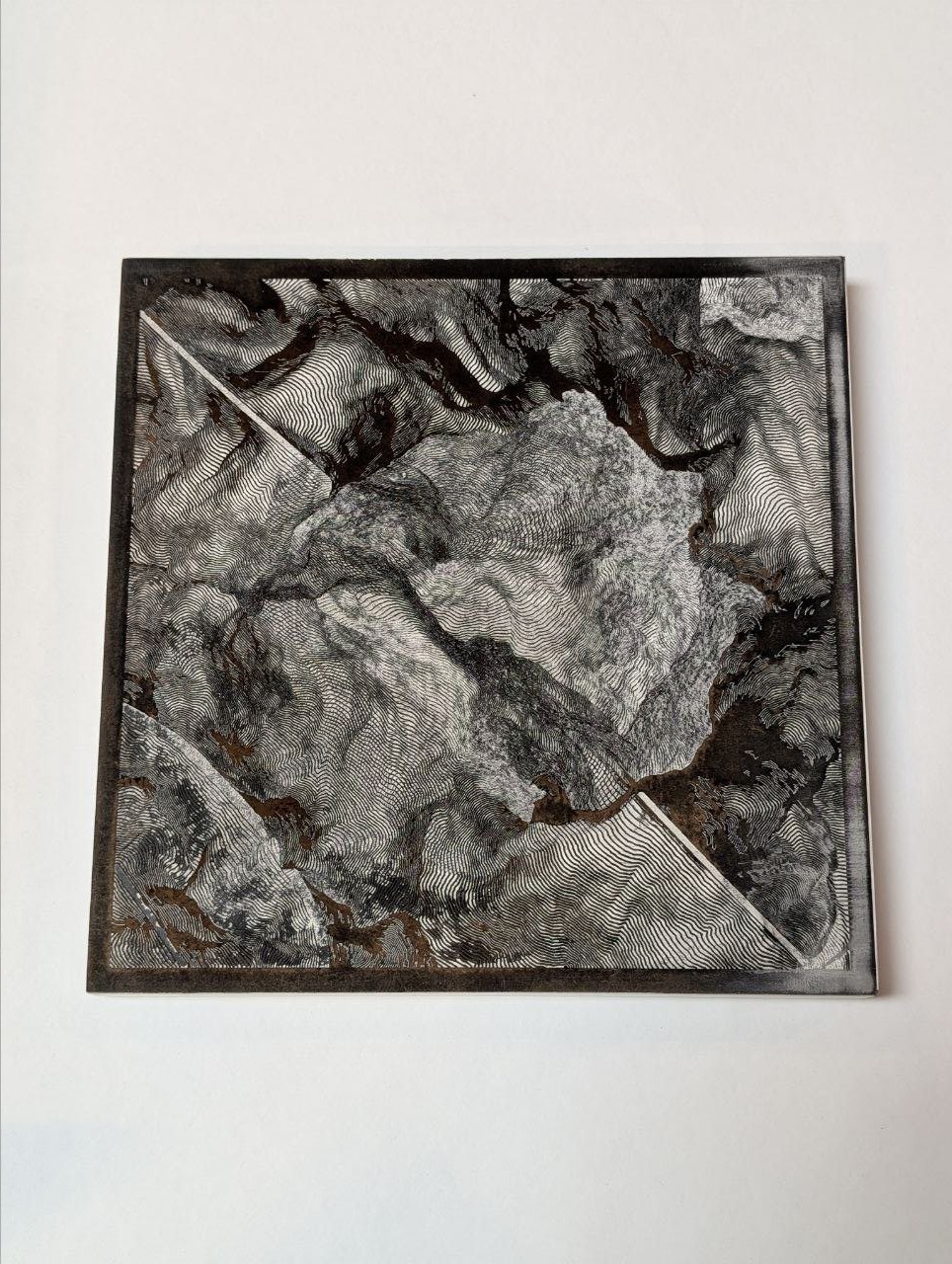
The exported JPEG is then upscaled using Upscayl. The AI upscaler sharpens the feedback generated lines without introducing artifacts; the organic trails maintain their character while gaining the resolution necessary for clean processing. From there DrawingBot V3 handles vectorization. Sketch lines and streamlined edges are the preferred settings; more aggressive vectorization over-interprets the patterns and imposes geometric structure where none should exist. The slight irregularities that make the patterns feel natural rather than computational need to be preserved. The output JPG is then inverted so that engraved areas read as positive when the block is inked and pulled.
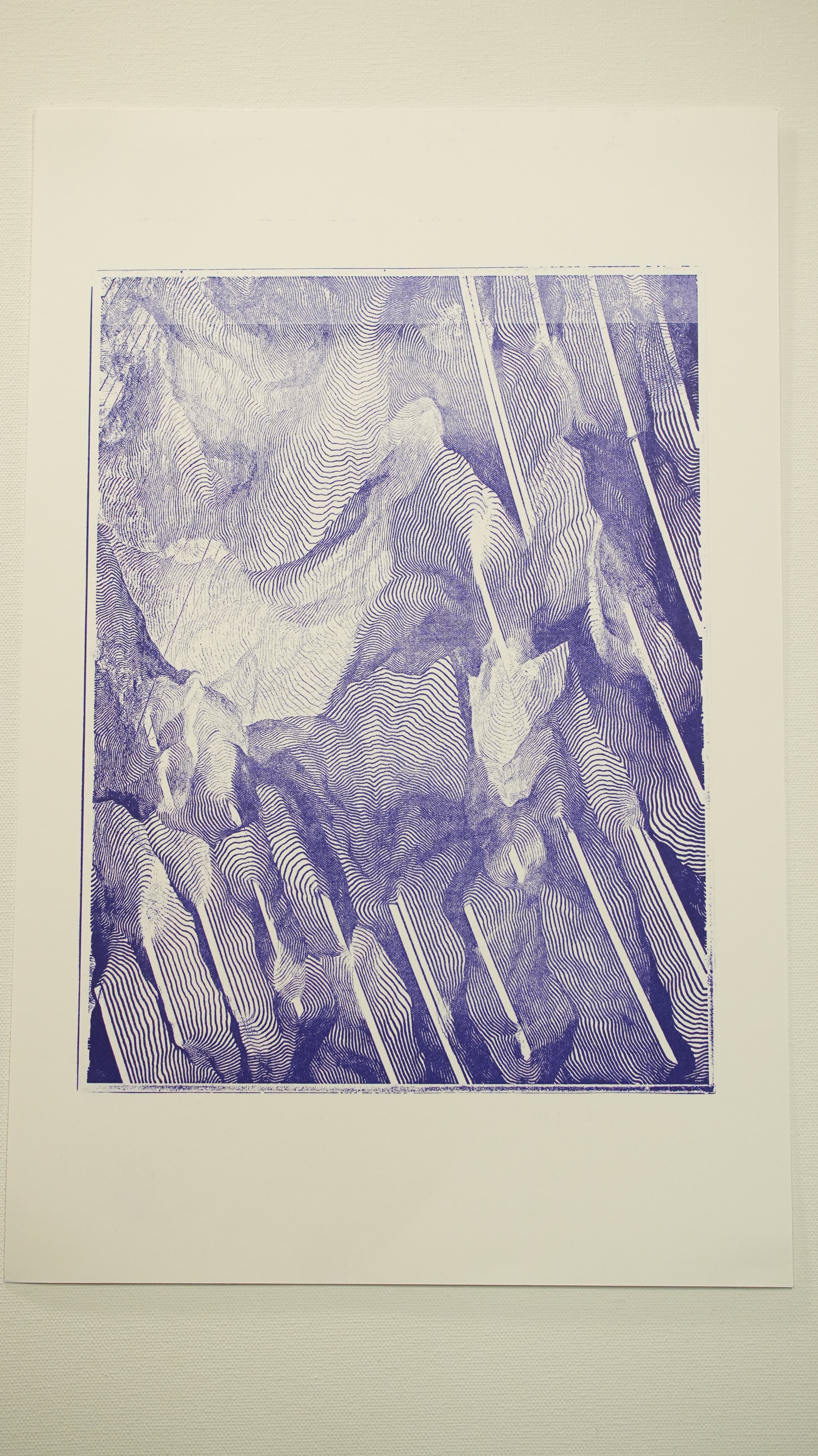
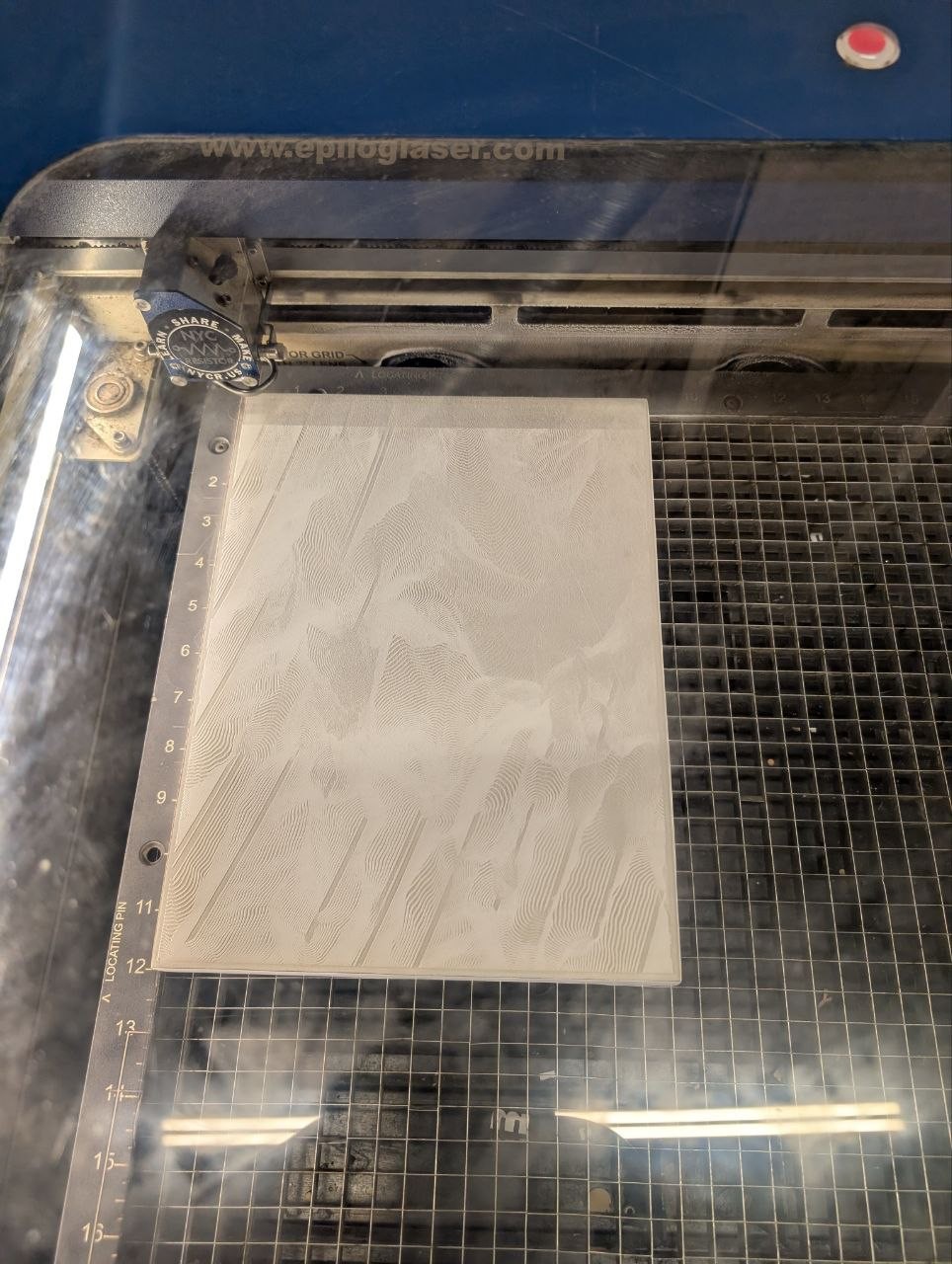
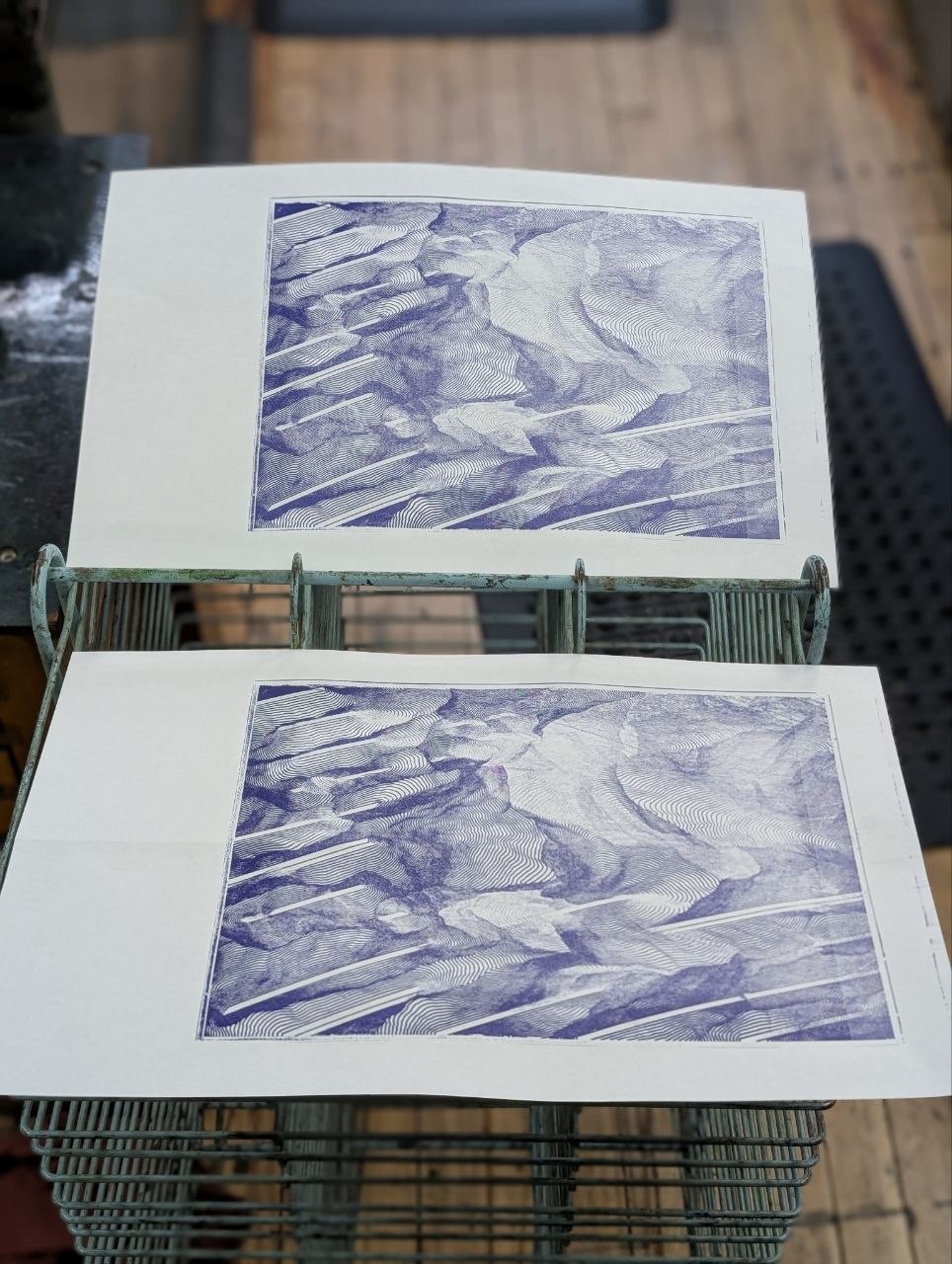
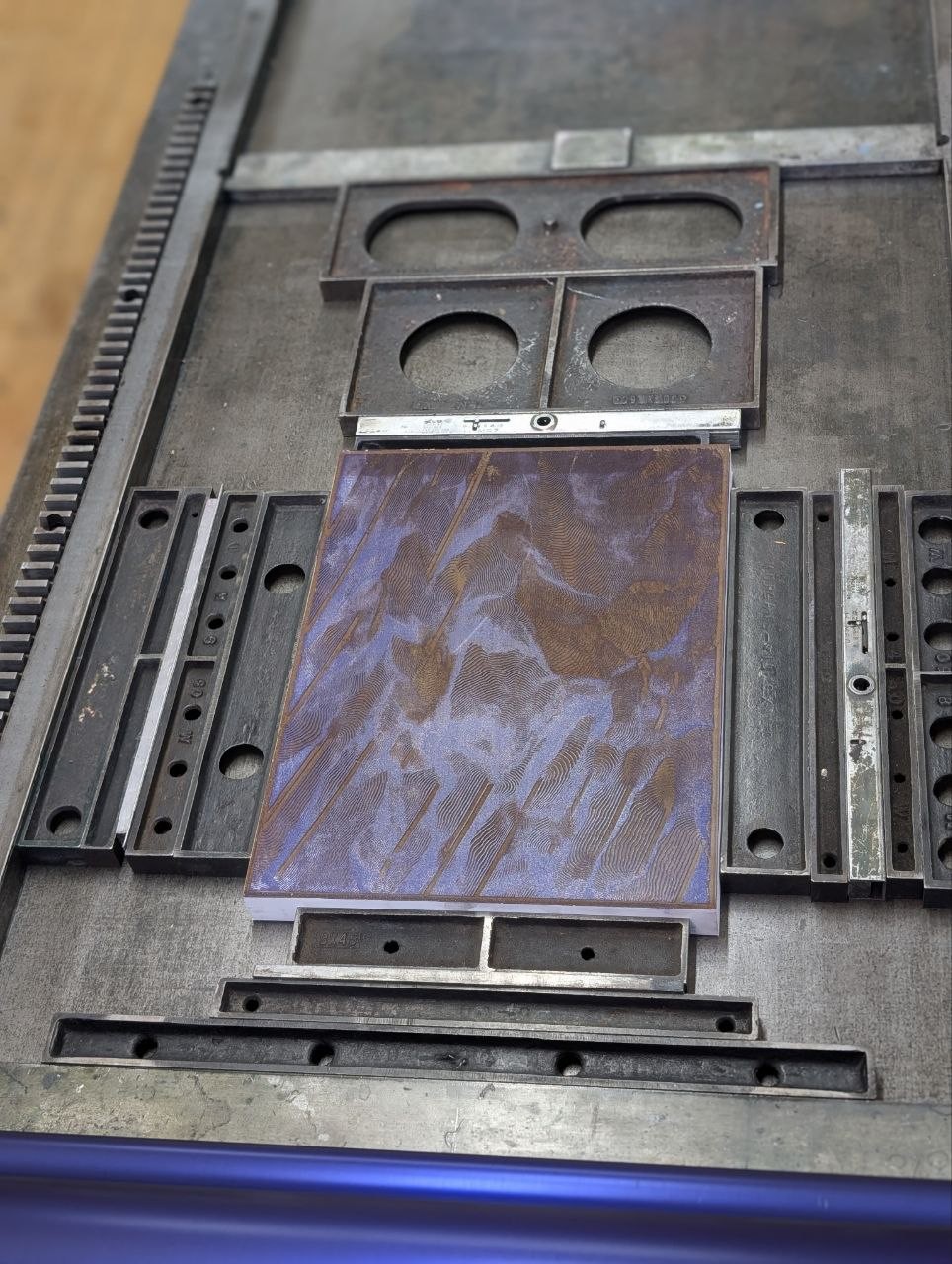
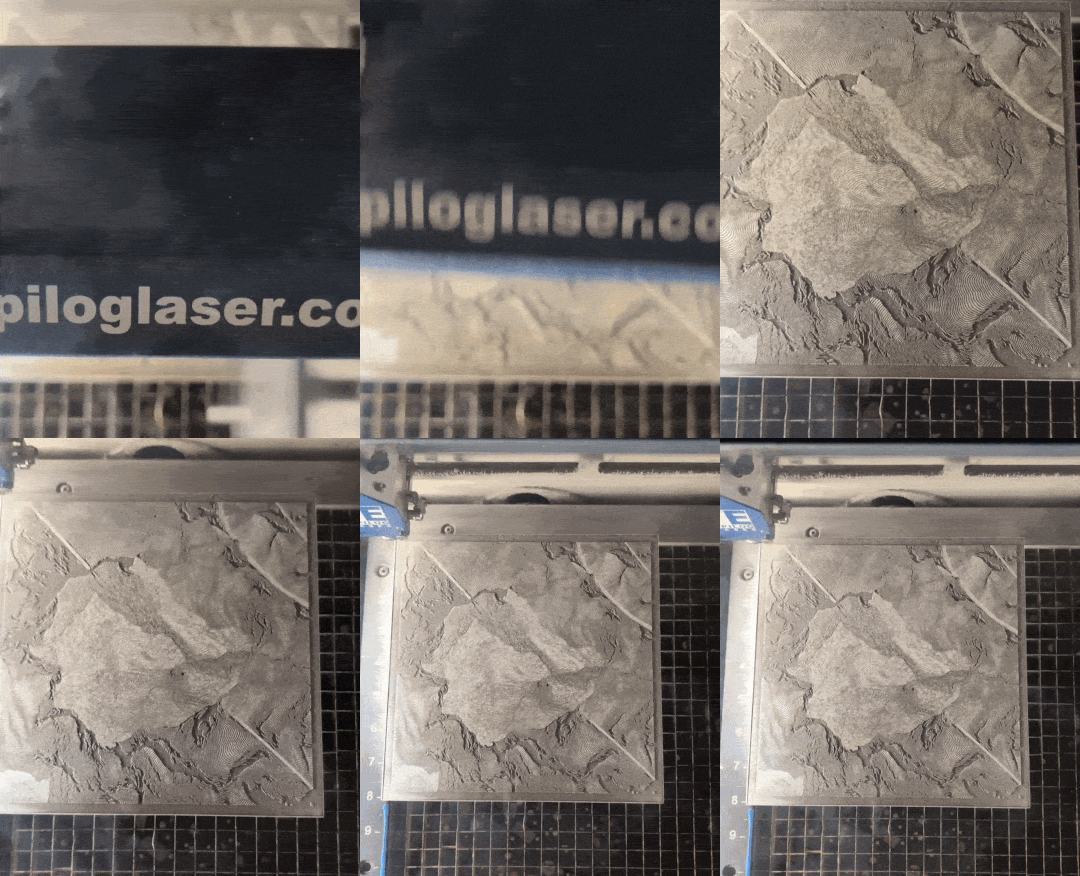
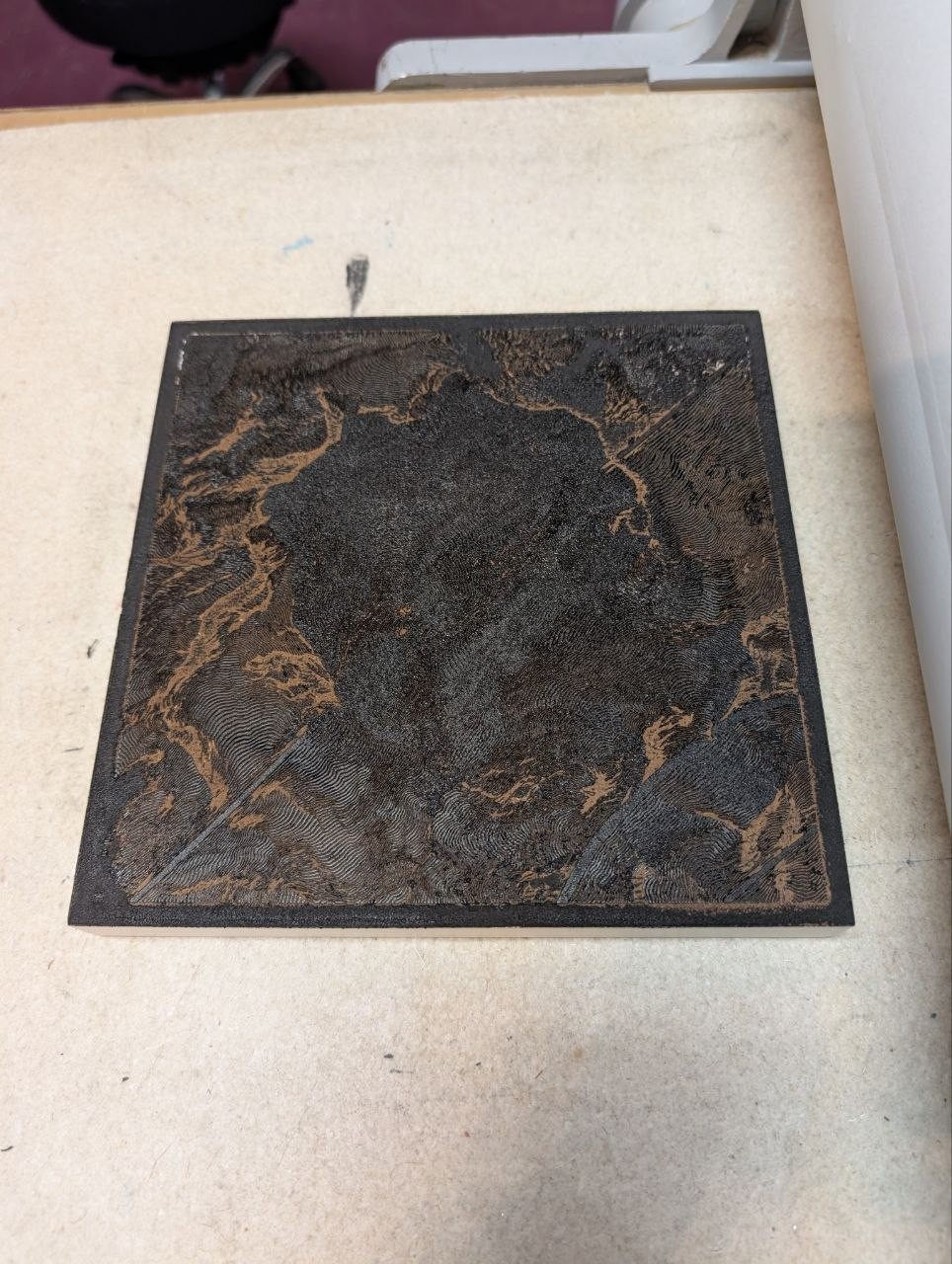
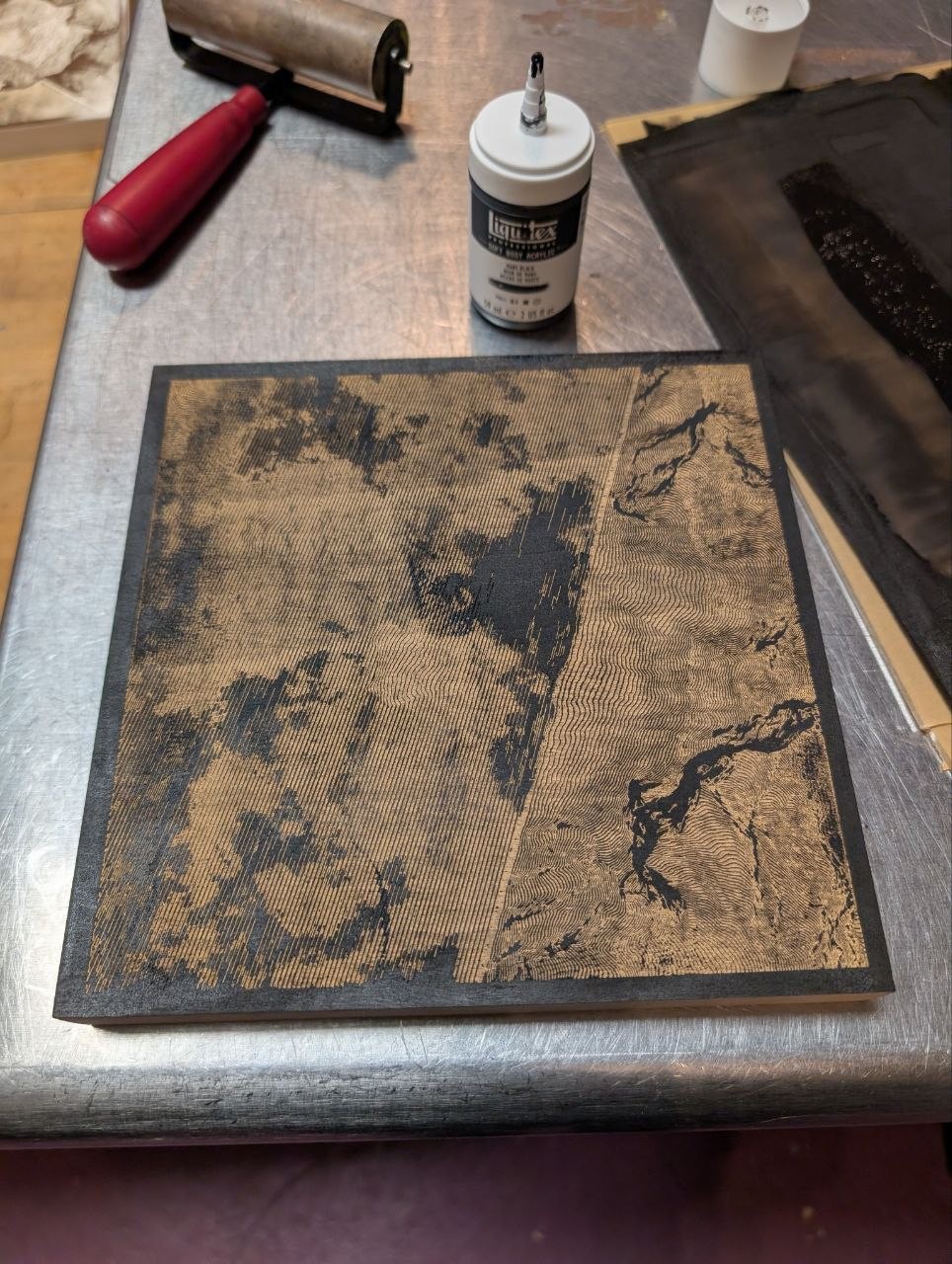
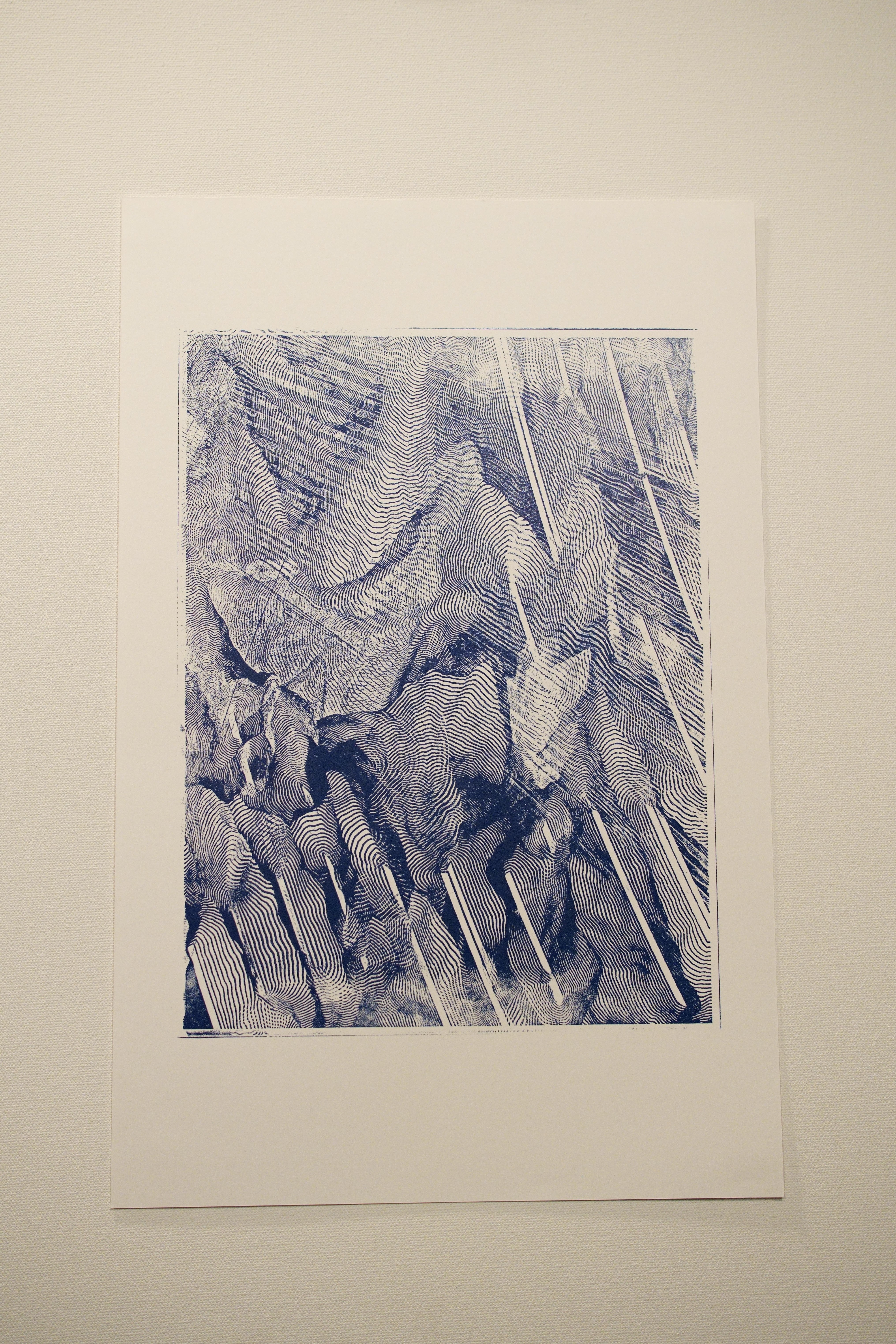
Engraving requires around three passes to achieve enough depth for the ink to transfer cleanly. Despite that, surprisingly small variations in surface height are still perceptible in the final print. One block was paused within the first few minutes of engraving and restarted. The interruption is visible in the finished print even though the image otherwise looks correct. The settings took a bit of trail and error to figure out but thats part of using the laser.
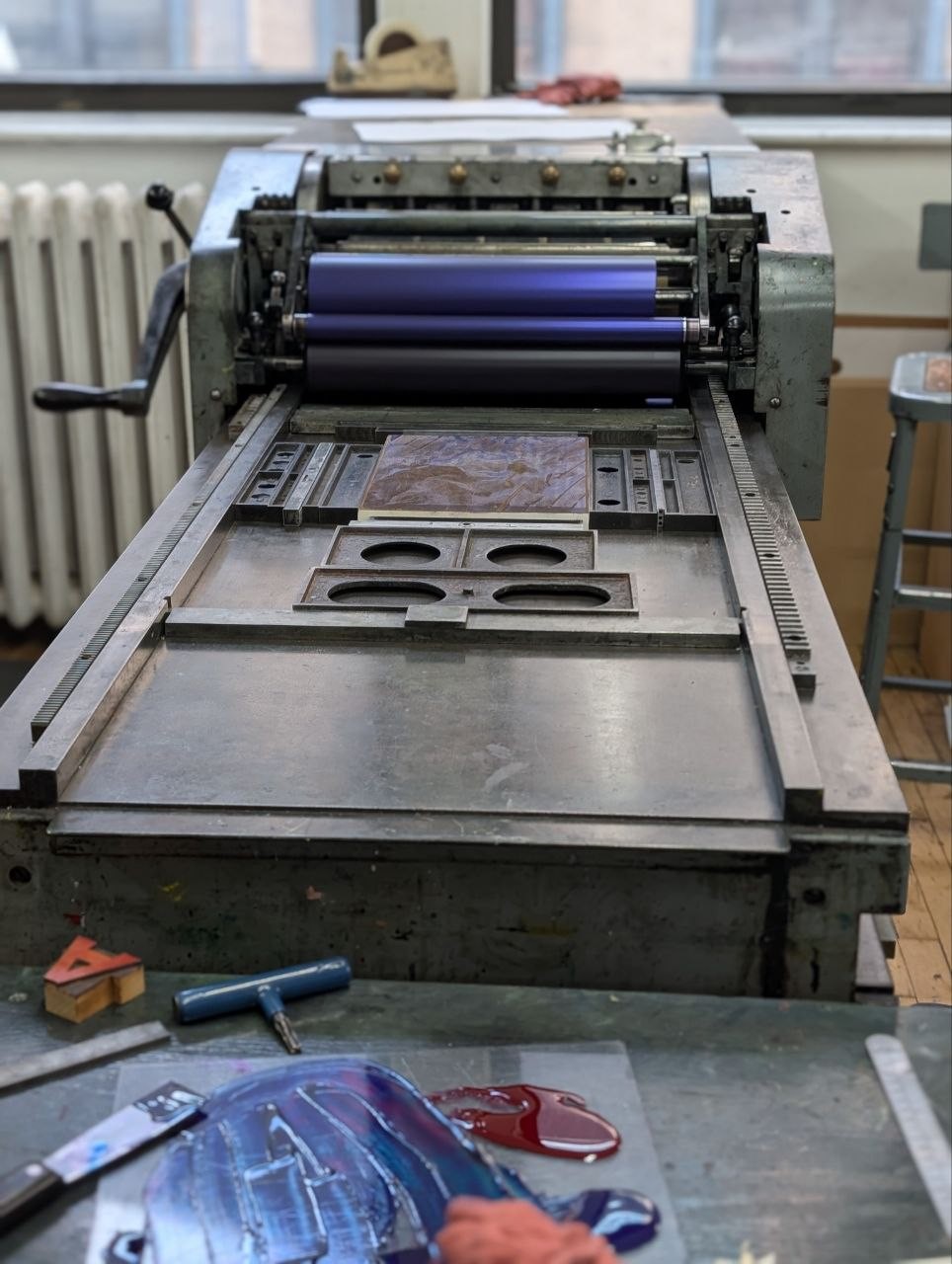
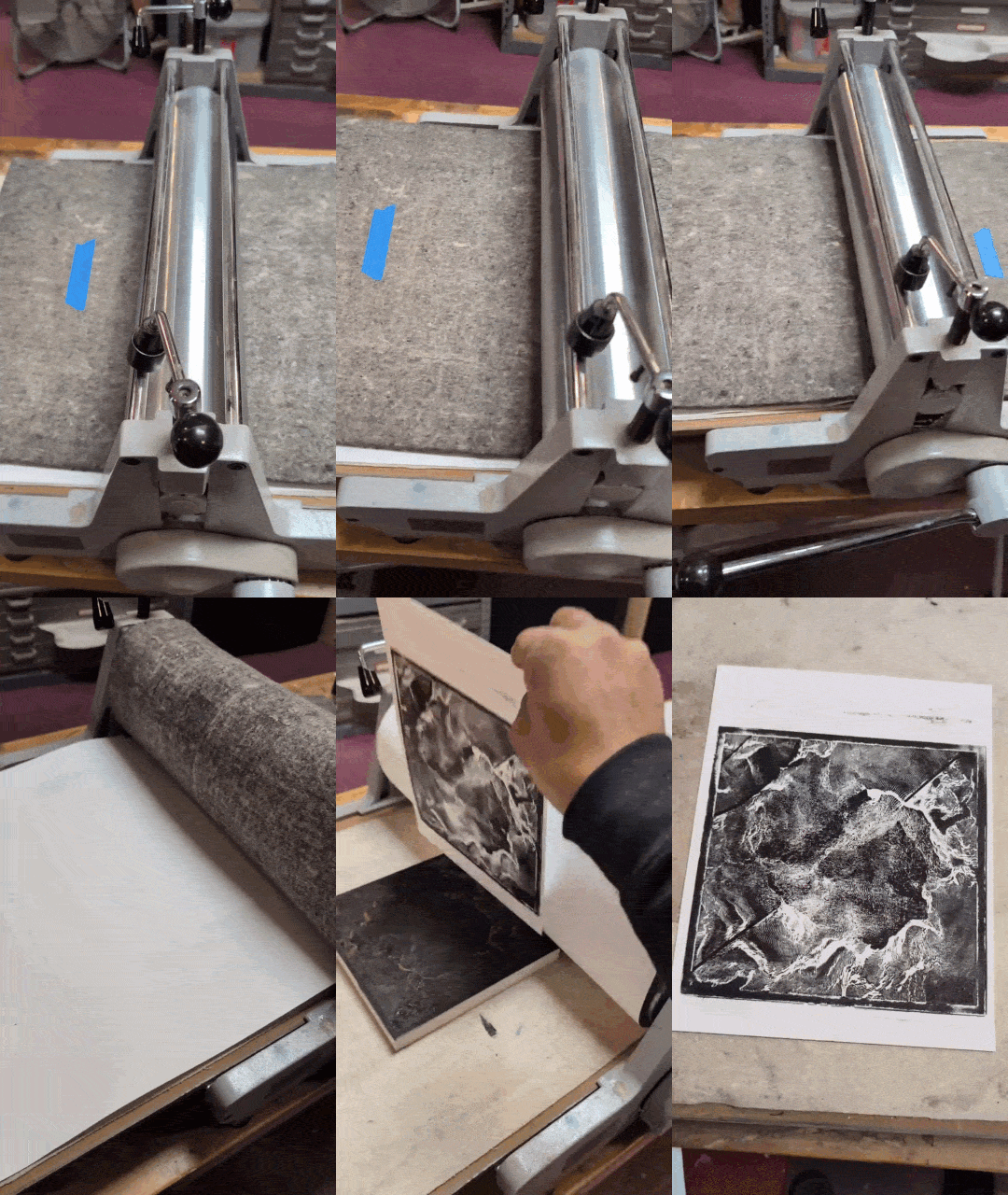
The blocks are cradled or framed wood panels made for painting rather than traditional woodblock stock. The extra thickness puts them close to type high, which is what the Vandercook requires. A paper shim under the frame closes the gap. Because the panels are framed on the back, the recessed area had to be filled with additional wood blocks. Without that fill the rollers push the empty area down and produce uneven inking. A problem that only reveals itself on the first pull. The Vandercook does not forgive much.