 Jerome Privott
Real talk: three of the five assembled revD boards arrived dead. Same cable, same firmware — one board lights up, another reads millivolts where 5 volts should be.
Here's where a month-old design decision paid off. Because the board has labeled test points on every power rail, a documented power path, and a firmware mode that lets a board report its own voltages, "where does the voltage stop?" became a checklist instead of an investigation. The diagnosis took minutes, not days: bad solder joints from assembly — an assembly defect, not a design error. The evidence was strong enough that the fab opened an after-sales review within hours.
The lesson for anyone shipping hardware: design for the failure investigation you hope you'll never run.
Full forensics — measurements, joint photos, and the checklist: https://www.byitl.com/blog/custom-pcb-fabrication-when-boards-arrive-dead
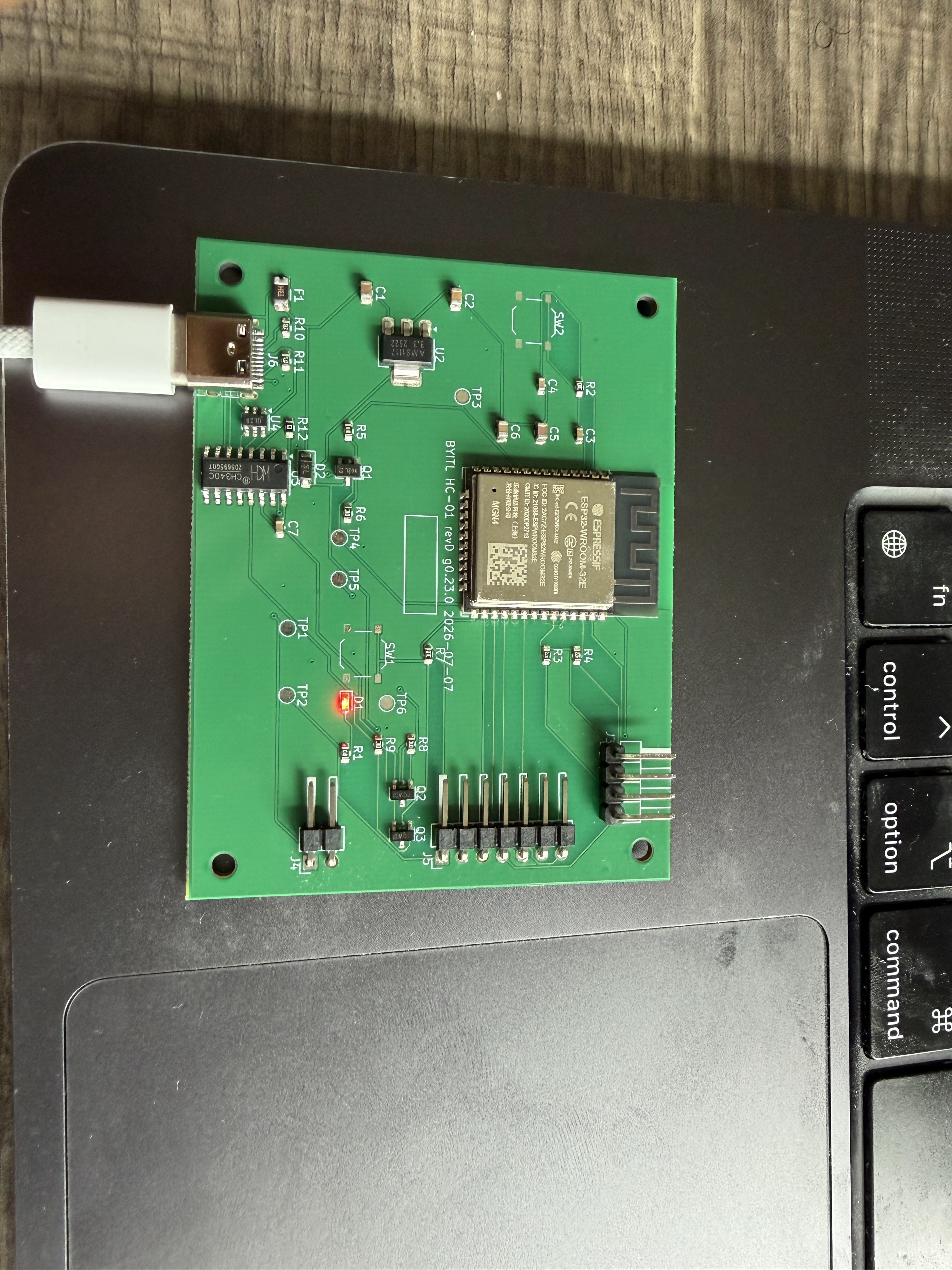
Meanwhile, the good boards took firmware without complaint (photo: first flash on a working revD). Next up: full assembly in the enclosure and closed-loop humidity control.
Discussions
Become a Hackaday.io Member
Create an account to leave a comment. Already have an account? Log In.