 lion mclionhead
It turned out there was but 1 manual from a 1976 electronic kit on the internets.

https://archive.org/details/science-fair-150-in-1-electronic-project-kit/page/n7/mode/2up
Sadly, nothing from the 80's was ever scanned in. So the lion kingdom could at least peruse the 1976 version & see if age enlightened anything, if anything that didn't work 40 years ago could be fixed now. The 80's version had an LED in addition to the incandescent lamp, a single TO-92 transistor, & a reed switch. The 1976 version had a 7 segment display, BA302 audio amplifier, & a cadmium sulfide cell which the 80's version did not. They used the 7 segment display as a bunch of loose LEDs instead of a numeric display.

Perusing the size of the WIRING SEQUENCE text, the gnarliest build in 1976 was project #2. The 80's version started easy & got harder in the back. Young lion never bothered with the most complicated builds.
The schematics weren't intended to be read. They have ground on top & 9V on the bottom. Fortunately, any schematic can now be fed into a model & summarized in natural language. They used either the speaker or earplug as a microphone or a speaker, depending on the application.
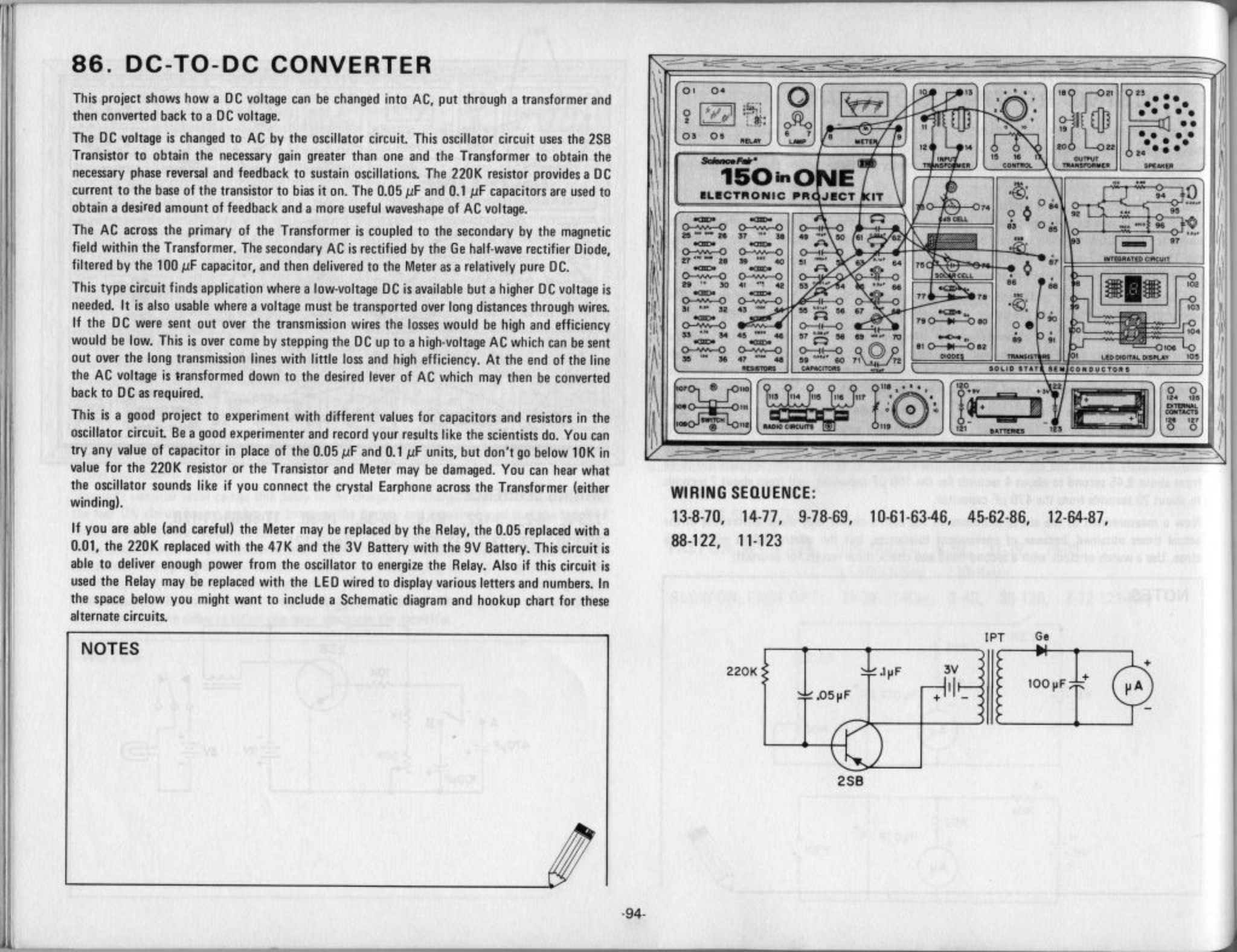
What was once called a joule thief, during the green revolution.
Everything relied on a single transistor oscillator. If that didn't work, the whole kit was cactus. This one seemed to always use a transformer with the transistor to make a sustained tone.

Their basic single transistor oscillator used a transformer + transistor.

Young lion busted his balls on a siren of some form, but never got it to work.
The BOM is in the back. They used a 2SB56 germaneium transistor for the audio oscillators & a 2SA52 transistor for the RF oscillators.
They had a lot of sound generators, sine wave generators, oscillators.
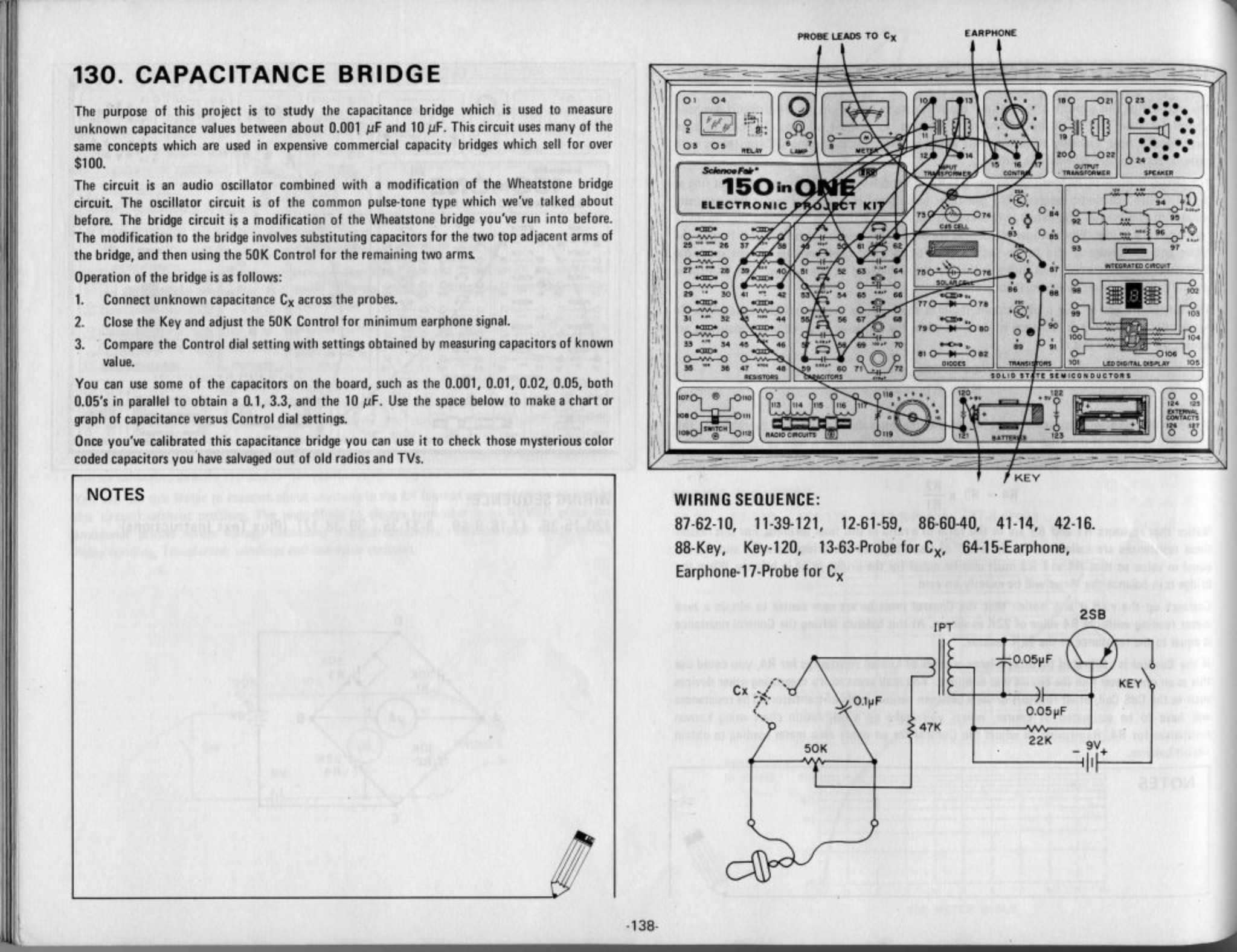
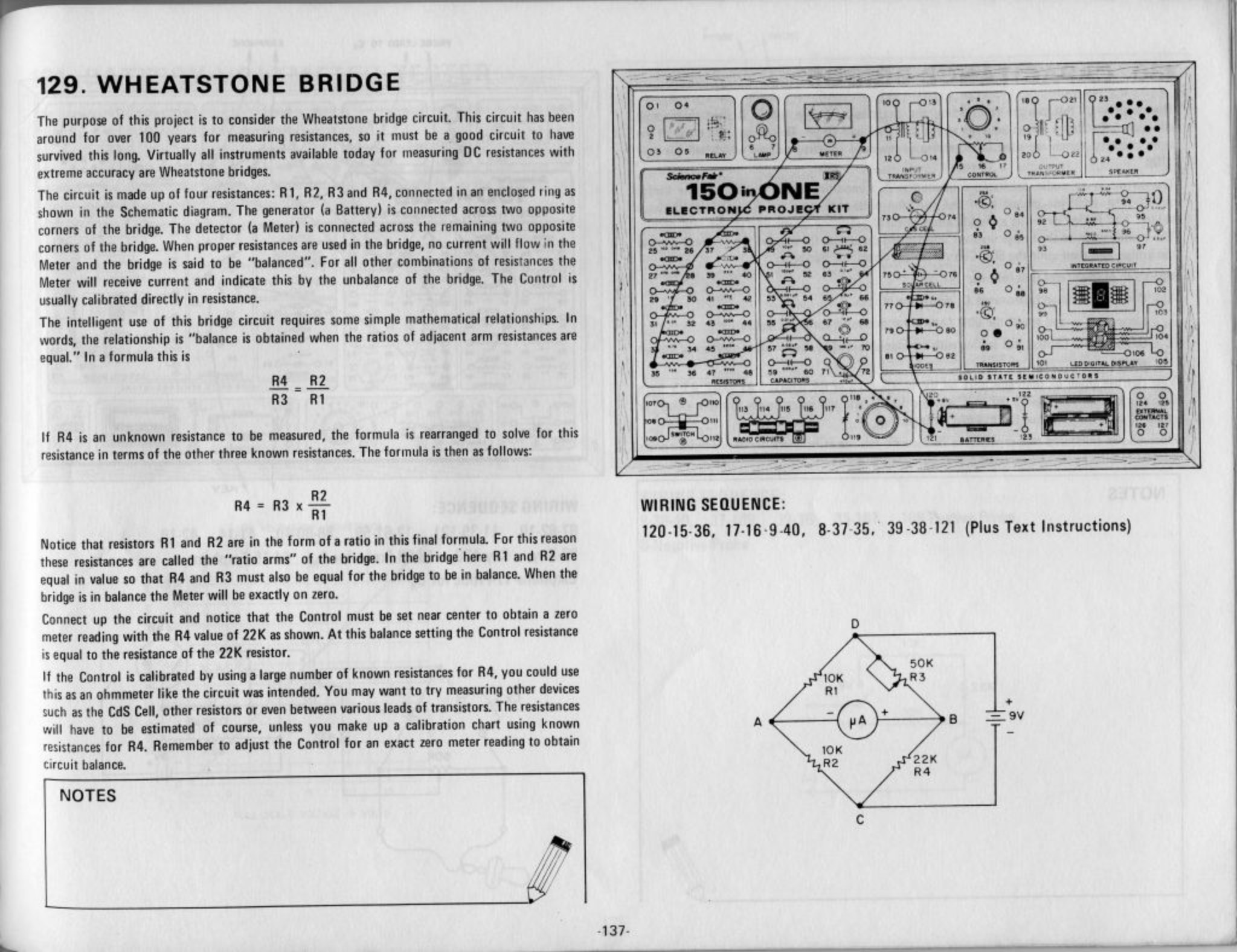
Lion eyes started watering with the wheatstone bridge & the capacitance bridge.
They had some AM transmitters & a bunch of amplified receivers which young lion didn't have. The transistor radios were the most complicated projects. They used the same variable transformer as the receiver to generate the carrier.
A lot of projects required stuff which didn't come with the kit, like a coin cell, neon lamp.
There were a lot of typos. No spell checking or language models in 1976.
This kit had a lot of flip flop circuits which the lion kit did not. Young lion really just cared about a radio & an LED blinker.
They had all the logic gates using transistors. It would almost be a good reference if there were no language models.

They had some high voltage generators which were banned by the 80's. They used a relay as an oscillator.
Discussions
Become a Hackaday.io Member
Create an account to leave a comment. Already have an account? Log In.