 Ponderly Robotics

How it works
Palm-sized cube on the desk. Face pointing up is the activity you are tracking. Flip when you switch task, use the stop face when you are done. Goal is muscle memory like a chess clock, not another phone app you forget to start.
The cube is a dumb sensor on purpose. Optional free web dashboard if you want history and face colors; you can also run more offline after setup.
Open source DIY
- Firmware (MicroPython): MIT
- Enclosure / STLs: CC BY-NC-SA 4.0
- Assembly PDF + FreeCAD source in the repo
- Repo: https://github.com/PonderlyRobotics/esp_flipbuddy
- Printables: https://www.printables.com/model/1784412-flipbuddy-open-source-time-tracking-cube-esp32
- Free dashboard: https://www.flipbuddy.app
Today’s path: print the shell, source common modules (ESP32 + IMU + LEDs + LiPo), flash firmware, pair in the app. Remix the STLs and send photos if you do something weird with them. I want that.
AI agents (MCP)
Paid Basic and Pro can use MCP tools so an AI agent reads real tracks, not guesses. Examples: “what did I work on today?”, “how am I doing on my programming goal?”
I use Grok Build and OpenCode; same tools work with Claude Code, Codex and other MCP clients. MCP is paid for now because servers, backups and HA still cost money. If ops cost drops enough I may make MCP free later. That is a goal, not a hard promise.
Hardware status (Aug 2026)
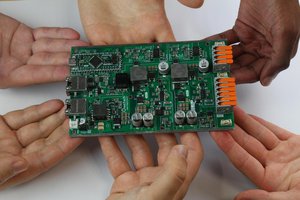
First manufactured PCB batch for SoM modules (ESP32-C6) arrived. Modules are in testing. Open source DIY with generic ESP32 + common IMU + LEDs is the path I want people on right now. Kits or assembled cubes only after SoM validation. I will post a project log when that is real.
The SoM is where I push battery life hard, not with magic firmware only. Board brings up parts I care about for months on a small LiPo:
- TI BQ21061: LiPo charge + protection path
- TI BQ27427: fuel gauge + coulomb counting (so the cube can know battery state without guessing)
- TI TPS63900: ultra-low Iq buck-boost for the power rail (fixed converter, no firmware driver, just hardware)
- Bosch BMA400: ultra-low power 3-axis accel for orientation / wake style use, instead of only a power-hungry IMU class part
After this first PCB batch is stable enough that I am not rewriting half a driver every week, I plan to open source MicroPython libraries for the chips that actually need software (BQ21061, BQ27427, BMA400) under a permissive license so other ESP32 / IoT projects can reuse them, not only FlipBuddy. TPS63900 stays a board-level power part. If you already need one of the programmable ones on another project, say so in the comments, it helps me prioritize.
Deep-sleep / ship-mode current numbers and full kit SKUs after I finish bring-up and I am happy with the measurements. Until then treat power figures from older notes as design targets, not final published results.
Typical DIY parts (reference, not a shop list)
- ESP32 board (many SuperMini / similar boards work with the open firmware)
- 6-axis IMU (e.g. MPU6050 class)
- 6× WS2812B (or similar addressable LEDs)
- LiPo with protection, 550 mAh+ class
- 3D printed shell + light guides (STLs on GitHub / Printables)
Future SoM boards aim at better battery life (charger, fuel gauge, low-Iq power path, low-power accel). Numbers and kit SKUs when testing is done and I am ready to sell, not before.
What I want from this page
Build reports, failed prints, STL customizations, firmware questions, hard privacy feedback. If something in the docs is wrong, open an issue on GitHub or comment here or join the discord server and use feedback channel!


 Michael
 Eleo Basili
 Jean Alinei
 oshpark
This is nice work, I wish there is a demo video, you know device working...