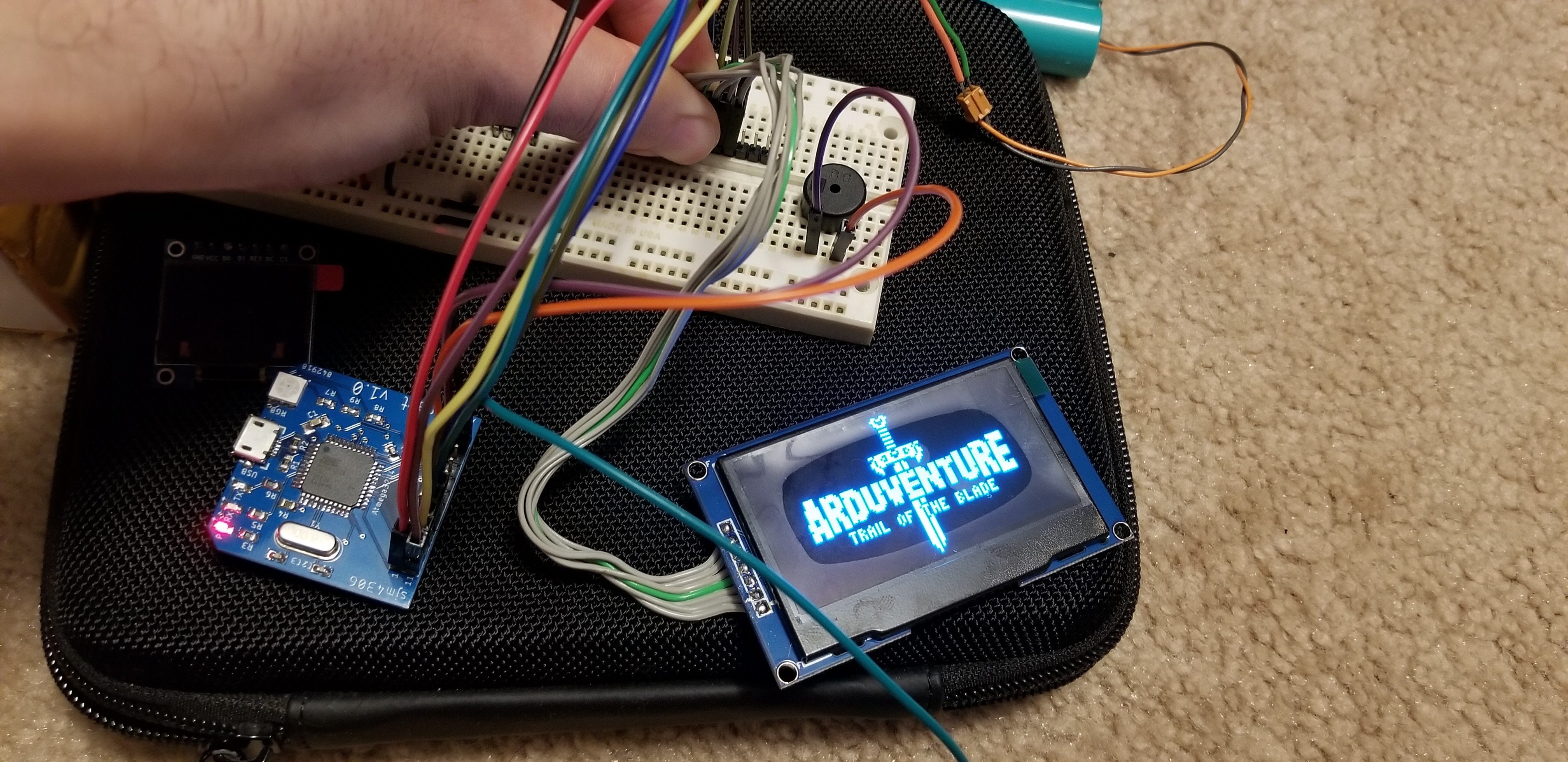
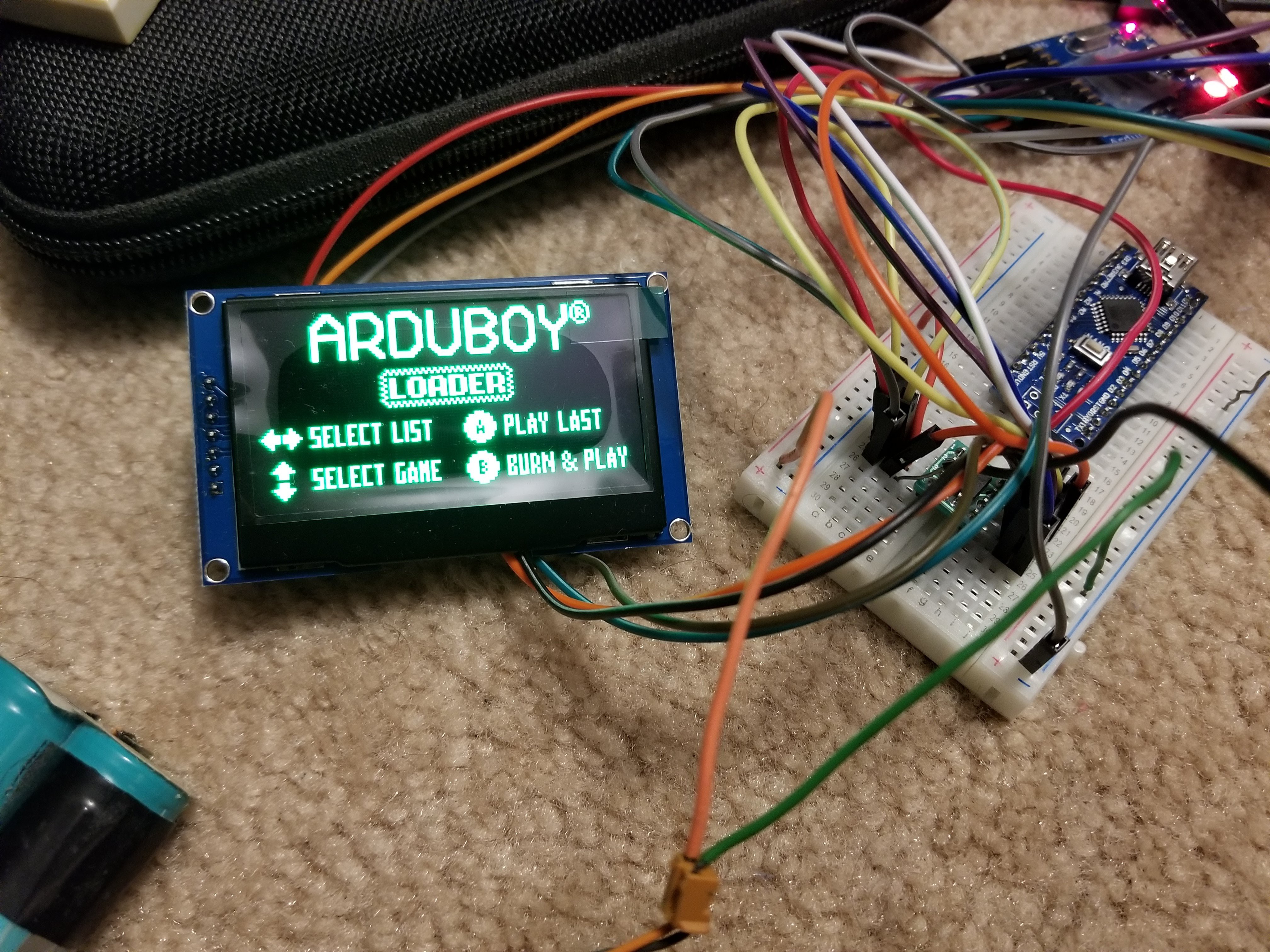
I've made several DIY game consoles based on the Arduboy platform and finally got my hands on the newest official FX-C so let's compare!
To make the experience fit your profile, pick a username and tell us what interests you.
We found and based on your interests.
First off huge thanks to Seeed Studio for sending the FX-C so I can take a look at it.
Check out the Arduboy here: https://www.amazon.com/dp/B0GMH1F7R3?...
Promotional code(10% off): BGJ7D7QE
Community: https://community.arduboy.com/t/make-...
Quick-start guide: https://www.arduboy.com/quick-start
Additional Resources:
https://cloud.arduboy.com/
https://community.arduboy.com/t/ardub...
https://bateske.github.io/ArduboyWebF...
I recently made a review video of the FX-C but will also reiterate in written form below with a little introduction to the platform for those who might be interested in it:
I'm a long time fan of the Arduboy platform, having been a member of the forums for several years now. I fell in love with the Arduboy when it was first launched as a Kickstarter but I was a poor college student so couldn't back it at the time. Fast forward a number of years and this is as far as I know the third major iteration of the Arduboy (not counting the mini which is more like a development tool imo).
The original model could only store one game at a time, and to change the game you had to recompile and flash the new game onto the Arduboy using the Arduino IDE. The next model was the Arduboy FX which with massive support from forum members added an SPI flash memory chip and updated the bootloader to support reflashing games on the fly from external memory. The most recent iteration upgrades the original micro USB port to USB C and adds multiplayer support by routing I2C pins through unused pins on the USB connector.
At it's very core the Arduboy is an 8-bit Microchip ATMEGA32U4 microcontroller with 32K of flash, 2K of EEPROM, native USB support and running at 16MHz. The screen is a 1.3" 1-bit monochrome SD1306 SPI OLED display with a 128x64 resolution. The front of the console is clear polycarbonate and the rear is anodized aluminum. The console only has six buttons (four directions and A and B). Most of my homebrew versions upgrade the display to a 1.54" or 2.42" OLED of the same resolution but available in several monochrome colors (however they use the SD1309 controller which is mostly compatible but requires patching games to support the lack of the internal charge pump command that the 1306 uses). All Arduboys have a 1-bit piezo speaker, RGB LED, and 180mAh LIPO battery.
The FX and FX-C models have an external 16MB SPI flash memory to store hundreds of games which can flash the internal ATMEGA memory at any time. Game saves are stored in the ATMEGA's internal EEPROM, with the caveat that some games will overlap saves so you do have to be a little careful if you don't want to overwrite or corrupt saves. Flashing games to the flashcart (the SPI flash chip) is handled by either Mr. Blinky's python script or now via several online webtools that use Chrome's ability to connect USB serial devices (this one is my favorite: https://www.bloggingadeadhorse.com/cart/CartBuilder.html?file=flashcart-index&list=BigFX).
The FX-C's standout feature imo is routing the I2C pins through the USB C connector. This is intended for multiplayer games by connecting two Arduboys up with a double ended USB C cable, however I'm more excited because this opens the Arduboy up for integrating it into my electronics projects as a controller or display. Through I2C the Arduboy can be made into a universal programmable IR remote, have removable "backpacks" that add bluetooth, wifi, or even mass storage via micro sd cards! There's an entire world opened up now that there's an easy to access data connection directly wired up the the microcontroller inside the Arduboy!
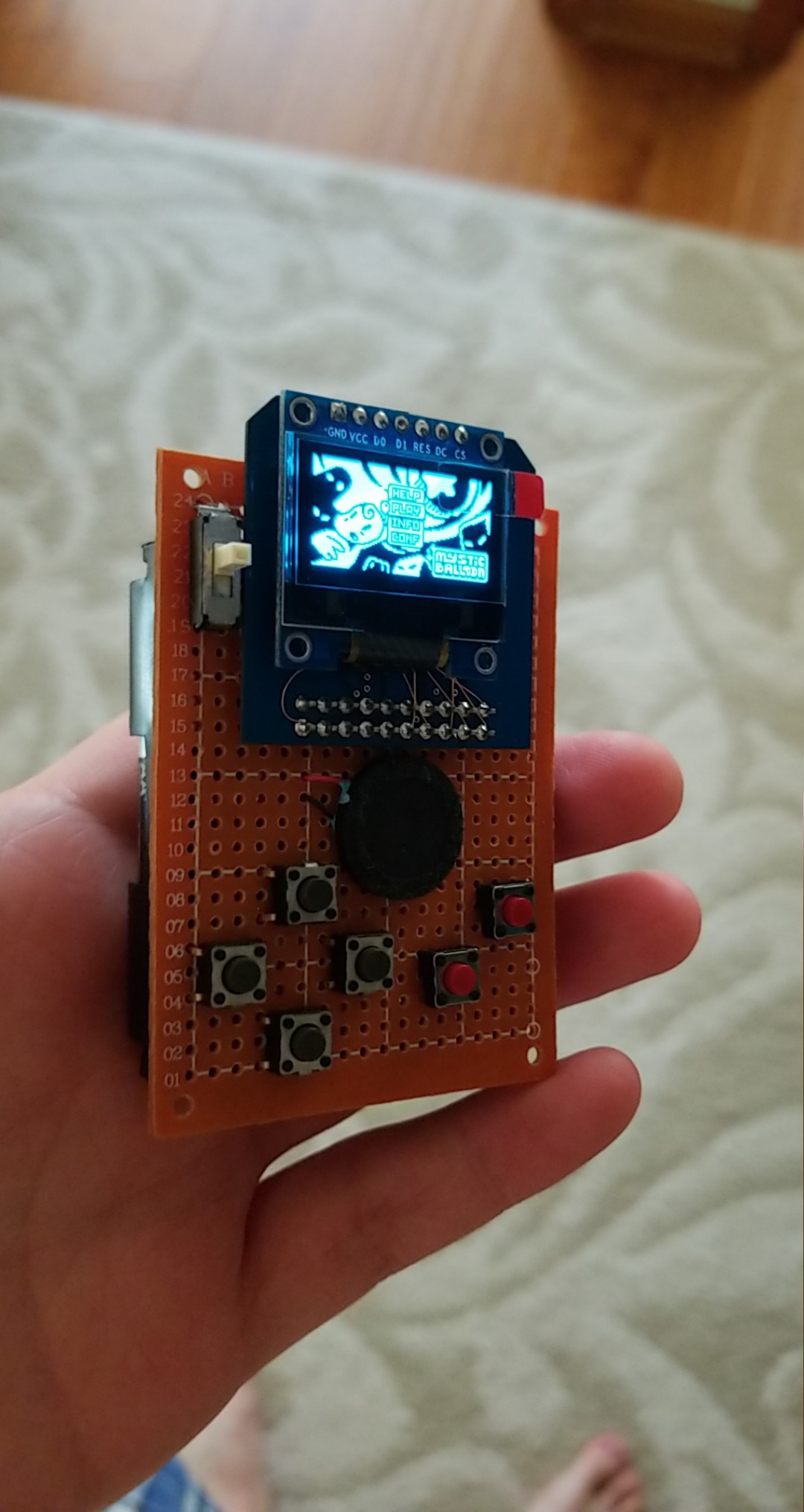
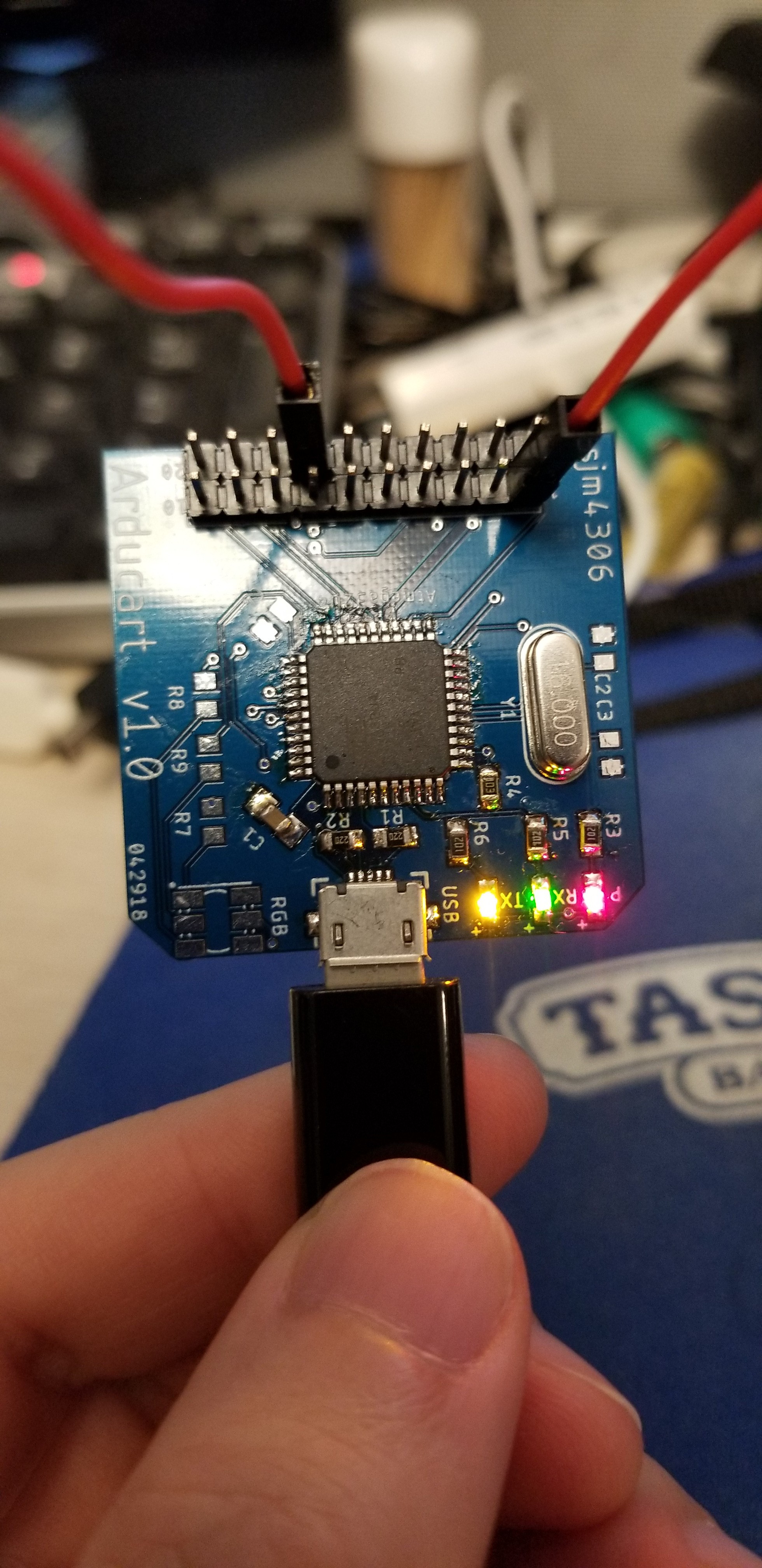
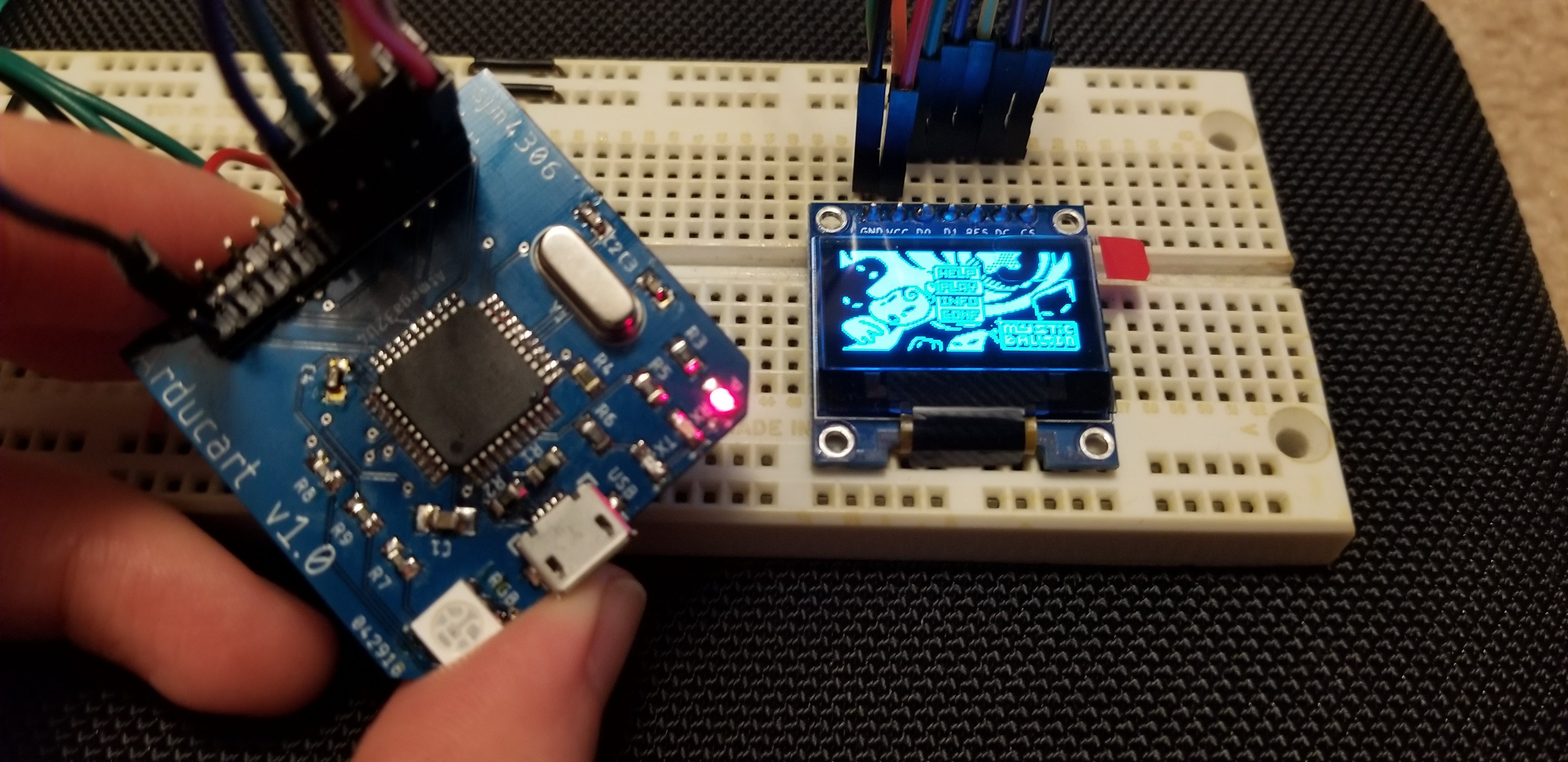
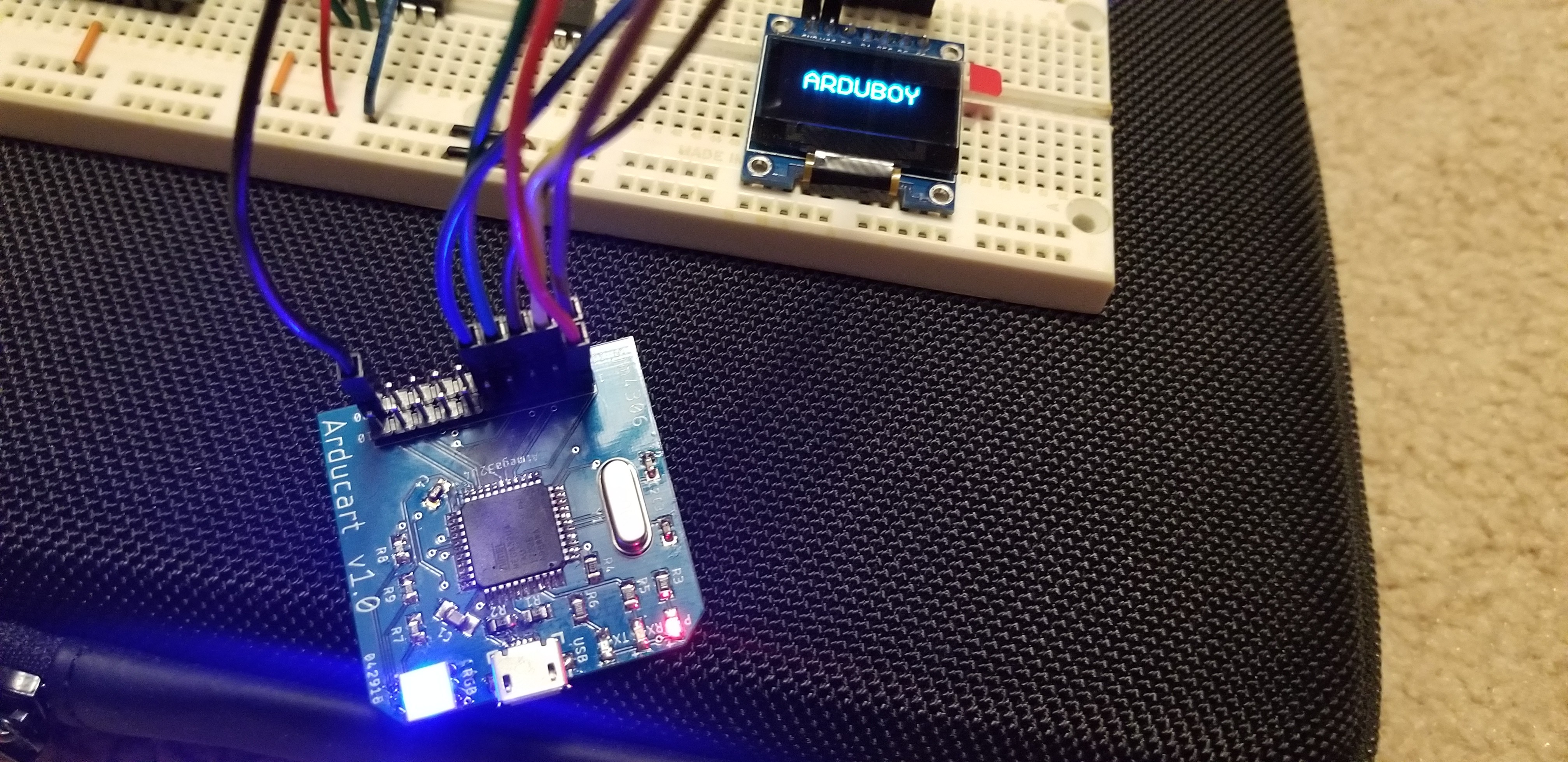
My homebrew clones served to improve on what I felt were a few shortcomings of the official hardware. Namely the original model's lack of swappable games and adding a much larger SD1309 display through my ArduCart Project:
The idea was to move the processing to a removable cart and the main console would only need power...
Read more »
Create an account to leave a comment. Already have an account? Log In.
Become a member to follow this project and never miss any updates