Jeremiah

WHAT IT IS
Livyatan is an integrated design suite for makers, built over the past year by one CNC machinist working nights and weekends. CAD with shop export, image generation, image-to-mesh, laser and plasma prep, resin print prep, a machining advisor, and more — eighteen modules and counting.
They are separate programs that talk to each other through ordinary files. Written in Rust. The core runs on any Debian box with no GPU and no network connection. No subscription, no account, nothing phones home. Free — PolyForm Small Business 1.0.0.
OUT NOW
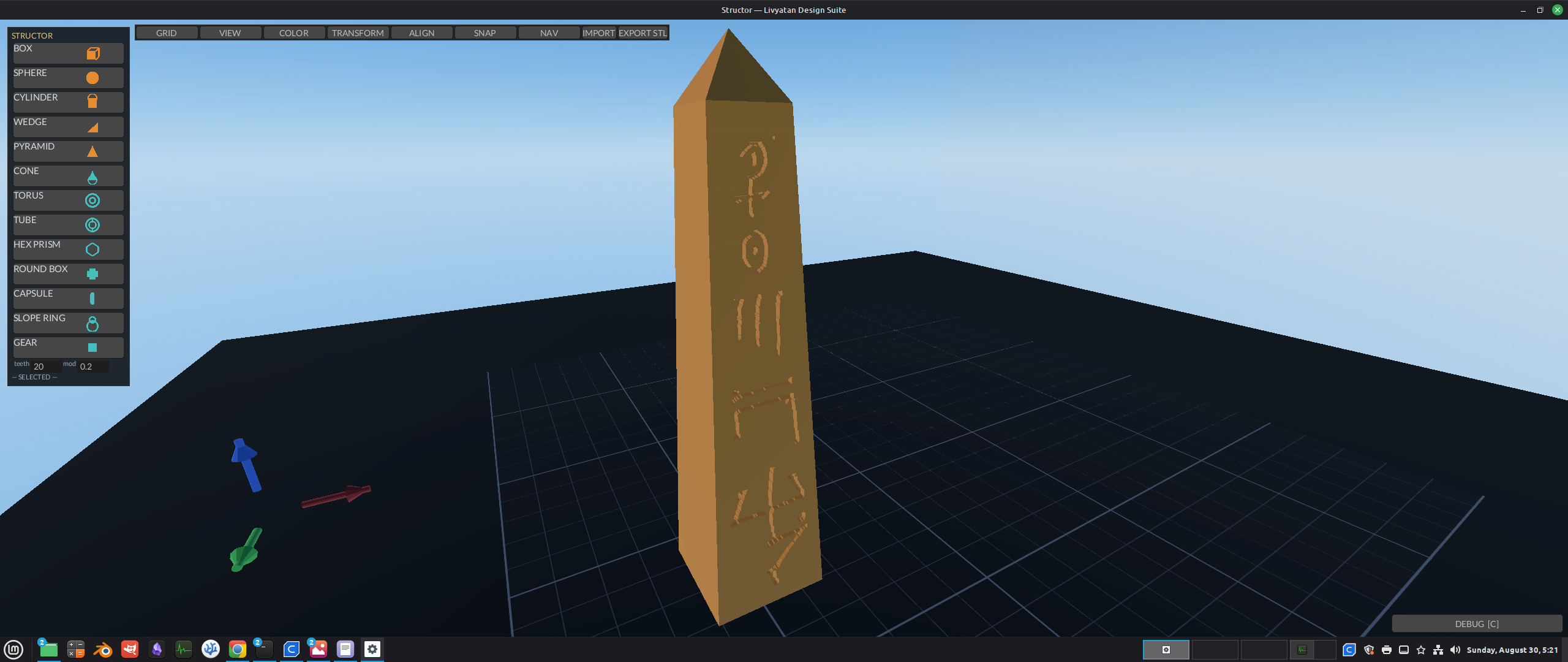
Structor 0.11.0 — a solid modeller for print-and-cut parts. Primitives, weld, group, measure, STL in and out, save/open/recent with autosave. The build plate sits inside a modelled 30 m shop bay with a granite inspection bench and a bridge crane overhead, because the viewport is a game engine rather than a CAD widget. Runs on any Debian box, no GPU.
Phantasos 0.3.0 — image generation on your own GPU (Vulkan; AMD, Intel, NVIDIA), or on a GPU box across the LAN with one button. Prompt it, or hand it a picture and say what to change. While it renders, an hourglass runs sand paced to the time your particular machine actually takes.
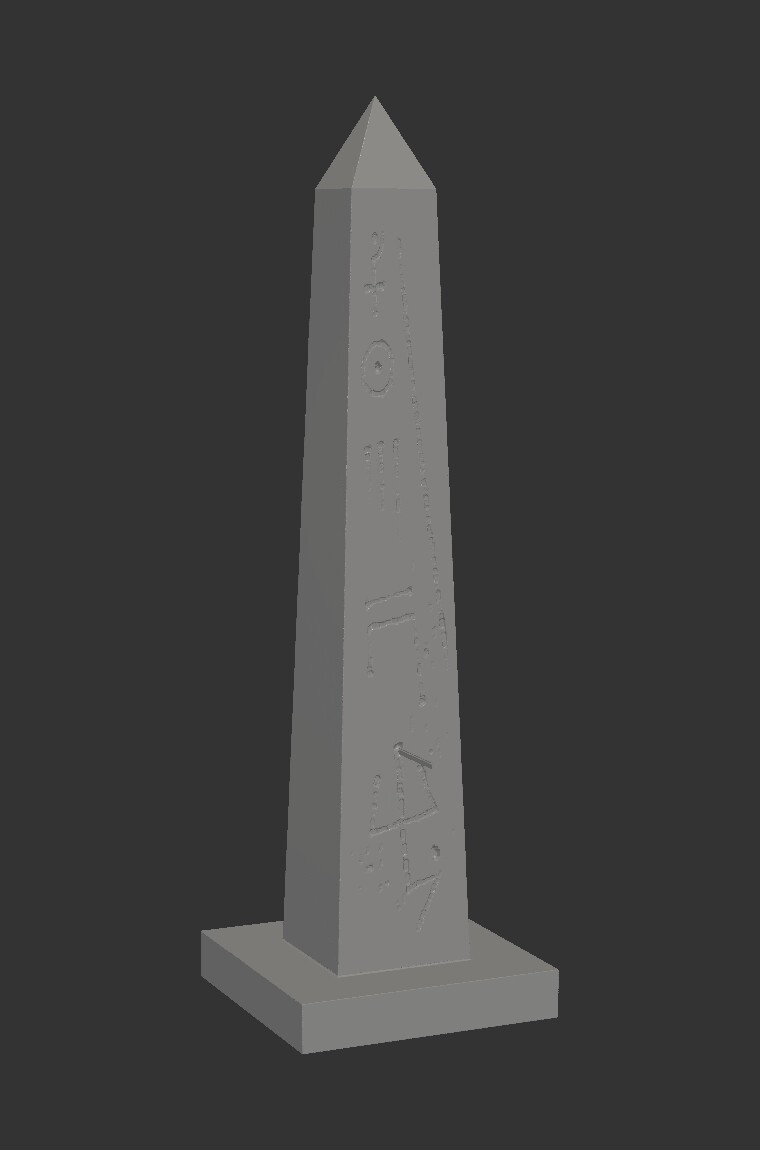
GilgaMESH 0.2.0 — photograph to sliceable STL at the size you name. Rotate and crop before you commit. Mesh generation wants about 8 GB of GPU memory or a large unified-memory box; repairing a mesh needs no GPU at all. It ships as a working test prototype, and its rough edges are written into its release notes rather than hidden.
Downloads: https://github.com/3DJ77/Livyatan Debian 13 / Ubuntu 24.04+ — sudo apt install ./structor_0.11.0_amd64.deb
THE OBELISK
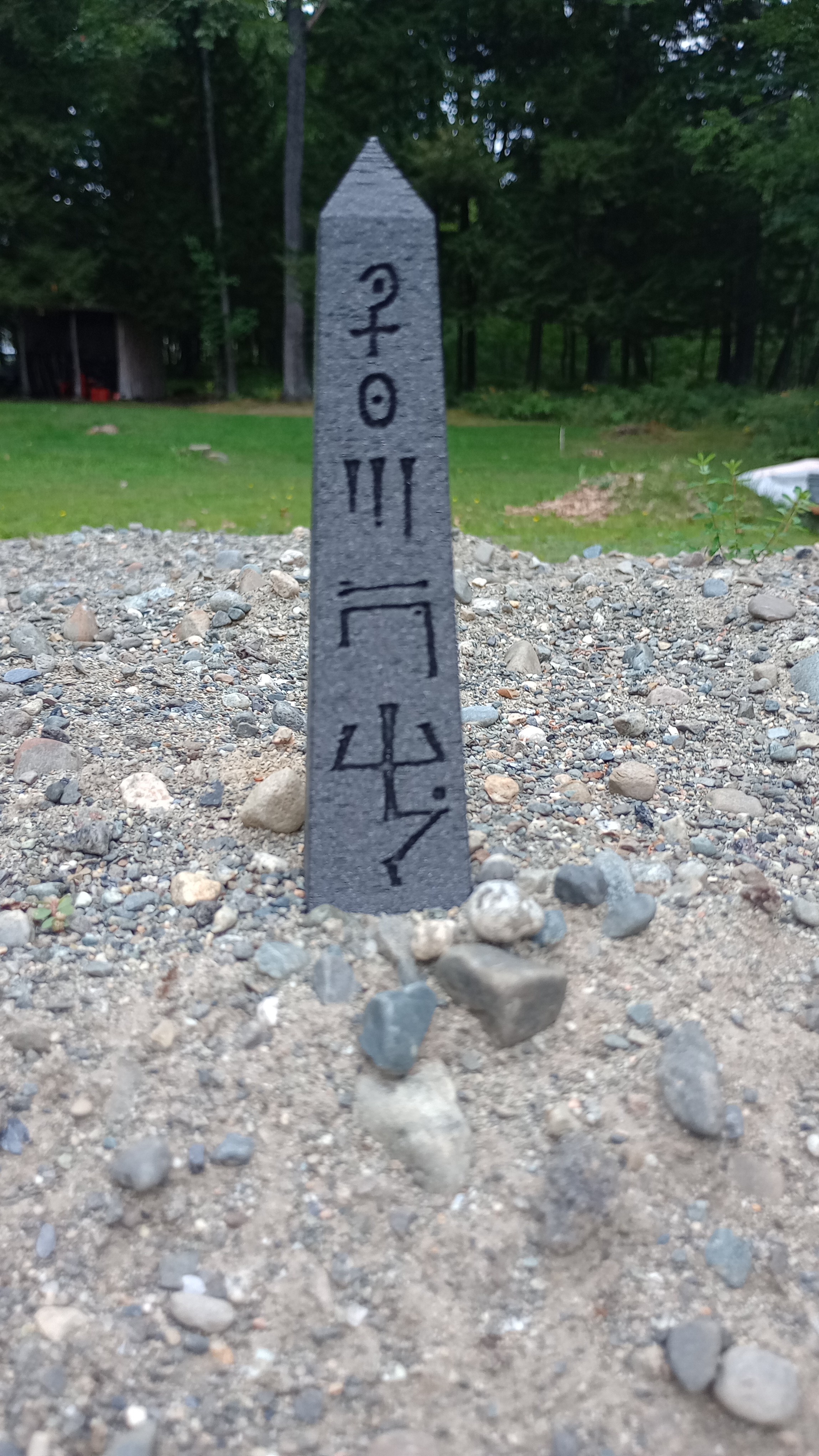
A design suite is easy to demo and hard to prove. Any single module can be made to look competent in a screenshot. What cannot be faked is one object going the whole length of the chain and coming out the far end as a part you can hold.
So I picked the most boring object I could think of. Flat faces, hard edges, a taper, and a carved face — enough geometry to catch real errors, simple enough that when something comes back wrong I can see which stage caused it. A dragon hides its defects in the scales; an obelisk has nowhere to put them.
The glyphs are mine: five sigils drawn in pencil almost thirty years ago, on paper that barely survived. The path from that page to a printed monument is idea → drawing → photograph → rectify → extract linework → clean and place → emboss → weld watertight → slicer → print. Ender-3 Max, 0.2 mm, about two and a half hours, galaxy black PLA.
The obelisk is the suite's recurring calibration and first-test project. Every module gets measured against the same object, every new module joins the run, and anyone learning the tools can walk the identical path instead of starting cold on their own hard part.
WHAT IS STILL COMING
Nazca does the linework and the emboss — laser and plasma prep. Gorgon is a handheld 3D scanner that will close the loop: scan the printed obelisk back into a model and compare it against the one that went to the slicer, which turns a walkthrough into a number for what each stage of the chain actually costs you. Behind them: Hephaestus (CAM), Jove (resin prep), Oannes (a machining advisor that reads your G-code), Labyrinth, Tiamat.
The rest hang on the gallery wall at https://3dj77.github.io with their links dark. One comes off every week or so, as my schedule allows, in an order you can build with — each drop is usable the day it lands with whatever is already out.
HONEST NOTES
Built nights and weekends around a full-time shift schedule, using Claude as the coding tool. Every design call and every decision in it is mine.
The hardware model is honest too: the core tools need no GPU and no network. The AI-assisted features need real hardware behind them, and when it isn't there the feature says so plainly instead of degrading quietly.