 Mithilesh Gupta Konda

The Story Behind Rhythm: Built Out of Pure, Copper-Clad Spite
Updates also on: Instagram
Lately, there’s been a massive resurgence of people wanting dedicated Digital Audio Players (DAPs). People are exhausted by notification dings during an album, and they want intentional listening back.
The problem is the current market:
- The "Audiophile" Bricks: Cost $600 to $1,500, weigh as much as a crowbar, run sluggish, bloated Android builds, and burn battery just to display a volume slider.
- The Budget Players: Cost $50 to $100, but sound flat and congested. Why? Because they take the cheap shortcut: running everything off a generic all-in-one multimedia SoC or bargain codec.
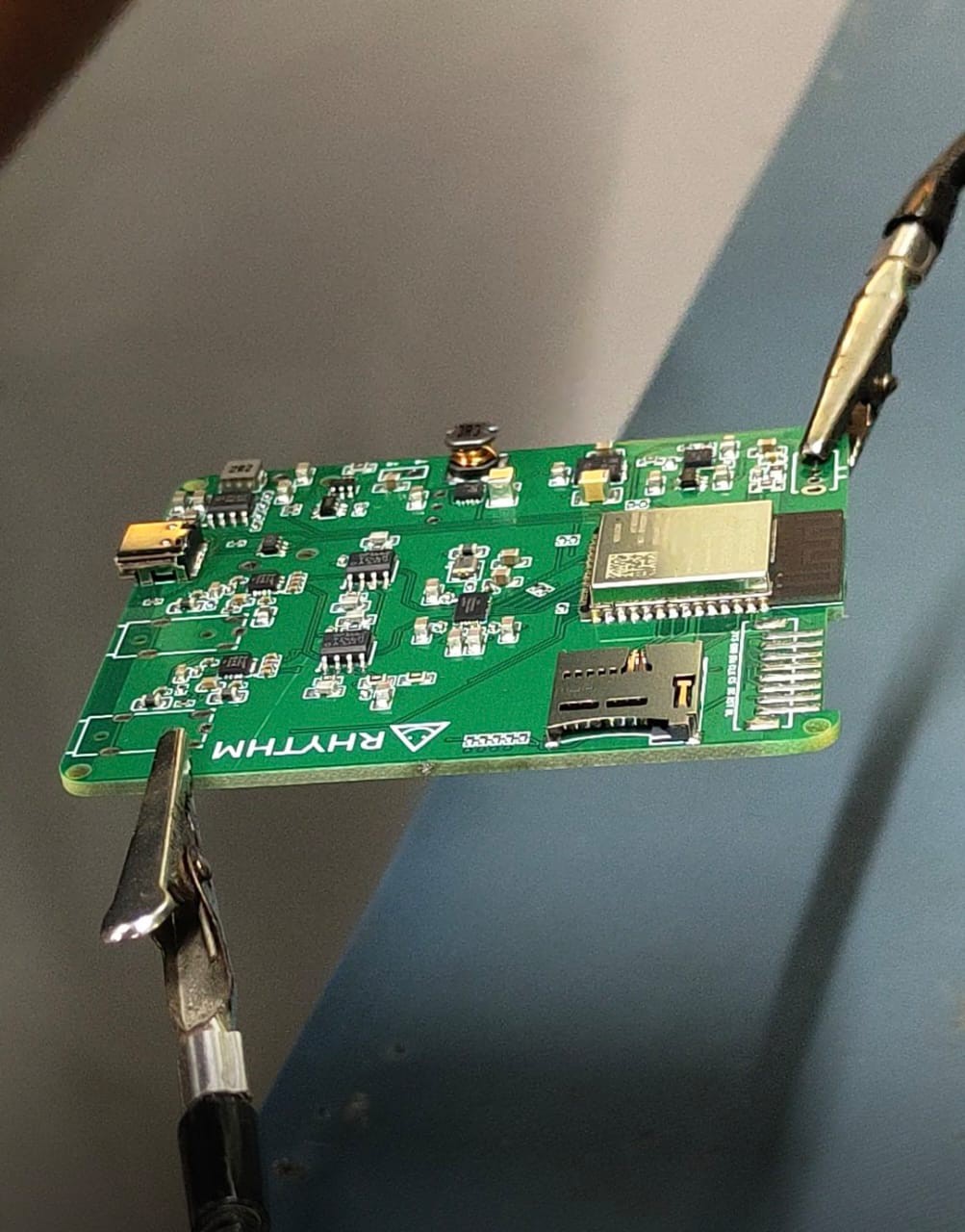
An audio device doesn't sound good just because a datasheet claims "24-bit/192kHz." Real acoustic depth lives and dies by power delivery and analog isolation. When your microcontroller's noisy digital switching hash shares the exact same power plane as your sensitive analog output, your soundstage collapses into a flat, veiled mess. True fidelity demands dedicated, isolated silicon: an independent, current-mode DAC, ultra-low-noise LDOs, a properly tuned transimpedance stage, and a robust headphone driver that doesn't sag under load.
When I started sketching out this architecture on my desk, someone looked at it and told me flat out:
"Building a discrete, low-noise audio player from scratch on your own PCB? That's too hard. You can't pull that off."
That bruised my impedance-matched, silicon-etched ego.
Naturally, the only reasonable engineering response was to double down, and build it anyway.
Doing Sharing Right: Two Jacks, Zero Compromise
While proving a point on the bench, I tackled another pet peeve: sharing music.
Music is meant to be shared with your partner or a close friend. But handing someone a passive $2 plastic Y-splitter is an acoustic crime:
- It cuts the impedance in half.
- It ruins the amplifier's damping factor.
- It creates a shared ground loop that drags your stereo imaging straight into the dirt.
- If one person uses sensitive 16Ω IEMs and the other has 150Ω planar cans, one person gets deafened while the other hears a whisper.
Rhythm solves this properly. Instead of an internal split, it features two completely independent, actively buffered 3.5mm outputs, each driven by its own dedicated Texas Instruments DirectPath amplifier. You can plug in two completely different pairs of headphones, sit side-by-side on a train or a park bench, and experience uncompromised, pristine lossless audio together.
Hardware Highlights
- True Discrete Datapath: No all-in-one codec shortcuts. An ESP32-S3 handles file parsing and DSP, pushing pristine I2S to an ES9038Q2M SABRE DAC, running into an active OPA1688 transimpedance stage.
- Dual Isolated Power Domains: Digital logic and high-frequency switching lines are physically separated from the analog rails, regulated by dedicated ultra-low-noise LDOs to ensure the noise floor remains dead silent.
- Tuned Analog Bandwidth: The I/V feedback network uses linear, high-frequency capacitors to place the out-of-band delta-sigma noise pole well beyond the audible band >150kHz, preserving phase coherence and high-end spatial reverb tails.
- Twin Independent Outputs: Two TPA6132A2 DirectPath amplifiers provide ground-referenced, capacitor-free drive. No bass roll-off, no phase shift, and zero crosstalk between listeners.
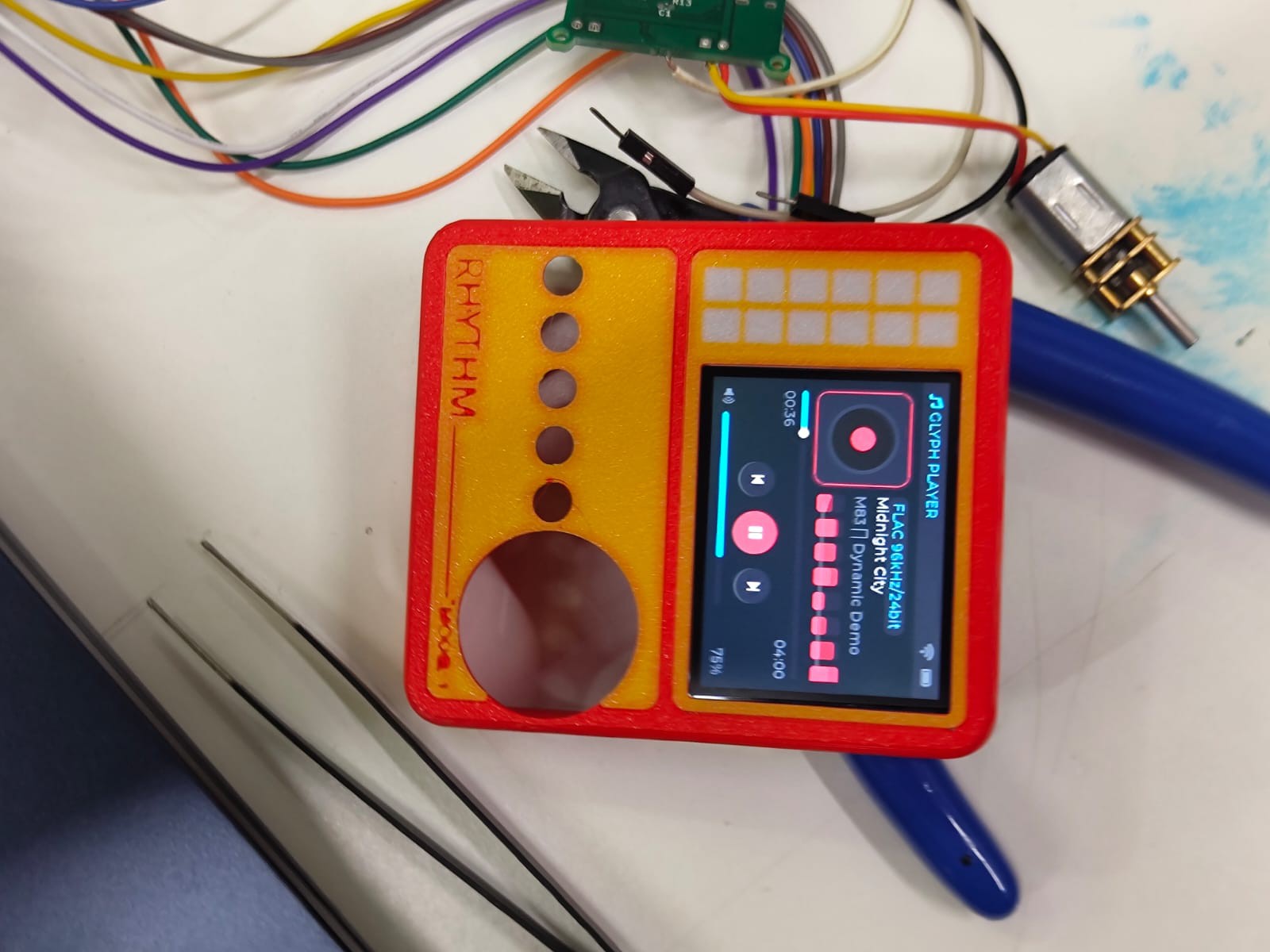
- Tactile, Distraction-Free UI: A responsive 2.0-inch color LCD display paired with a physical rotary encoder and tactile buttons for volume and track navigation that works seamlessly through your pocket.
Specs at a Glance
- Processor: ESP32-S3 N16R8
- DAC: ESS SABRE ES9038Q2M (32-bit / up to 192 kHz PCM)
- I/V Stage: Low-Noise Dual OPA1688
- Headphone Amps: 2× TI TPA6132A2 DirectDrive (Independently Buffered)
- Outputs: 2× 3.5mm Stereo Headphone Jacks
- Display: 2.0-inch SPI Color TFT LCD
- Controls: Precision Mechanical Rotary Encoder + Tactile Buttons
- Storage:...
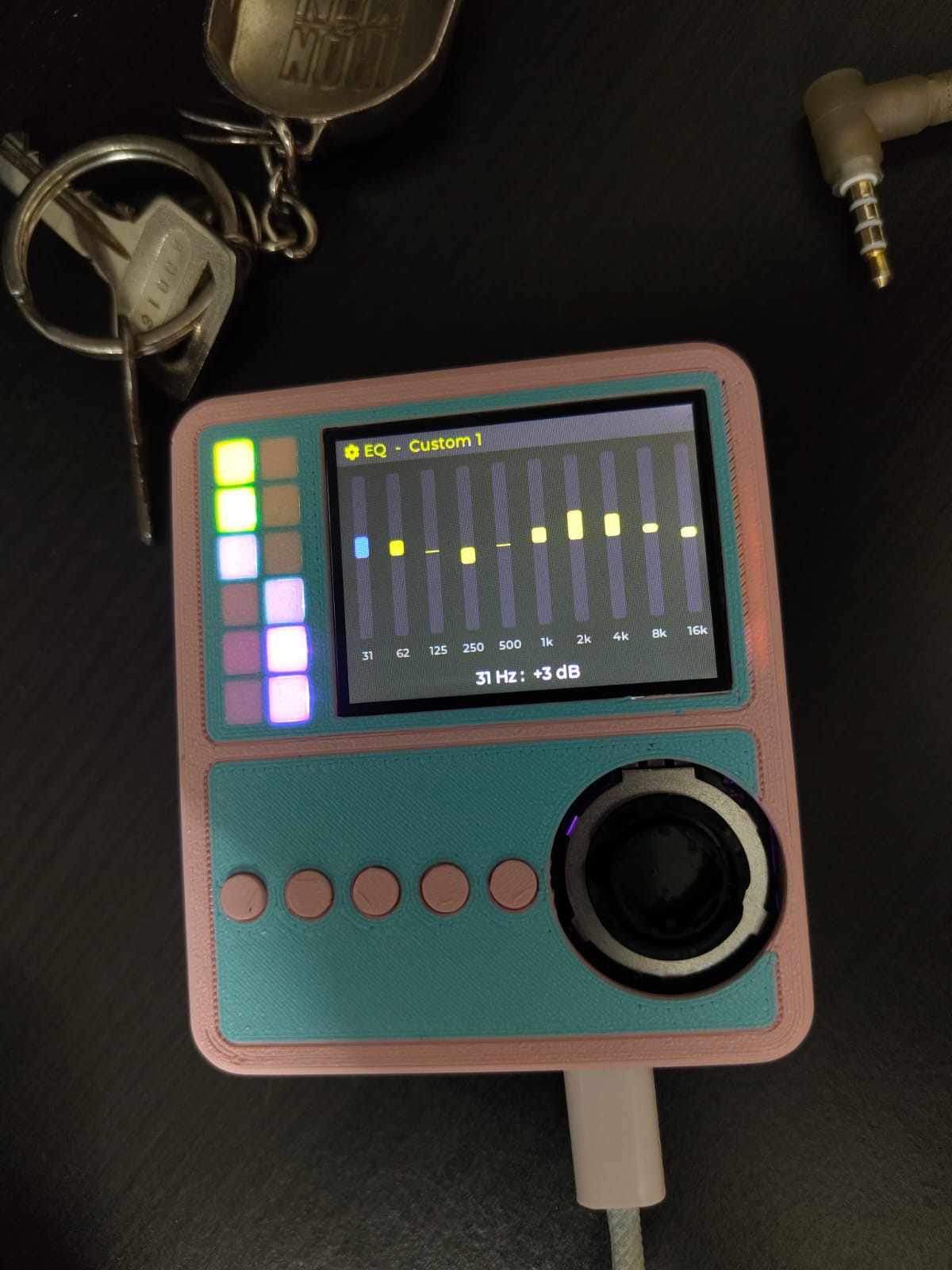
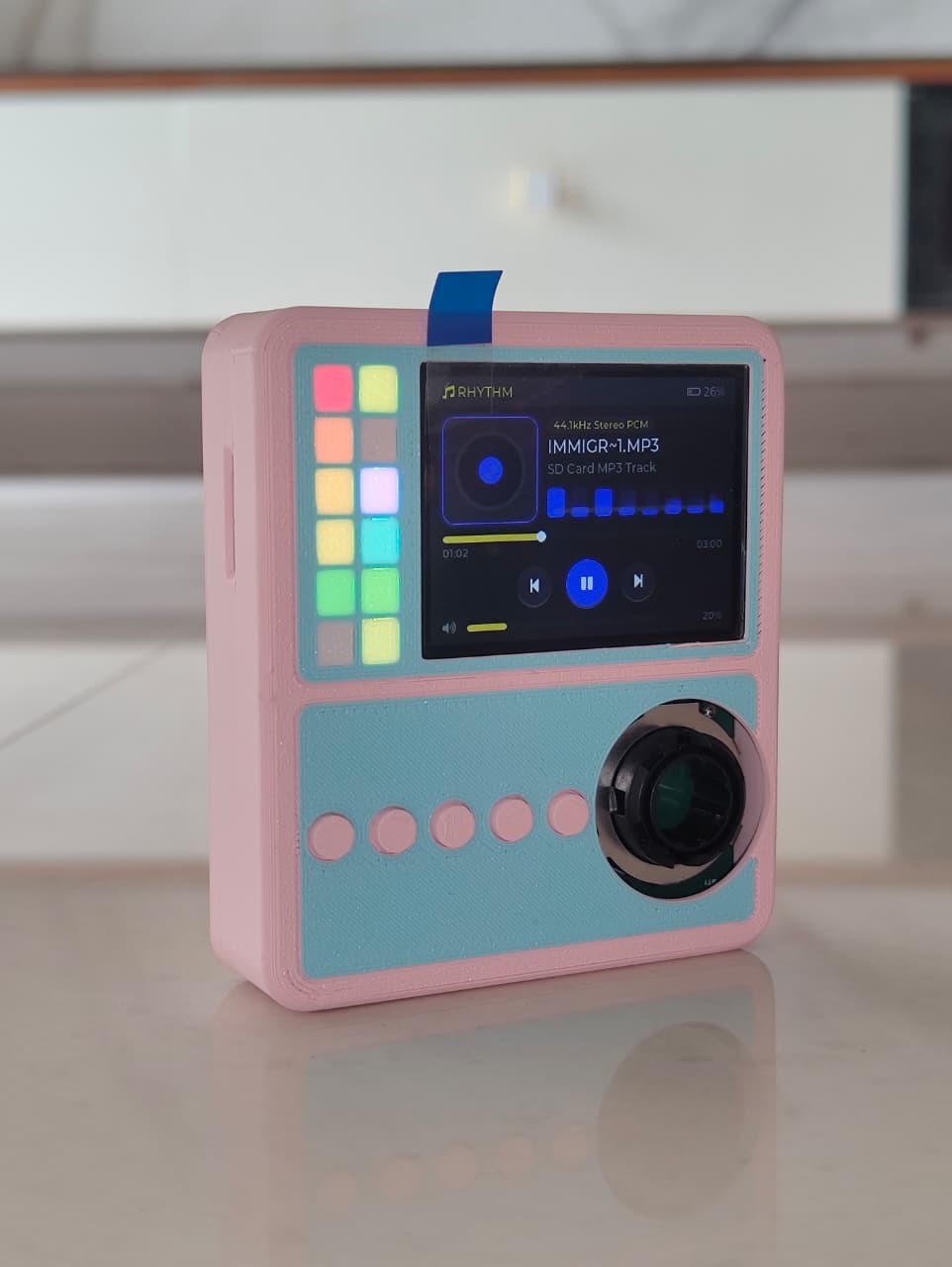
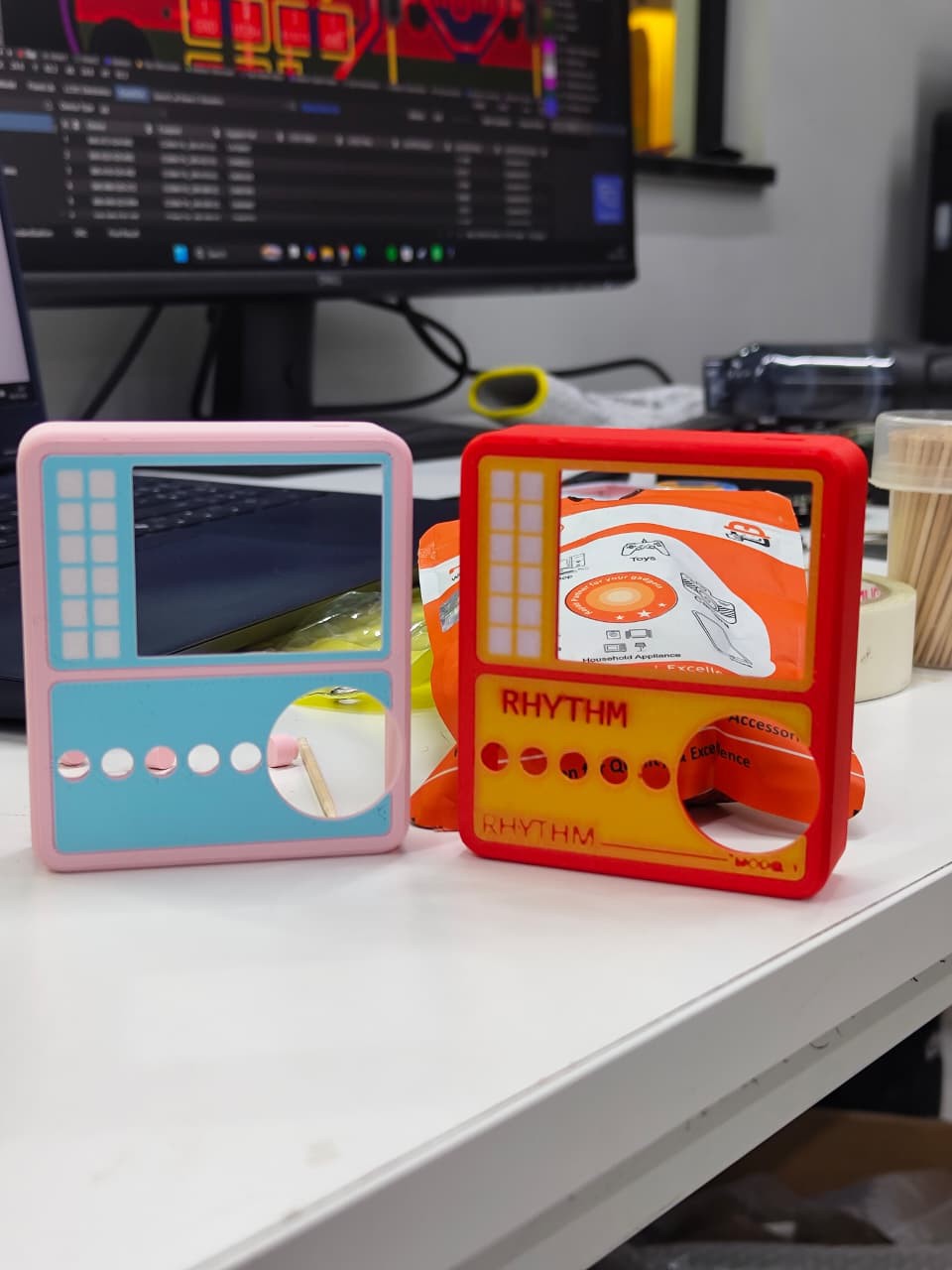


As an audiophile, i love the idea, and the design. Punchy Colors, visualiser, crown and buttons. You've got whole retro vibes with a modern twist.