 mircemk

Bioresonance therapy is a type of alternative treatment that is based on the idea that the body’s cells, tissues, and organs emit electromagnetic frequencies. The premise behind bioresonance therapy is that these frequencies can be measured, analyzed, and potentially rebalanced to improve health and well-being. The goal of bioresonance therapy is to correct these imbalances by sending counteracting frequencies back into the body to restore harmony. Bioresonance devices typically involve electrodes that are placed on the skin or sometimes in direct contact with acupuncture points or other parts of the body.
The device that is the subject of analysis in this video represents the part that generates a specific frequency or a series of frequencies. Applicable frequencies specifically for certain diseases can be found in several places, and for example I have provided some sources and tables (at the end of the text.) And before I start describing and testing this device, I want to emphasize that this method of treatment is not widely accepted in scientific and medical circles, because there is not enough scientific evidence for its effectiveness, so it is often considered pseudoscience. In this video I want to capture the technical side of this, and similar devices, and I have no intention or knowledge in that area to discuss its effectiveness. From a technical point of view, I can certainly guarantee that this particular device has absolutely no negative impact on the human body, since it is powered by a battery and is actually a generator of weak rectangular signals with an small amplitude. Actually in everyday life, we are constantly exposed to much more aggressive sources of various frequencies.
Basically, the device consists of a color display with a touch screen that is controlled by a microcontroller that also serves to generate frequencies. These frequencies are then fed to a class-D amplifier, to whose output electrodes are connected through a protective resistor. Electrodes are held in the palms of the hands during therapy, or placed on an appropriate part of the body.
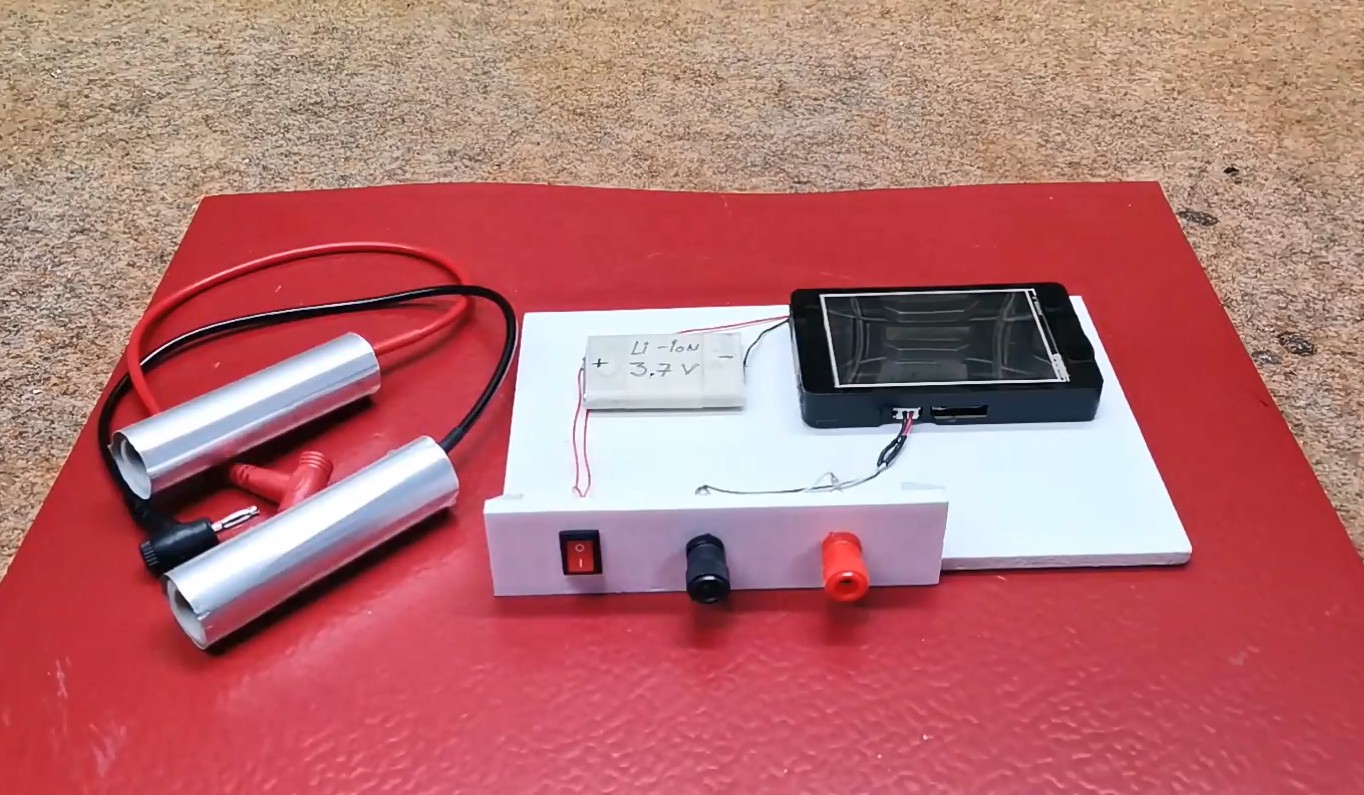
To better understand the functioning and composition of such a device, I first made a simple functional prototype on a small plastic board. Only a few components are needed to make a fully functional device:
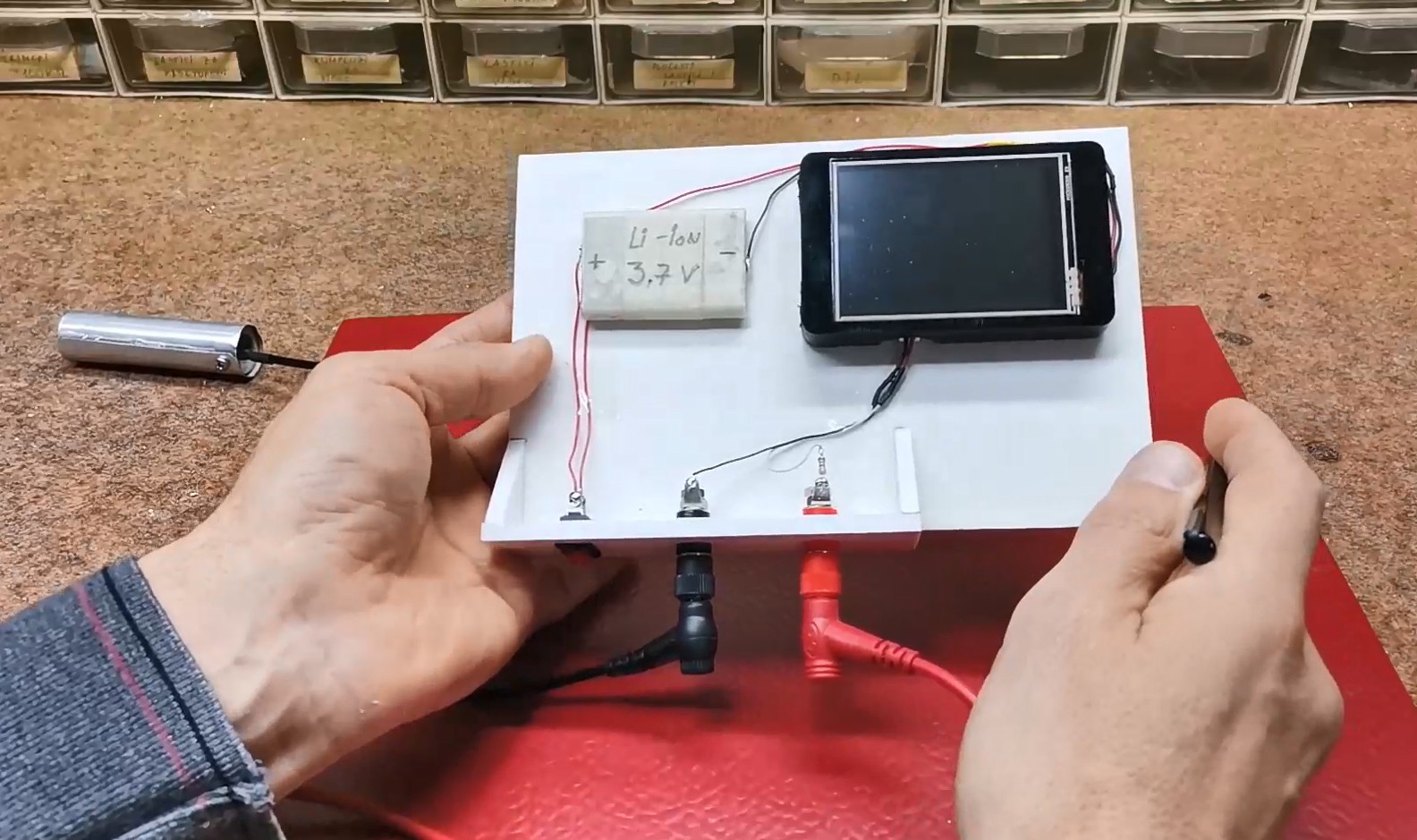
- CrowPanel 2.4"-ESP32 HMI Dispaly
- 3.7V Lithium Battery
- Small Switch
- Protective resistor 10 Ohm
- Two metal electrodes through which the therapy is applied
A lithium battery is connected to the appropriate battery connector via this small switch. The type (capacity) of the battery is not critical and any shape and capacity can be used. Of course, we need to pay attention to the polarity. The electrodes are connected to the audio output of the HMI displaymodule via a protective resistor. The electrodes can be metal rods made of stainless steel, or for example aluminum cylinders as in my case. Also, for this purpose can serve laminated pertinax boards used for making PCBs. I made assembled test device from PVC material based on the appearance of several similar commercial devices.
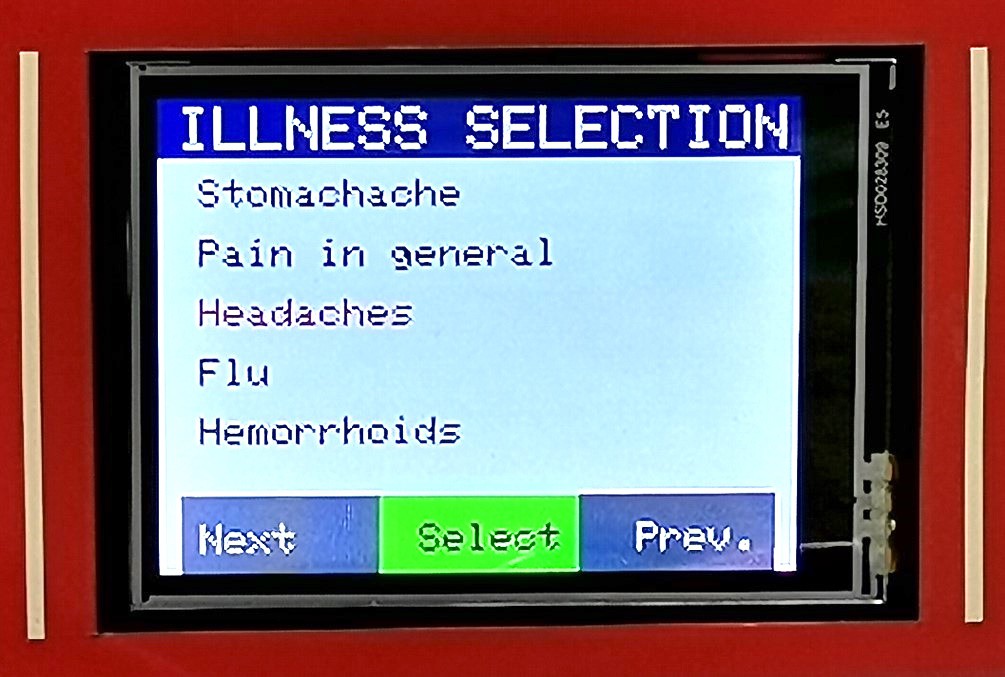
When turning on the device, the initial information screen appears, and according to the indicated information, by touching the screen anywhere, we enter the "ILNESS SELECTION" menu to select the disease we want to treat. Here we have two buttons "PREV" and "NEXT" with which we can move through the diseases.
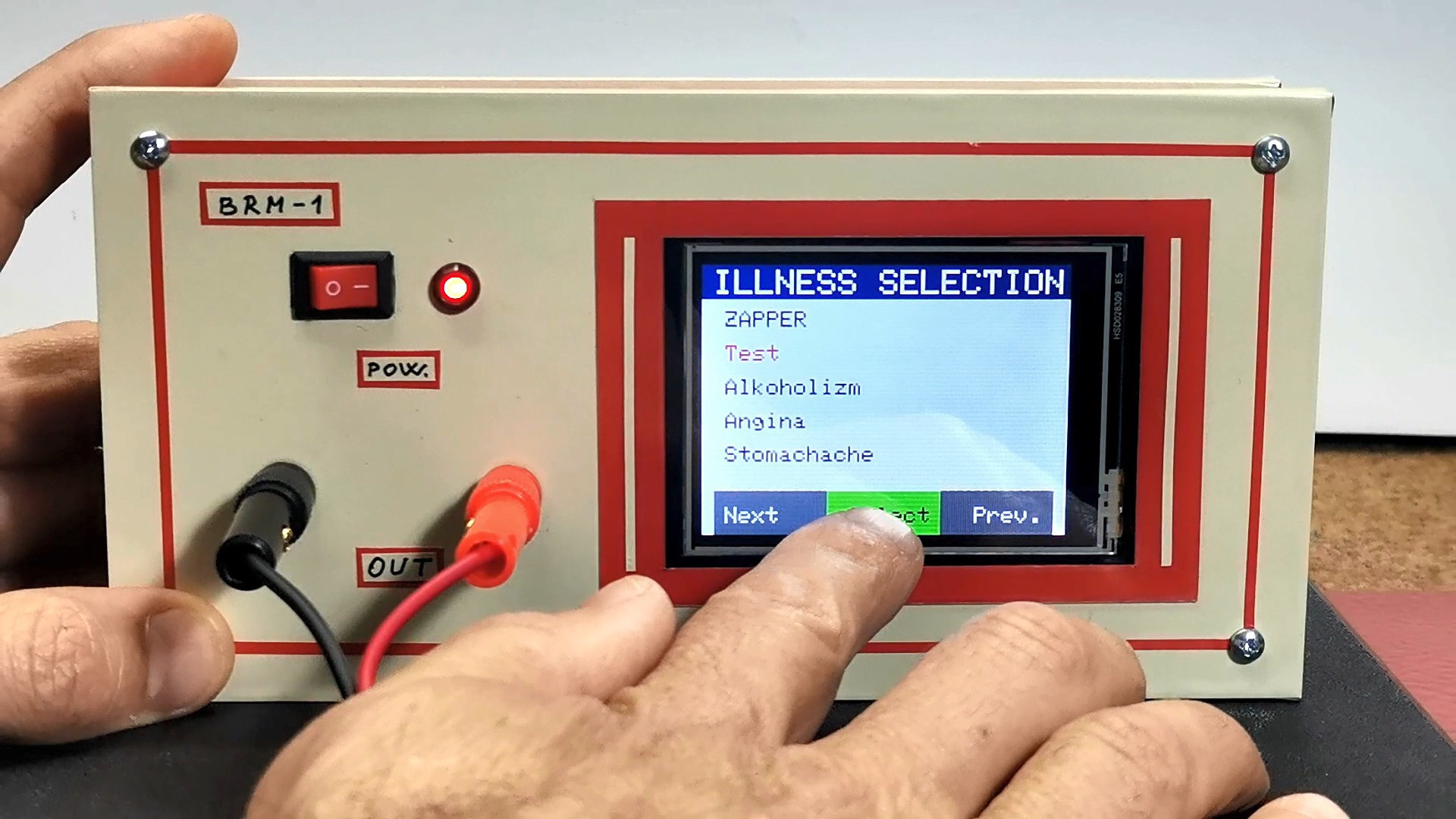
Let me emphasize that in a new device, only the "ZAPPER" function is initially entered here, and the remaining diseases and functions are entered through an appropriate web interface, which will be described further in the text. The selected disease is in red. To continue in the menu for starting the therapy, we need to press the "SELECT" button.
As you can see, the selected disease, the current frequency, and the total number of frequencies for the selected disease are marked...
Read more »