 Carl F.
RotaryCell began as a hand-wired, one-off conversion. That prototype proved the core idea: an ESP32 and cellular modem could read the original rotary dial, place and receive calls, operate the handset, and ring the telephone’s mechanical bells through a Silvertel AG1171 line interface.
Getting it to work once was only the beginning. The loose wiring made the prototype difficult to reproduce, inspect, or repair. It also left little room for additions such as reliable modem recovery and controlled power saving.
The current version replaces most of that point-to-point assembly with two purpose-built circuit boards. The AG1171 carrier handles the telephone interface and its through-hole components. The Audio/Reset A4 board handles adjustable audio conditioning and includes a hardware power-cycle circuit that the ESP32 can trigger if the cellular modem becomes unresponsive. Custom printed carriers secure the electronics inside the phone without drilling or cutting its case.
Several complete PCB-based conversions are now operating. The current firmware supports the new hardware, including modem reset, AG1171 power control, maintenance Wi-Fi, browser-based diagnostics, event logging, and web firmware updates. A 5330 mAh 21700 cell provides roughly two days of typical operation.
The other major task was turning my notes and development photos into instructions someone else could actually follow. The resulting guide now covers sourcing, PCB ordering, printed parts, wiring, firmware, installation, adjustment, and final testing.
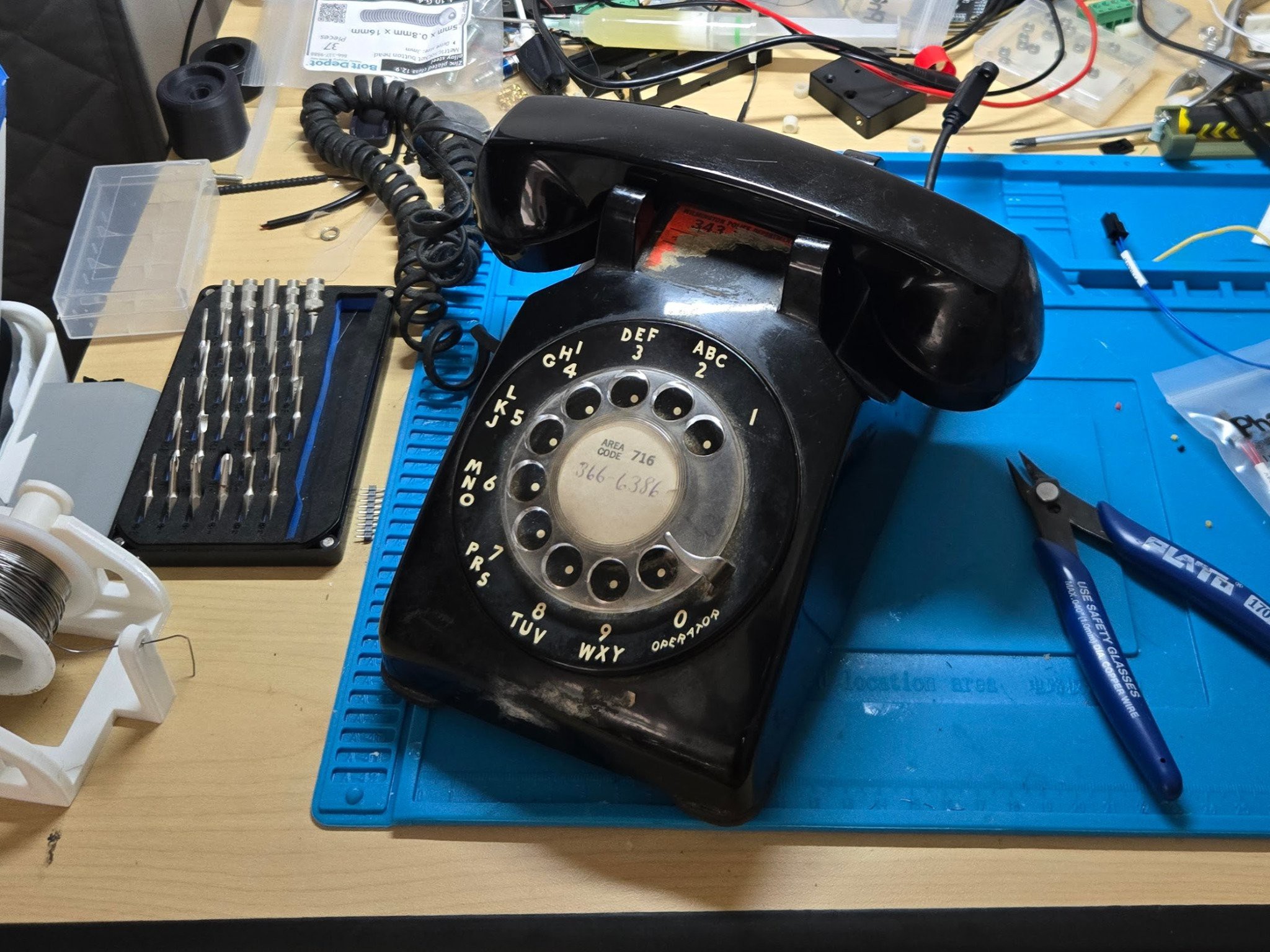
Illustrated build guide: https://evilroot.net/RotaryCell/
GitHub repository: https://github.com/fregacmols/RotaryCell
Discussions
Become a Hackaday.io Member
Create an account to leave a comment. Already have an account? Log In.