 mircemk

In one of the previous videos I presented the making of a miniature Horn type speaker box with a 2 inch full range driver. In fact, this box is a proportionally reduced version of the Fostex FE208NS 8 inch driver speaker box. There you could follow in detail the manufacturing method as well as its characteristics compared to a small NAD commercial speaker. Unfortunately, the result was far below my assumptions and expectations, so I decided to make two more different types of mini speaker boxes with the same driver, of course with dimensions according to well-known online calculators for this purpose. So, I decided to make both a BASS-Reflex type and a compression box with the appropriate volume and dimensions.
Now I have the opportunity to compare the sound of the three boxes one by one with the same driver to find out which box will sound the best. In the previously mentioned video, I calculated the resonant frequency of this particular driver, which was around 170Hz, and I used that information when designing these two new sound boxes. This is one of the bass-reflex type boxes, which, unlike a closed sound box, has a small opening on the front or back, usually with an inserted cylinder with precisely calculated dimensions.

This project is sponsored by PCBWay. From September 1, 2026, to January 24, 2027, PCBWay is hosting its 9th Project Design Contest. You can enter in five different categories: Edge AI & IoT, Robotics, Power, Open Theme, and Mechanical. Valuable prizes—including cash, coupons, and single-board computers—await the winners, while every participant will receive a Raspberry Pi Pico. Don't miss this opportunity to share your work and win great prizes. Make PCBWay your first choice!
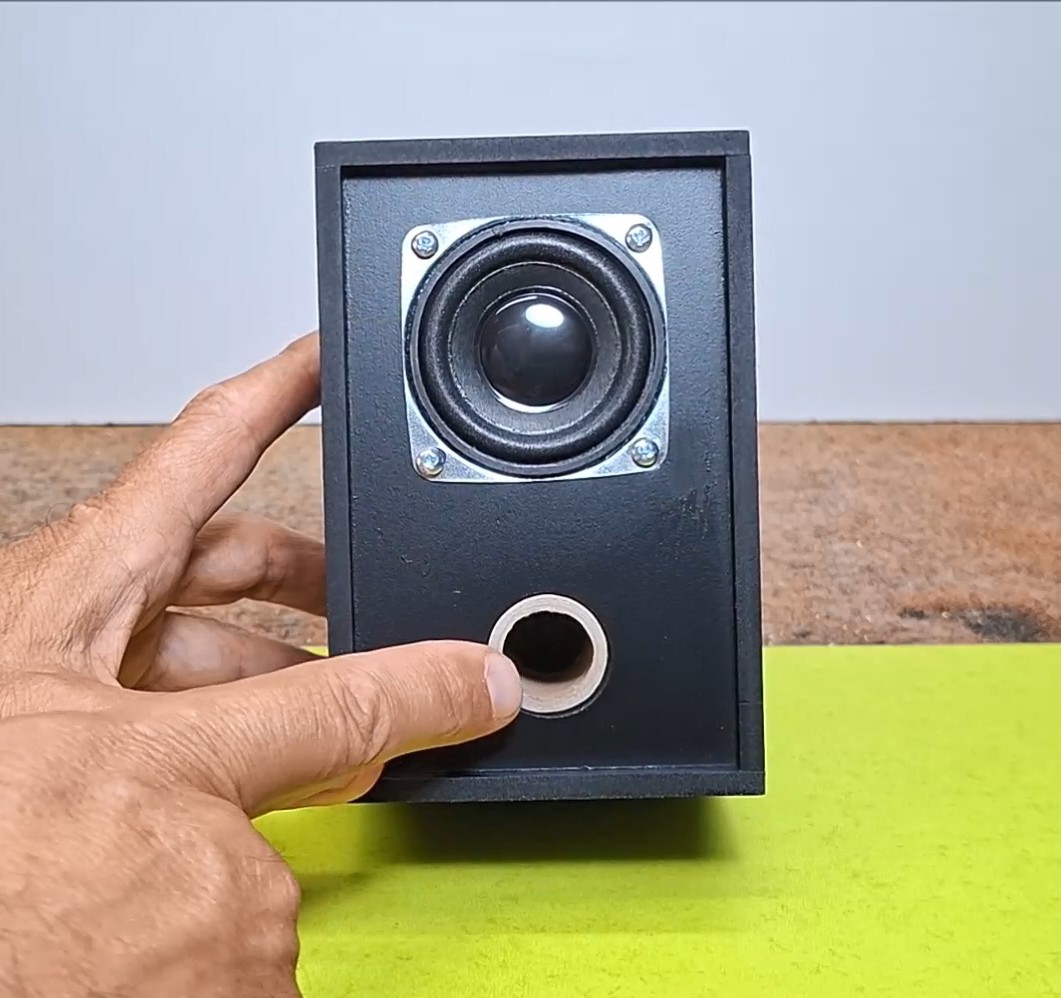
Specifically, this box has outer dimensions centimeters, and the bass reflex tube has a diameter of 18mm and a length of 43mm and is placed at a distance of 23mm from the bottom wall of the box. It is made of 5mm PVC material, which, with its strength and workability, is ideally suited for this purpose. There is an appropriate connector on the back, and this is the inside where you can see that it is properly damped with pieces of sponge.
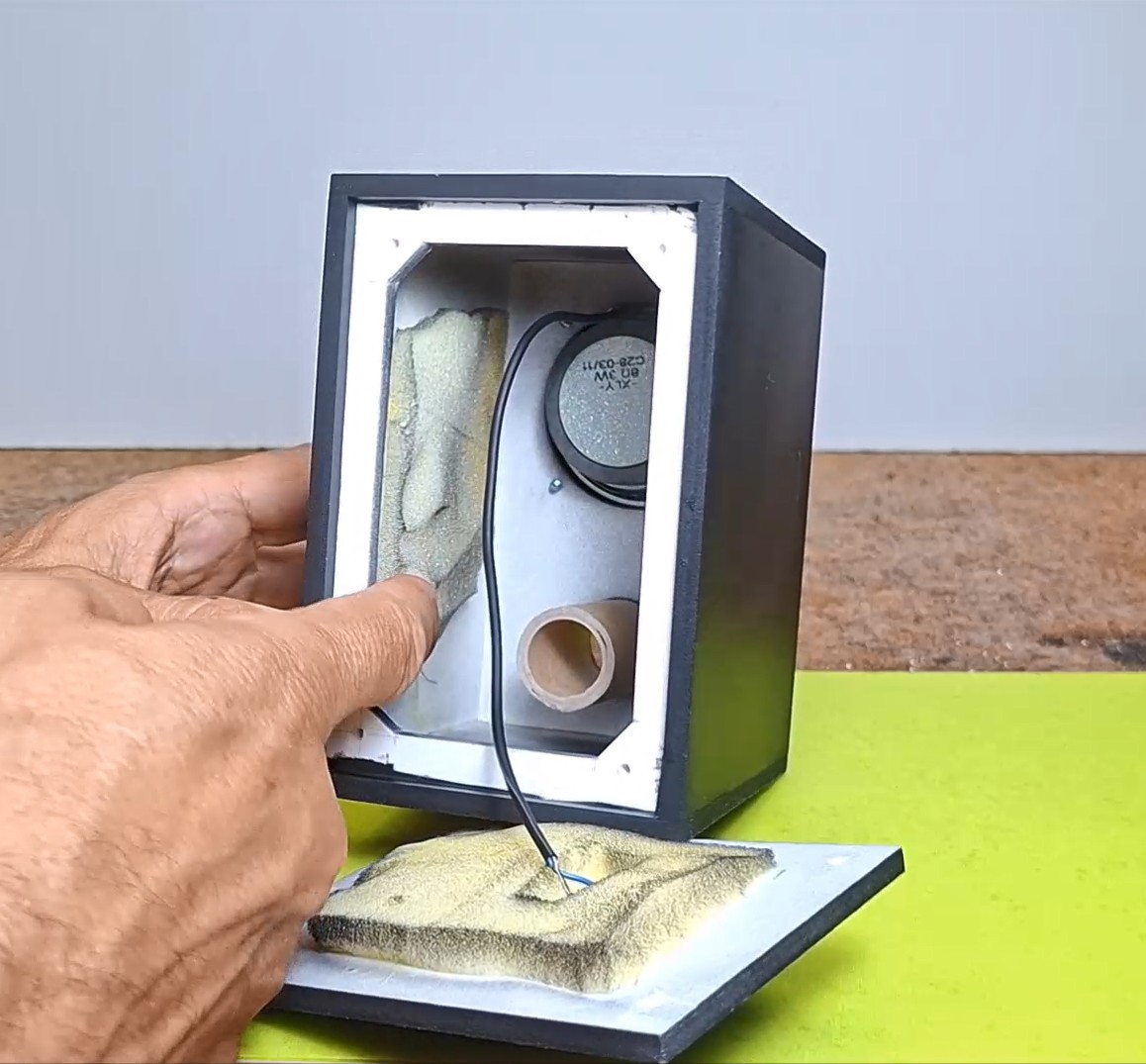
The speaker is mounted with 4 screws on the front at a distance of 35mm from the top plate. The next box is of the compression type, which means that there is no opening on either side of the box. This is the most commonly used type of sound box in practice, it is much easier to design, and generally gives good results especially when using small drivers.
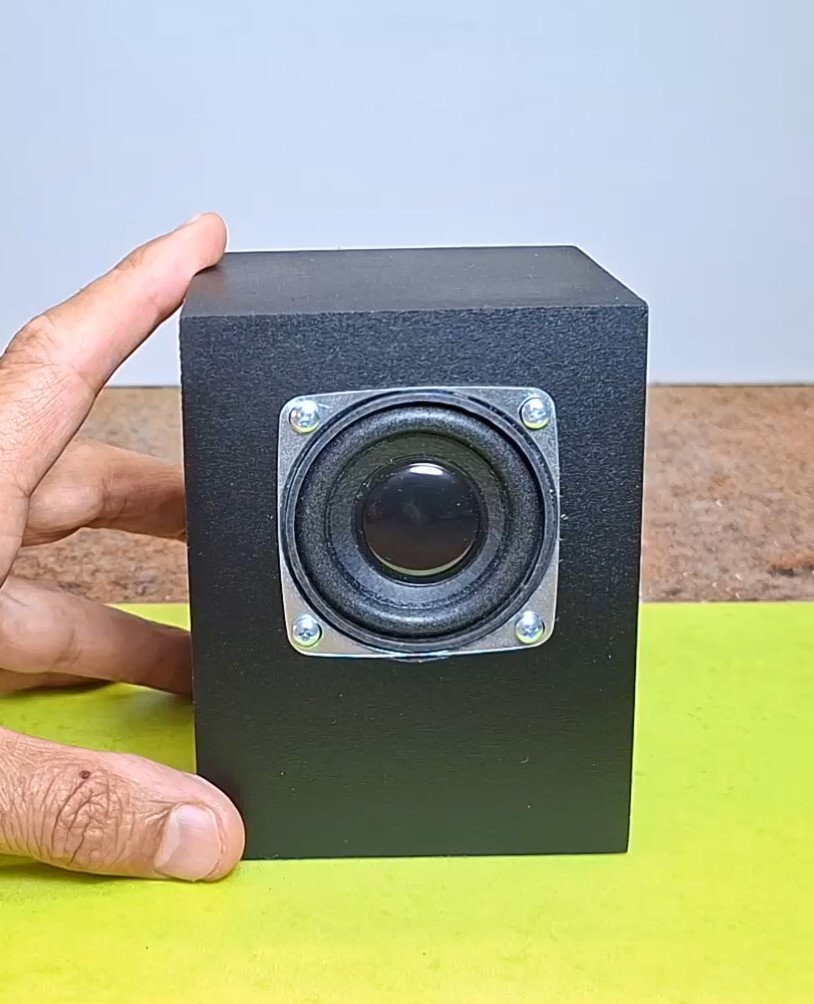
It is made of the same material as the previous ones and has a connector on the back, and the interior is also damped with sponge. The speaker is mounted in front at a distance of 45mm from the top plate, according to calculations specifically for this box.
Now comes the most interesting part, which is a comparison of the sound characteristics of the three types of speakers placed one next to the other and driven by an identical audio signal. This way we will be able to feel the difference between them best. Especially for this purpose, I have created a small electronic project for switching the signal of the three speakers with appropriate LED signaling.
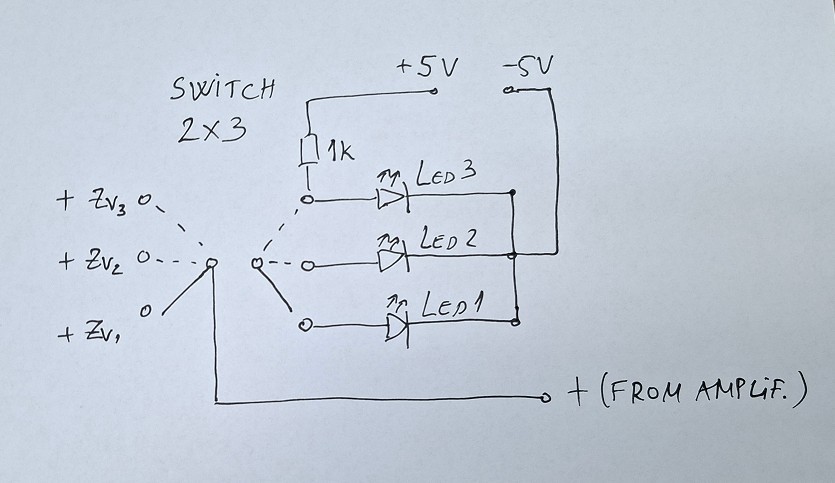
So at the moment the speaker above which the LED will be lit will be active. For this circuit, I use a 2x3 mechanical switch and three LEDs with a current-limiting resistor on the cathodes and a power supply. The audio signal will have a power of 2-3 watts and is identical for the three speakers. Here is what the entire test setup looks like with the selection of an appropriate speaker that will emit the audio signal.
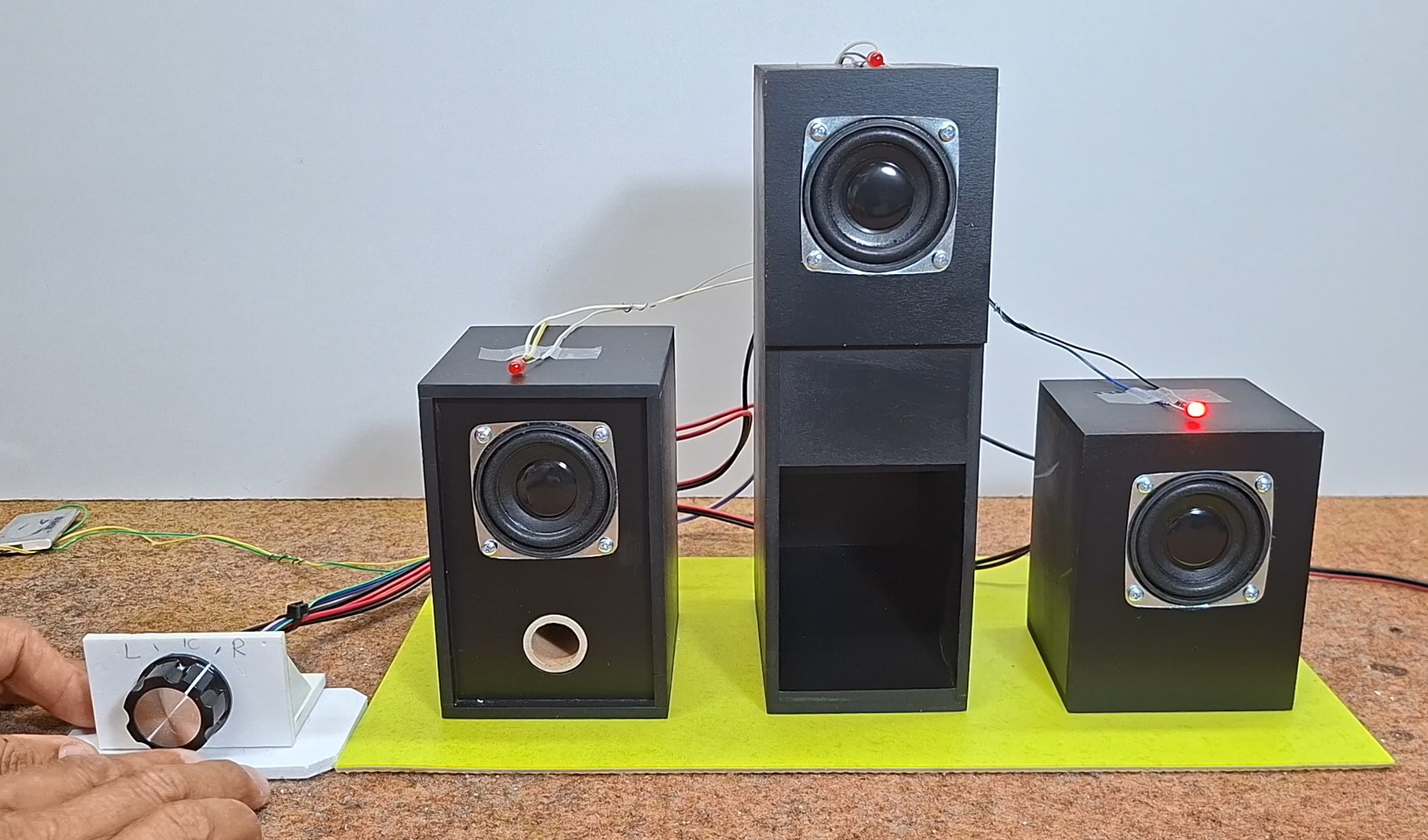
During the testing I will use audio materials from the YouTube database of copyright-free songs. For a better comparison I will listen to songs that contain predominantly Bass, then predominantly midrange (instruments), and predominantly treble. Unfortunately, you will not be able to capture the exact sound through...
Read more »