 Xavi Paz
RetroBox Modem
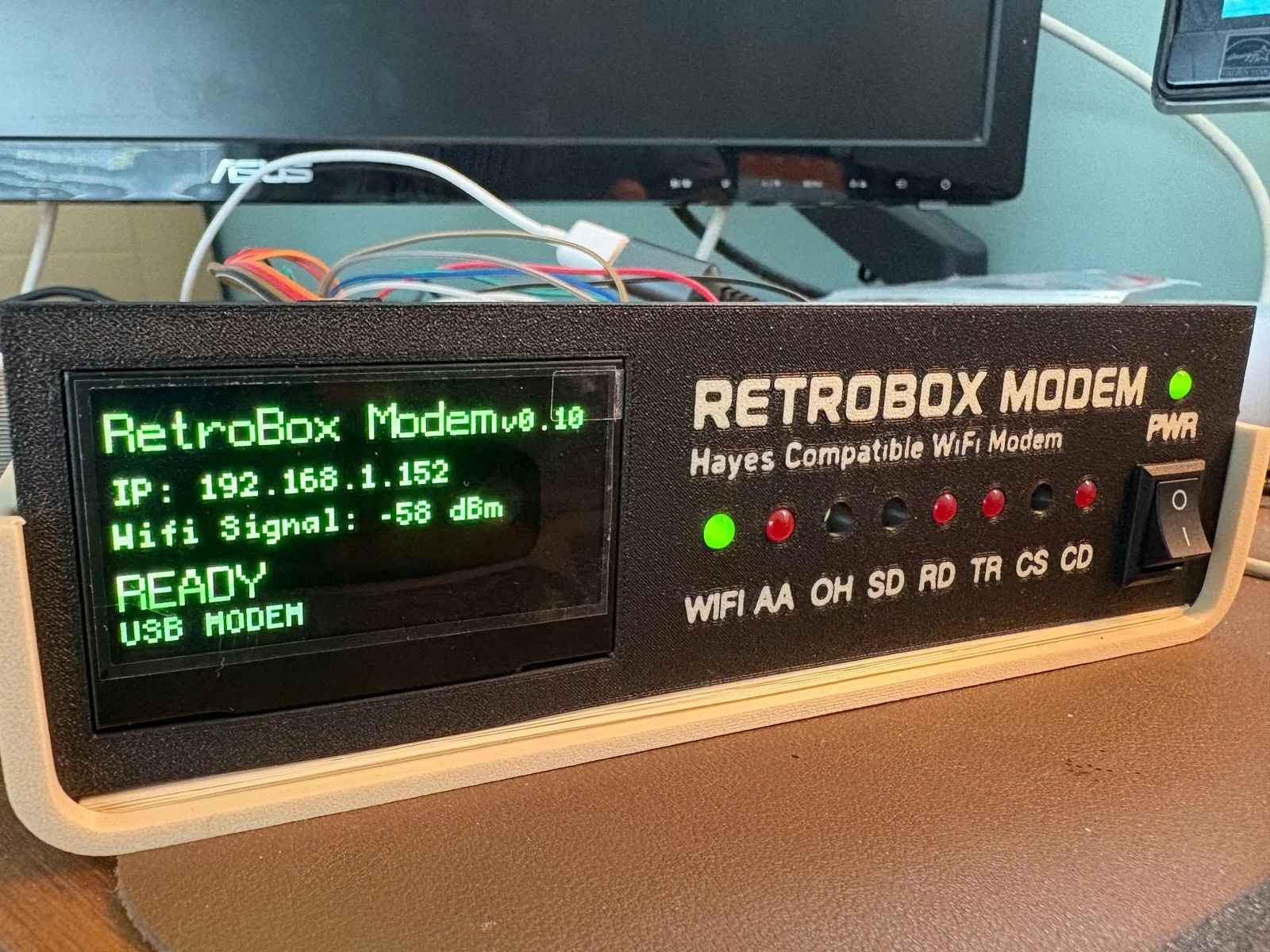
RetroBox Modem is a project I started while researching and writing BBS Before the Web, a book about the history of Bulletin Board Systems, modems and the online world that existed before the Web.
Part of the reason for writing the book was surprisingly personal. My children had grown up with the Internet simply being there, and I realised how difficult it was to explain what it felt like when connecting two computers meant dialing a telephone number, listening to a modem negotiate and waiting for a CONNECT message to appear.
While researching that history, I eventually decided that writing about the experience wasn't enough.
I wanted to rebuild part of it.
That became RetroBox Modem.
What is RetroBox?
RetroBox is a Hayes-compatible WiFi modem for both vintage and modern computers, built around a Raspberry Pi Zero 2 W.
A computer communicates with RetroBox much as it would have communicated with a traditional modem:
AT
OK

ATD...
CONNECT
The computer does not need to understand WiFi, TCP or Telnet. RetroBox handles that side of the connection and presents a familiar modem-like interface to the machine.
Vintage computers can connect through an appropriate serial interface, while modern computers can use USB serial.
The result is that the same device can be used from machines separated by several decades.
More than a WiFi-to-serial adapter
There are already excellent ways of connecting old computers to modern networks.
RetroBox has a slightly different goal.
I wanted it to feel like a modem.
That means reproducing many of the details that were part of the experience:
- Hayes-style AT commands
- dialing and connection sequences
- modem result codes such as
CONNECTandNO CARRIER - escape sequence
+++ - return online with
ATO - modem status LEDs
- OLED connection information
- dialing and handshake audio
- configurable connection-speed profiles
- persistent configuration
- BBS favorites and recent connections
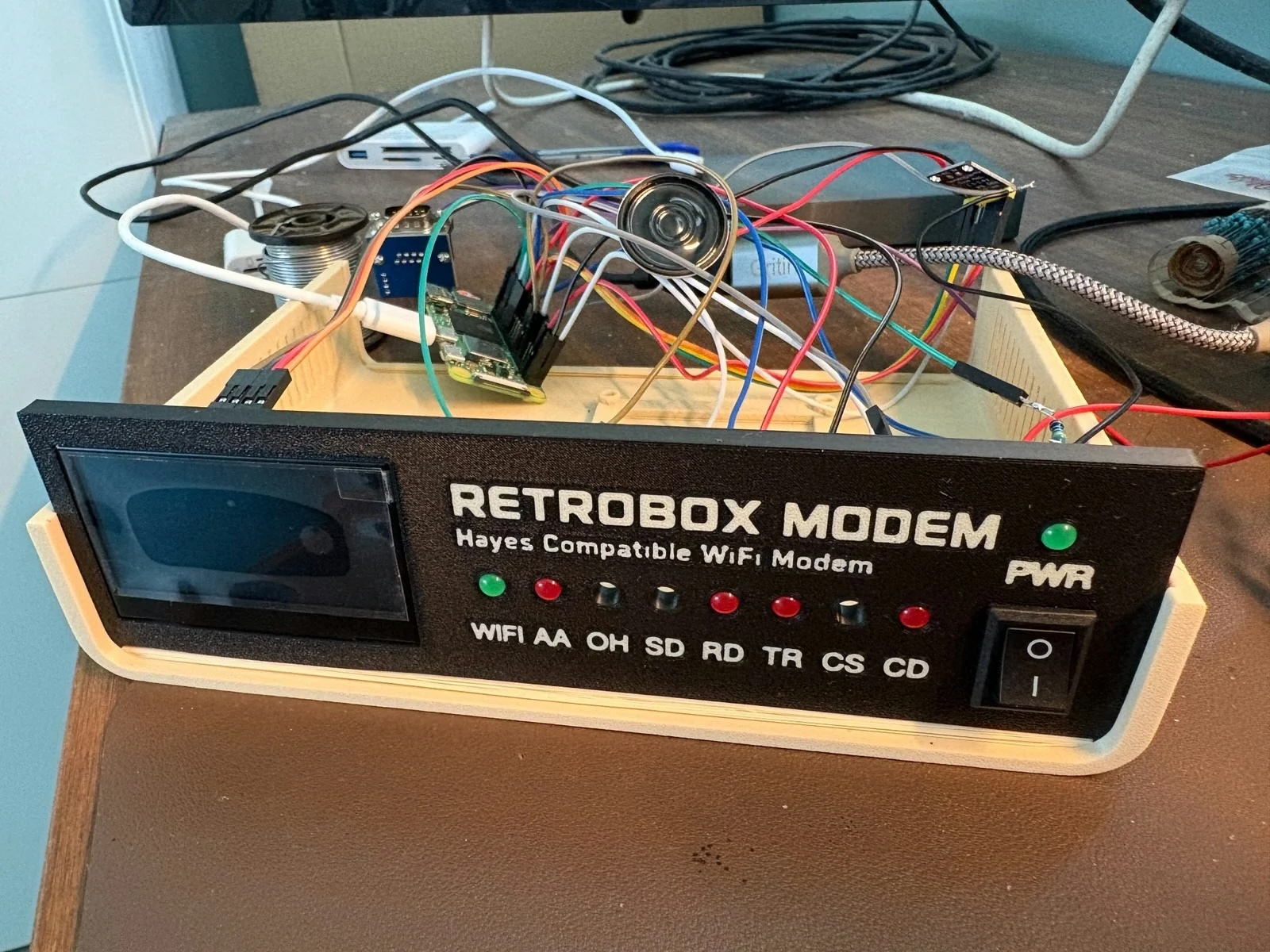
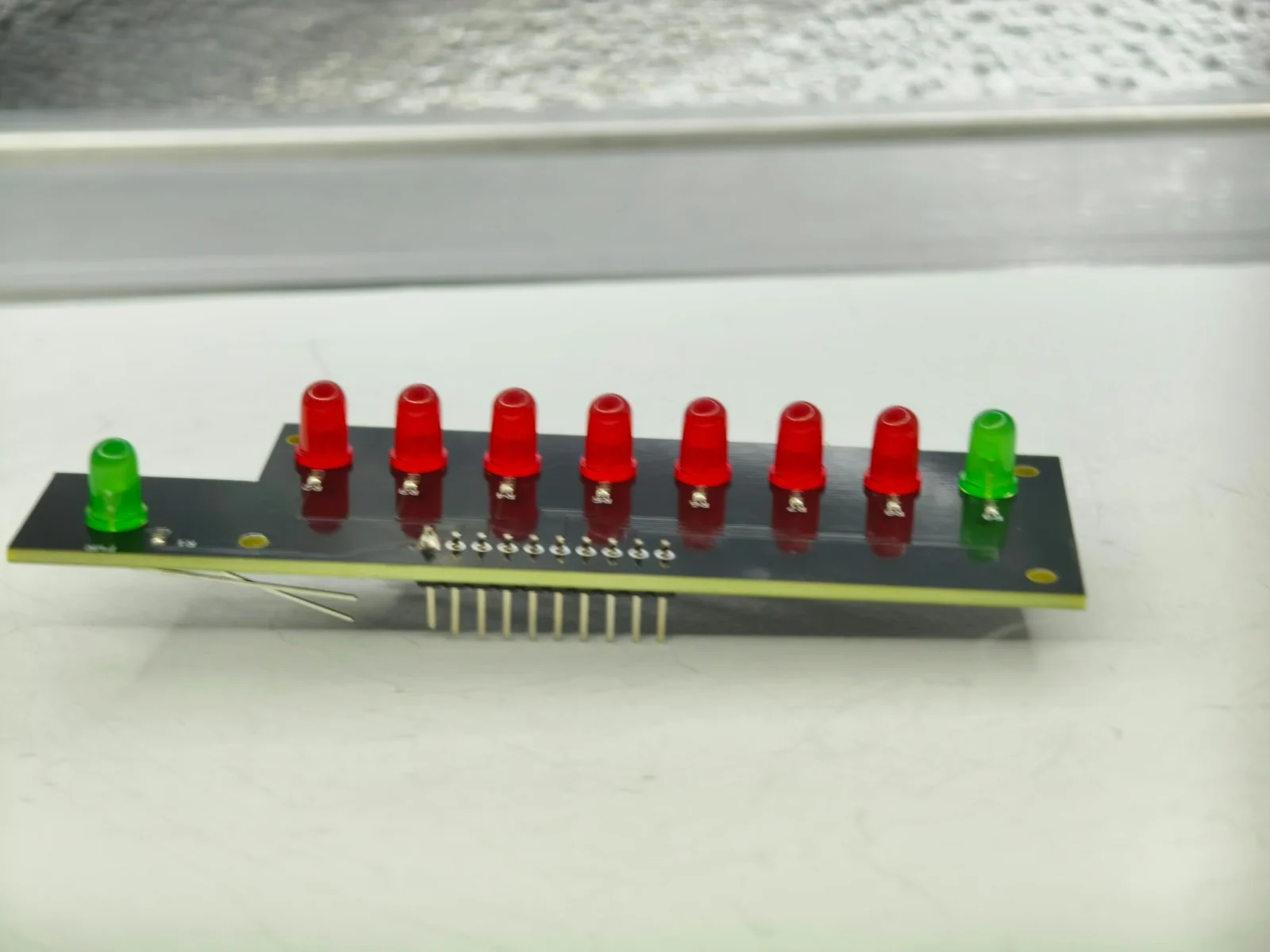
The front panel follows the language of classic external modems, with indicators for:
WIFI AA OH SD RD TR CS CD
and a separate power indicator.
The hardware
The current prototype is based on:
- Raspberry Pi Zero 2 W
- 128×64 OLED display
- I2S audio amplifier
- internal speaker
- status LEDs
- physical power switch
- USB serial interface
- serial connectivity for vintage machines
- custom 3D-printed enclosure and front panel
The enclosure has gone through many iterations while I worked on tolerances, OLED positioning, LED alignment, lettering and assembly.
The current case is designed to resemble the external modems and peripherals that would not have looked out of place beside a computer in the 1980s or 1990s.
Modem personalities and speed
RetroBox can emulate the experience of several generations of dial-up modem.
The current firmware includes modem profiles ranging from V.22bis through V.90, while a separate pacing system controls how quickly data is actually delivered to the terminal.
That distinction lets me experiment with something I find particularly interesting: how different speeds felt.
For example, the same BBS can be experienced with data paced at:
300 bps
1200 bps
2400 bps
9600 bps
14400 bps
28800 bps
33600 bps
56000 bps
At 300 baud, you can actually watch the terminal appear line by line.
At the faster settings, the experience changes completely.
This has also become a useful way of demonstrating just how enormous the perceived difference between modem generations really was.
The sound matters
One of the surprisingly difficult parts of RetroBox has been the audio.
Anyone who used dial-up modems regularly remembers that the handshake was not just noise. Different standards, chipsets and generations of modem had recognisable characteristics.
RetroBox currently reproduces dialing, carrier and handshake sounds, but this part of the project is still actively being refined.
My goal is not simply to play a generic "modem sound". I want the sound profiles to become increasingly representative of the standards they are supposed to evoke.
That work is ongoing.
Connecting to a real BBS
RetroBox does not connect to a simulation.
It connects to real BBS systems that are online today.
A typical session still begins with the same little ritual:
AT
OK

ATDhostname:port
After the dialing and handshake sequence:
CONNECT
and the terminal becomes part of a BBS again.
The underlying transport is modern.
The experience presented to the computer deliberately isn't.
Tested on old and new computers
I have been developing RetroBox from modern computers, but I also wanted to make sure it worked where it really matters: on actual older machines.
The prototype has already been tested with 486 and Pentium-era PCs, as well as modern computers.
The intention is to continue expanding support for other vintage platforms and serial interfaces as development continues.
Why build this in 2026?
RetroBox isn't intended to pretend the Internet never happened.
For me, the interesting part is allowing old computers to do something meaningful again using the interfaces and interaction model they were designed for.
There's also something wonderfully unnecessary about typing:
ATDT
in 2026.
That is probably reason enough to build one.
The project is still evolving, and I am continuing to refine the hardware, enclosure, firmware, serial interfaces and perhaps most obsessively the sound.
3D printing the enclosure
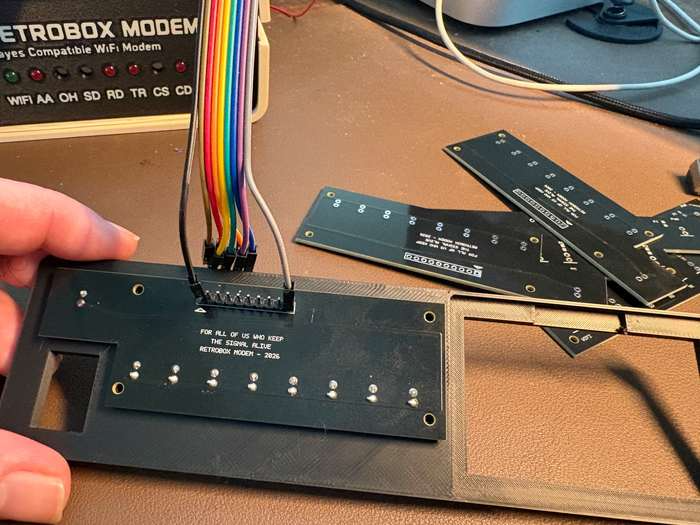
The enclosure has been an important part of the project from the beginning.
Rather than using an off-the-shelf box, I wanted RetroBox to look like something that could plausibly have sat next to a computer in the 1980s or 1990s, while still accommodating modern hardware inside.
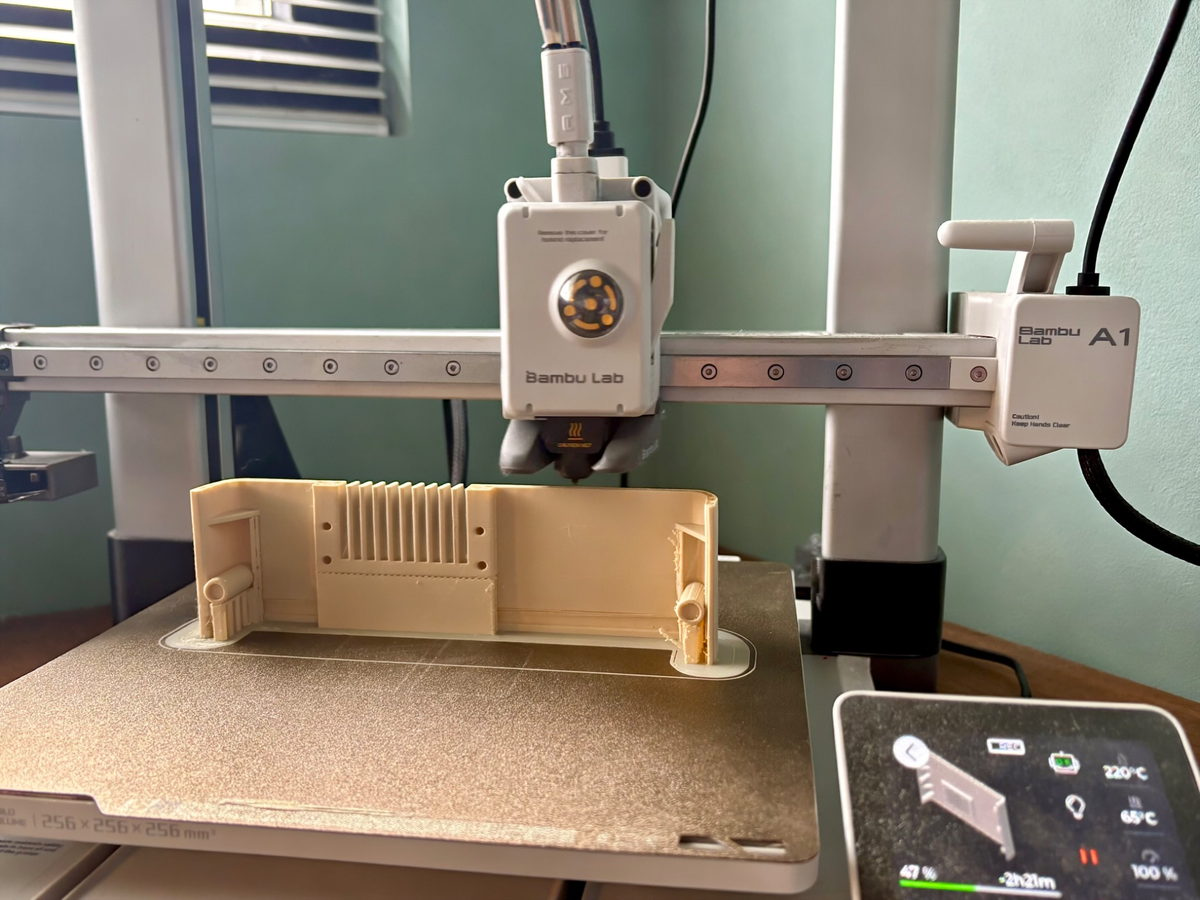
The case has gone through many printed revisions while refining details such as:
- OLED position and clearance
- LED hole diameter and alignment
- PCB mounting posts
- front-panel lettering
- rocker-switch fit
- internal spacing
- ventilation
- screw and insert placement
- two-color front-panel printing
The current enclosure is printed in a warm vintage-computer cream with a black front panel, using a Bambu Lab printer. A lot of the development has been less about making it look “retro” and more about getting all the tolerances right so the electronics actually fit and the front panel looks clean after printing.
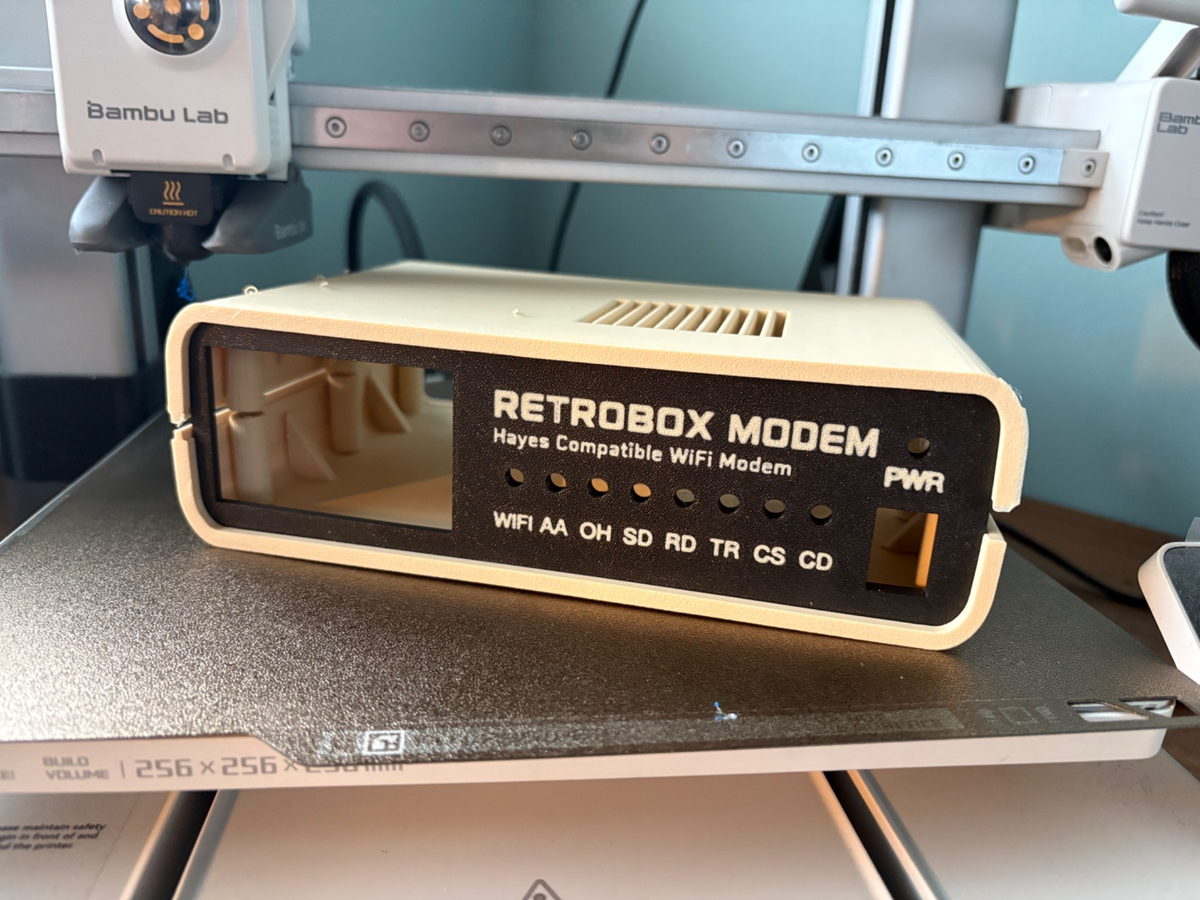
One of the things I enjoy most about the project is that the enclosure can evolve together with the electronics. A change in a connector, PCB position or display placement can be tested in a new physical revision rather than remaining only as a CAD drawing.
That iterative process has become a significant part of RetroBox itself.
The book behind the research
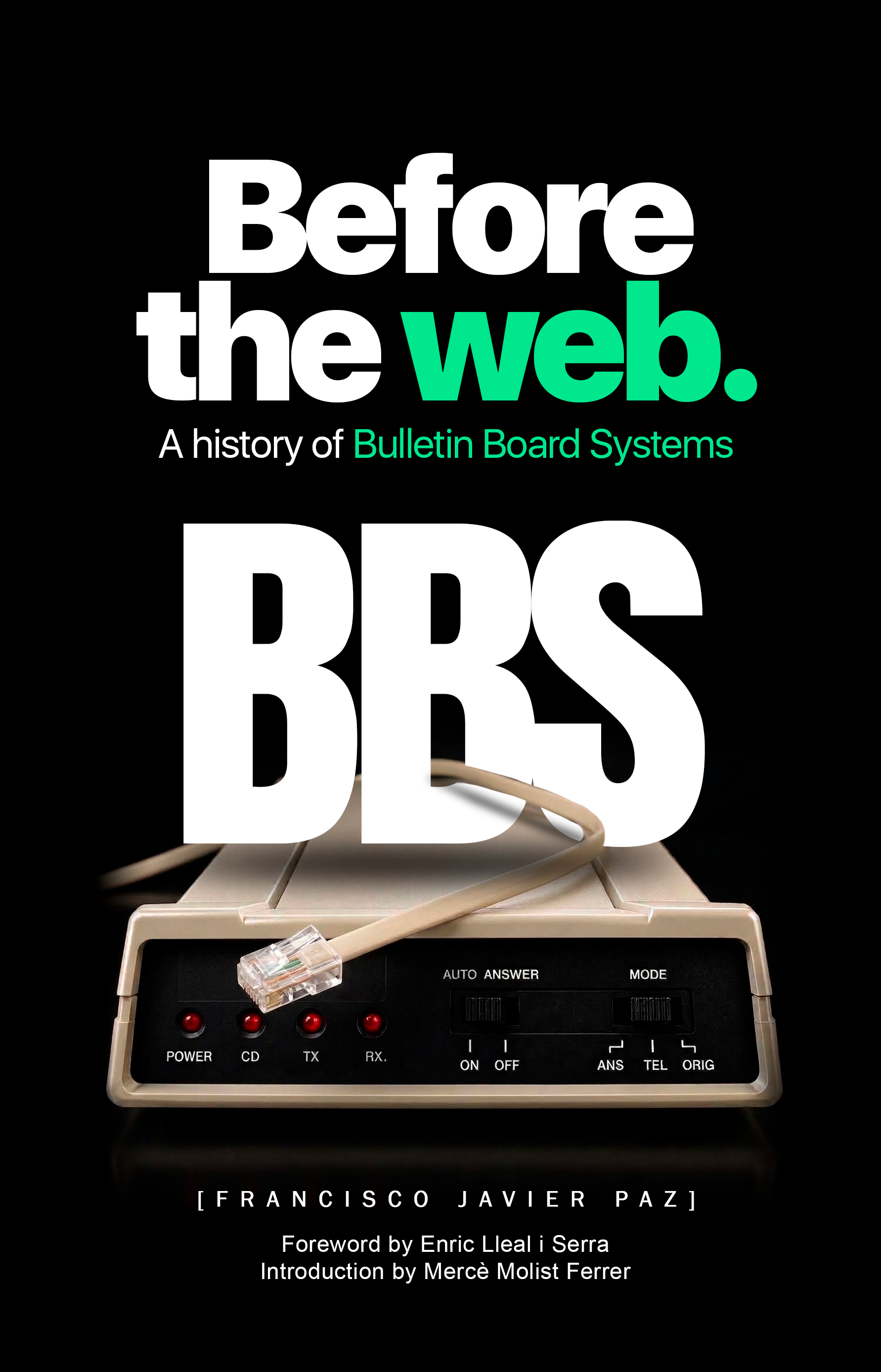
Alongside RetroBox Modem, I have been working on BBS Before the Web, a book about the history of Bulletin Board Systems, modems and the communities that grew around them before the Web became mainstream.
The book goes much further than the RetroBox project itself. It brings together technical history, personal accounts, old publications and stories from people who actually ran, used and built BBS systems in different parts of the world.
In a way, the two projects complement each other.
The book documents the history. RetroBox lets you experience a small part of it again.
BBS Before the Web is currently in its final stages and will be available soon in English & Spanish.
The line is open again!