 S.I.
S.I.Hi everyone, I’m a KOSEN (National Institute of Technology in Japan) student, and together with my friends, I am building a DIY Quantum Computer using the Earth's Field Nuclear Magnetic Resonance (EFNMR) method. In this log, I’ll share the backstory of how I ended up building a quantum computer from scratch and give an overview of the project.
The Origin Story: Why I Decided to Build a Quantum Computer
My First Encounter with Quantum Mechanics and a Middle School Science Project
I first learned about quantum mechanics when I was in my second year of middle school (8th grade). I was immediately captivated by the fact that, despite how surreal and counterintuitive quantum theory seems, it is the very foundation of how our world operates. Driven by this fascination, I conducted a science project measuring the width of slits by performing a double-slit experiment using everyday items (a CD, a holographic card sleeve, and a screen privacy filter).
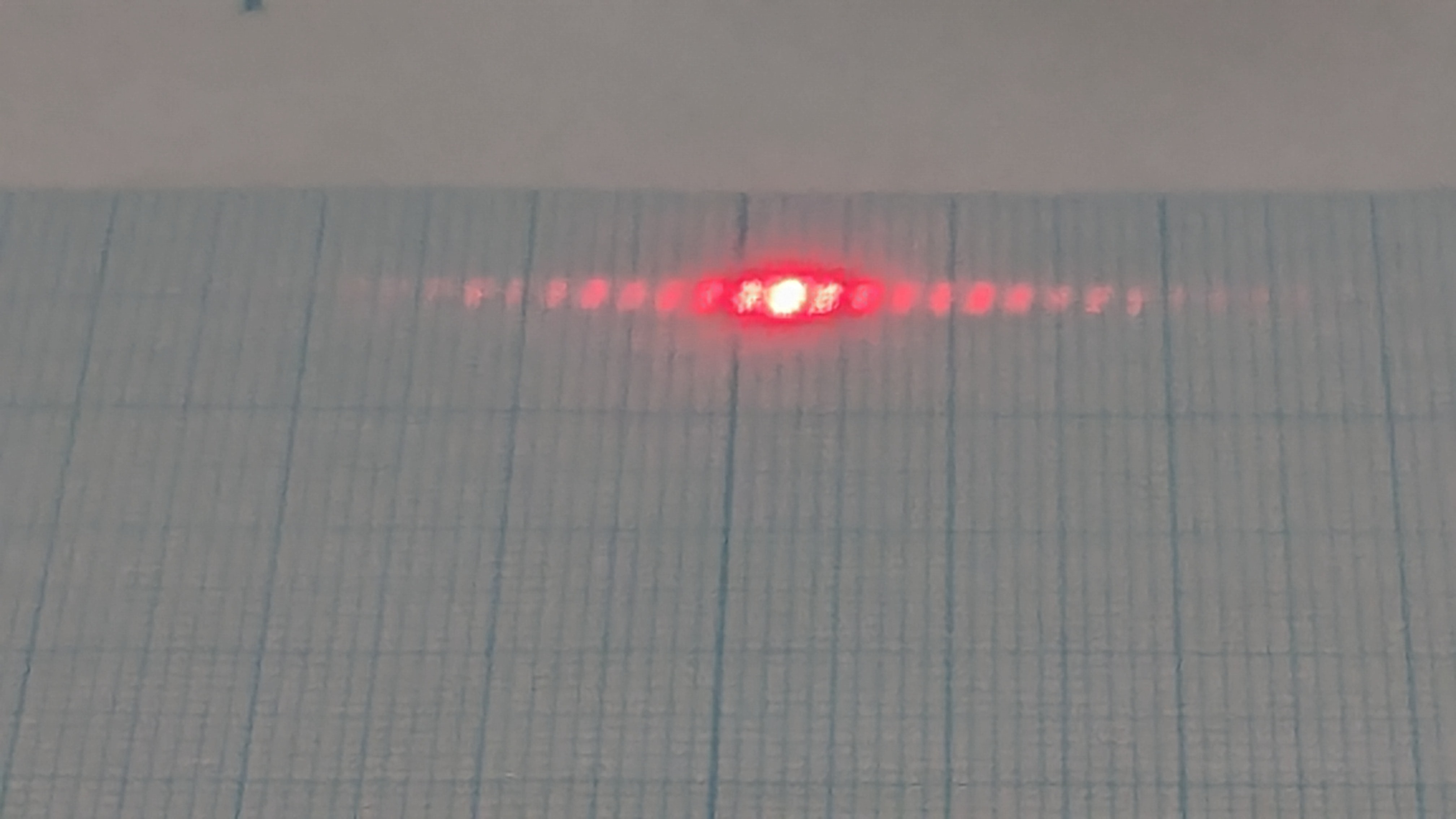
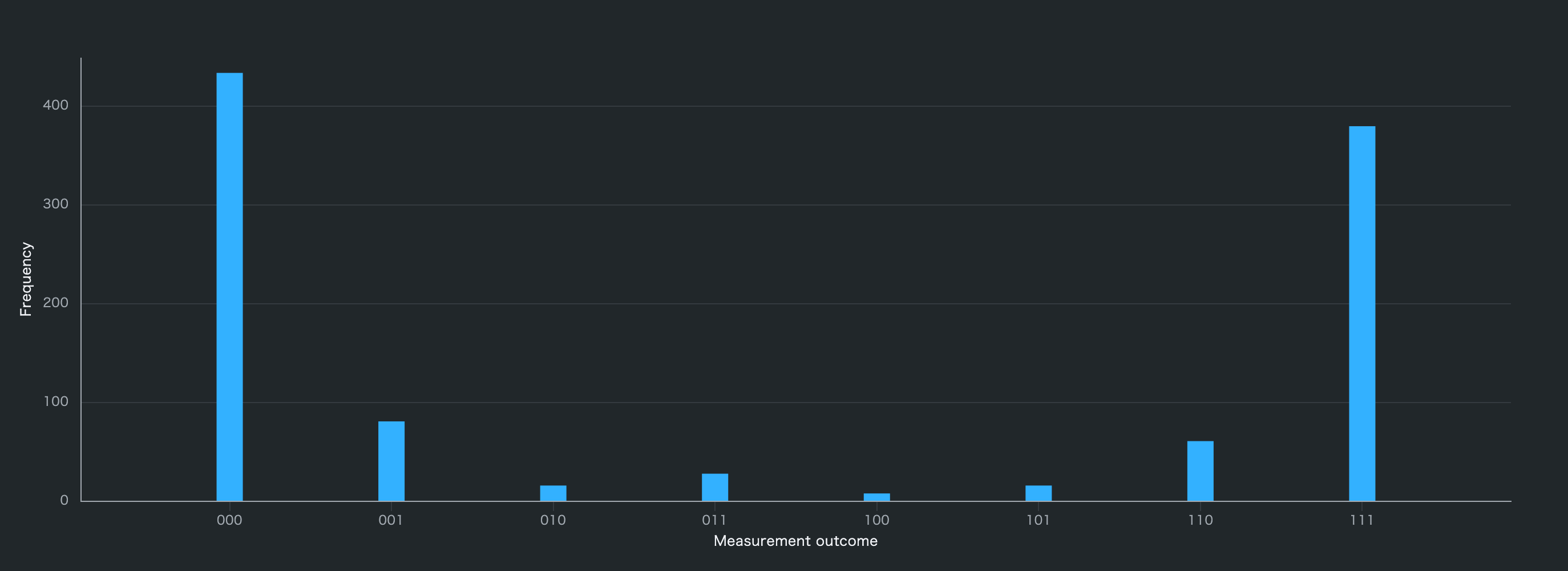
Later, I read a book about "Quantum Supremacy," which introduced me to quantum computers. The idea of fusing my love for quantum mechanics with my passion for making things (hardware DIY) completely hooked me. In my third year of middle school, I used the IBM Quantum Composer to verify quantum algorithms for another project. It was then that I decided I wanted to become a hardware engineer for quantum computers in the future.
The Hardware Wall: Lack of Access
While I was able to get my hands on the software side of quantum computing, the hardware—which I am far more interested in—was completely out of reach. Aside from facility tours, there was almost zero opportunity to actually touch or interact with it. Since I was a kid, my motto has always been: "If it doesn't exist, build it." So, in middle school, I looked into whether I could build a quantum computer myself. However, I found out it would cost a minimum of 300,000 JPY (around $2,000), which forced me to give up at the time.
Discovering the EFNMR Method
After enrolling in KOSEN, I was determined to take some kind of action regarding quantum computers. I obsessively researched DIY quantum computing again and discovered that by using the Earth's Field Nuclear Magnetic Resonance (EFNMR) method, I could start a project for about 100,000 JPY (around $700).
Knowing this was my chance, I fully committed to building an EFNMR quantum computer. I immediately dove into the details and started by simulating the signals using Python.
EFNMR Quantum Computer Project Details
Operating Principle
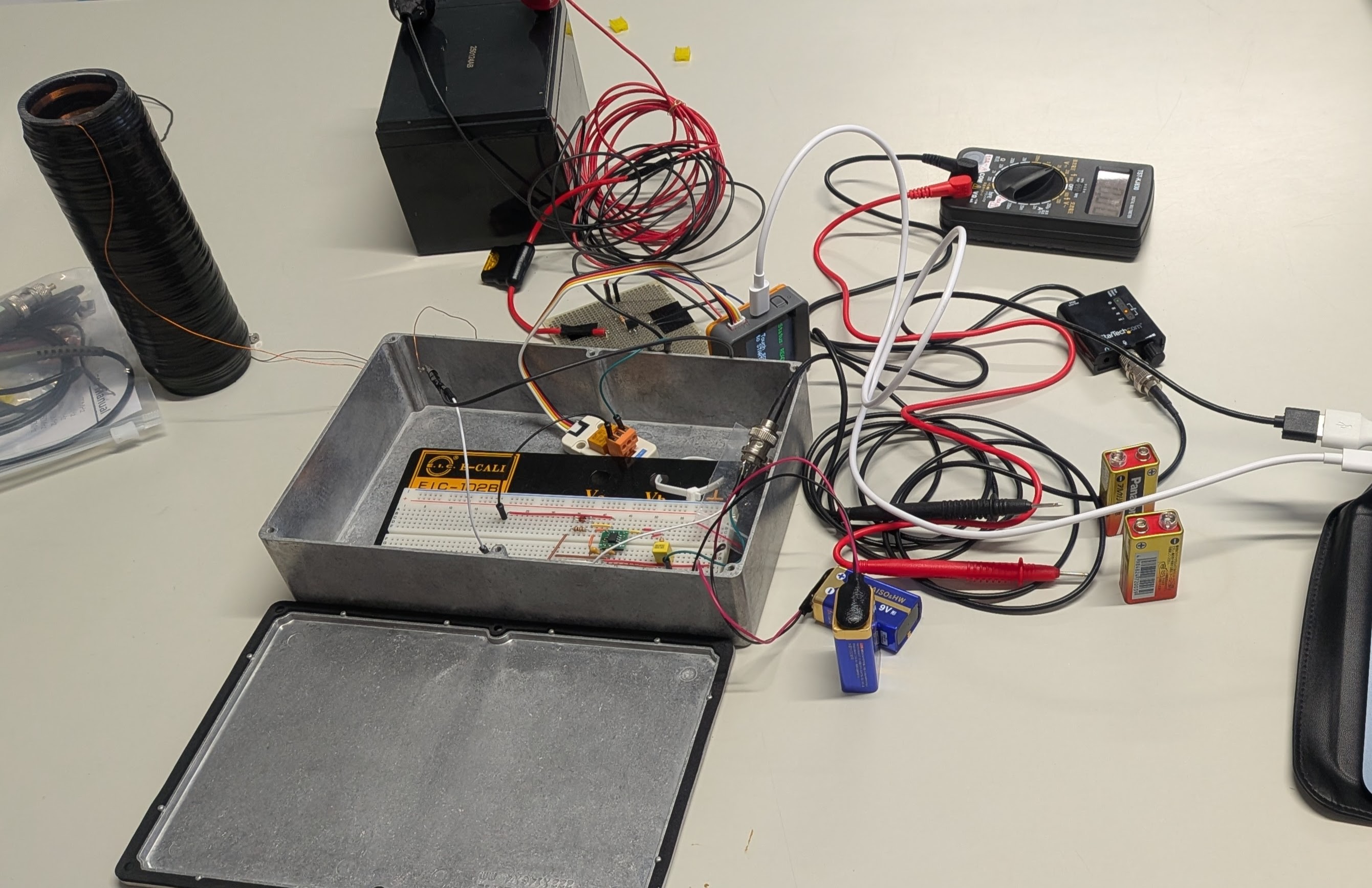
- Spin Initialization (Polarization): We run a massive current through a large coil to align the proton spins (in pure water) with the magnetic field, setting the qubit to the |0⟩ state.
- Sequence Switching: Using a MOSFET and a relay unit, we switch the circuit between the high-current coil phase and the highly sensitive signal-reading phase.
- Signal Amplification: When the spins precess and try to return to their original state aligned with the Earth's magnetic field, they emit a microscopic signal (FID signal). The coil captures this, the amplifier circuit boosts it, and it is fed into the PC via a sound card.
- Analysis: The signal acquired in step 3 is processed using FFT and noise reduction in Python to observe the quantum state.
System Configuration
- Microcontroller: M5Stack
- Sensor Coil: 250 meters of 0.5mm enamel wire, painstakingly hand-wound around a PVC pipe.
- Proton Sample: Pure water
- Polarization Circuit: Fully sealed Lead-Acid Battery (to prevent power supply noise), MOSFET, Fuses.
- Amplifier Circuit: Ultra-low distortion/noise Op-Amps (AD797BRZ), Film Capacitors, Fast Recovery Diode.
Development Logs: Past and Future
I have been publishing my past development logs as a "Book" on Zenn (a Japanese tech blogging platform). However, I used AI to help write the text for those past logs because I actually started this project around April 2026, but only began writing articles in September 2026, so I had a lot of catching up to do.
*Note: From now on, I will be writing all project logs manually, without AI generation.*
Currently, we have finished building all the hardware modules and have successfully received the FID signal! However, we are currently struggling with dead-time and severe noise issues, so the signal isn't clean yet. Future logs will cover our battles with noise reduction and circuit optimization.
Democratizing Quantum Computer Hardware
As I mentioned earlier, I have suffered from a severe lack of access to quantum hardware. I believe that in the near future, quantum computers will become just as critical to society as AI is today. If we don't have access to quantum hardware now, we will be left behind. We are already seeing a massive gap between those who understand and utilize AI and those who don't.
Everyone needs to start learning about quantum computers right now, even just a little bit. And there is a huge difference between knowing the theory and actually touching, seeing, and experiencing the hardware. Engineers and students who are interested must have access to both the software and the hardware.
Right now, anyone can try quantum software, but hardware remains locked behind closed doors. Hardware needs an environment where anyone can touch it, just like software!
That is why, through this project, I want to create a pathway for students and engineers who want to tinker with quantum hardware. My ultimate goal is to develop a cheap, easy-to-build DIY quantum computer and open-source the entire design on the internet!
My personal goals for this project are to build this machine, acquire the engineering skills necessary for the future, and share this accessible quantum hardware with the world.
Thank you for reading, and I hope you follow along with our journey!
Trivia: The Origin of the Name "NMRQCP"
"NMRQCP" is both my profile name and the name of this entire project. It stands for Earth's Field Nuclear Magnetic Resonance Quantum Computer Project. "EFNMRQC" was a bit too long, so I dropped the "EF" and added a "P" for Project, resulting in NMRQCP.
Discussions
Become a Hackaday.io Member
Create an account to leave a comment. Already have an account? Log In.