 strange.rand
Why
Most DIY access control projects I've seen let the device decide. A fingerprint module does the matching itself and talks to the ESP over a plain, unauthenticated UART, or a reader checks a card and sends the command that opens the lock. It's relatively easy to get to that wiring and make the device say "match is OK". A few modules do encrypt that link, but the key sits in the ESP's flash, and the same ESP still opens the door, so owning the ESP still means owning the door.
This project turns that around: the reader in front of the door is deliberately dumb.
The idea
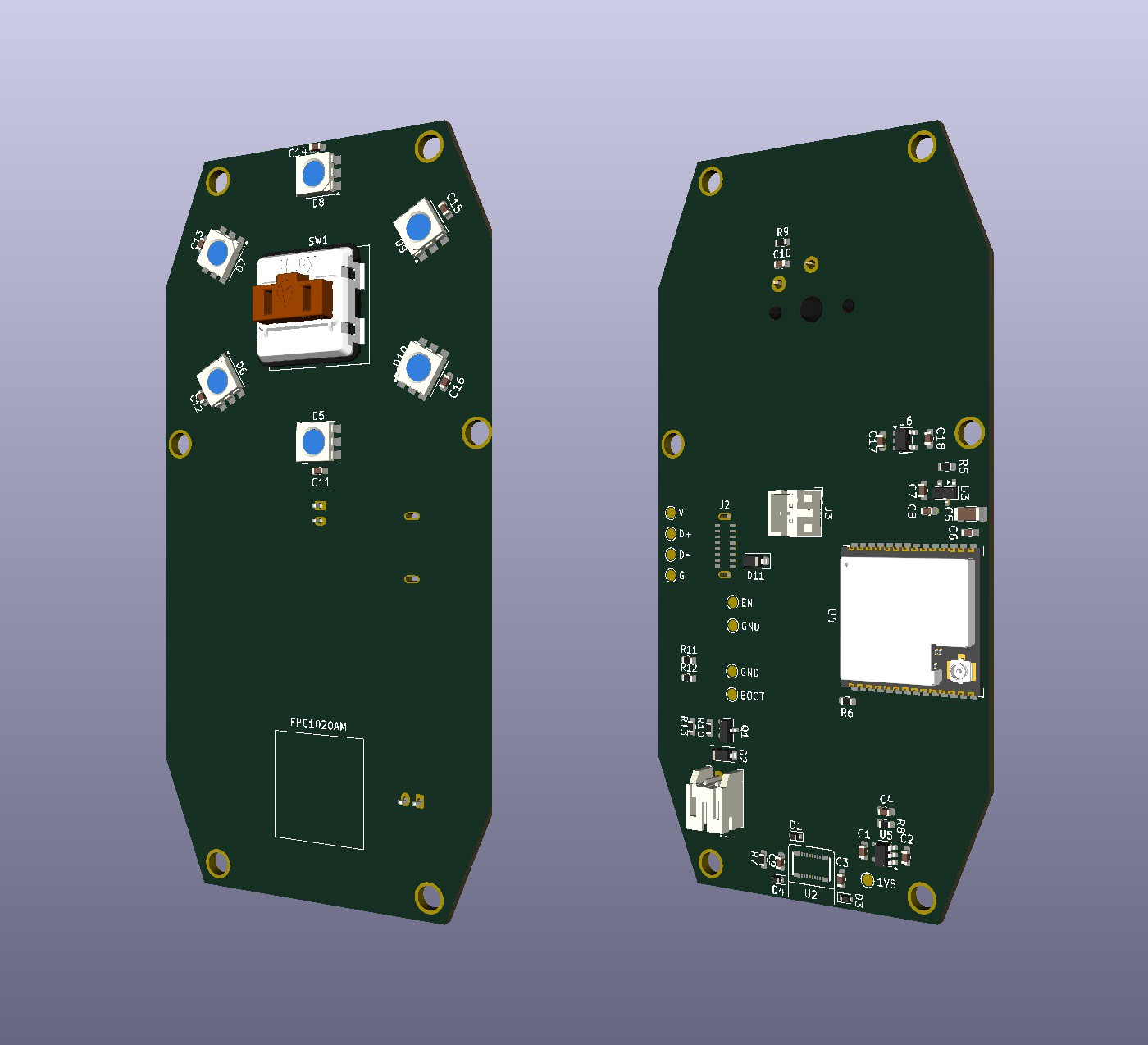
- The reader is an ESP32-S3 with an NFC front end, later also a bare fingerprint sensor and a keypad for a PIN. It relays what is presented to it and shows the result on an LED ring. It holds no keys and no templates, has no "access granted" logic, and cannot open the lock.
- The server verifies the credential, whatever its kind (phone, card, fingerprint, PIN), and makes the decision. Then it sends the lock a short-lived grant.
- Home Assistant, or any other actuator that accepts the grant, operates the lock. It does not decide who may enter.
Hardware
What I test on now: an ESP32-S3 on Wi-Fi with a PN532 V3 NFC module on SPI (with its IRQ line, which matters for latency), an LED ring for feedback, and a Pixel 10 as the phone.
Planned: a bare FPC1020AM fingerprint sensor, a flex-cable version that comes with the bezel already built in. The lesson from my first boards: the chip drives the finger through a metal bezel, and without one the frames are pure noise. A keypad for PINs may or may not make it onto the board, but support for it in the software is planned either way.
Firmware
An ESPHome external component (ESP32, ESP-IDF) that keeps one WebSocket to the server and relays what the reader captures. Its protocol core has no ESPHome dependency, so it is tested on a host with sanitizers and a fuzzer. The measured time from a phone entering the field to the verdict on the reader is about 245 ms.
Server
A Dockerized ASP.NET server (.NET 10) with SQLite. It verifies credentials, applies the policy, and serves the admin UI (Vue, English and Ukrainian) on its own port, which the reader subnet cannot reach. Administrators log in with a password and an authenticator code, and every change is written to an audit log.
Status
Works
- Unlocking with a phone works on the bench, from the tap to the lock
In progress
- Final work on the phone path
Next
- Long testing of the current stage
- NFC cards (DESFire, NTAG 424 DNA)
- Fingerprint: the FPC1020AM board with server-side matching and adaptive templates
- PIN and backup codes
Later
- Possibly a Doorbell v2 with a camera, Ethernet, and several power options (PoE among them)