fool
fool-
Human Centered Design
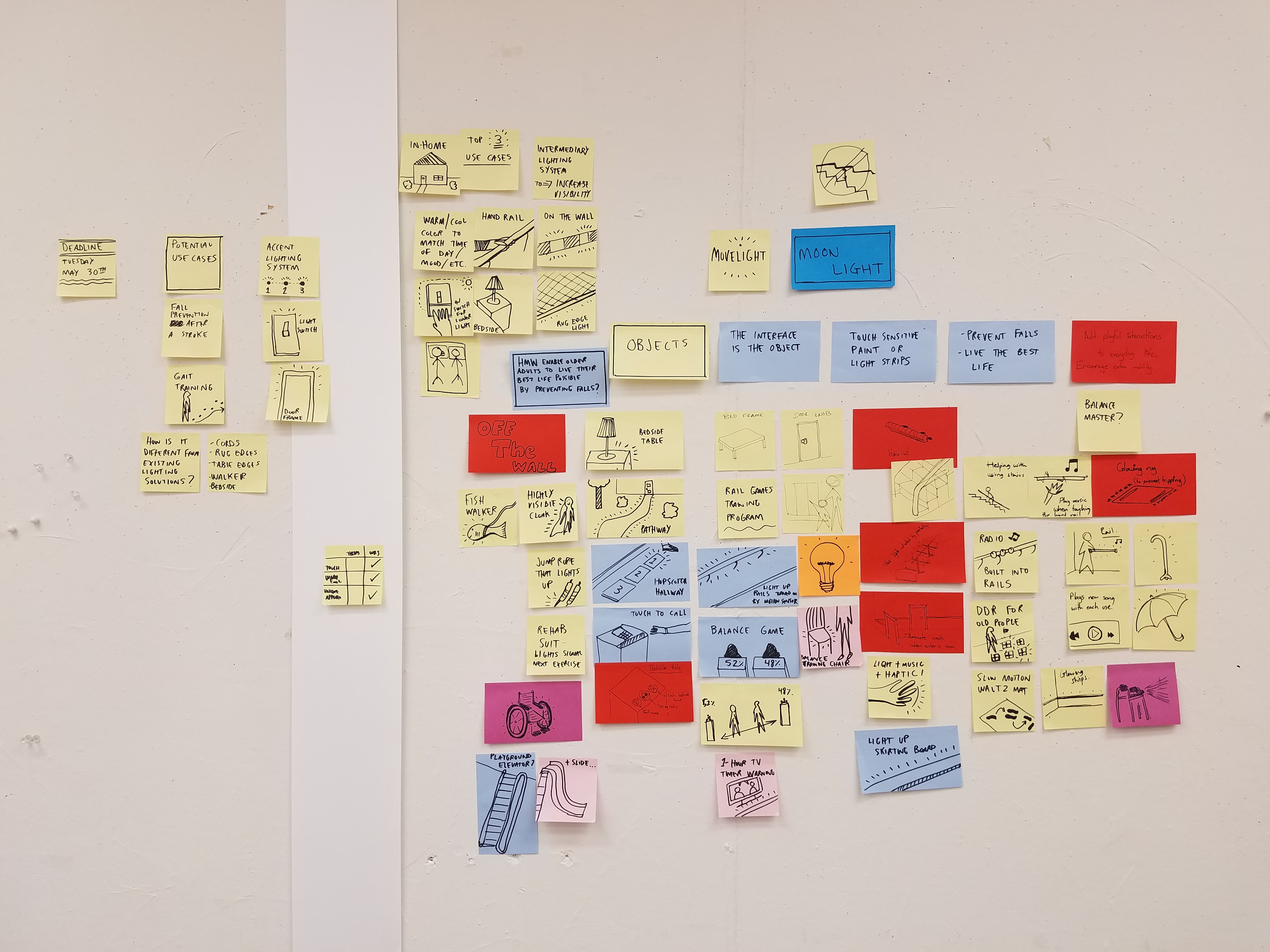
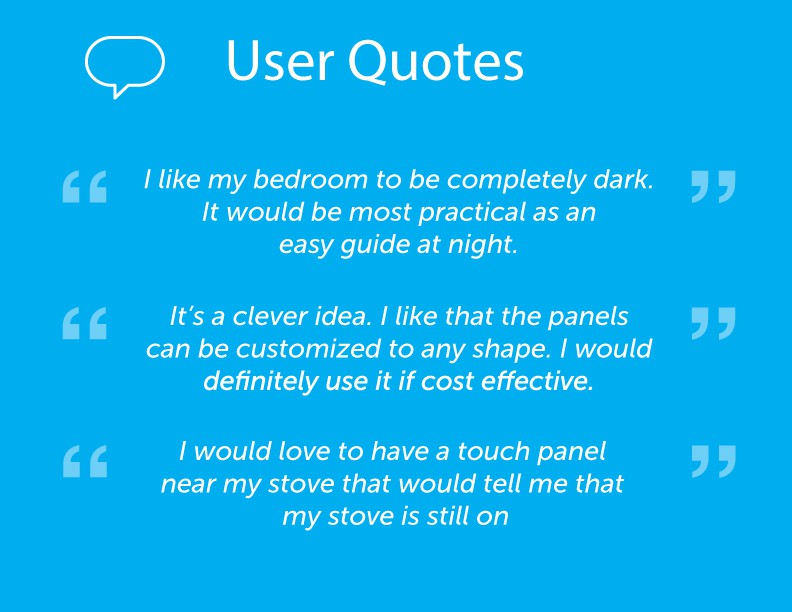
08/08/2017 at 22:29 • 0 comments![]() Means actually going and talking to humans. Thanks to mom, we showed demos to people at:
Means actually going and talking to humans. Thanks to mom, we showed demos to people at: Center for Senior Services, Tennyson Court Assisted Living & Memory Care, Weinberg Campus Retirement Community in Amherst, NY!
![]()
We surveyed everyone from the administrative staff, to nurses to residents.
![]()
Grandma also got involved along the way, and helped us model an application for floor panels!
-
We take an existential detour to find ourselves!
08/08/2017 at 20:03 • 0 commentswwWait one moment, I forget that we have not introduced ourselves.
We are the humans shepherding the "Whoa Board", @whoaboard. Documented it last year. Got a shout out here :O.
We've since opened a store, courtesy of kickstarter. We've shipped those orders (if you supported, would love to hear your thoughts!), but used a few of them to experiment with larger pieces so that we could illustrate some material ideas and test things to make sure they actually work :).
This process started when we were invited to present at Hacking Arts, INST-INT, and SXSW Create (fbook link). Most recently, we attended SIGGRAPH (as part of the STUDIO, here's the program - lot's of VR for breakfast, coincidentally the title of our talk - slides).
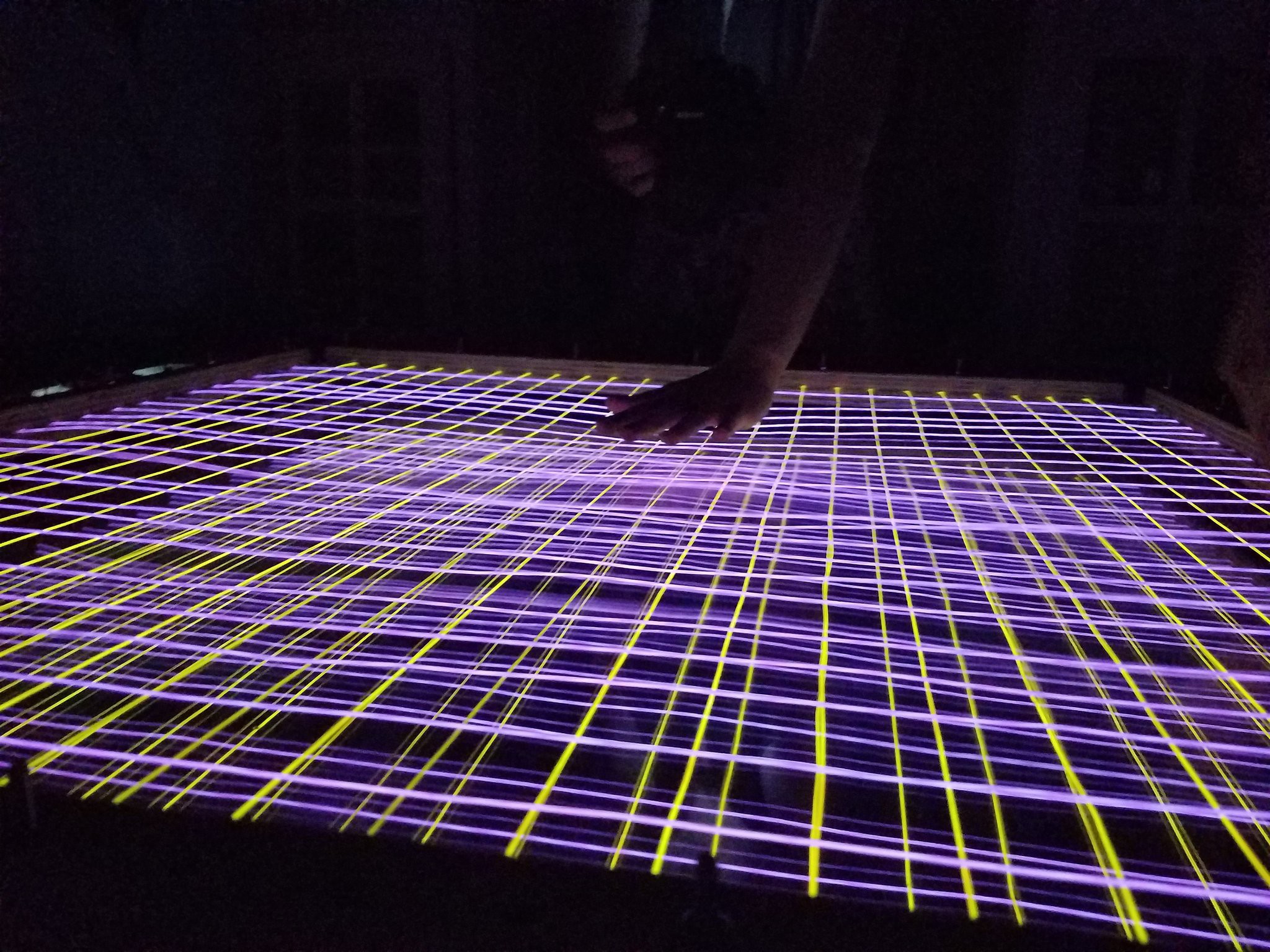
The largest project we've built so far is the Space Frame (designed by @spacecubs) "harp" with 12 Whoa Boards, 48 wires. Each board sends MIDI over USB to a computer running abelton live to make sounds. The "horizontal" (purple) wires trigger a MIDI pulse only where triggered, the "vertical" (orange) trigger it on every on-off, so you hear the wave you see. Audio Signal and Sound Design developed by Zanzie (insta link) (music video en route).
![]()
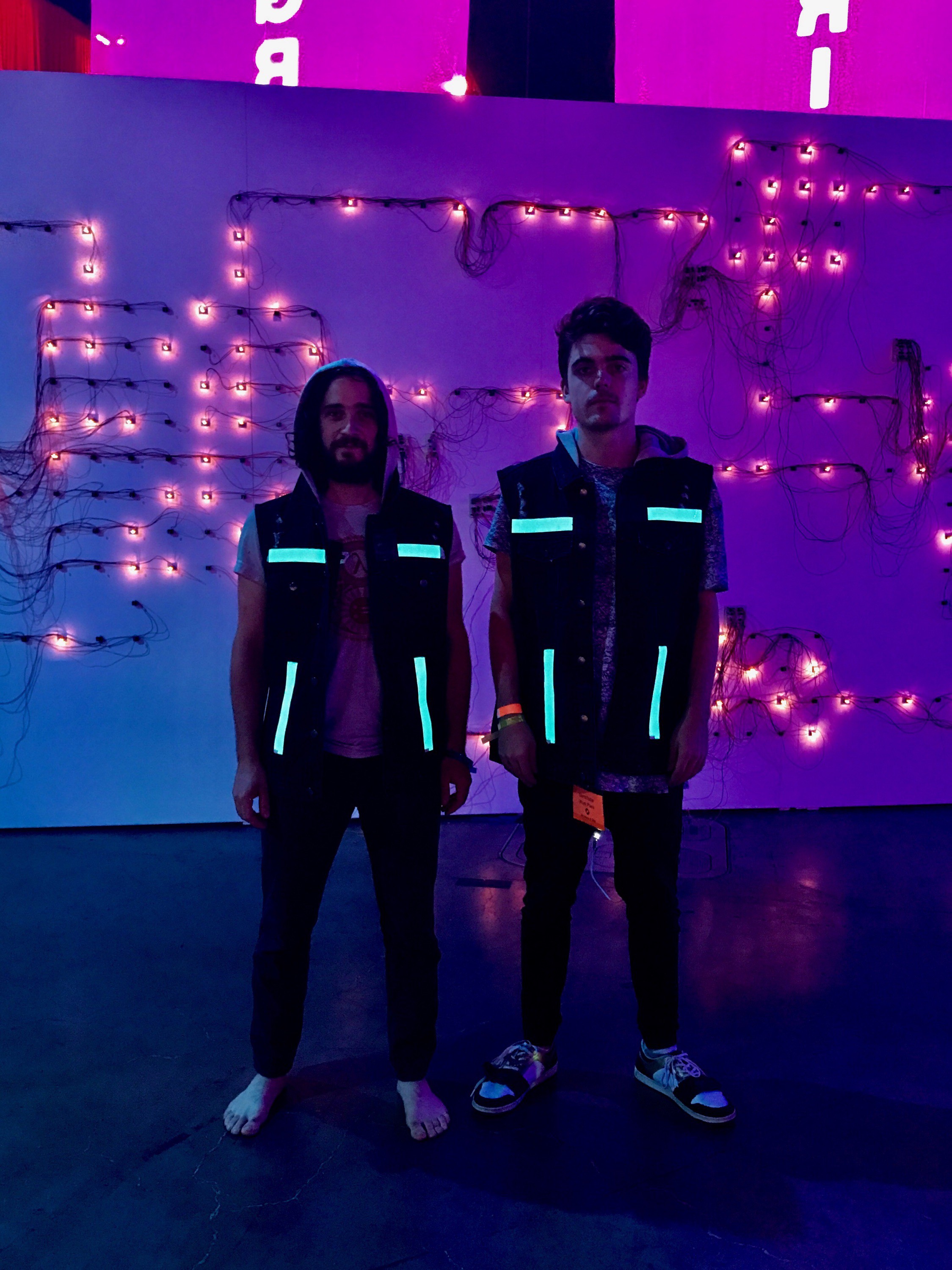
Muffin and Leanne also made some vests. Here's the V1. V2 will be a networked hot potato. You can find the work in progress code for that game here: https://github.com/muffinator/pass_da_blink_v1.![]()
Muffin on someones left (his or yours, who knows)! Zanzie (Addington-white) is the other one.
Another larger thing we worked on this year was this art installation developed by Alex Gindal, Kaiwen Fa, and Wyatt Laster. It used the ability to create groundloops as the interaction to advance in a game, forcing players to interact with each other - body with body :O.
-
Imagined Interactions!
08/08/2017 at 17:11 • 0 commentsTo move off the wall, we experiment with a few different possible interactions which a mobility impaired person might use in order to engage with this project.
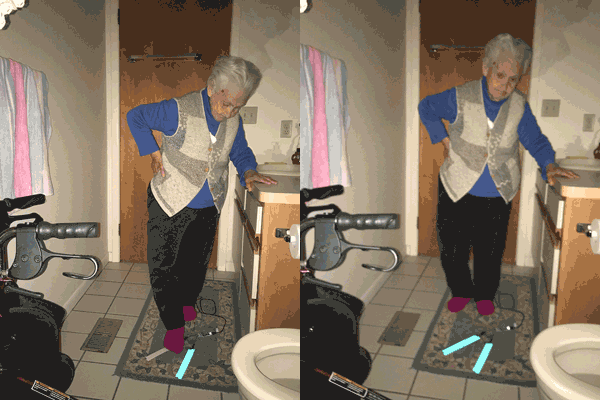
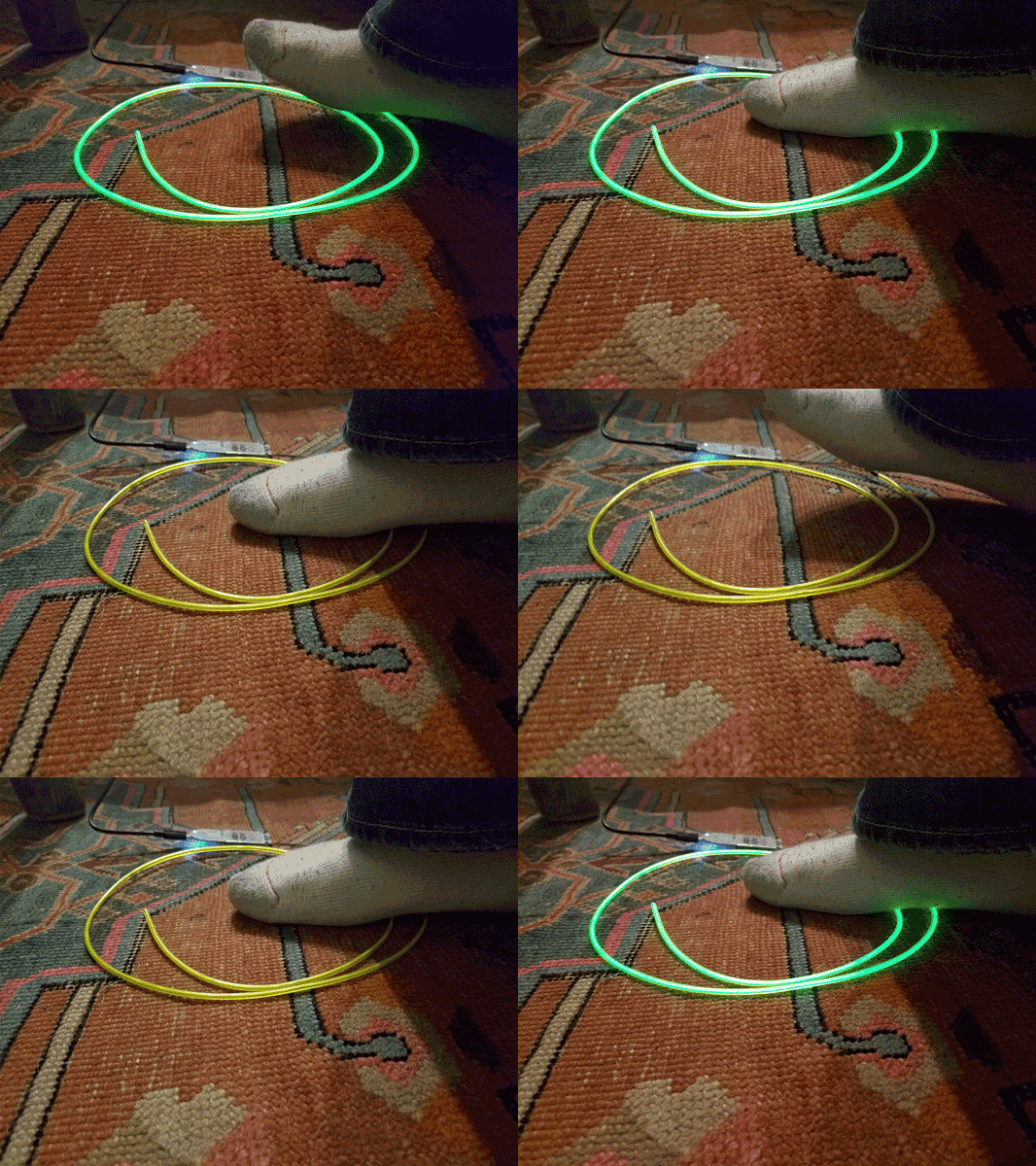
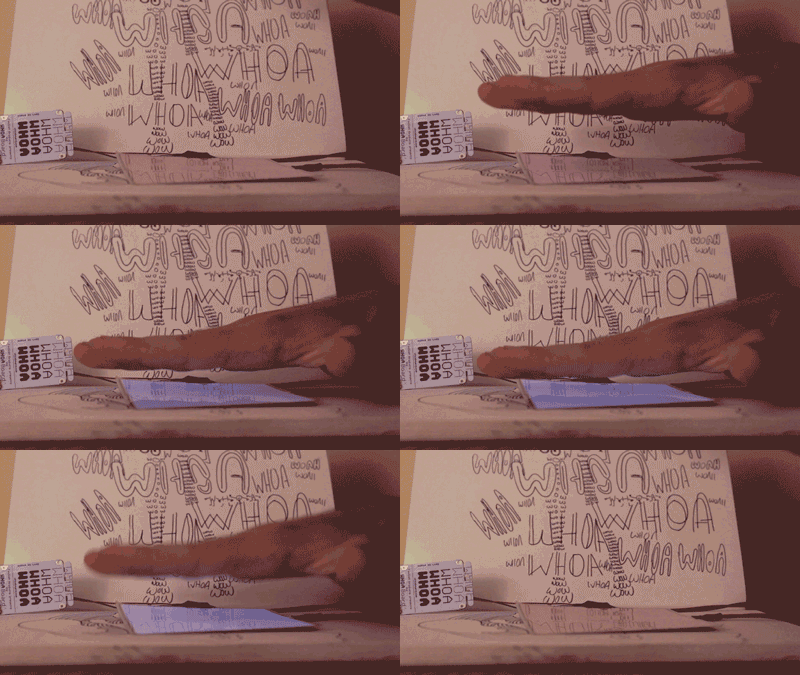
First we verify that we are capable of sensing touch through socks, to establish that touching with feet is a viable interaction (in addition to touching with hands). Note that we have many modes of interaction published here, in open source down to arduino - but not yet populated with illustrations #visualwomen!
![]() We also consider surfaces that would be natural to coat with EL paint. One in particular which stands out is house hand rails.
We also consider surfaces that would be natural to coat with EL paint. One in particular which stands out is house hand rails.We also begin considering the light switch as a possible control point, where touching the outside of the light switch can enable a natural secondary interaction (in contrast to flipping the light switch).
![]()
It is also worth noting that the capacitative sensing which we are building on can perform measurements at a distance, and can even be used to create a "visual theremin" effect (code here)
![]()
-
A glowing sandwich with a side of jam
08/08/2017 at 16:11 • 0 commentsThe core feature of the whoa board is that it makes objects coated with light emitting (electro-luminescient) coatings touch sensitive. http://hackaday.com/2016/08/26/el-wire-gets-some-touching-after-effects/
![]()
(photo courtesy of LumiLor that develops the coating).
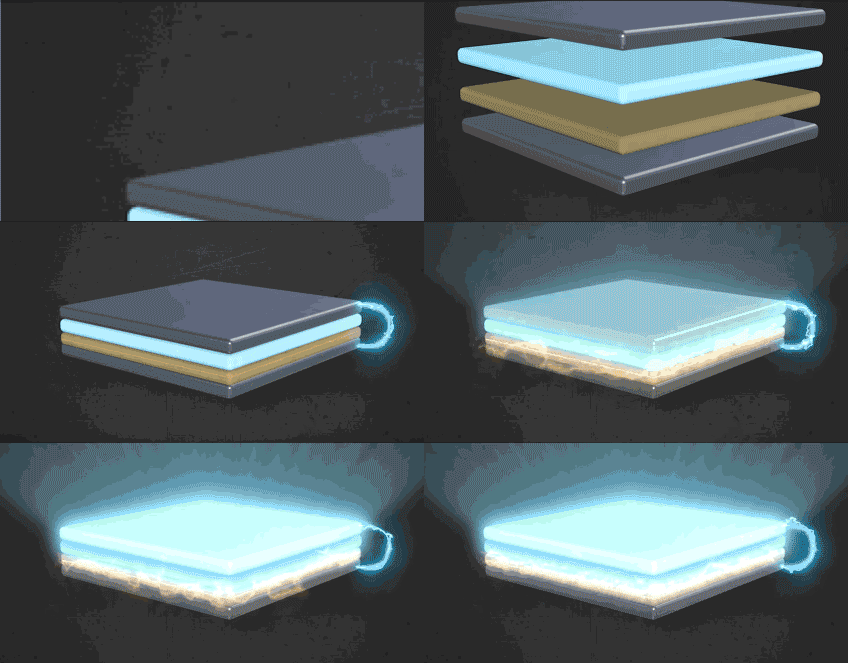
These objects can come as (EL) wire, panels, as well as paint. All of these materials have the following multilayer structure:
![]() In particular, there are two conducting layers that between them have a phosphor layer (usually copper activated zinc sulfide) you can activate by applying ~100VAC at ~1000Hz.
In particular, there are two conducting layers that between them have a phosphor layer (usually copper activated zinc sulfide) you can activate by applying ~100VAC at ~1000Hz.
So, to begin, we began thinking about places where touch sensitive lighting could improve people's lives.![]()
-
Choosing a canvas!
08/07/2017 at 06:12 • 0 commentsFor our hack-a-day prize submission, we will be playing with an open source circuit board that we designed and manufactured, called the whoaboard (these are available for others to play with at whoaboard.com/store).
In particular we will be exploring how this board can be used in the design of a novel and more humane form of assistive lighting for people who are mobility impaired.
MoonLITE
Interactive lighting elements for the mobility impaired. Designing a power supply for architectural scale interactive EL installations
 Means actually going and talking to humans. Thanks to mom, we showed demos to people at: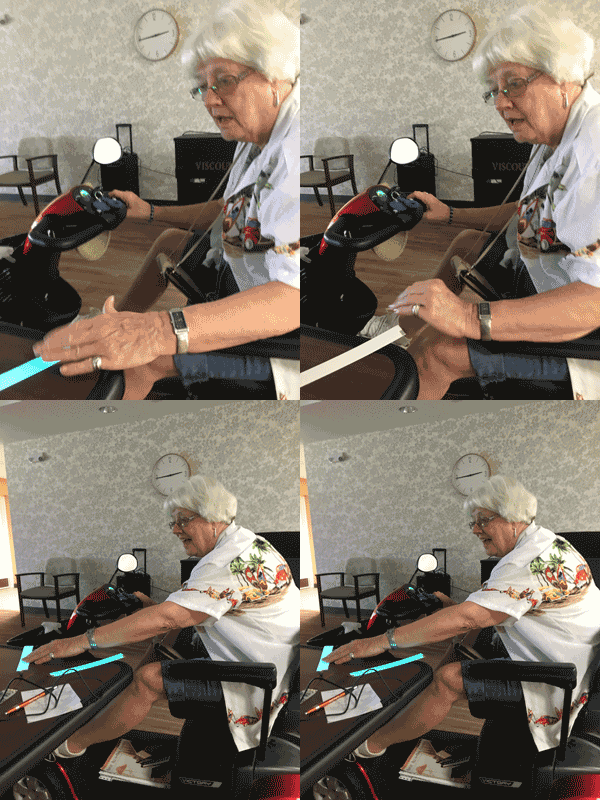
 We also consider surfaces that would be natural to coat with EL paint. One in particular which stands out is house hand rails.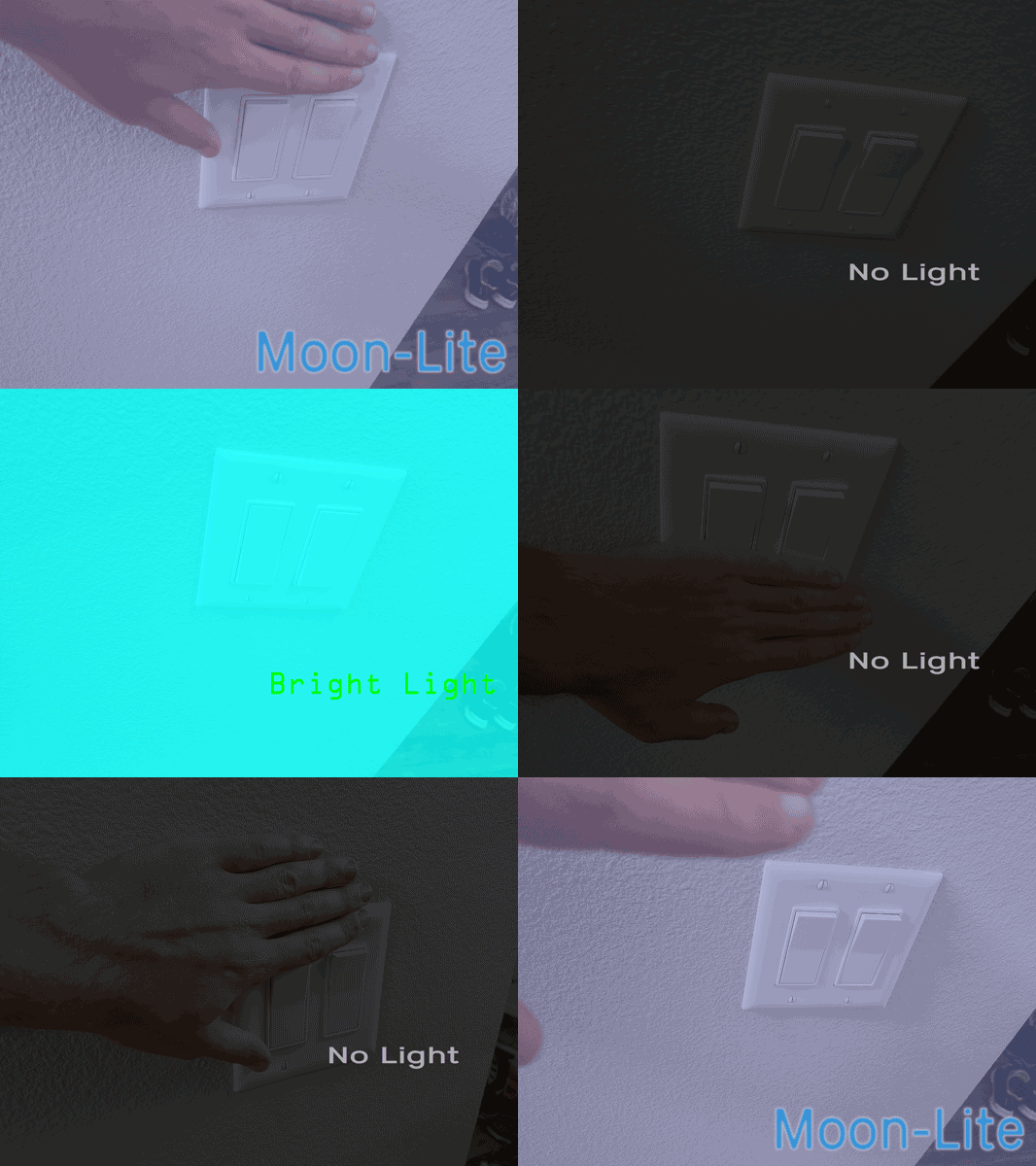

 In particular, there are two conducting layers that between them have a phosphor layer (usually copper activated zinc sulfide) you can activate by applying ~100VAC at ~1000Hz.