 MakerVisioneer
We’ve explored the recognition capabilities of Google Vision and OpenCV. We decided to go with OpenCV, for our phase one design, because of its movement detection capability. Google Vision remains an option for recognition, but we intend to try local neural nets first to eliminate the dependency on an outside service.
Recognizing the label with Google Vision when it is less than 20 cm.
Using OpenCV to detect motion, speed, and position with a selected area on a frame.
Google Vision and Speech API via Asus TinkerBoard
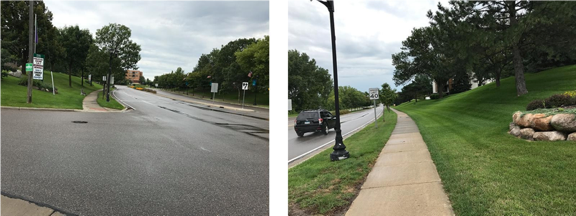
We also did an experiment to determine how many cameras should be used, as well as, which angle is best for traffic detection. The conclusion was that two cameras in the angle of 60 degrees are best for performing traffic detection.
1. One camera, forward facing, no deflection.

2. Two cameras, forward facing, no deflection
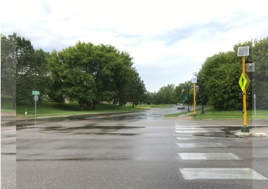
3. Two cameras, 15 degree deflection
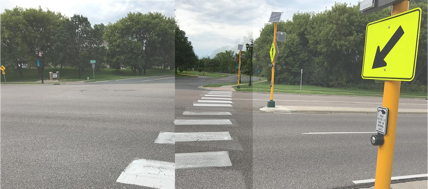
4. Two cameras, 30 degree deflection
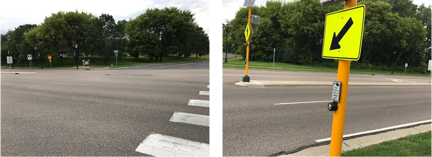
5. Two cameras, 45 degree deflection
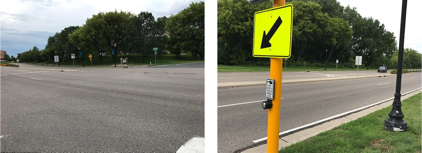
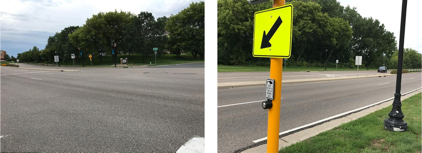
6. Two cameras, 60 degree deflection
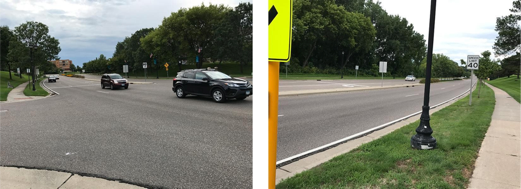
7. Two cameras, 90 degree deflection (side facing)
Discussions
Become a Hackaday.io Member
Create an account to leave a comment. Already have an account? Log In.