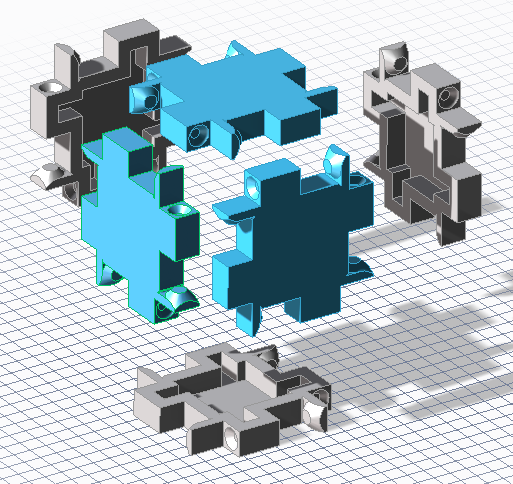
A Construction set. Made of flat pieces. 3D-printer friendly.
To make the experience fit your profile, pick a username and tell us what interests you.
We found and based on your interests.
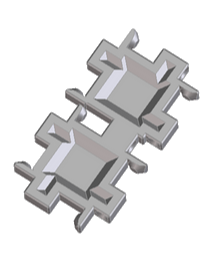
Let’s add the second main piece (1x2)
It looks as a pair of connected main squares (let’s name them 1x1).
It speeds up construction.
it lets build stronger parts using brick lock.
It can strengthen the large flat faces and corner edges with longerons and spaces.
Printed sample:
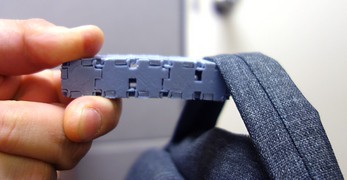
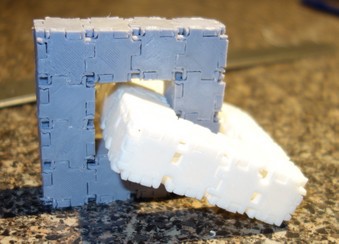
A pretty strong hook for backpack:
Uploaded here 2x2-1x2-plate.stl
Most parts take only 15 layers on my FDM printer. So printing of one set doesn't take long, but I want more parts to be printed in one session. Ideally hundreds of parts at once.
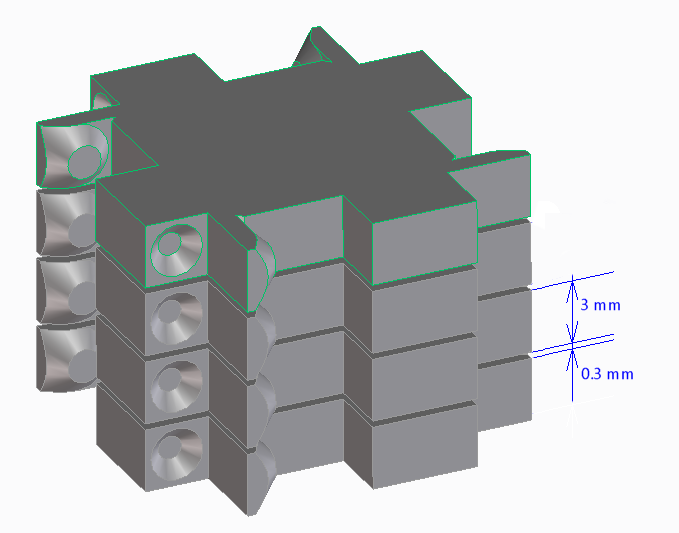
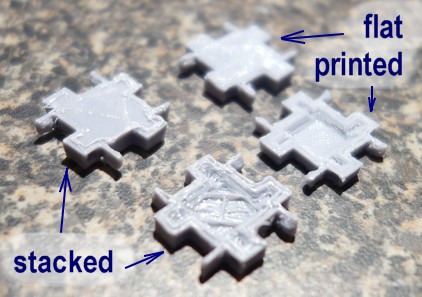
Parts are flat. What if I stack them layer by layer with a thin gap?
Here is the stl: 1x1-32.stl
A gap of 0.3 mm makes one loose layer.
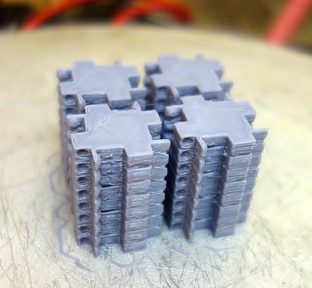
Here it's printed:
And cut with utility knife:
New parts work good. They are like the previous flat printed parts except for underside which has very rough surface due bridging.
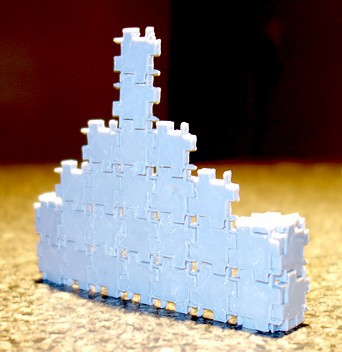
I tried them in practical usage.
It works. If needed, I can make about 500 flat parts in one print.
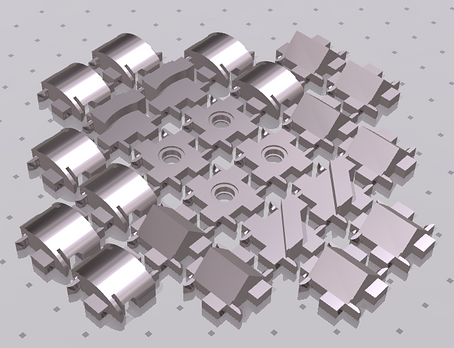
It's time to add five types of decoration pieces.
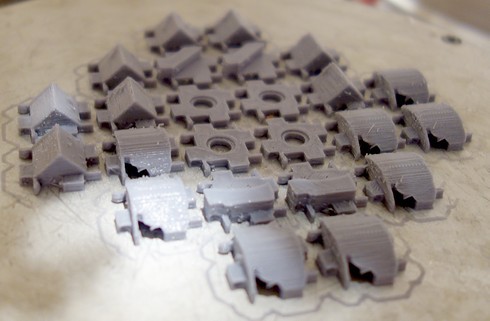
Printed
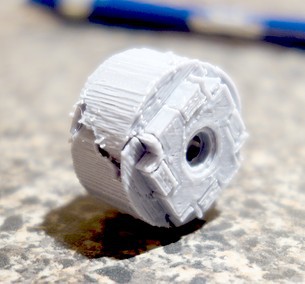
A wheel made of six parts:
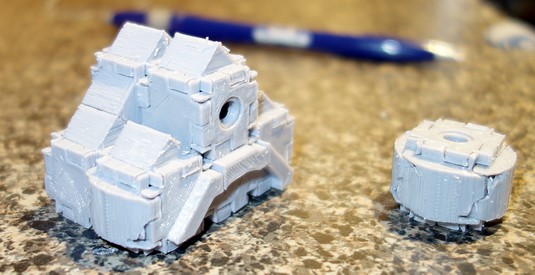
A small building:
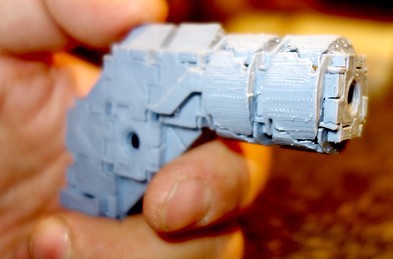
A gun:
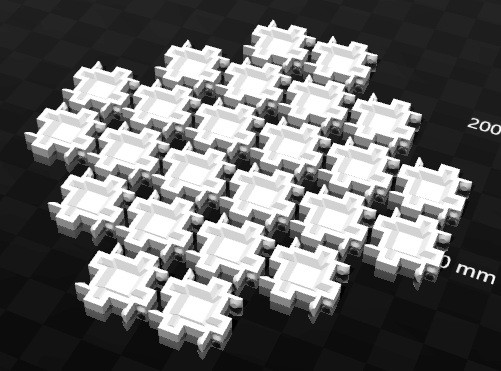
Set of 24 parts laid-out on a circular platform: 1x1-24.stl
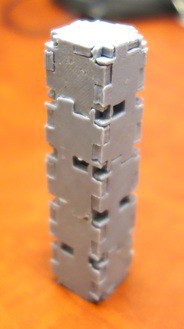
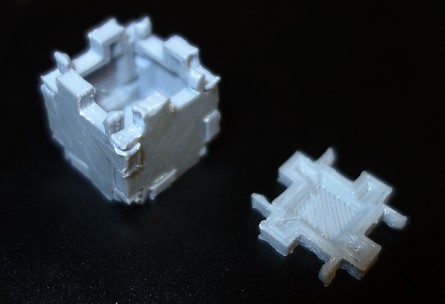
The simplest cube from the previous log. This time printed. I intentionally skipped the parts deburring to check for +/-0.2mm tolerance promised. Despite some surface roughness, parts stick and click.
After cleanup.
Construction sets can be divided in three large groups:
I want to combine the simplicity of plastic interlocks with plate-base design.
This idea is not new, there are number of construction sets based on this idea. I just wan to give a try to my s-shaped interlock with convex-concave side surfaces.
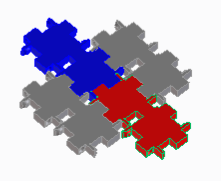
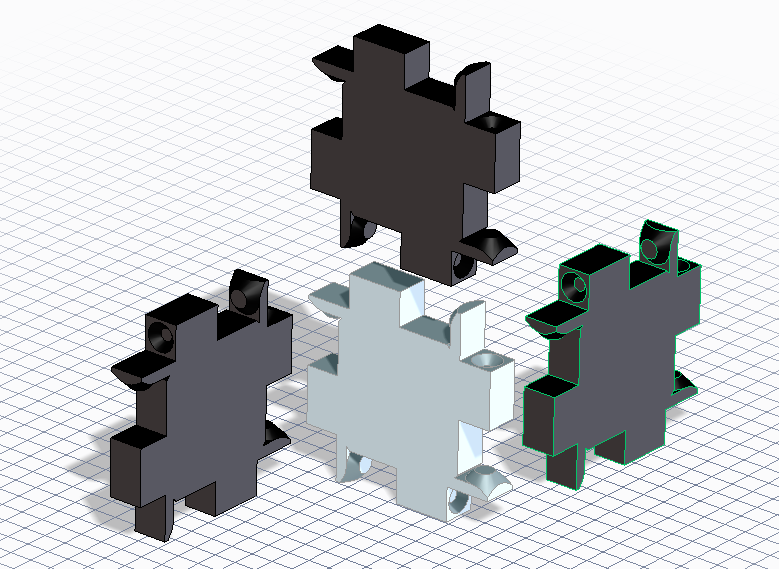
The first and main part is a rectangular 1x1 plate having interlocks at each four sides. Interlock allows to attach parts in three right angles.
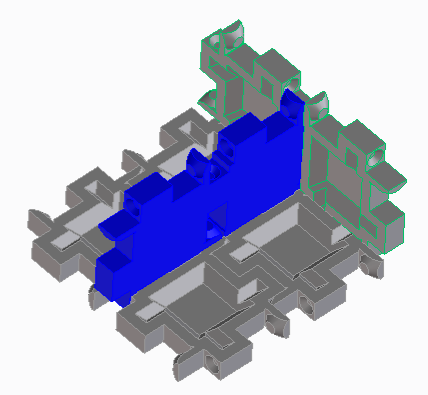
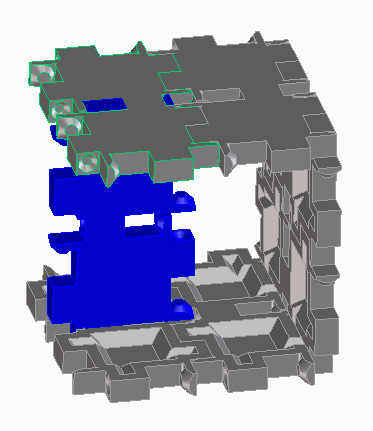
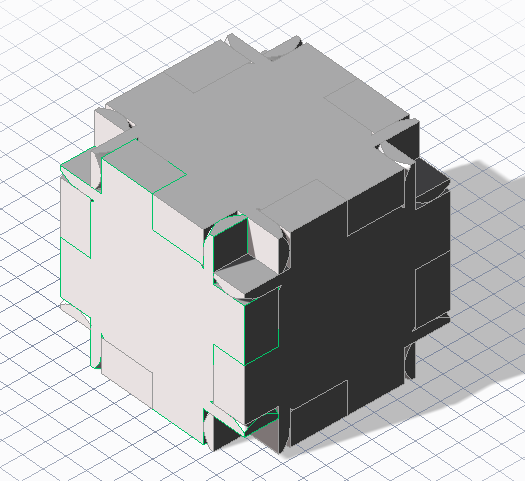
The simplest figure that can be assembled is a cube:
Here is its open view:
Create an account to leave a comment. Already have an account? Log In.
I planned they to act as flat springs. They thickness should be fine-tuned depending on material flexibility.
Become a member to follow this project and never miss any updates
super neat idea. is there a reason why the smallest linking piece is so small compared to the chunkier part?
i.e., on any given side you have a small link part (and the negative/removal of it) as well as a large link part (and its negative). why aren't all these roughly the same size? (i.e., 1/4, 1/4, 1/4, 1/4 the size of the space available.)
ah, i (think i) see; it's so they can flex easier as the pieces are put together.