 lion mclionhead
Discovered all GND on the DAC was hooked up to the mane GND instead of the 5V virtual GND. The 5V virtual GND was the 5V supplying the DAC. Regulated 12V was the 25V on the DAC. 10V was only used for the MAX412. The heat sunk LM7805 was the 5V & the bare LM7805 was the 10V.
5V virtual GND would stay & be migrated to the LM317. The 10V & the regulated 12V would move to the 15V in.
DAC -> divider -> Volume -> subwoofer/line level -> baxandall EQ -> divider -> power amplifier
Baxandall EQ has a low impedance input & low impedance output so it has to run at line level. Its output has to be divided down to amplifer input level.
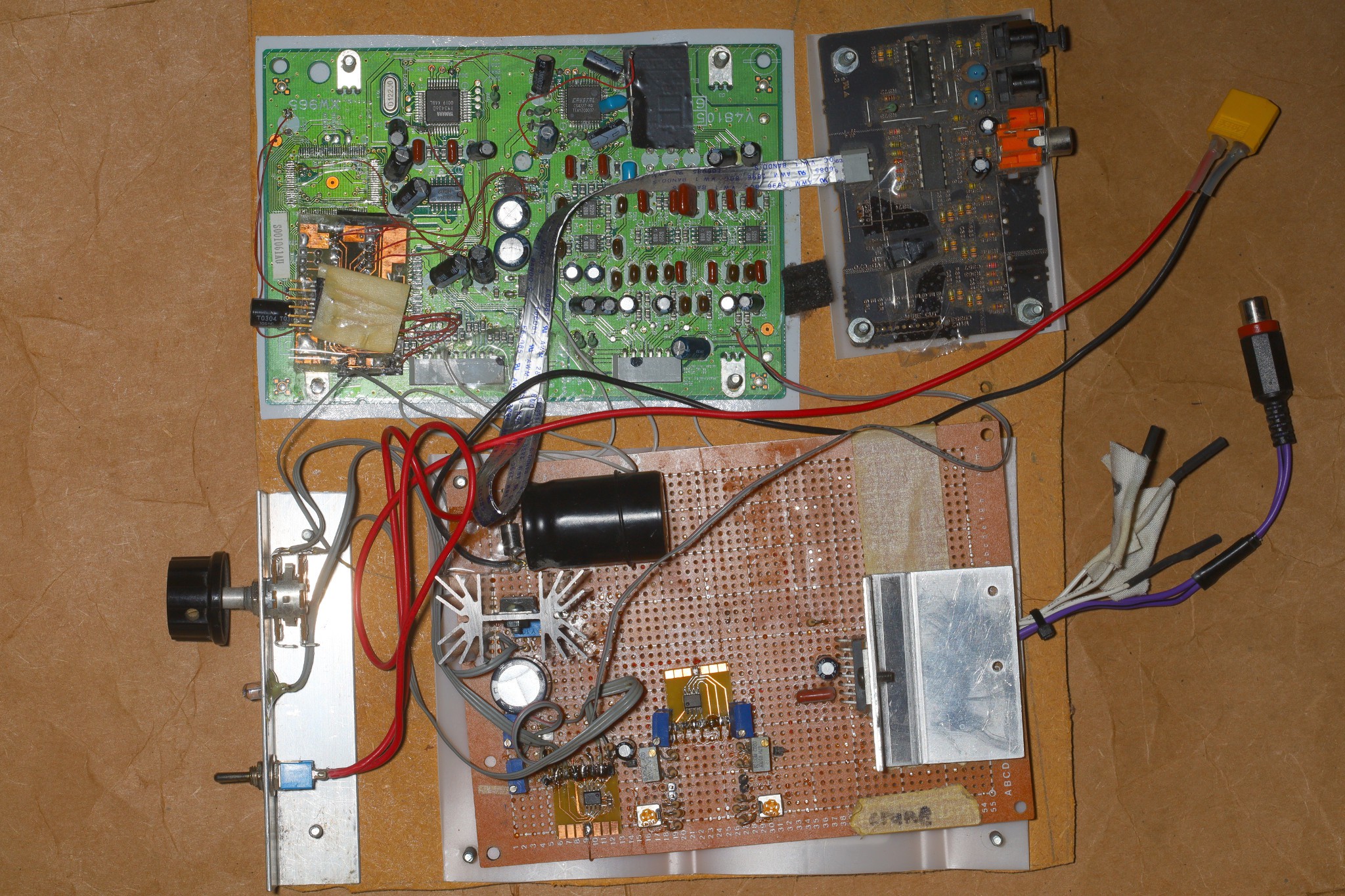
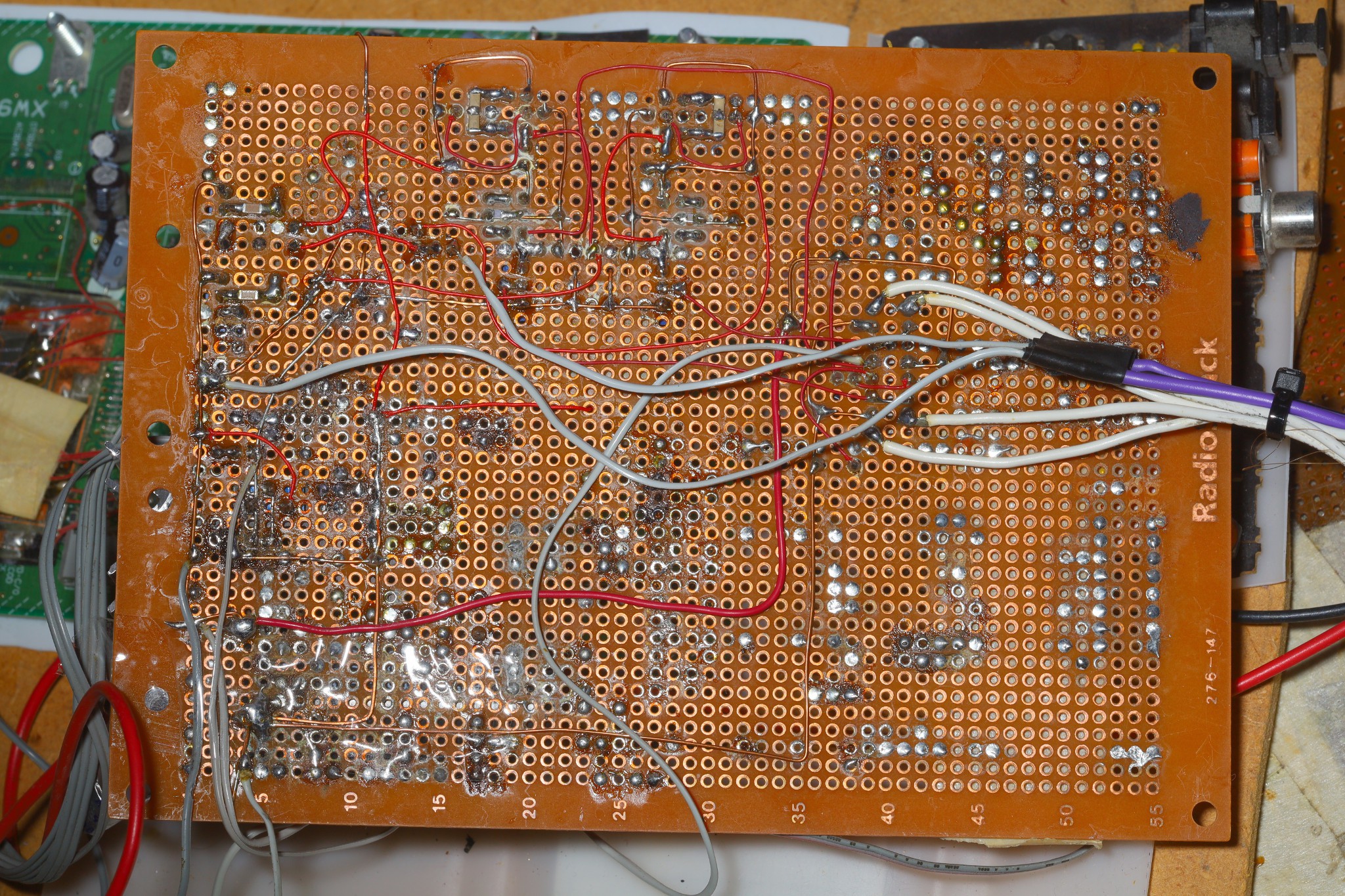
A lot of parts disappeared.
That had a few problems. The 3A 15V USB faulted on the inrush current. Hooking up the subwoofer mixer caused all the output to be mono. We had a non reproducible clipping & non reproducible noise. At minimum, it's going to be a lot of voltage followers.
---------------------------------------------------------------------------------------------
For some reason, young lion never marked the push pull pairs of the speaker outputs. There was a 50/50 chance of cross wiring the speakers & getting mono. That got the subwoofer mixer to work.
The clipping & noise was caused by a ground fault somewhere. Probing showed all the crosstalk to be in the STA540 with the mixing network not creating any crosstalk. It seems the STA540 heat sink needs to be grounded separately. Adding grounding straps to every metal object & insulating everything from the wood got the noise down.
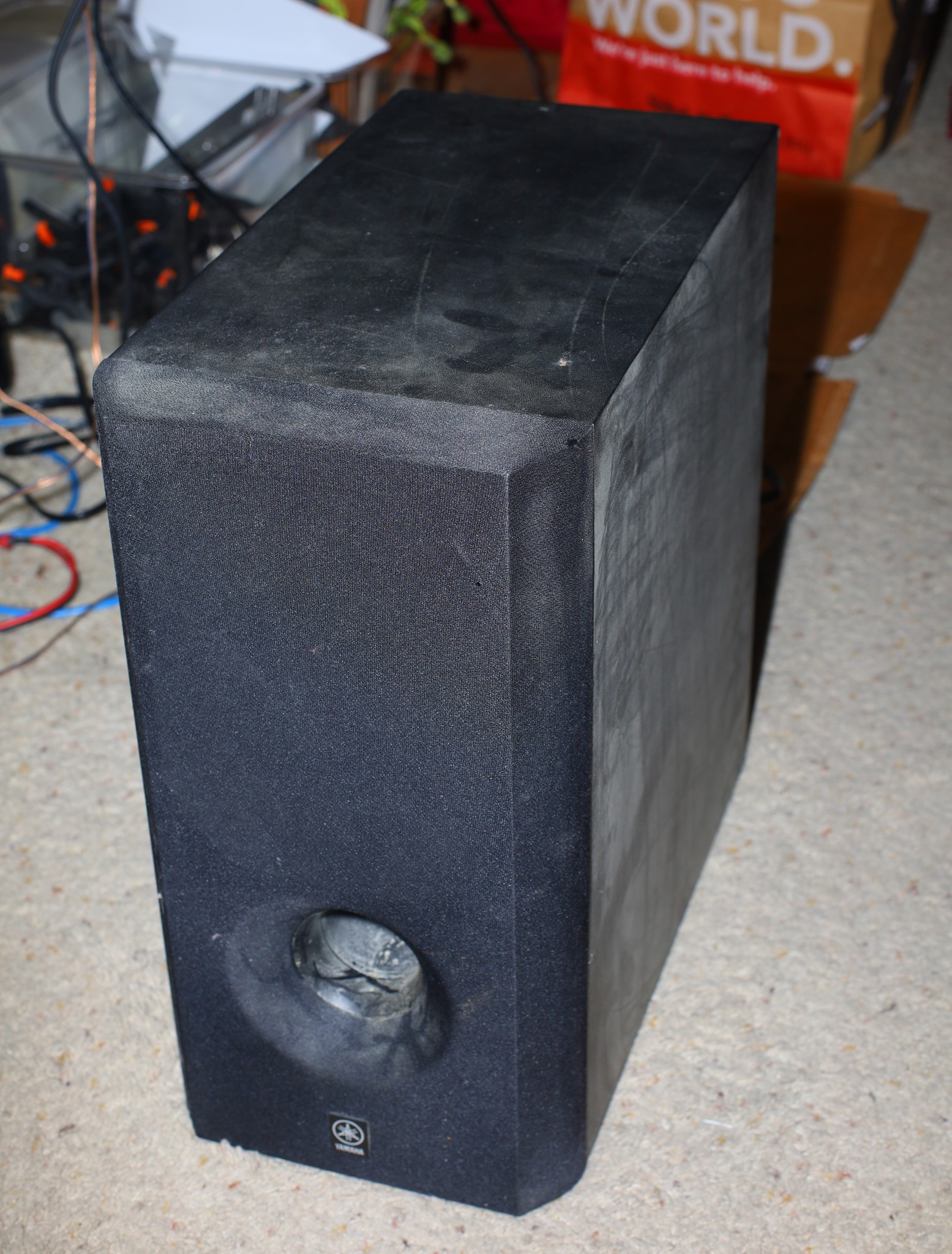
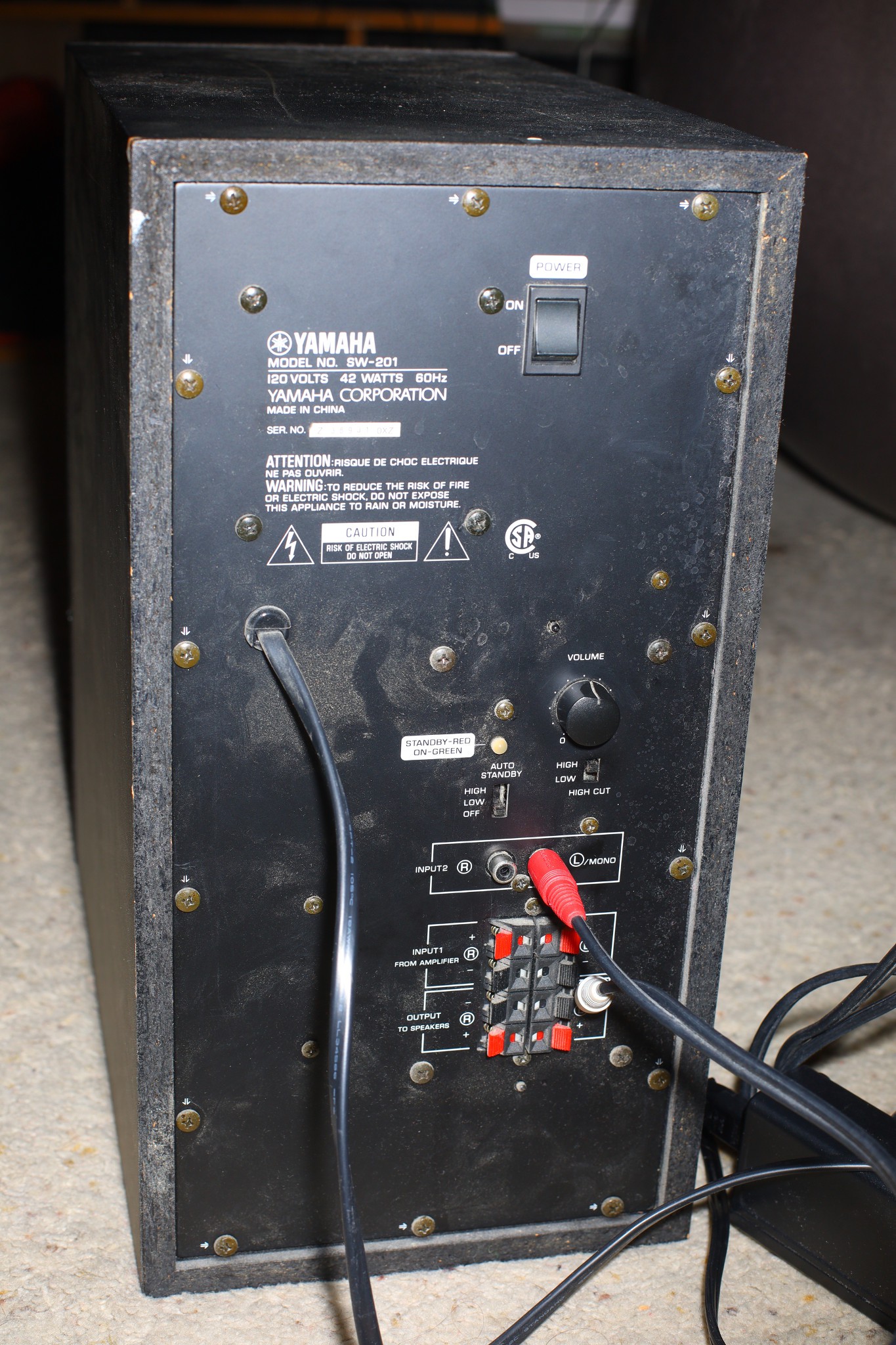
Firing up the subwoofer after 15 years, it had a nasty AC hum. It has its own facility for mixing down stereo input. It might need a lower impedance signal than a blocking cap. The subwoofer is isolated so it could be floated to virtual GND. Helas, that did nothing. The AC hum tends to start random times after it's powered up, pointing to a dead cap or broken solder joint. Power cycling it or whacking it makes it go away for a certain amount of time. When it works, it makes lions wish they had the $4M for a detached house, $600k when the speaker was new.
The worst case is another STA540 directly powering the subwoofer with a lowpass filter.
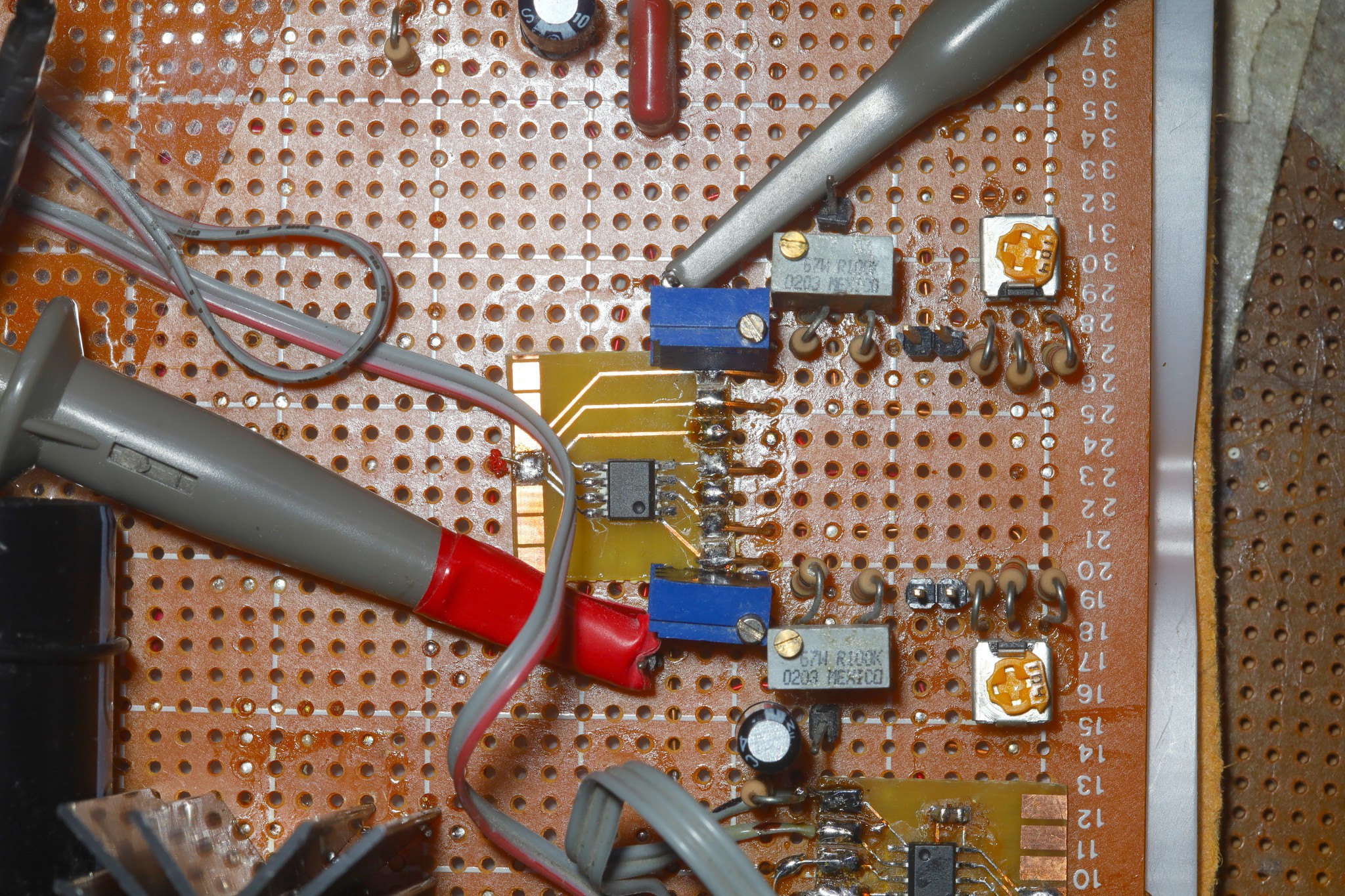
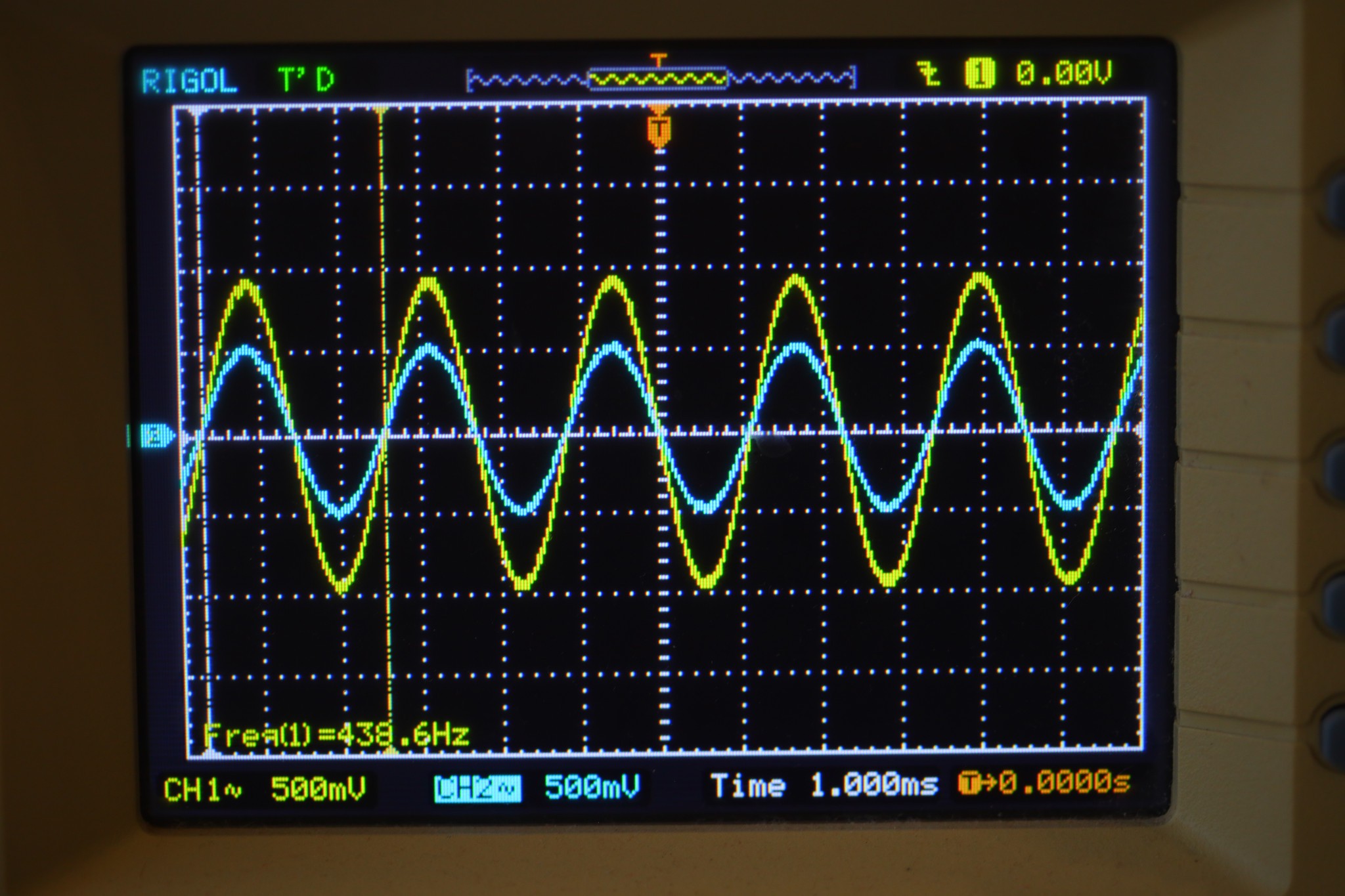
In the interest of only passive networks, adjusting subwoofer gain entails generating a sine wave in the flat 1khz EQ range, viewing the manes & subwoofer output of both channels on the scope, adjusting 1 channel at a time so the manes match & are a fraction of the subwoofer stage. The subwoofer itself has another pot for field adjustment.
---------------------------------------------------------------------------------------------------------------------------------------------
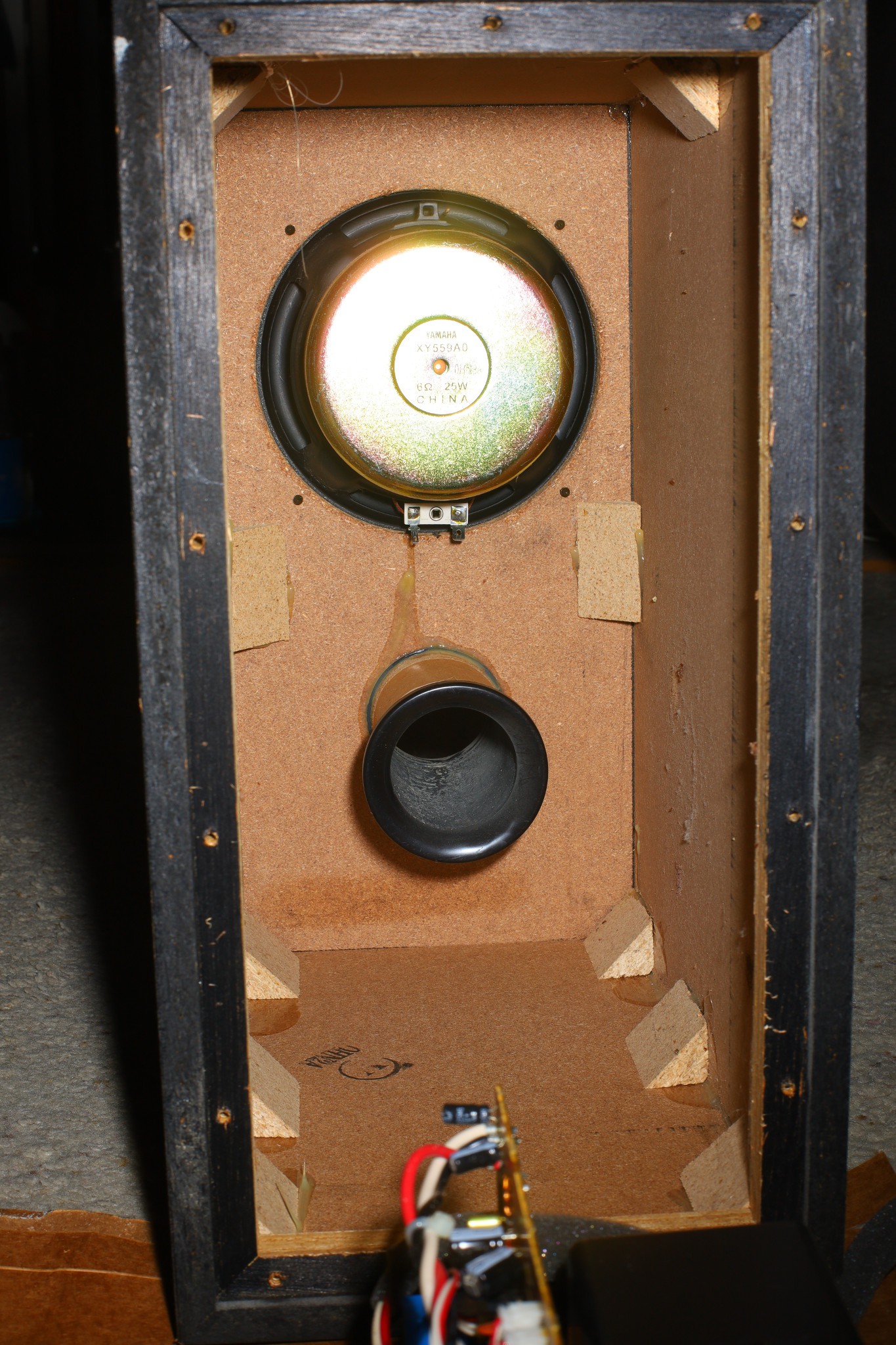
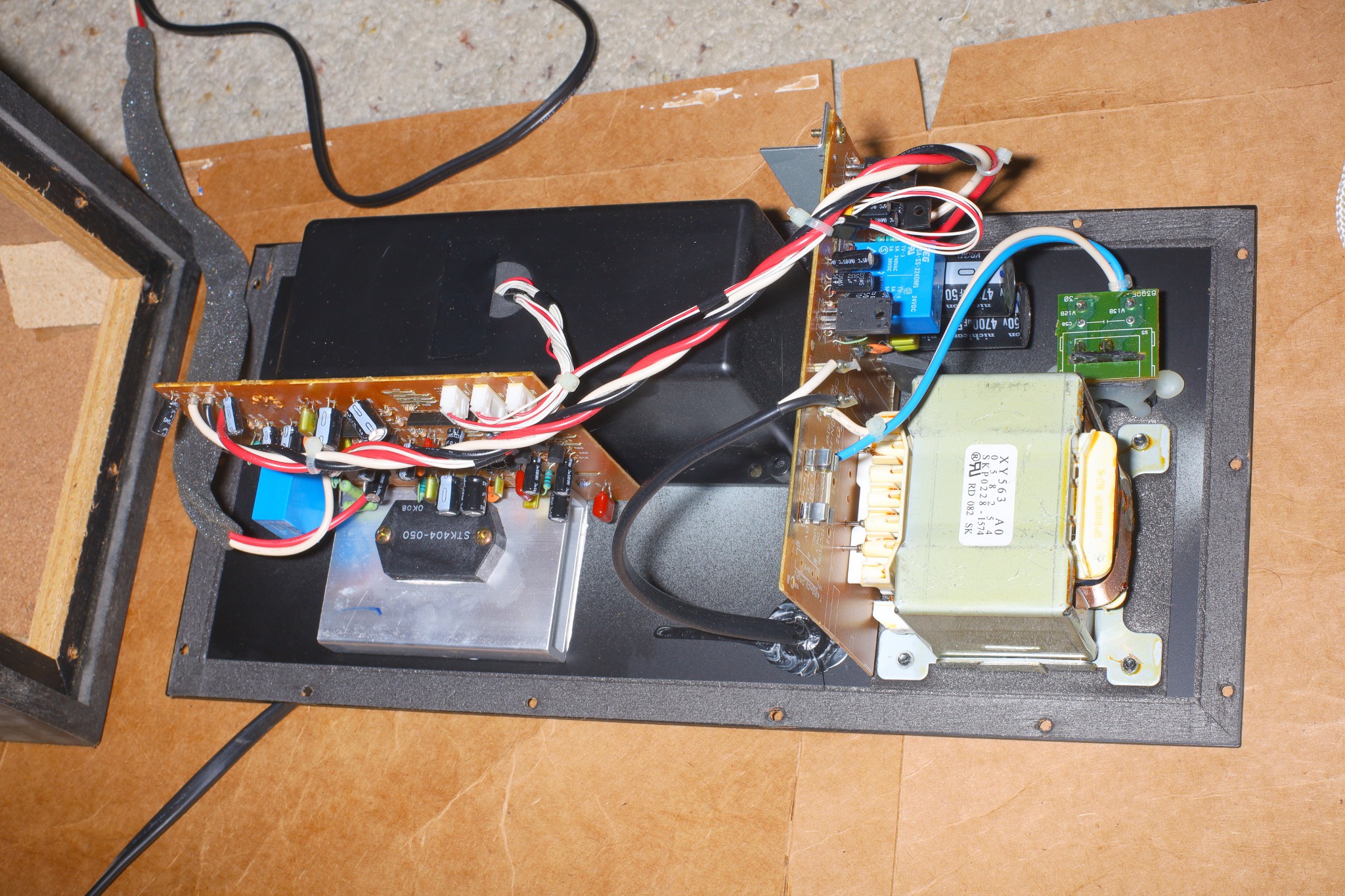
A painful teardown of the subwoofer revealed relays, over stretched ribbon cables, chip amplifier, & lots of spider webs. These are typically perishable parts. The easiest next step would be a dedicated STA540, lowpass filter, dedicated volume pot for the subwoofer. A speaker wire would go to the existing cabinet. The idea is to have easily replaced parts. The front panel would need another pot & switch. Basically, the whole thing would be rebuilt.
There are subwoofer kits & preamps. They historically needed constant replacement & were higher priced.
Discussions
Become a Hackaday.io Member
Create an account to leave a comment. Already have an account? Log In.