 lion mclionhead
After 2 weeks of snail mail, the 2nd STA540 went in. Stepped up the feedback resistor to 20k.
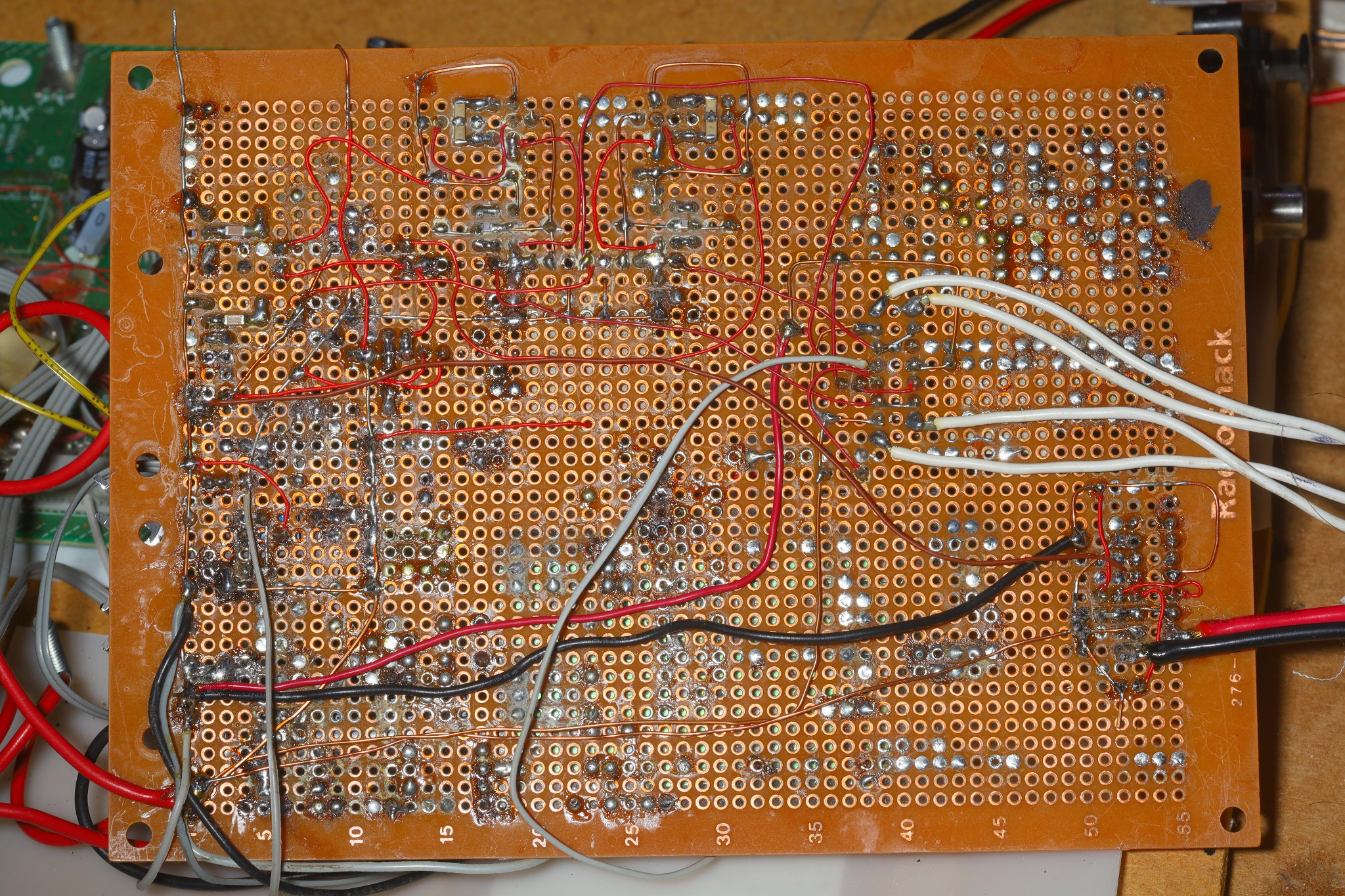
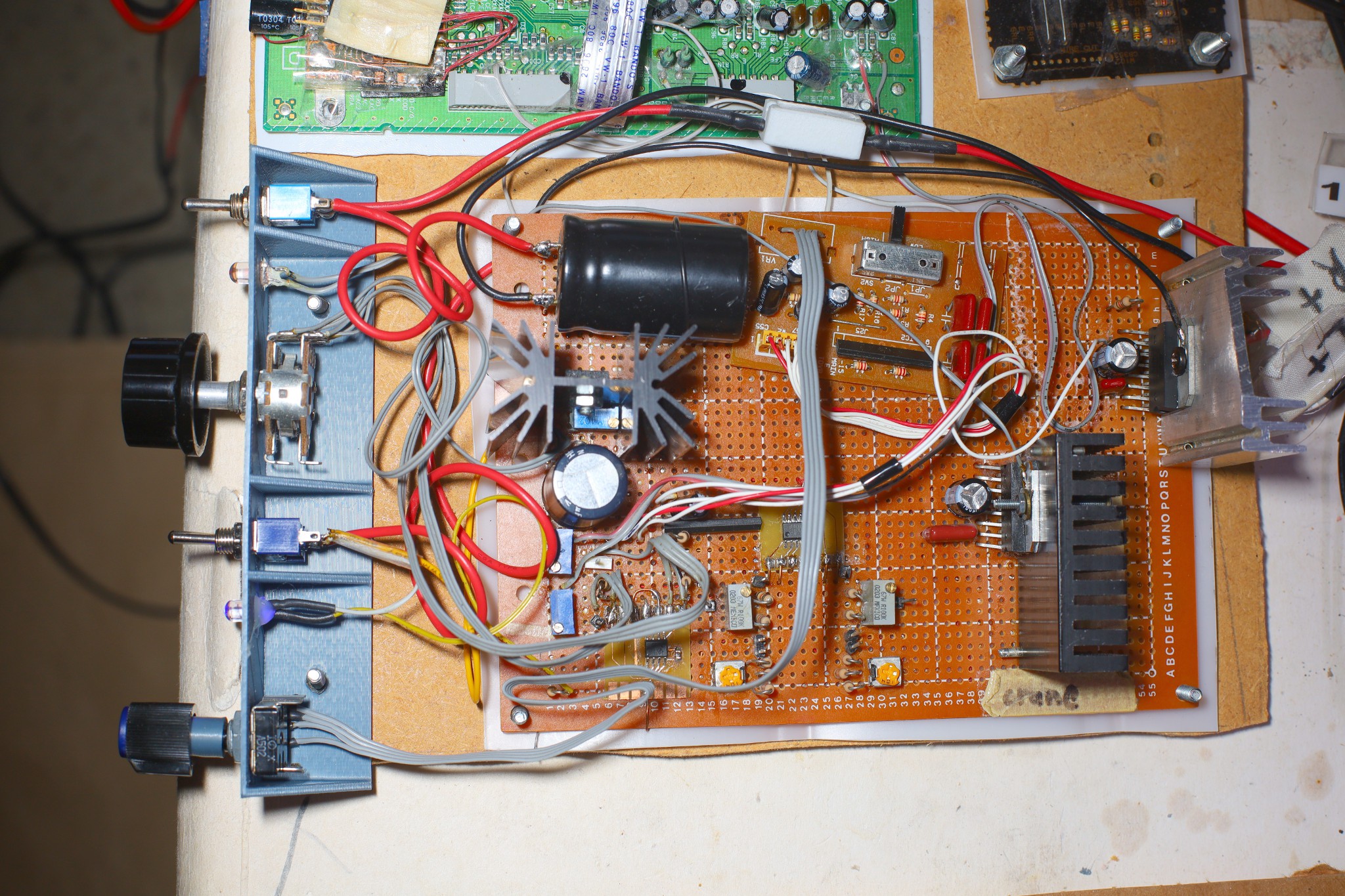
Positioned it for future heat sink expansion.
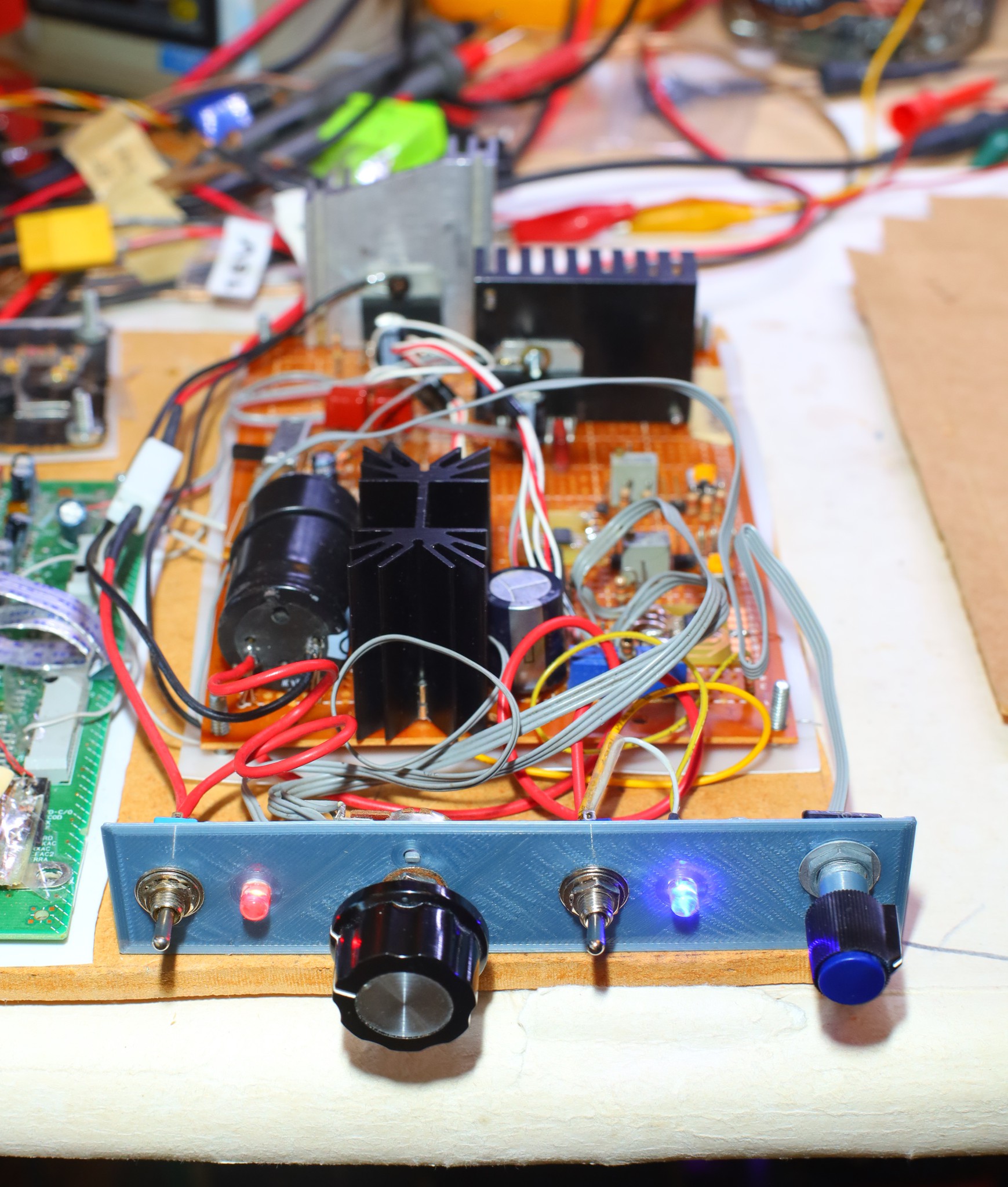
The subwoofer power & volume are a lot more convenient than stock. The PLA front panel no longer requires isolation or grounding. It just needs some captive nuts. The subwoofer pot needed an adapter to fit the improved knob. It probably needs some indicators for a more stable position.
Standby power went back to 7W.
The useful subwoofer range was only the top 1/4 on the front panel. Stepped the feedback resistor up again to a 100k pot so it could be dialed into the mid range of the front panel.
The STA540 had no problem powering test tones beyond useful levels but it seemed weak during music. It was easier to feel the bass in the stability ball than hear it. Recall the stock receiver having the same problem.
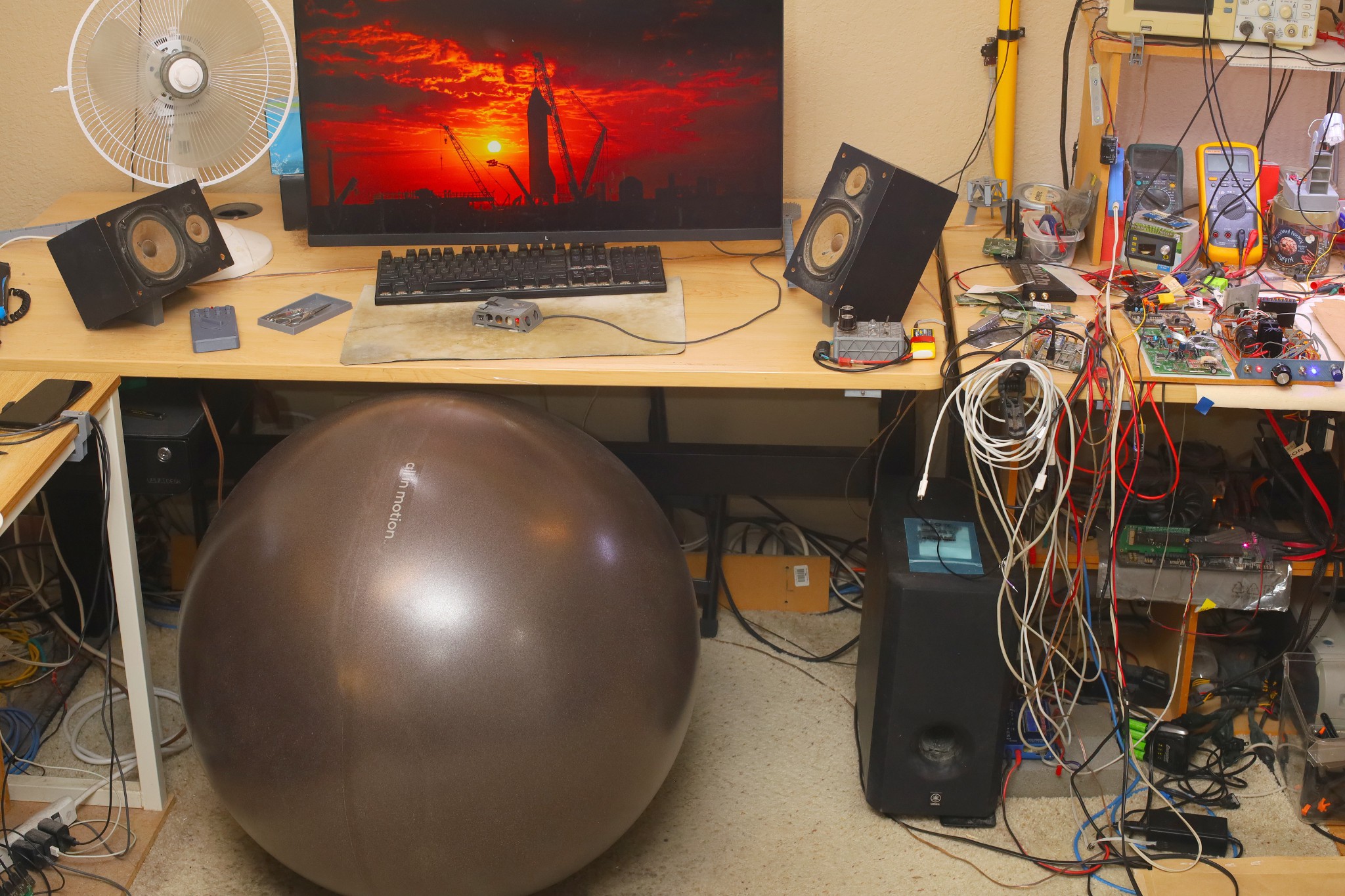
1st, the manes are being driven harder in the low end than the stock amplifier. 2nd is the subwoofer's unfortunate position. It was obstructed under a table before 2011 & now is in front of the manes. The only space has it pointing away from the lion. A working system would entail sitting far away from the monitor.
Tried pointing the woofer up, which slightly improved things.
There's no relief in sight. It would take a real man cave costing millions of doll hairs to properly position it.
---------------------------------------------------------------
Modern e-commerce being what it is, the minimum order of STA540 was 2 via 6 week snail mail. Paying double would have bought 1 from Sparkfun in 1 week. This is going to provide 6 channels of amplification, if just 1 goes to the subwoofer. Testing showed 1 into the subwoofer was enough. There is a TDA7561 in the apartment, but it requires I2C.
Given 6 amplifier channels, there are 6 channel TOSLINK DAC's for a price.
https://www.amazon.com/SOUTHSKY-Digital-Decoder-Converter-Optical/dp/B08KD9NVXY/
https://www.amazon.com/Digital-Channel-Converter-Optical-Amplifier/dp/B0GS5R2K73/
https://www.amazon.com/Decoder-Converter-Digital-Optical-Concert/dp/B09CDY7862/
They're either 192khz for 2 channels or 48khz for 6 channels. 192khz for 6 channels seems to require USB.
The vintage CS4227 can decode 6 channels of I2S but the YM3436 only decoded 2 from TOSLINK. It used the YM3436 for a legacy 2 channel codec while the YSS908 was decoding a 6 channel codec over TOSLINK, a very hardware solution for handling 2 different codecs. Since the YSS908 is gone, it will never decode 6 channels again.
There's always fabricating a TOSLINK or USB decoder out of spare parts, but it would be a big effort. It would fill the space occupied by the TOSLINK board but wouldn't take any more space. Then, it might as well have a raspberry pi SPI interface for capturing. The mane advantage is being able to process the digital signal. A growing number of gootube channels which formerly allowed downloads are now blocked from downloaders.
https://www.youtube.com/@greatperformances/videos
https://www.youtube.com/@NatGeo
https://www.youtube.com/@gravitasdocumentaries/videos
All the long format videos are blocked but the authorized player finally gained barely useful audio compression after a 20 year battle for louder commercials. It's total dogshit & there's no reverb.
-----------------------------------------------------------------------------------------------------------------------
After many years, lions became satisfied that 6 speakers would be a tangibly better experience. 2 ears combined with head movements produce much more spatial awareness than 2 speakers can provide, the same way eye movements are a key factor in vision besides static pixels. The center speaker & rear speakers are resolved by head movements in addition to stereo perception.
Discussions
Become a Hackaday.io Member
Create an account to leave a comment. Already have an account? Log In.