 MOSFET
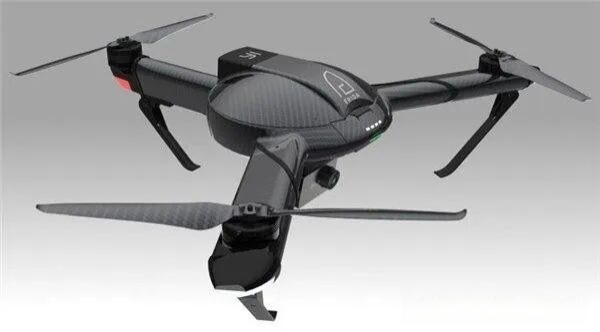
The structure of a drone comprises several key components: the airframe, propulsion system, flight control system, communication link system, and payload.
The motors within a drone's propulsion system, commonly referred to as “motors,” serve as the primary power source. By adjusting the rotational speed of these motors, the drone alters its flight state. Specifically, varying the speed of each motor enables the drone to hover in place, ascend or descend, or move in any direction.
Motors are categorized into “brushless motors” and “brushed motors.” Most drones on the market today utilize brushless motors. These employ semiconductor switching devices for electronic commutation, offering advantages such as high reliability, absence of commutation sparks, and low mechanical noise.
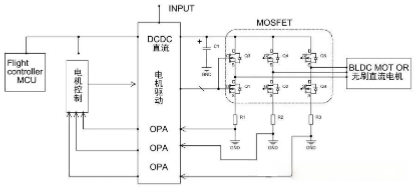
I. Typical Application Topology Diagram
During motor operation, the principle can be simplified to involve three sets of MOSFETs. Each set comprises upper and lower transistors that conduct sequentially. Upper and lower transistors across different sets conduct according to specific timing sequences to achieve commutation. As the commutation frequency gradually increases, the brushless motor's rotational speed rises accordingly. Various onboard sensors collect attitude data, which is processed by the controller to execute a series of actions including altitude ascent, hovering, and descent.
II. Advantages of Low-Voltage MOS Technology
High-Efficiency Power Management: Low-voltage MOS technology features fast switching characteristics and low power consumption, enabling efficient management of a drone's electrical energy and enhancing energy utilization. It plays a crucial role in motor drive systems and battery management, contributing to extended flight times.
Thermal Stability: Low-voltage MOS technology exhibits outstanding thermal stability, maintaining consistent performance under high-temperature conditions. This characteristic makes it suitable for diverse complex flight environments, ensuring stable drone operation across varying conditions.
III. Specific Applications of Low-Voltage MOS in Drones
Motor Drive: Within drone motor drive systems, low-voltage MOS technology is extensively employed in brushless motor drive circuits. Through precise commutation control, low-voltage MOS technology enables motors to operate efficiently and stably. The commutation control principle can be simplified as follows: three groups of MOSFETs operate, with each group containing upper and lower transistors that conduct at different times. Upper and lower transistors across different groups conduct according to specific timing sequences to achieve commutation. As the commutation frequency gradually increases, the rotational speed of the brushless motor also rises.
Battery Management: Low-voltage MOS technology also plays a vital role in drone battery management systems. By controlling current flow, it ensures safe and efficient battery usage. Combined with intelligent algorithms and advanced control strategies, it enables balanced charging and discharging, thereby extending battery lifespan.
Flight Control System: The flight control system serves as the drone's “brain,” managing functions such as attitude control, navigation positioning, and mission execution. Within this system, low-voltage MOS technology regulates the current and voltage to various actuators, enabling precise maneuvering and stable flight. For instance, during attitude control, it works with sensors like gyroscopes and accelerometers to achieve automatic balancing and posture adjustment.
Discussions
Become a Hackaday.io Member
Create an account to leave a comment. Already have an account? Log In.