 Sergei Kashin
High-power LEDs are easy to drive electrically.
Keeping them alive at extreme power density is a different story.
When I started pushing beyond moderate LED power levels, standard aluminum heatsinks stopped being enough. Not because they were small — but because heat density, mounting geometry, and long-term thermal stability introduced constraints that off-the-shelf radiators weren’t designed for.
This led to a custom radiator design.
Why Standard Heatsinks Failed
At lower power levels (≈200–300W), a large extruded aluminum heatsink with proper airflow was sufficient.
Once total power and density increased, several issues appeared:
-
Uneven temperature distribution across the board
-
Localized hot zones
-
Mounting pressure sensitivity
-
Mechanical flex affecting thermal contact
-
Airflow dead zones
The issue wasn’t just “more heat.”
It was how heat moved through the structure.
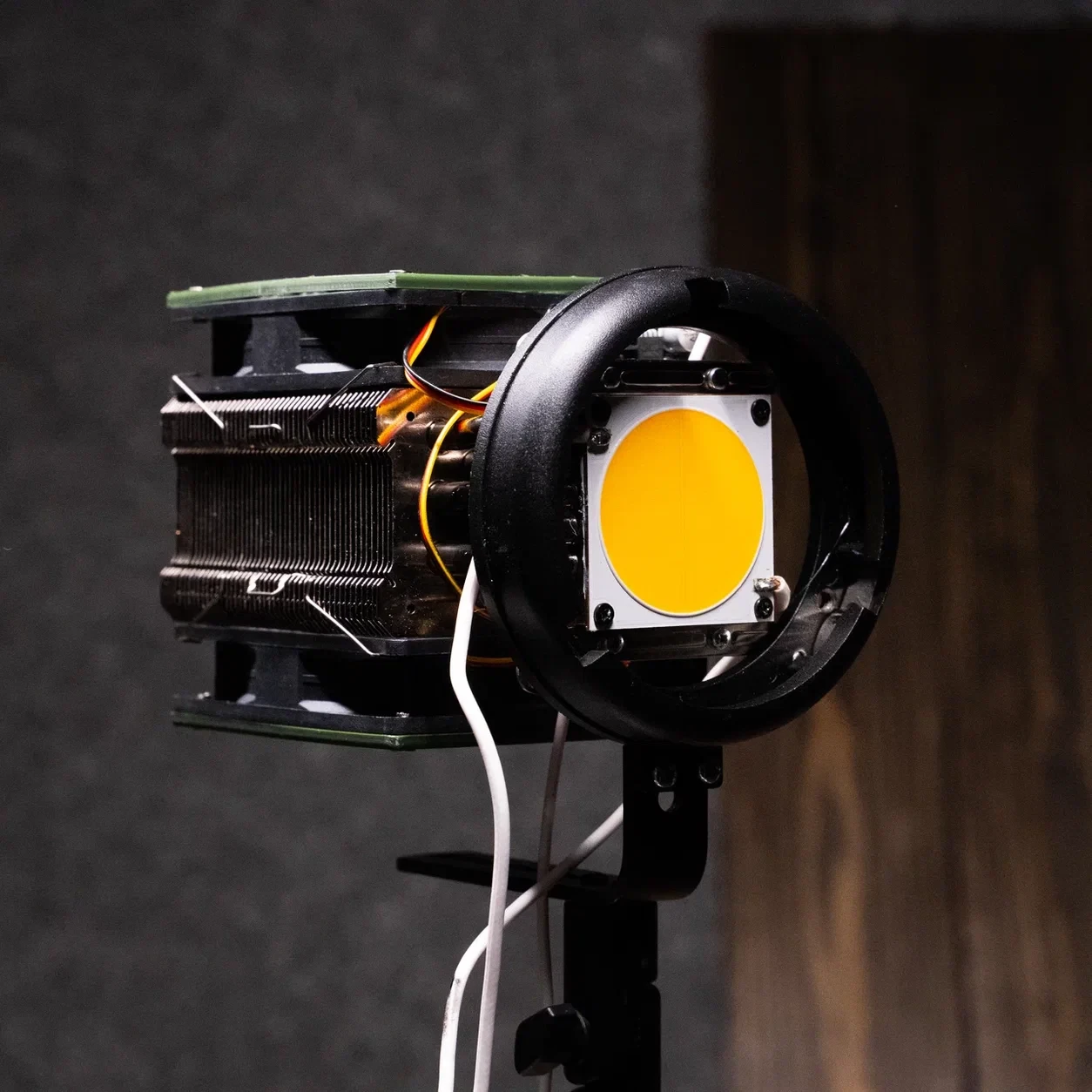
Early mounting tests revealed uneven temperature spread across the array.
The Design Constraints
The custom radiator had to solve several problems simultaneously:
-
High thermal conductivity at the LED interface
-
Even pressure distribution across a large board
-
Structural rigidity under clamping force
-
Controlled airflow channels
-
Long-term stability under sustained load
Instead of simply increasing aluminum mass, I redesigned the thermal path.
Copper vs Aluminum
Aluminum is practical and affordable.
Copper conducts heat significantly better.
For extreme density applications, the solution became hybrid:
-
Copper interface section for fast heat spreading
-
Aluminum bulk structure for mass and cost control
-
Controlled transition between materials
The key wasn’t just conductivity — it was reducing thermal bottlenecks at the interface.
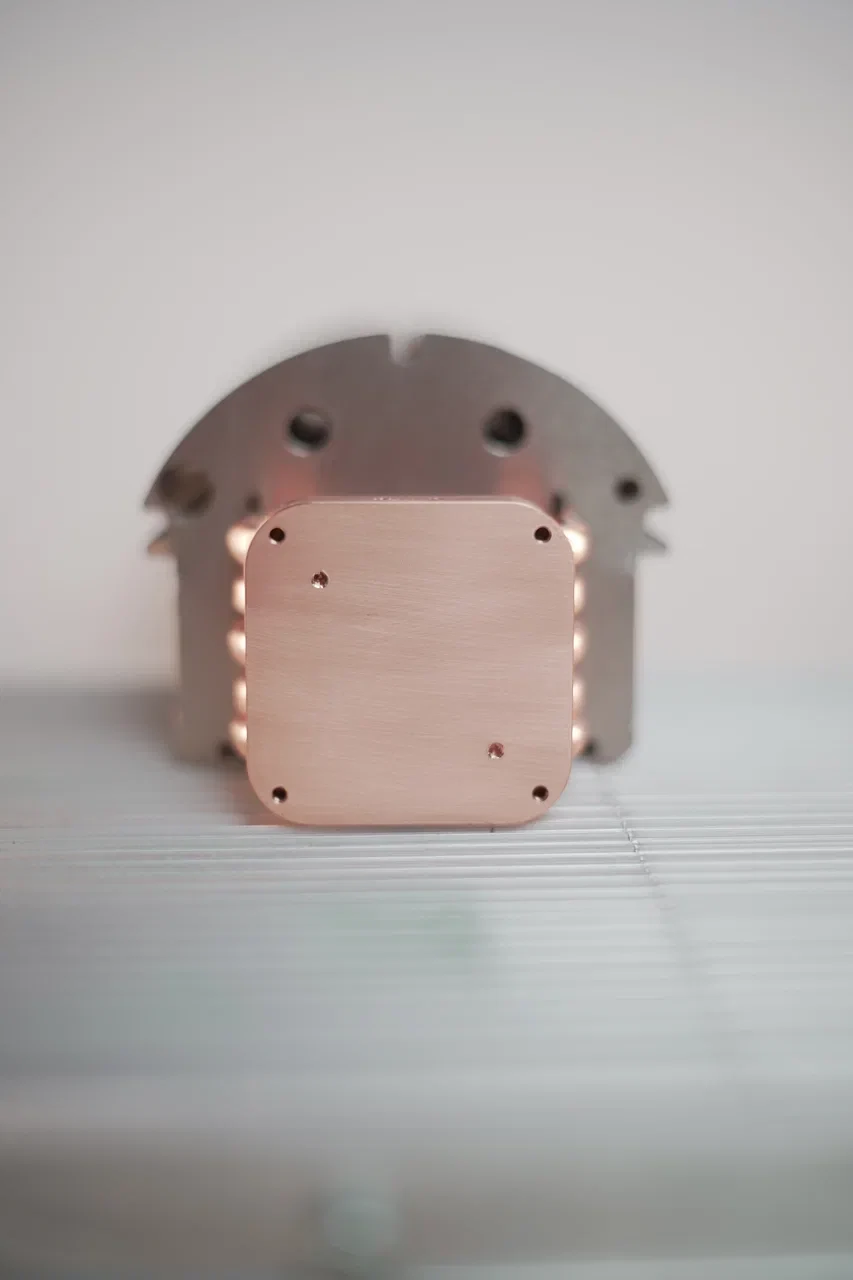
Copper interface plate improves initial heat spreading before transfer into the main aluminum mass.
Mechanical-Thermal Coupling
One unexpected factor: structural rigidity.
At high clamping forces, minor flex in the mounting structure altered contact pressure. That changed thermal resistance.
The radiator became not just a heat sink — but a mechanical component.
Increasing stiffness improved temperature uniformity more than simply enlarging fin area.
Airflow Reality vs Assumptions
Simulations and intuition often assume clean airflow paths.
In reality:
-
Fans introduce turbulence
-
Fins create dead zones
-
Adjacent structures disrupt flow
Custom airflow channeling was required to ensure consistent cooling across the entire surface.
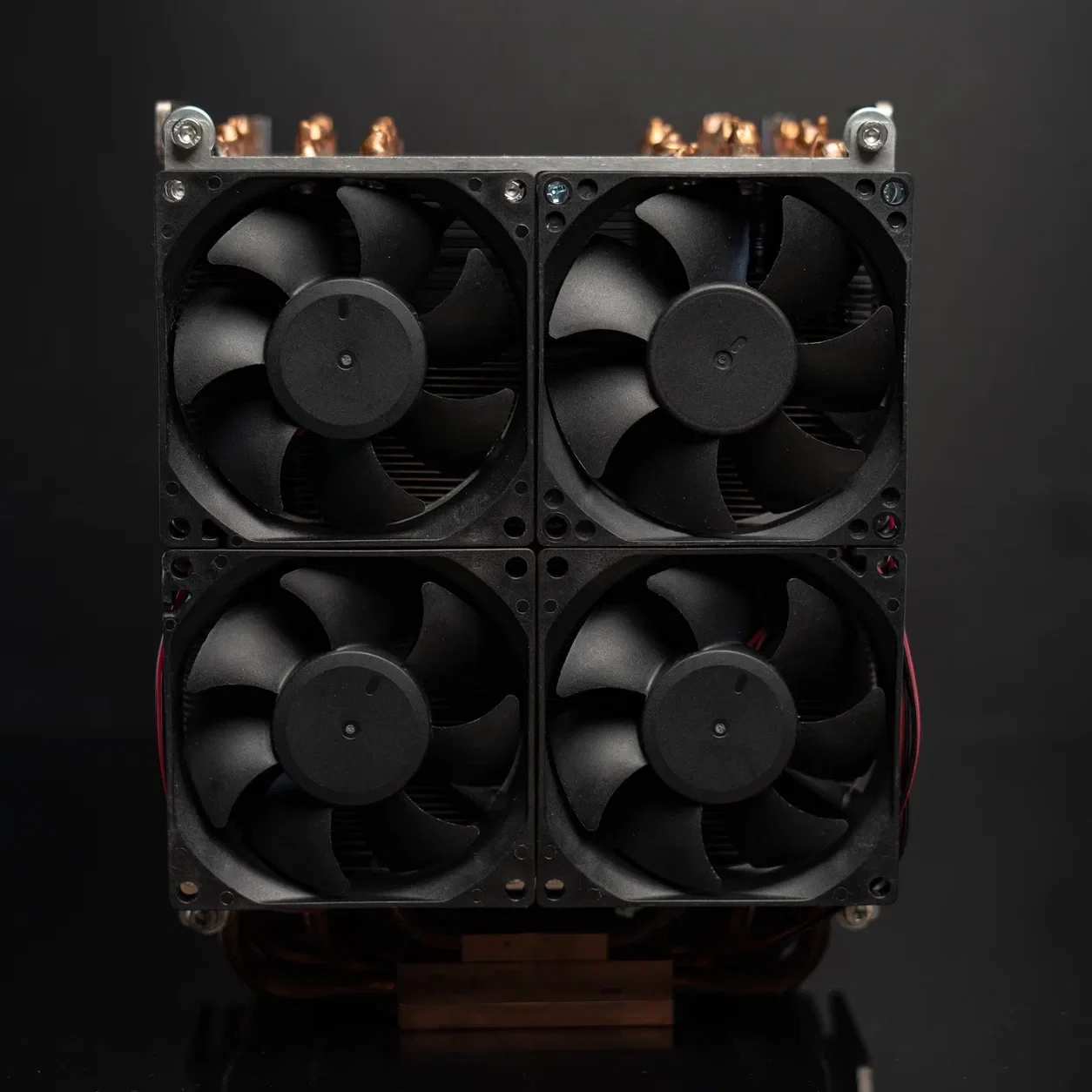
Airflow path optimization proved as critical as raw heatsink mass.
The Result
With the redesigned radiator:
-
Temperature distribution became more uniform
-
Junction temperature dropped under sustained load
-
Long-term stability improved
-
Degradation rate decreased
The solution wasn’t larger.
It was more controlled.
Final Thought
At extreme LED power levels, a radiator isn’t just a chunk of metal.
It’s a thermal system that must integrate:
-
Materials science
-
Mechanical rigidity
-
Pressure control
-
Airflow engineering
And once you cross a certain power density threshold, off-the-shelf solutions simply aren’t designed for that regime.
Discussions
Become a Hackaday.io Member
Create an account to leave a comment. Already have an account? Log In.