 pcbmaster
Surface-Mount Device (SMD)technology has become the foundation of modern electronics manufacturing. From smartphones and IoT devices to automotive control systems and industrial equipment, nearly every electronic product relies on SMD components mounted directly onto printed circuit boards (PCBs).
However, choosing the right SMD package is not simply a matter of component availability. Package selection directly affects PCB layout, signal integrity, thermal performance, manufacturing yield, assembly cost, inspection methods, and long-term reliability.
For PCB designers, hardware engineers, and sourcing professionals, understanding the different SMD package types is essential for making informed design decisions. In this guide, we'll explore the most common SMD package categories, their characteristics, advantages, limitations, and typical applications.
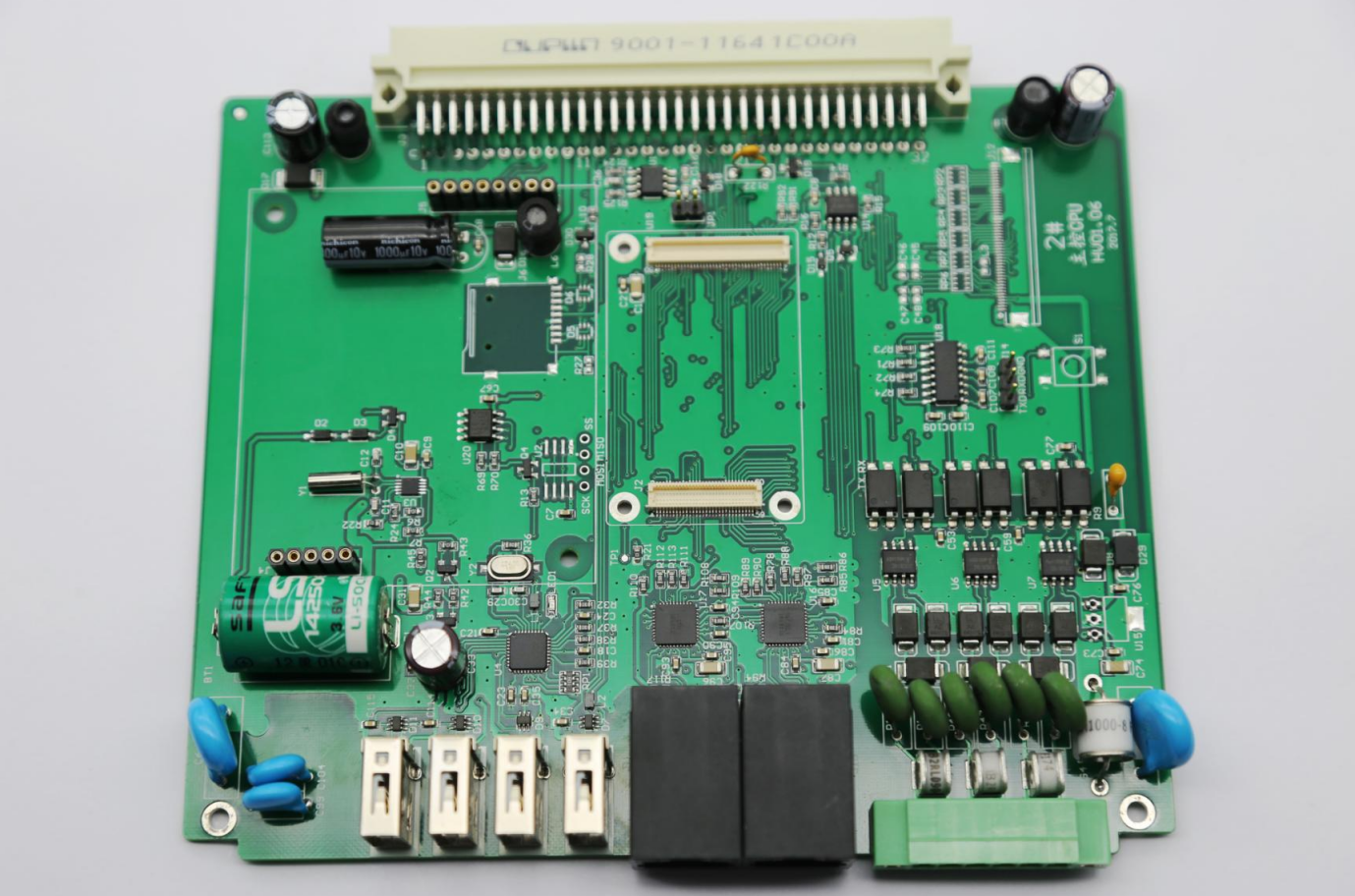
What Is an SMD Package?
An SMD package refers to the physical housing of an electronic component designed for surface-mount technology (SMT). Unlike through-hole components that require leads to pass through drilled holes in a PCB, SMD components are soldered directly onto copper pads on the board's surface.
This approach offers several advantages:
- Smaller PCB size
- Higher component density
- Faster automated assembly
- Reduced manufacturing cost
- Better high-frequency performance
- Improved production scalability
As electronic devices continue to become more compact and powerful, SMD packaging has evolved into a wide range of formats optimized for different electrical, mechanical, and thermal requirements.
Why SMD Package Selection Matters
Many designers focus primarily on electrical specifications when selecting components. However, package choice can be equally important.
The package influences:
Design Factor | Impact |
PCB Size | Smaller packages enable higher density layouts |
Signal Integrity | Shorter interconnections reduce parasitic effects |
Thermal Management | Package structure affects heat dissipation |
Manufacturing Yield | Some packages are easier to assemble than others |
Inspection Capability | Lead visibility impacts quality control |
Repairability | Larger packages are easier to rework |
Cost | Package complexity influences assembly expenses |
For example, a QFN package may save board space and improve electrical performance, while a QFP package may simplify inspection and rework.
Therefore, selecting the appropriate package requires balancing performance, manufacturability, reliability, and cost.
Common Passive SMD Package Types
Passive components such as resistors, capacitors, and inductors are typically identified by standardized package sizes.
Chip Resistor and Capacitor Packages
The most common package naming convention uses dimensions in inches.
Package | Dimensions (inch) | Dimensions (mm) |
0201 | 0.02 × 0.01 | 0.6 × 0.3 |
0402 | 0.04 × 0.02 | 1.0 × 0.5 |
0603 | 0.06 × 0.03 | 1.6 × 0.8 |
0805 | 0.08 × 0.05 | 2.0 × 1.25 |
1206 | 0.12 × 0.06 | 3.2 × 1.6 |
1210 | 0.12 × 0.10 | 3.2 × 2.5 |
2512 | 0.25 × 0.12 | 6.3 × 3.2 |
Advantages
- Extremely compact
- Low assembly cost
- High-speed automated placement
- Excellent suitability for high-volume production
Typical Applications
- Consumer electronics
- Smartphones
- Wearables
- Networking equipment
- Automotive electronics
As package sizes shrink, assembly accuracy requirements become increasingly demanding. While 0402 and 0201 packages are now common, they require precise PCB fabrication and SMT process control.
Leaded SMD IC Package Types
Leaded packages feature external leads extending from the package body, making them easier to inspect and solder.
SOIC (Small Outline Integrated Circuit)
SOIC packages remain popular for analog and low-pin-count digital devices.
Characteristics
- Gull-wing leads
- Moderate pin density
- Easy inspection
- Simple rework process
Common Uses
- Operational amplifiers
- Power management ICs
- Interface circuits
- Analog devices
Advantages
- Cost-effective
- Mature manufacturing process
- Good reliability
Limitations
- Larger footprint than leadless alternatives
- Less suitable for high pin counts
SOP and SSOP
SOP (Small Outline Package) and SSOP (Shrink Small Outline Package) are refinements of SOIC technology.
Key Features
- Reduced lead pitch
- Smaller footprint
- Higher pin density
Applications
- Memory devices
- Consumer electronics
- Communication modules
These packages strike a balance between miniaturization and manufacturability.
TSSOP (Thin Shrink Small Outline Package)
TSSOP packages further reduce thickness and footprint.
Benefits
- Space-saving design
- Improved board density
- Relatively easy assembly
Typical Applications
- Embedded systems
- Portable devices
- Medical electronics
QFP (Quad Flat Package)
QFP packages place leads on all four sides of the package.
Characteristics
- High pin count capability
- Visible solder joints
- Good inspectability
Common Variants
- LQFP (Low-profile QFP)
- TQFP (Thin QFP)
- PQFP (Plastic QFP)
Applications
- Microcontrollers
- DSPs
- FPGA devices
- Communication processors
Advantages
- Easy visual inspection
- Convenient debugging and rework
Disadvantages
- Larger PCB area requirement
- Lead damage during handling is possible
Despite competition from leadless packages, QFP remains widely used in industrial and automotive applications.
Leadless SMD Package Types
Leadless packages eliminate exposed leads, reducing parasitic inductance and improving electrical performance.
QFN (Quad Flat No-Lead)
QFN has become one of the most popular modern IC package formats.
Structure
Instead of external leads, metal pads are located underneath the package perimeter.
Most QFN packages also include a central thermal pad.
Advantages
- Small footprint
- Excellent thermal performance
- Low parasitic inductance
- Strong high-frequency characteristics
Applications
- RF circuits
- Wireless communication modules
- Power management ICs
- IoT products
Challenges
- Hidden solder joints
- Requires X-ray inspection
- More difficult rework process
As electronic devices become smaller and faster, QFN adoption continues to grow rapidly.
DFN (Dual Flat No-Lead)
DFN is essentially a two-sided version of QFN.
Features
- Compact size
- Excellent thermal path
- Lower package height
Common Uses
- Sensors
- Battery management circuits
- Portable electronics
DFN packages are especially attractive in ultra-compact product designs.
LGA (Land Grid Array)
LGA packages use flat contact pads on the bottom surface.
Advantages
- High connection density
- Excellent electrical performance
- Compact form factor
Applications
- MEMS sensors
- RF modules
- Automotive electronics
- Embedded computing systems
Because solder joints are hidden underneath, inspection typically requires advanced imaging methods.
BGA-Based SMD Package Types
As integrated circuits became more powerful, pin counts increased dramatically. Traditional leaded packages struggled to accommodate hundreds or thousands of connections.
This challenge led to the development of Ball Grid Array (BGA) technology.
BGA (Ball Grid Array)
BGA packages use solder balls arranged in a matrix on the underside of the package.
Advantages
- Extremely high pin count
- Compact footprint
- Excellent electrical performance
- Reduced inductance
- Improved heat dissipation
Applications
- Processors
- FPGAs
- ASICs
- High-performance networking devices
Challenges
- Hidden solder joints
- Requires X-ray inspection
- More complex PCB design rules
Nevertheless, BGA remains the preferred solution for high-density, high-performance electronics.
FBGA (Fine-Pitch BGA)
FBGA reduces ball spacing to increase I/O density.
Typical Applications
- DDR memory
- Flash memory
- High-speed communication devices
Benefits
- Smaller footprint
- Higher connection density
Design Considerations
- Tight manufacturing tolerances
- Advanced PCB fabrication requirements
PBGA (Plastic Ball Grid Array)
PBGA uses plastic encapsulation and offers a cost-effective alternative to ceramic packages.
Advantages
- Lower manufacturing cost
- Good thermal performance
- High reliability
Common Applications
- Consumer electronics
- Embedded systems
- Industrial controllers
CBGA (Ceramic Ball Grid Array)
CBGA utilizes ceramic substrates for improved thermal and mechanical stability.
Advantages
- Superior thermal characteristics
- Excellent dimensional stability
- Enhanced reliability in harsh environments
Applications
- Aerospace systems
- Military electronics
- High-reliability industrial equipment
The higher cost generally limits CBGA use to mission-critical applications.
Thermal Considerations in SMD Package Selection
As power density increases, thermal management becomes a critical design concern.
Different package types offer varying levels of heat dissipation.
Package Type | Thermal Performance |
SOIC | Moderate |
TSSOP | Moderate |
QFP | Good |
DFN | Very Good |
QFN | Excellent |
BGA | Excellent |
CBGA | Outstanding |
Packages with exposed thermal pads, such as QFN and DFN, allow heat to transfer directly into PCB copper planes, improving overall system reliability.
When designing power electronics, engineers should carefully evaluate thermal resistance specifications rather than focusing solely on package size.
Manufacturing and Assembly Considerations
Package selection also impacts PCB assembly processes.
Easier Packages for Assembly
- SOIC
- SOP
- TSSOP
- QFP
These packages provide visible solder joints and generally offer high manufacturing yields.
More Challenging Packages
- QFN
- DFN
- LGA
- BGA
These package types often require:
- Precise stencil design
- Tight solder paste control
- X-ray inspection
- Advanced rework equipment
For companies outsourcing PCB assembly, working with an experienced manufacturing partner can significantly improve yield and reliability. Manufacturers such as PCBMASTER routinely assemble a wide range of package types, from standard passive components to complex BGA and fine-pitch QFN devices.
How to Choose the Right SMD Package
There is no universally "best" package. The optimal choice depends on project requirements.
Consider the following factors:
Choose SOIC or QFP When
- Easy inspection is important
- Prototyping and debugging are priorities
- Manual rework may be required
Choose QFN or DFN When
- Space is limited
- Thermal performance matters
- High-frequency operation is required
Choose BGA When
- High pin counts are necessary
- Maximum performance is required
- PCB space must be minimized
Choose Larger Passive Packages When
- Higher power handling is needed
- Manual assembly is expected
- Mechanical robustness is important
Choose Smaller Passive Packages When
- Board space is constrained
- High-volume automated assembly is available
- Miniaturization is a priority
The best package is ultimately the one that aligns with both product requirements and manufacturing capabilities.
Future Trends in SMD Packaging
The electronics industry continues moving toward higher density and greater functionality.
Several trends are shaping the future of SMD packaging:
- Ultra-small passive packages below 0201
- Advanced wafer-level packaging (WLP)
- Fan-out wafer-level packaging (FOWLP)
- System-in-package (SiP) integration
- 3D packaging technologies
- Improved thermal management structures
As these technologies mature, PCB designers will face new opportunities and challenges in balancing performance, manufacturability, and cost.
Companies throughout the electronics supply chain, including PCB fabrication and assembly providers such as PCBMASTER, are continually adapting their manufacturing capabilities to support these advanced package technologies.
Conclusion
SMD package selection is far more than a mechanical decision—it is a fundamental aspect of PCB design that influences electrical performance, thermal behavior, manufacturing efficiency, reliability, and overall product cost.
Passive packages such as 0402 and 0603 dominate modern compact designs, while leaded packages like SOIC and QFP continue to offer simplicity and ease of inspection. Meanwhile, leadless formats such as QFN and DFN provide superior electrical and thermal performance, and BGA packages remain indispensable for high-pin-count, high-performance devices.
By understanding the strengths and trade-offs of each package type, engineers can make informed decisions that improve product quality and streamline manufacturing. Whether you're developing a compact IoT sensor, an industrial controller, a medical device, or a high-speed communication system, selecting the appropriate SMD package is a critical step toward achieving a successful PCB design
Discussions
Become a Hackaday.io Member
Create an account to leave a comment. Already have an account? Log In.