 pcbmaster
A 100 ohm resistor is one of the most commonly used passive electronic components in circuit design, appearing in everything from simple LED circuits and sensor modules to advanced embedded systems and communication hardware. Although its resistance value seems simple, this small component plays a critical role in controlling current flow, protecting sensitive devices, adjusting signal levels, and maintaining circuit stability.
For engineers, makers, and electronics enthusiasts, understanding how a 100 ohm resistor works and where it is used is essential. Whether troubleshooting a PCB, designing a prototype, or selecting components for mass production, knowing the characteristics of this resistor value can help avoid circuit failures and improve overall performance.
This guide explains the working principle of a 100 ohm resistor, its electrical characteristics, identification methods, power considerations, and the most common applications in modern electronic systems.
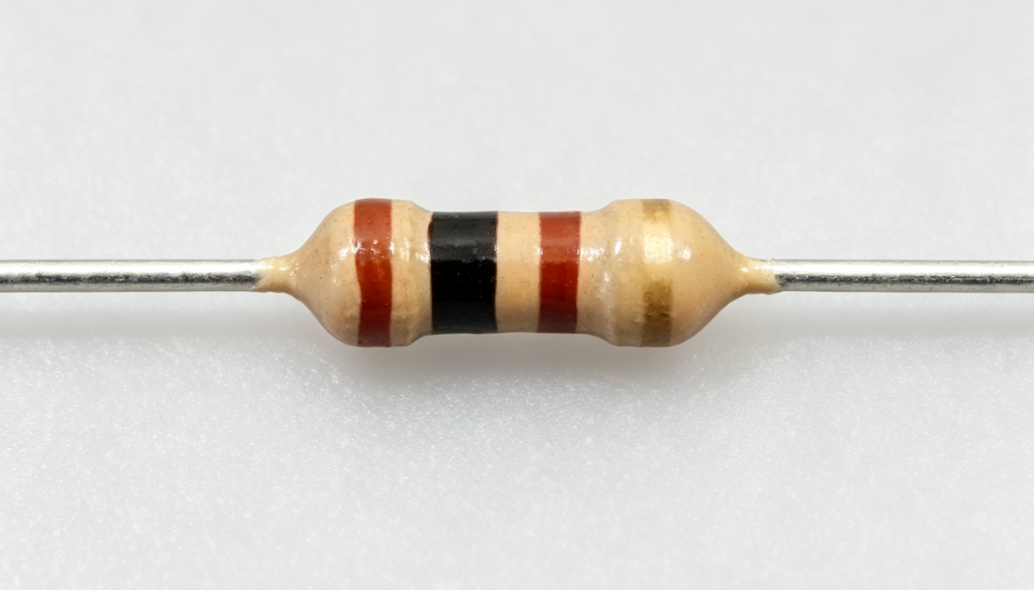
What Is a 100 Ohm Resistor?
A 100 ohm resistor is a passive electronic component with a resistance value of 100 ohms (Ω). Its primary function is to limit or control the flow of electrical current in a circuit.
Resistance determines how much a component opposes the movement of electric current. A higher resistance value reduces current flow, while a lower resistance value allows more current to pass through. A 100 ohm resistor sits in a frequently useful range, providing enough resistance for current regulation without significantly restricting circuit operation.
The relationship between voltage, current, and resistance is described by Ohm’s Law:
I=V/R
For example, if a 5V supply is connected across a 100 ohm resistor, the current flowing through the resistor can be calculated as:
I = 5V / 100Ω = 0.05A
or 50mA.
This predictable behavior makes the 100 ohm resistor a practical choice for many electronic applications.
How Does a 100 Ohm Resistor Work?
The working principle of a 100 ohm resistor is based on electrical resistance created by a resistive material. Inside the component, conductive particles are arranged in a way that restricts the movement of electrons.
When voltage is applied, electrons attempt to flow through the resistor. However, collisions within the resistive material slow down this movement, converting part of the electrical energy into heat. This process limits current and allows designers to control circuit behavior.
A typical resistor consists of:
- Resistive element – The material responsible for creating resistance
- Metal terminals or leads – Connections that allow current to enter and exit
- Protective coating – Provides insulation and mechanical protection
- Marking system – Indicates resistance value and tolerance
The resistor itself does not actively amplify, switch, or generate signals. Instead, it performs a passive but essential role in managing electrical conditions.
For PCB designs, a 100 ohm resistor may appear as a tiny surface-mount device (SMD) or a traditional through-hole component. Despite its small size, its placement and specifications can directly affect circuit reliability.
Companies such as PCBMASTER often consider resistor selection, footprint compatibility, and assembly requirements during PCB manufacturing because even basic components can influence signal quality and production performance.
How to Identify a 100 Ohm Resistor?
Identifying a 100 ohm resistor depends on whether it is a through-hole resistor or a surface-mount resistor.
Through-Hole 100 Ohm Resistor Color Code
Traditional axial resistors use color bands to represent resistance values.
For a standard 4-band resistor:
Brown - Black - Brown - Gold
represents:
- Brown = 1
- Black = 0
- Brown multiplier = ×10
- Gold = ±5% tolerance
Therefore:
10 × 10 = 100Ω
A 5-band precision resistor may use a different color arrangement, such as:
Brown - Black - Black - Black - Brown
depending on the resistance coding system and tolerance requirement.
SMD 100 Ohm Resistor Marking
Surface-mount resistors usually use numerical markings instead of color bands.
Common examples include:
- 101 → 100Ω
- 1000 → 100Ω in some precision marking systems
The exact marking depends on the package size and manufacturer.
Because modern PCB assemblies frequently use tiny SMD components, engineers usually verify resistor values through datasheets, component markings, or automated inspection systems rather than relying only on visual identification.
Key Specifications of a 100 Ohm Resistor
Selecting the correct 100 ohm resistor requires more than checking its resistance value. Several electrical and physical parameters determine whether the component is suitable for a specific application.
1. Resistance Tolerance
Tolerance indicates how much the actual resistance can vary from the rated value.
Common tolerance ratings include:
- ±1% for precision circuits
- ±5% for general-purpose electronics
- ±10% for low-cost applications
For example, a 100 ohm resistor with ±5% tolerance may have an actual resistance between 95Ω and 105Ω.
Precision circuits such as measurement equipment often require tighter tolerance, while simple indicator circuits may not.
2. Power Rating
Every resistor has a maximum power rating that determines how much heat it can safely dissipate.
Common power ratings include:
- 1/8W
- 1/4W
- 1/2W
- 1W
- Higher power ratings for specialized applications
The power consumed by a resistor can be calculated using:
P = I²R
or
P = V²/R
A 100 ohm resistor carrying excessive current can overheat, change its resistance value, or fail completely. Therefore, engineers must select a resistor with sufficient power capacity.
3. Temperature Coefficient
The resistance value changes slightly as temperature changes. The temperature coefficient describes this variation.
A low temperature coefficient is important in applications where accuracy matters, such as:
- Precision measurement circuits
- Industrial control systems
- Calibration equipment
4. Package Size
Modern electronics use different resistor packages depending on space limitations and assembly methods.
Common SMD packages include:
- 0402
- 0603
- 0805
- 1206
Smaller packages save PCB space, while larger packages usually provide higher power handling capability.
Common Applications of a 100 Ohm Resistor
The 100 ohm resistor is widely used because it provides a balance between current control and signal performance. Below are some of its most common applications.
1. LED Current Limiting
One of the most popular uses of a 100 ohm resistor is limiting current through LEDs.
LEDs require controlled current because excessive current can permanently damage the semiconductor junction. A resistor placed in series with the LED reduces current and protects the device.
For example, in a 5V circuit with a typical red LED:
- Supply voltage: 5V
- LED forward voltage: approximately 2V
- Desired current: around 30mA
A resistor value near 100 ohms may be selected depending on the exact LED characteristics.
However, engineers must calculate the resistor value based on actual voltage and current requirements rather than choosing a value randomly.
2. Signal Termination and Impedance Matching
In high-speed digital circuits, a 100 ohm resistor is commonly used for signal integrity control.
Many differential communication standards use approximately 100 ohm impedance, including:
- USB differential signaling
- Ethernet communication
- LVDS interfaces
A properly selected termination resistor helps reduce:
- Signal reflections
- Ringing
- Overshoot and undershoot
- Data transmission errors
As PCB speeds continue increasing, resistor placement becomes increasingly important. A small difference in routing, trace impedance, or termination strategy can affect system reliability.
3. Transistor Base Current Limiting
A 100 ohm resistor can also be used to limit current entering the base of a bipolar junction transistor (BJT).
When controlling a transistor switch, excessive base current can damage the transistor or overload the driving circuit. A resistor placed between the control signal and transistor base provides current regulation.
This application is common in:
- Relay drivers
- Motor control circuits
- Switching circuits
- Hobby electronics projects
4. Pull-Up and Pull-Down Networks
Although higher resistance values such as 1kΩ or 10kΩ are more common for pull-up and pull-down resistors, 100 ohm resistors can be used in situations requiring stronger biasing.
Examples include:
- High-speed digital interfaces
- Communication buses
- Noise-sensitive circuits
The lower resistance provides stronger control of voltage levels but also increases current consumption.
5. Current Sensing Applications
A low-value resistor such as 100 ohms can sometimes be used for current measurement in specific circuits.
By measuring the voltage drop across the resistor, engineers can estimate current flow. However, dedicated current-sense resistors are usually preferred when accuracy and low power loss are critical.
6. PCB Prototyping and General Circuit Design
For electronics prototyping, 100 ohm resistors are often included in component kits because they are useful in many basic experiments.
Common beginner and maker projects include:
- Arduino circuits
- Microcontroller interfaces
- Sensor modules
- Audio circuits
- Small power control systems
Their availability, low cost, and predictable behavior make them one of the first resistor values many electronics learners encounter.
100 Ohm Resistor vs Other Common Resistor Values
Different resistor values serve different purposes.
Resistor Value | Common Uses |
10Ω | Current limiting, filtering, power applications |
100Ω | LED circuits, termination, signal control |
1kΩ | General pull-up/pull-down, transistor circuits |
10kΩ | Logic biasing, sensor circuits |
100kΩ | High-impedance input circuits |
A 100 ohm resistor is generally chosen when a circuit requires stronger current control than a 1kΩ resistor but does not need extremely low resistance.
How to Choose the Right 100 Ohm Resistor
Before selecting a 100 ohm resistor, consider the following factors:
Check the Required Power Rating
Calculate expected power consumption and choose a resistor with adequate safety margin.
Consider Environmental Conditions
Temperature, humidity, and mechanical stress can affect resistor performance.
Match the Package to PCB Requirements
For compact electronics, SMD resistors are usually preferred. Larger through-hole components may be better for high-power or educational applications.
Verify Tolerance Requirements
Precision circuits require tighter tolerance, while general-purpose circuits can use standard values.
Review Manufacturer Specifications
Datasheets provide important information about:
- Maximum voltage
- Temperature range
- Noise characteristics
- Reliability ratings
Conclusion
A 100 ohm resistor may be a simple component, but it performs many important functions across modern electronics. From protecting LEDs and controlling transistor circuits to improving high-speed signal integrity, this resistor value remains one of the most widely used choices in circuit design.
Understanding its working principle, specifications, and applications helps engineers make better component decisions and troubleshoot electronic systems more effectively.
Whether designing a prototype, developing a commercial product, or manufacturing complex PCB assemblies, selecting the correct resistor value is a fundamental step toward reliable circuit performance. With professional PCB design and manufacturing experience, PCBMASTER supports engineers in transforming circuit concepts into dependable electronic products where every component choice matters.
Discussions
Become a Hackaday.io Member
Create an account to leave a comment. Already have an account? Log In.