 Cedric Honnet

Publications
- Academic (ACM UIST 2021)
- MIT News
- HACKADAY
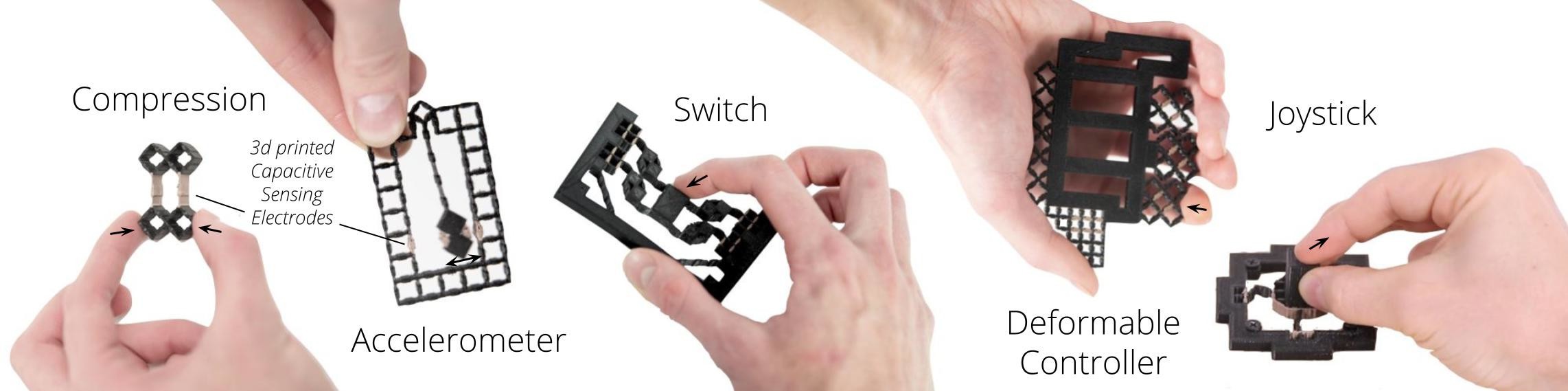
Principle
The conductive cell walls of MetaSense objects act as capacitance sensors to detect user interaction. In the following figure, a Metasense joystick is shown in (a) original state and (b,c) deformed states during user interaction with capacitance changes of conductive shear cells detected accordingly.
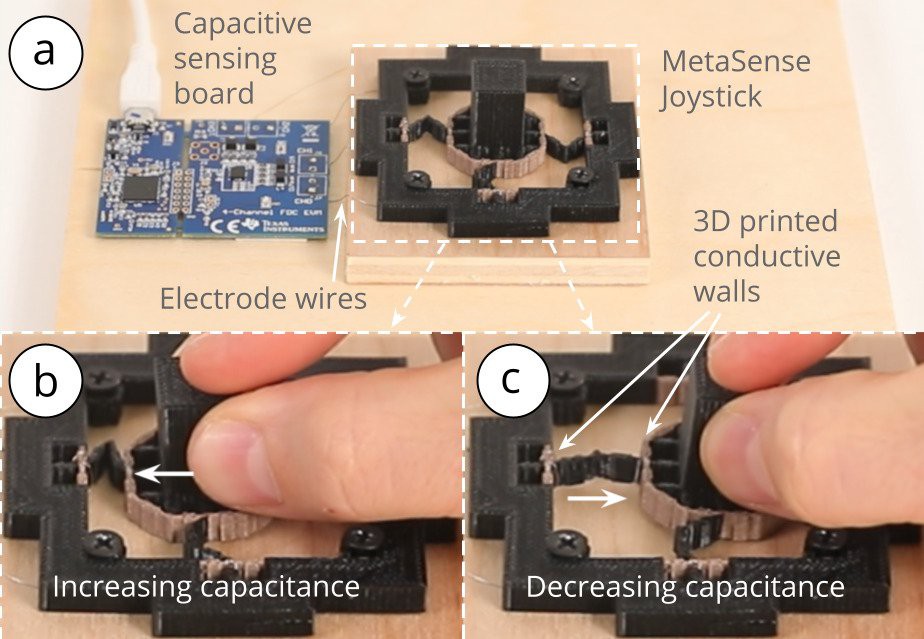
Visualizing Capacitance Variation:
Repo used to drive the capacitive sensing board:
Characterization
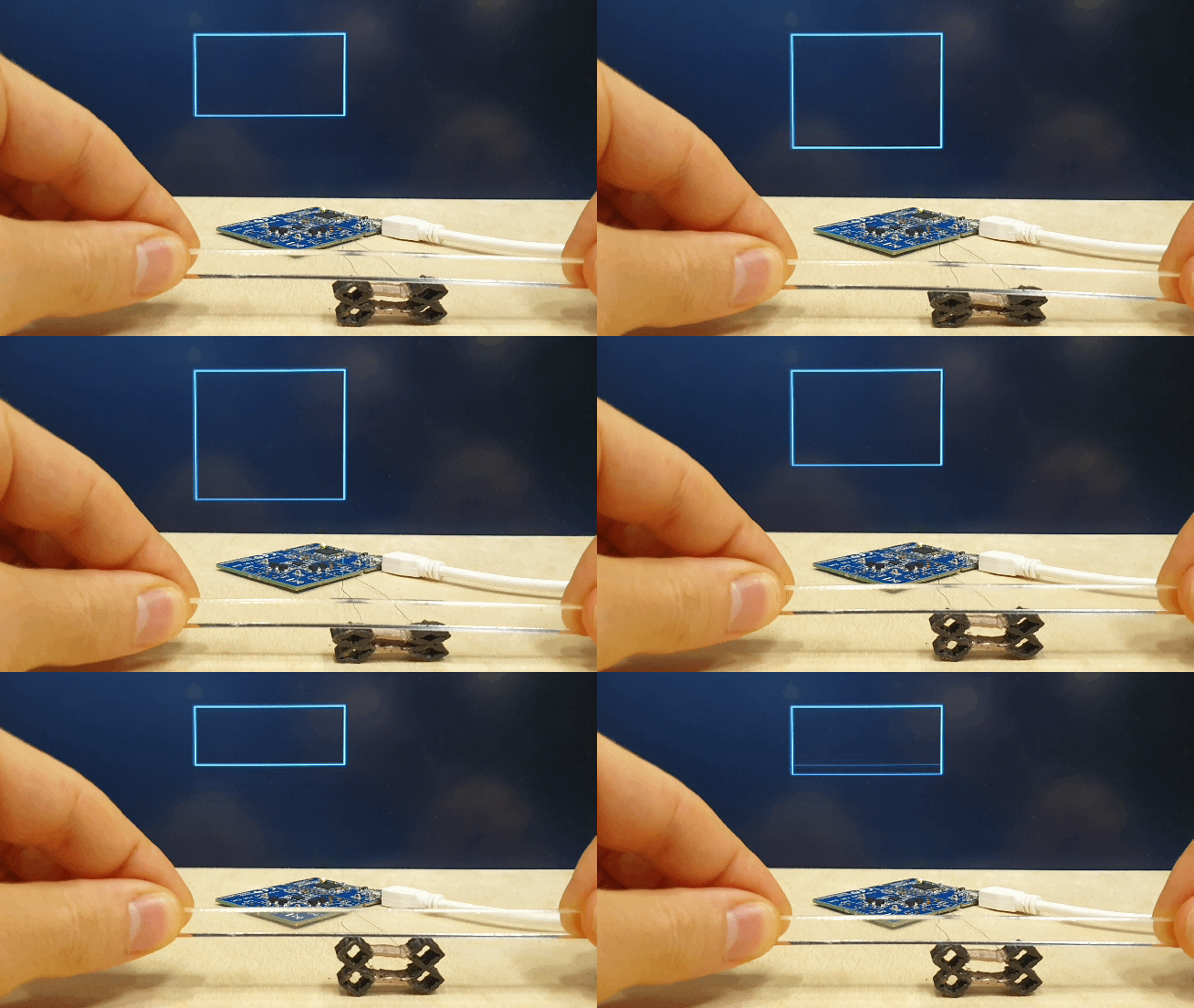
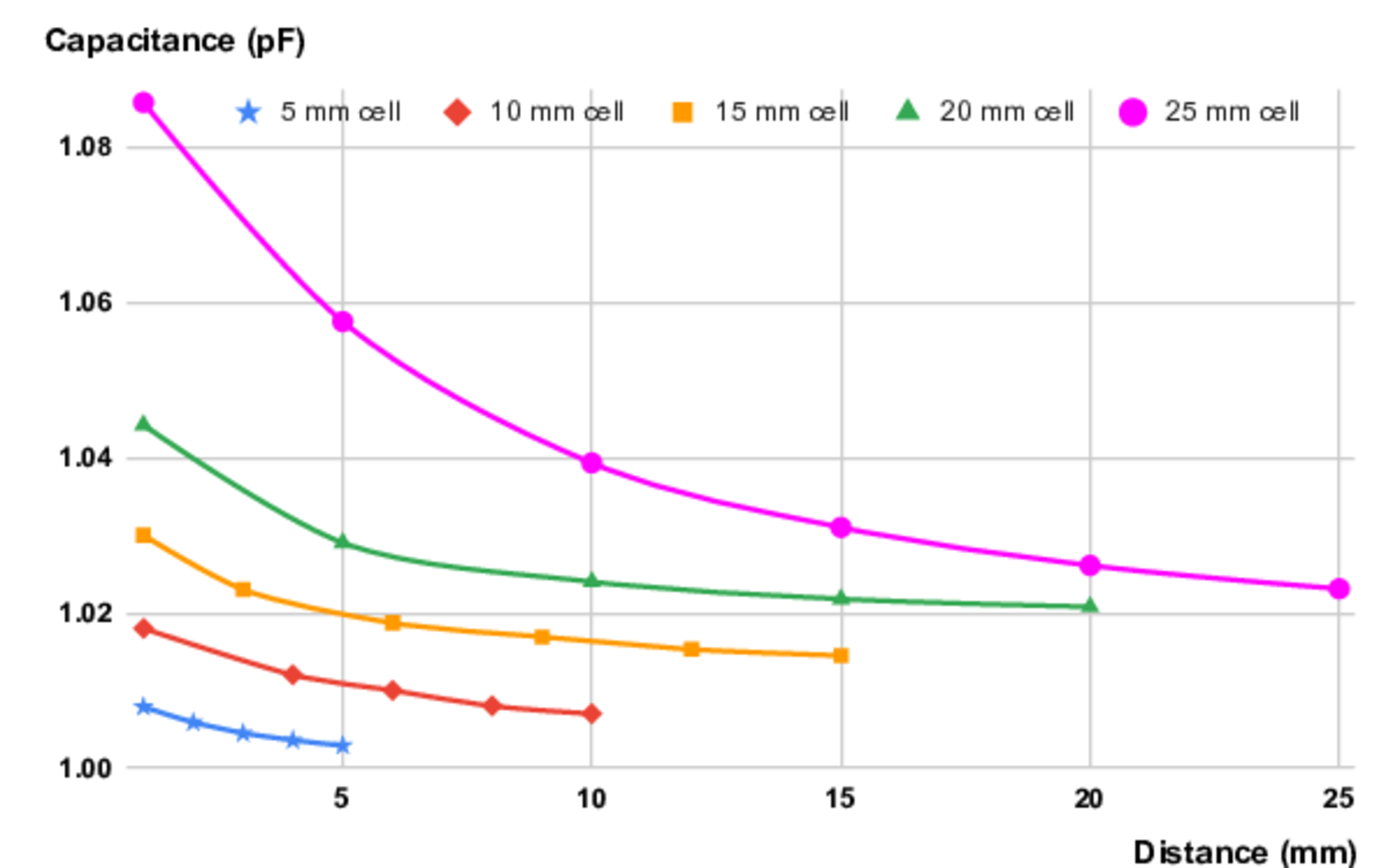
We printed multiple sizes of the "fundamental sensing cells" and characterized their capacitance VS compression:
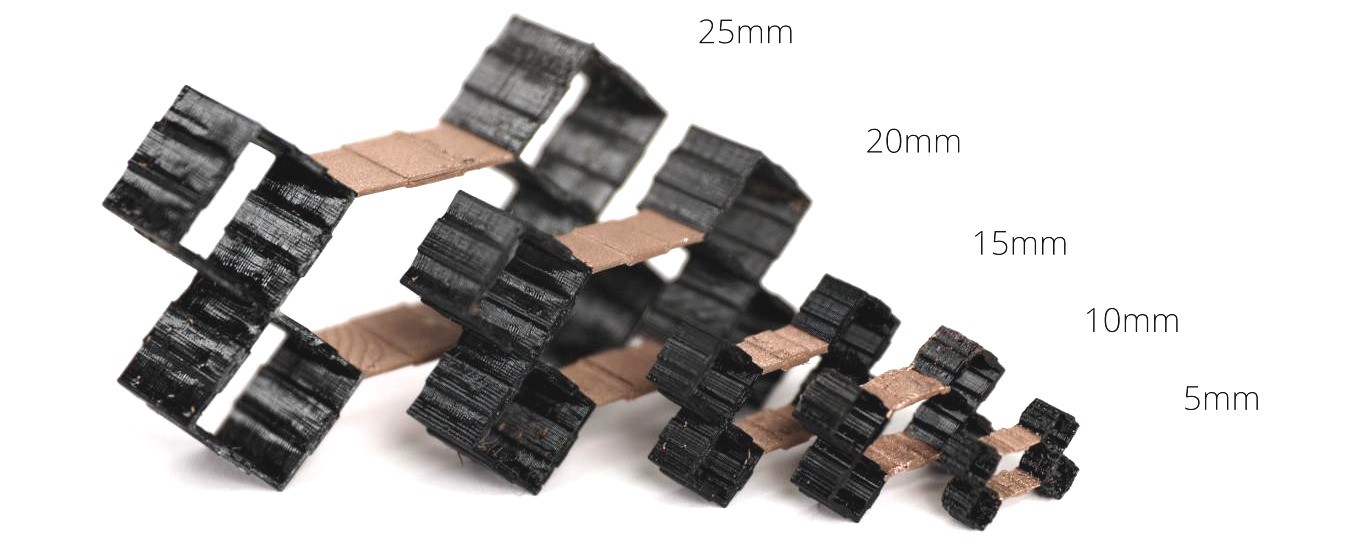
The results allow visualizing that we reached the limits of our capacitive sensing board (1pF) with the 5mm cells:
Simulation
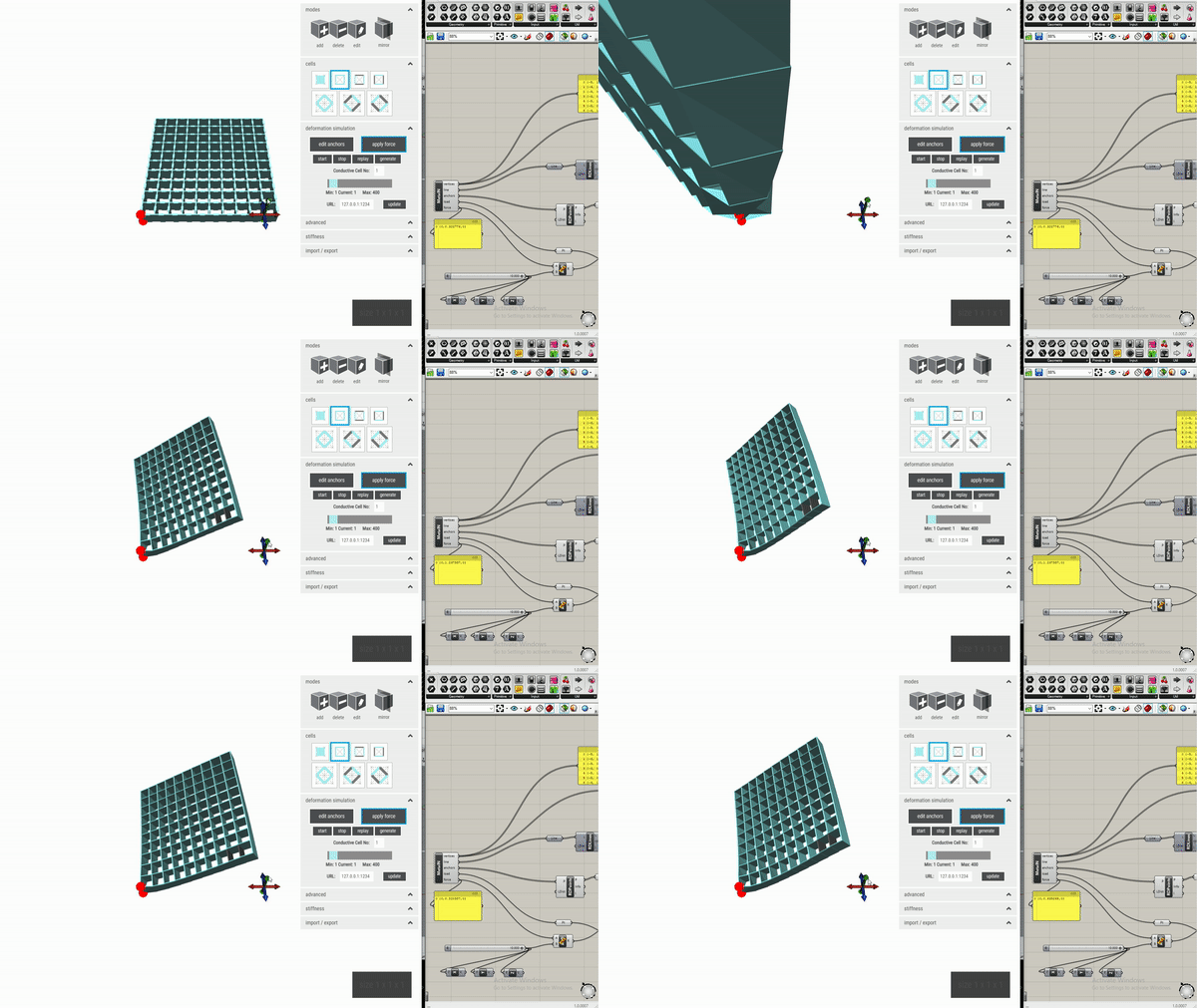
The editor allows visualizing simulated deformation, to predict the best position of the capacitive sensing cells:
Designs & Fabrications
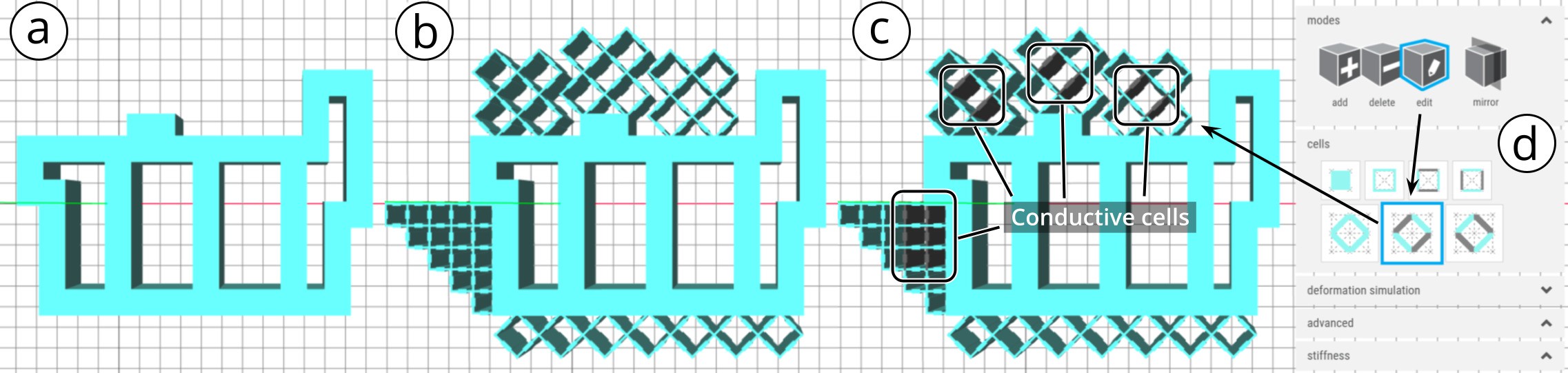
Here is a step by step example, creating a model in the MetaSense 3D editor:
(a,b): adding non-conductive, structural cells;
(c,d) converting structural cells to conductive cells using the edit tool.
=> Printing result:
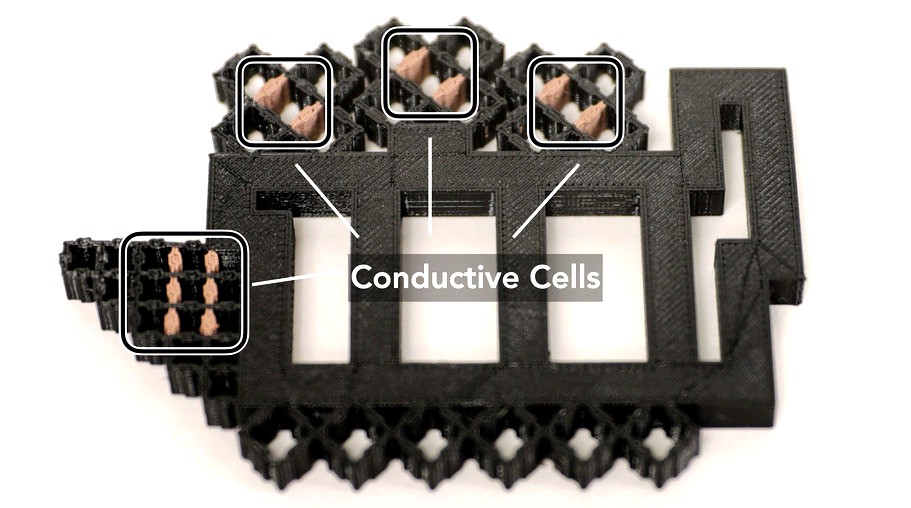
Filaments used: NinjaFlex TPU + Electrifi Conductive Filament
3d printer used: FlashForge Creator Pro 2.
Applications
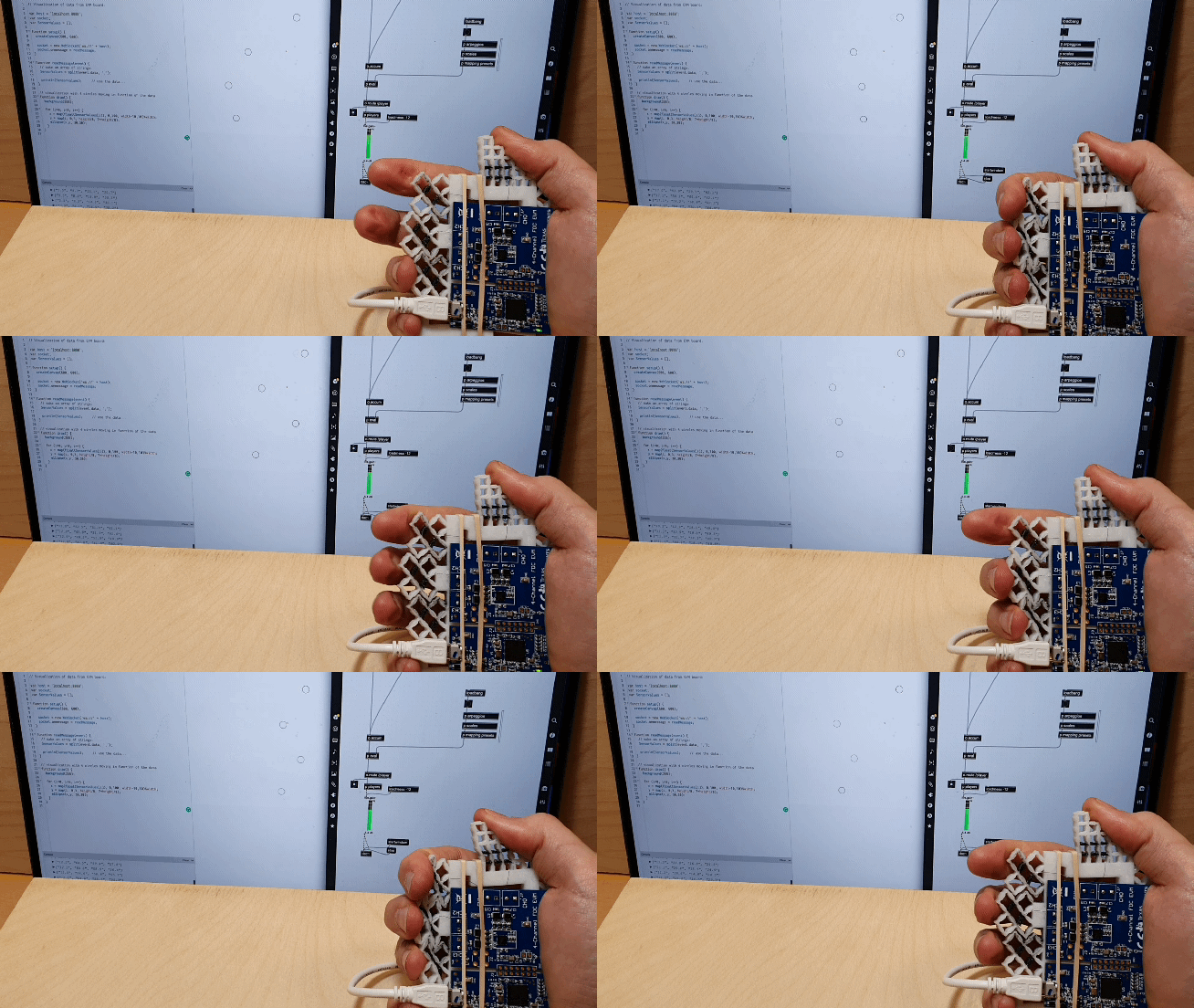
A musical controller !?
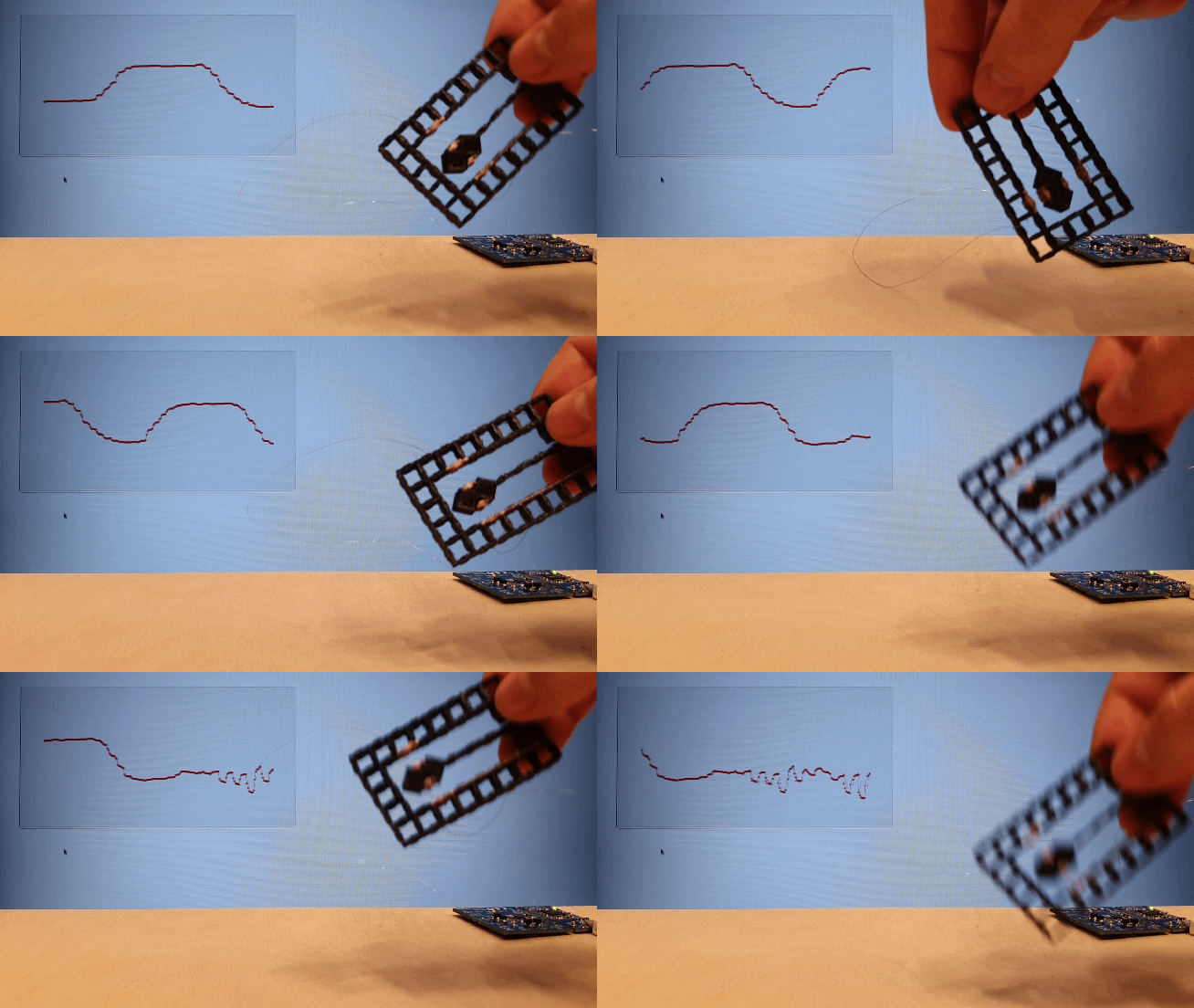
A 3d printed accelerometer!?
A joystick to play PacMan !?
Acknowledgement
The MetaSense fabrication was performed at the Center for Bits and Atoms, their expertise and financial contributions were essential for this project.
Team
J. Gong, O. Seow, J. Forman, S. Mueller.



 Neil means
 Aidan Leitch
 fcodiegomoreira
Thanks again!!