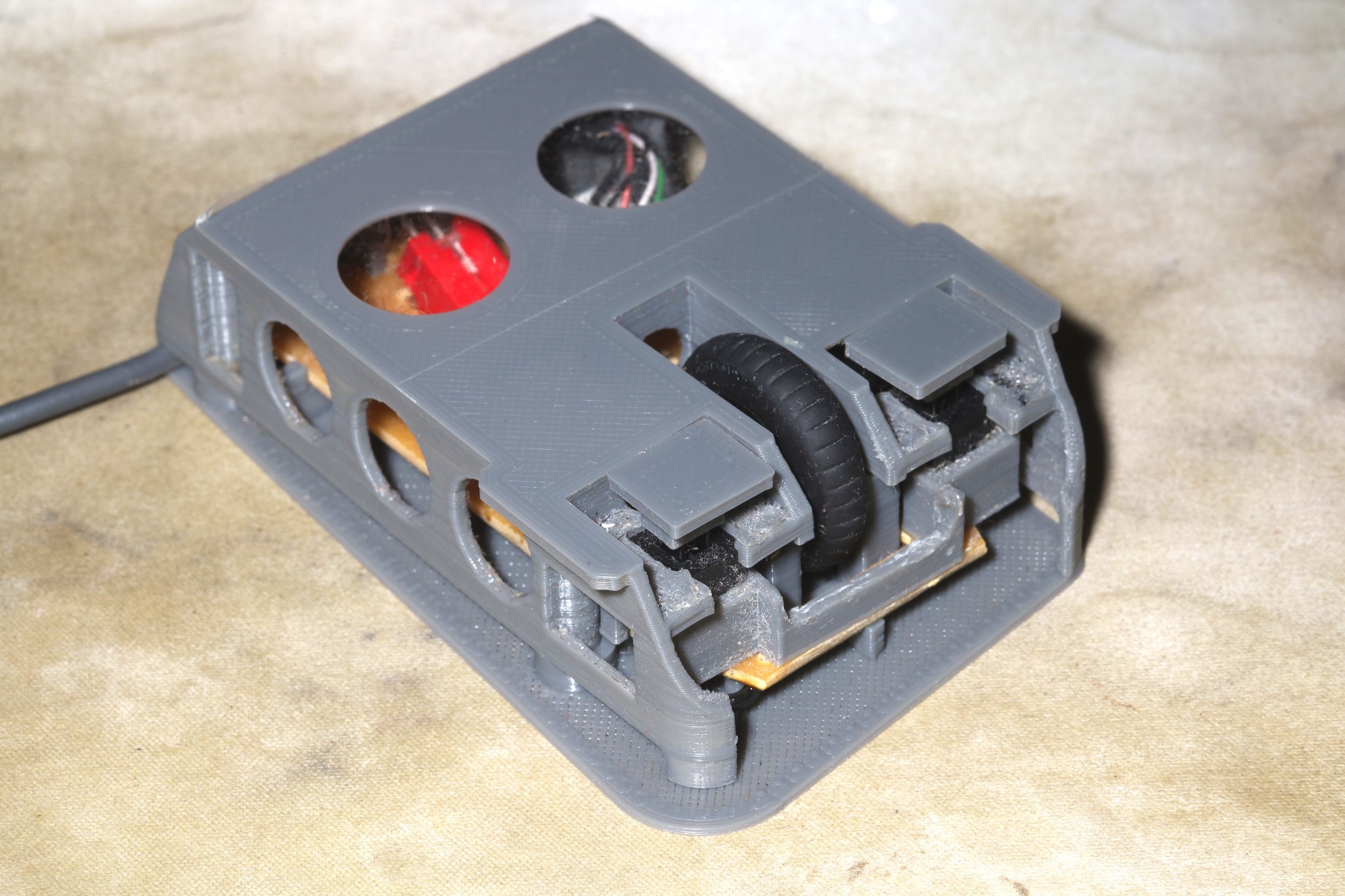
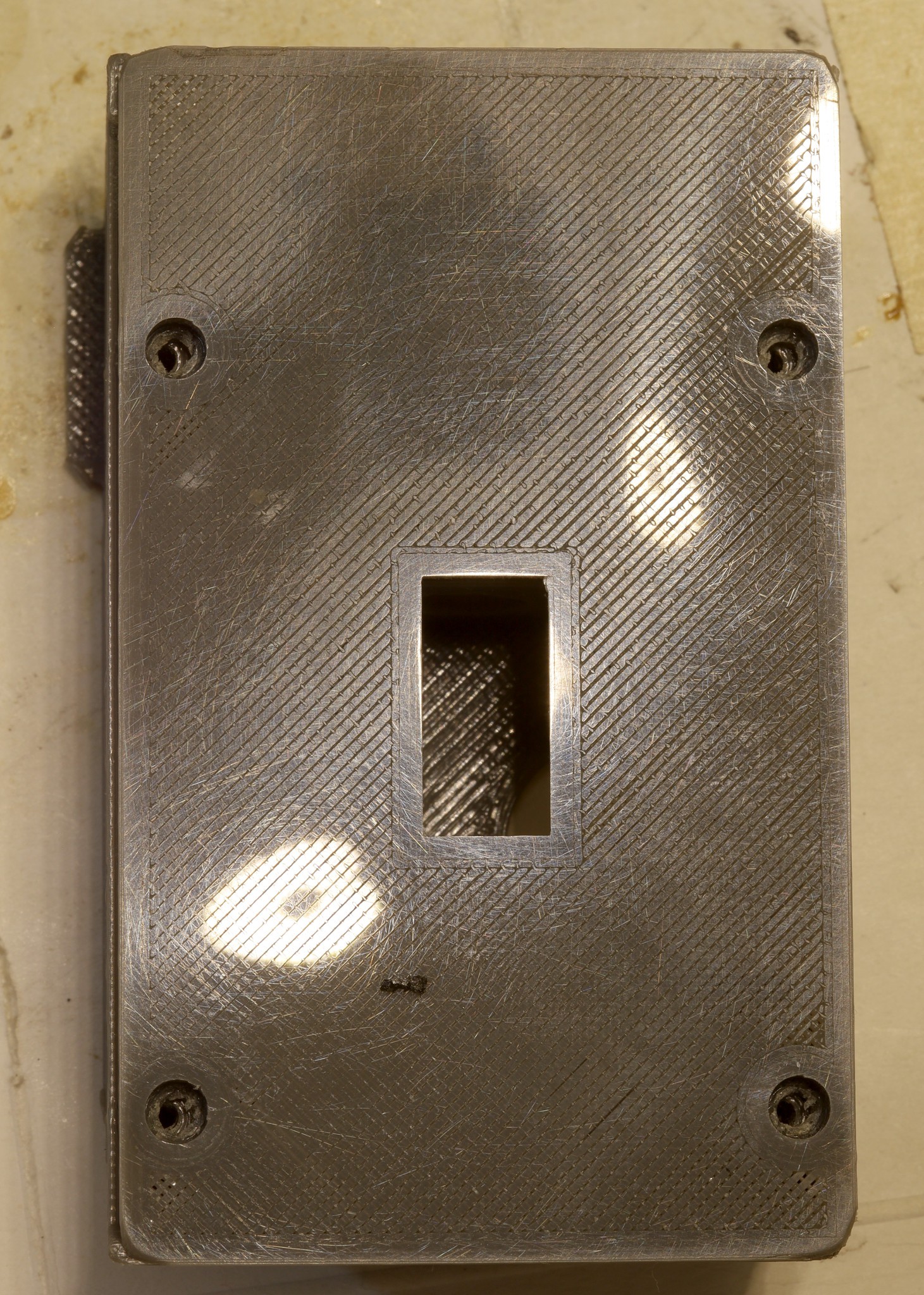
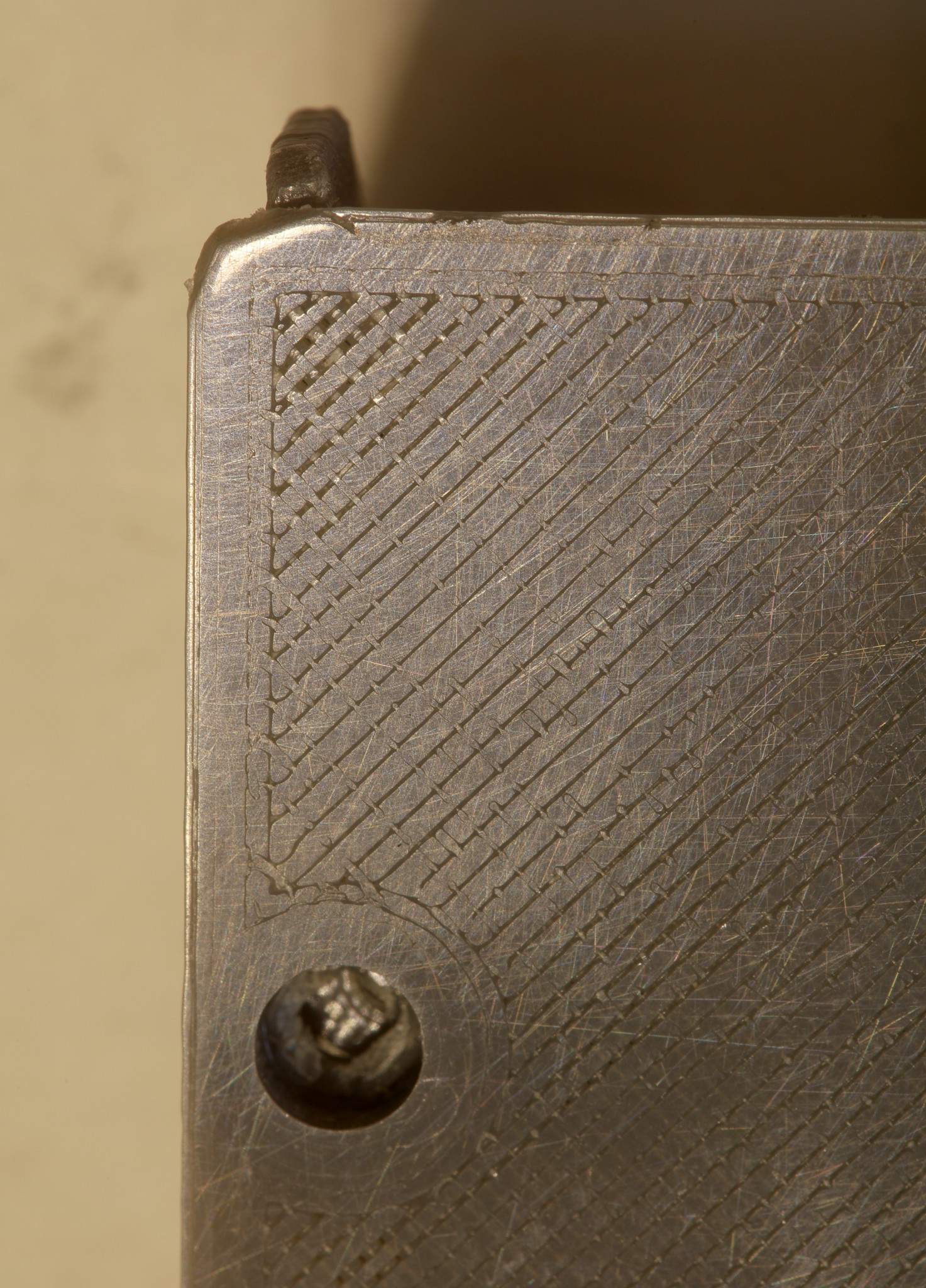
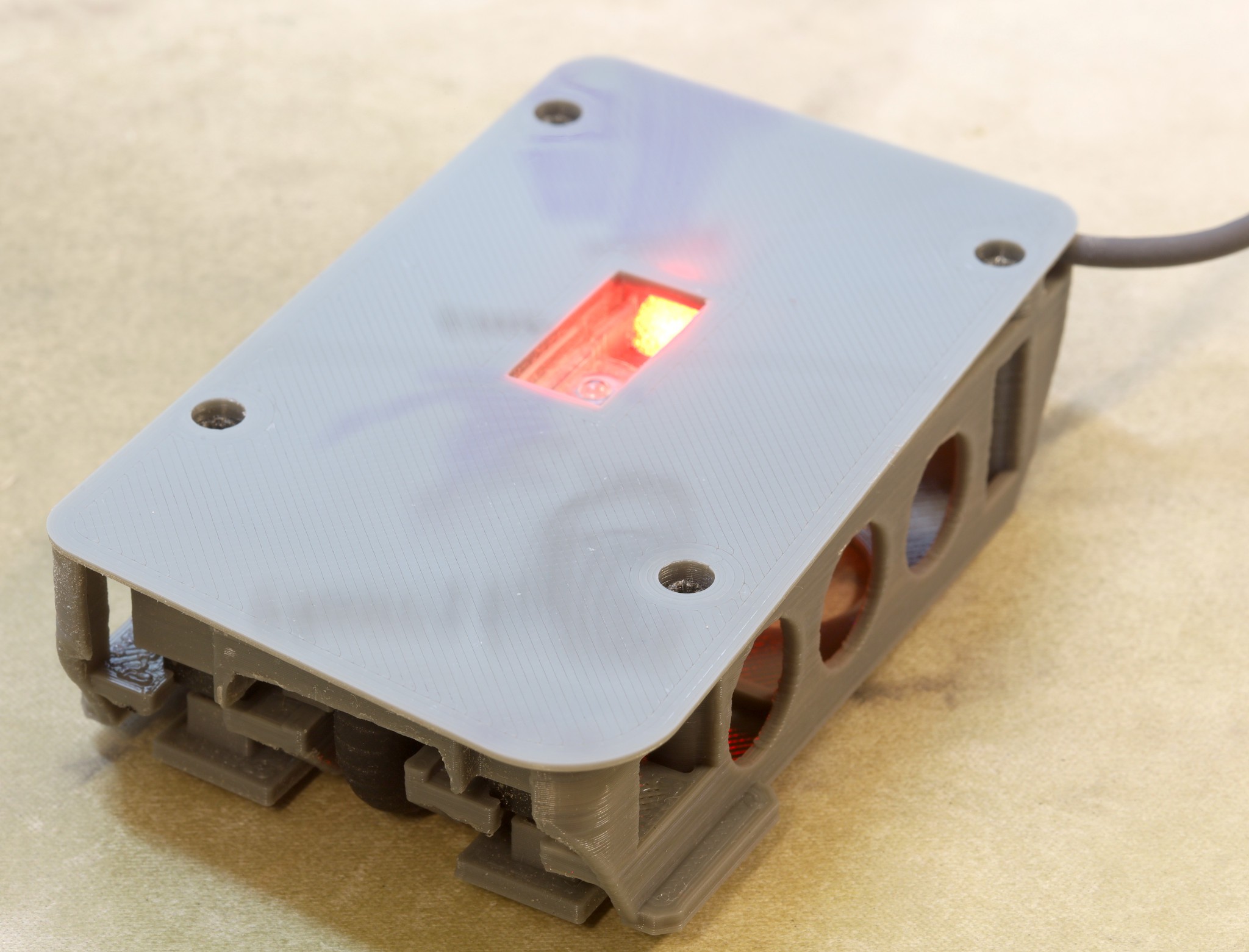
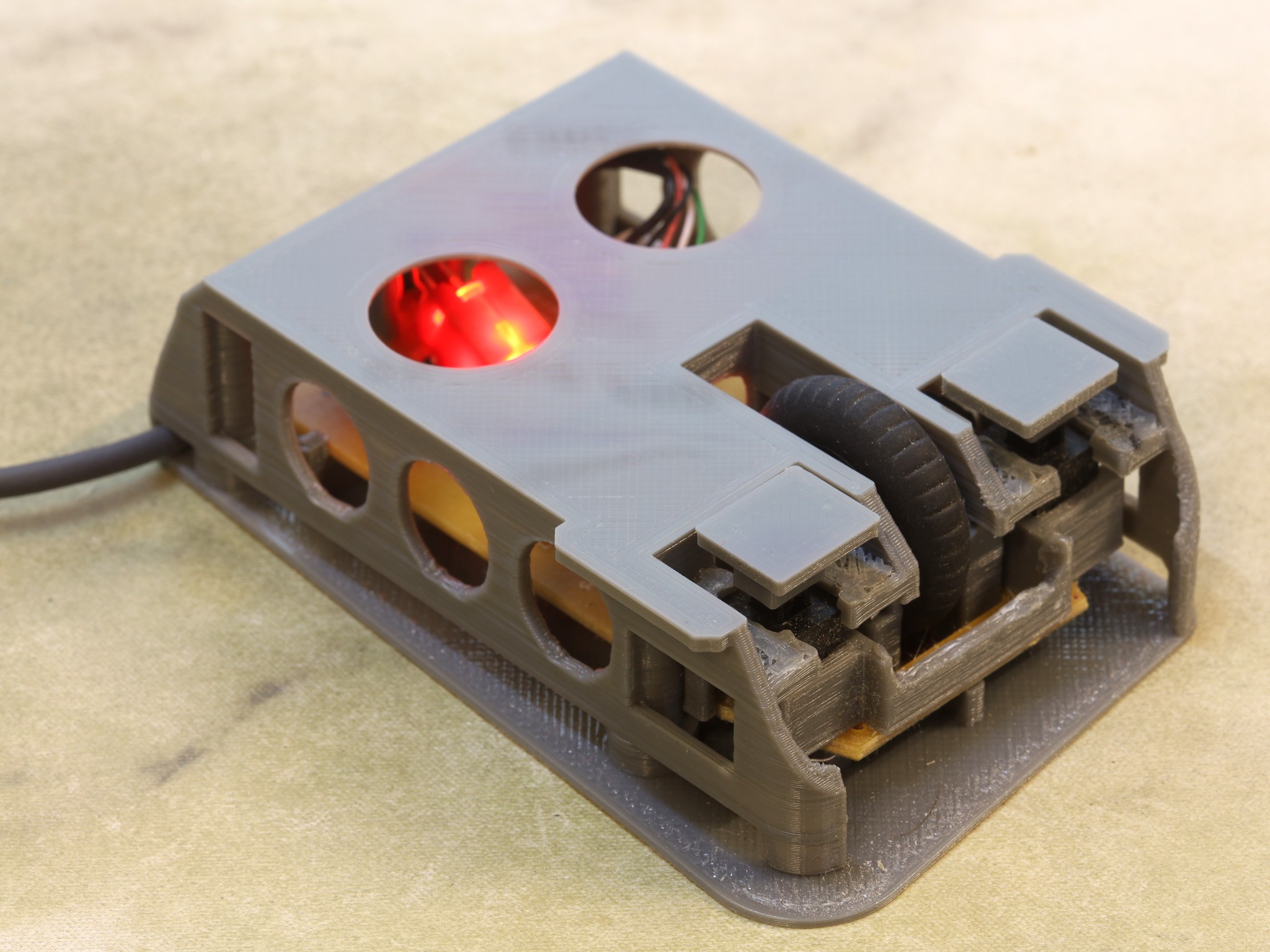
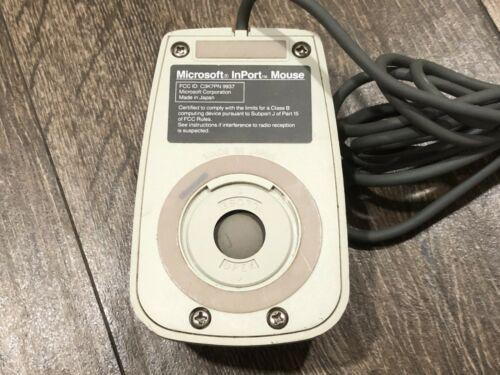
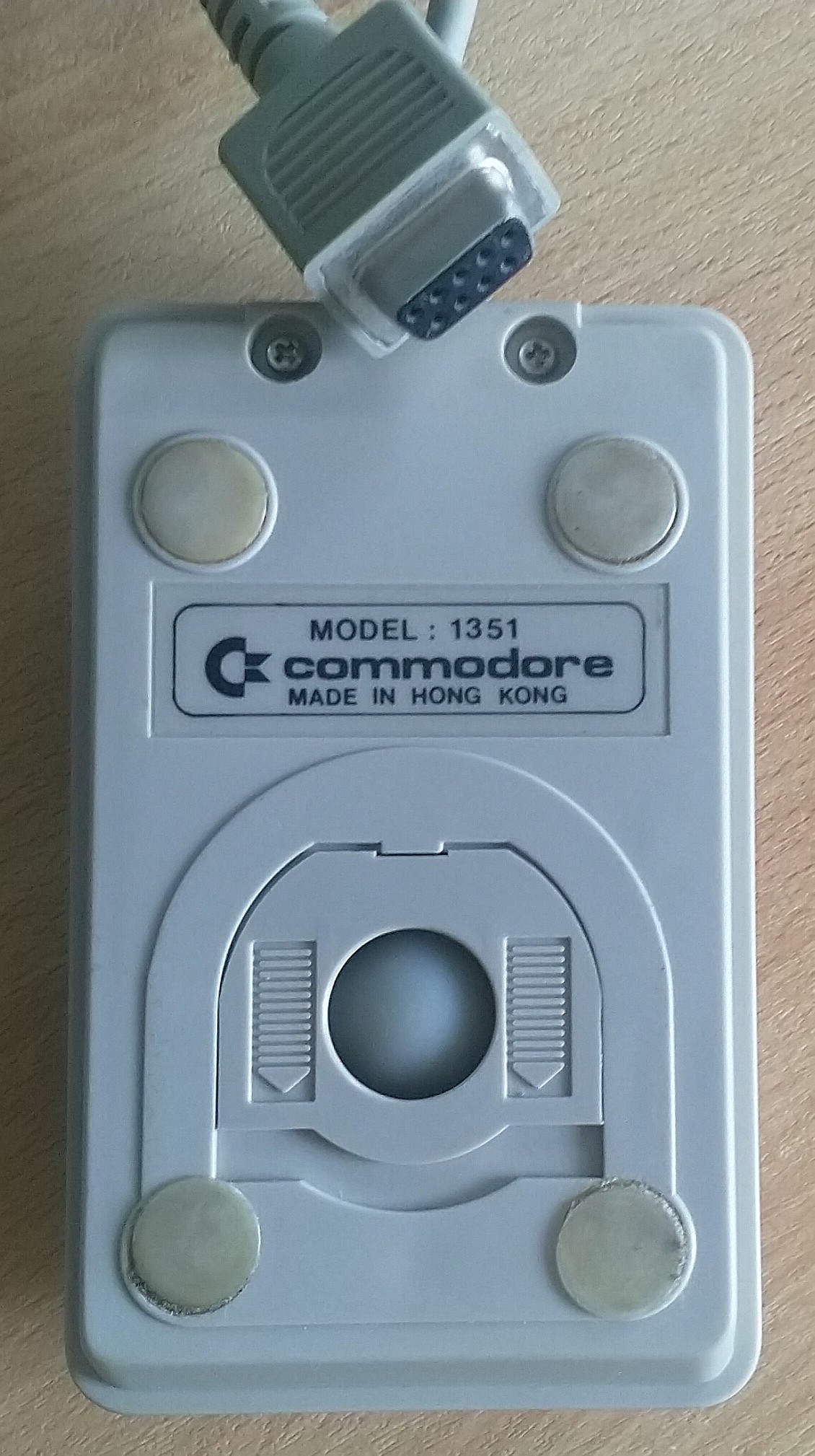
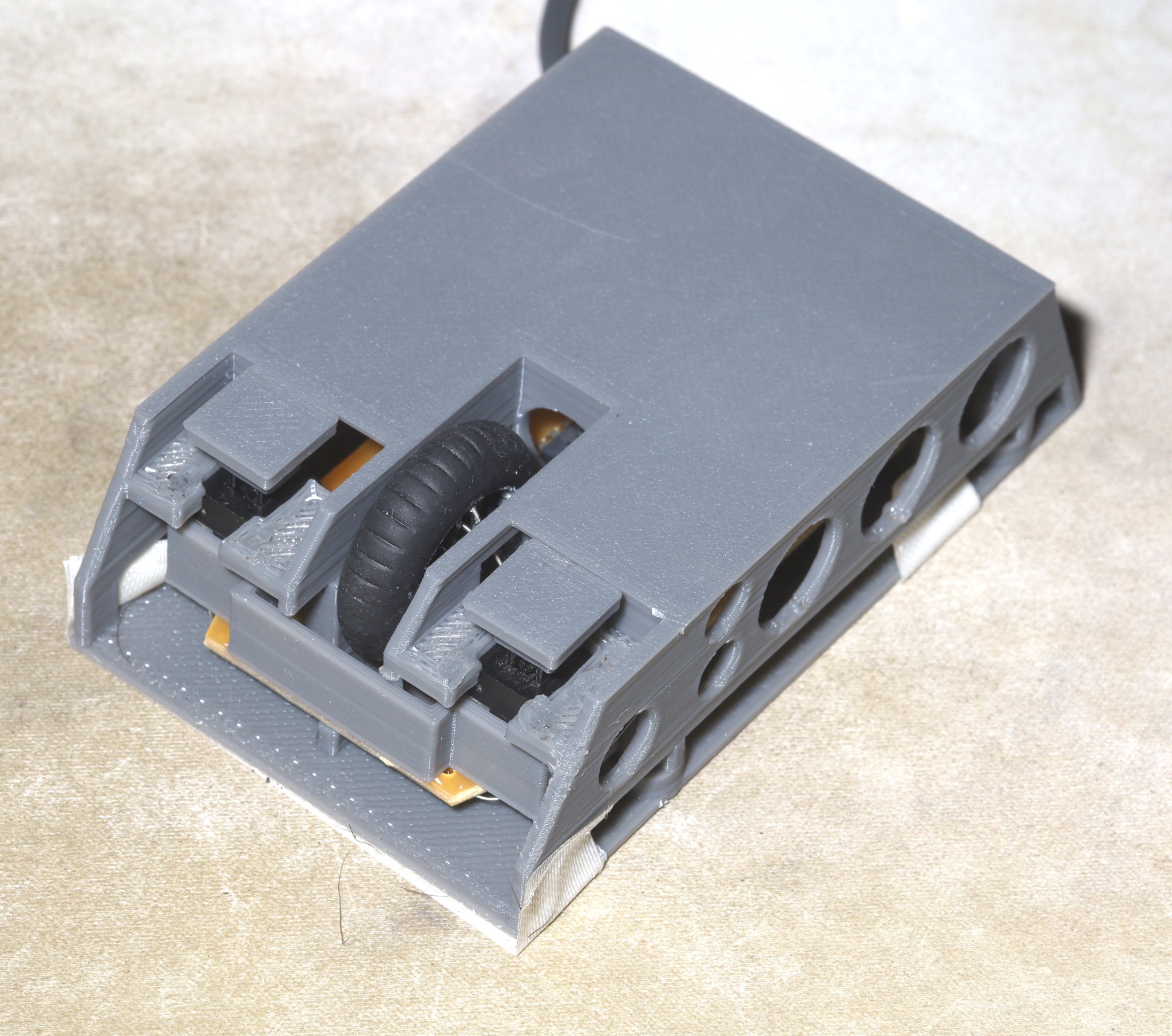
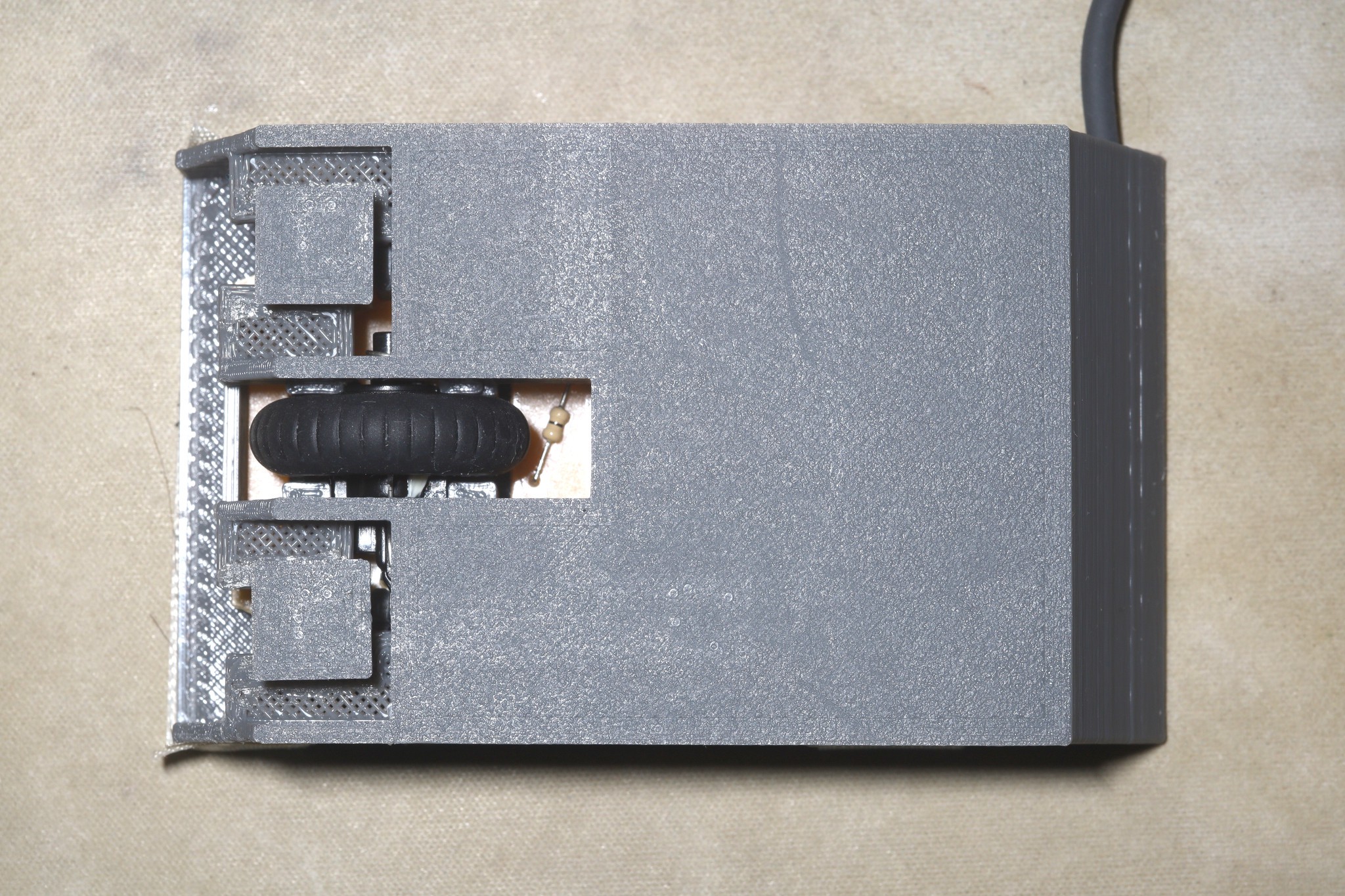
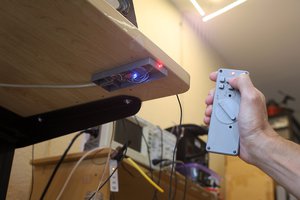
Even the maligned commodore 1351 was better than what we have now. Mice peaked with the grey eye microsoft mouse. Lions had the microsoft mouse before they had the commodore. The commodore was bad but still gave tactile sensation of a button click. What's been trending is a boxy design from the mid 80's, with assertive buttons & wheel clicks.
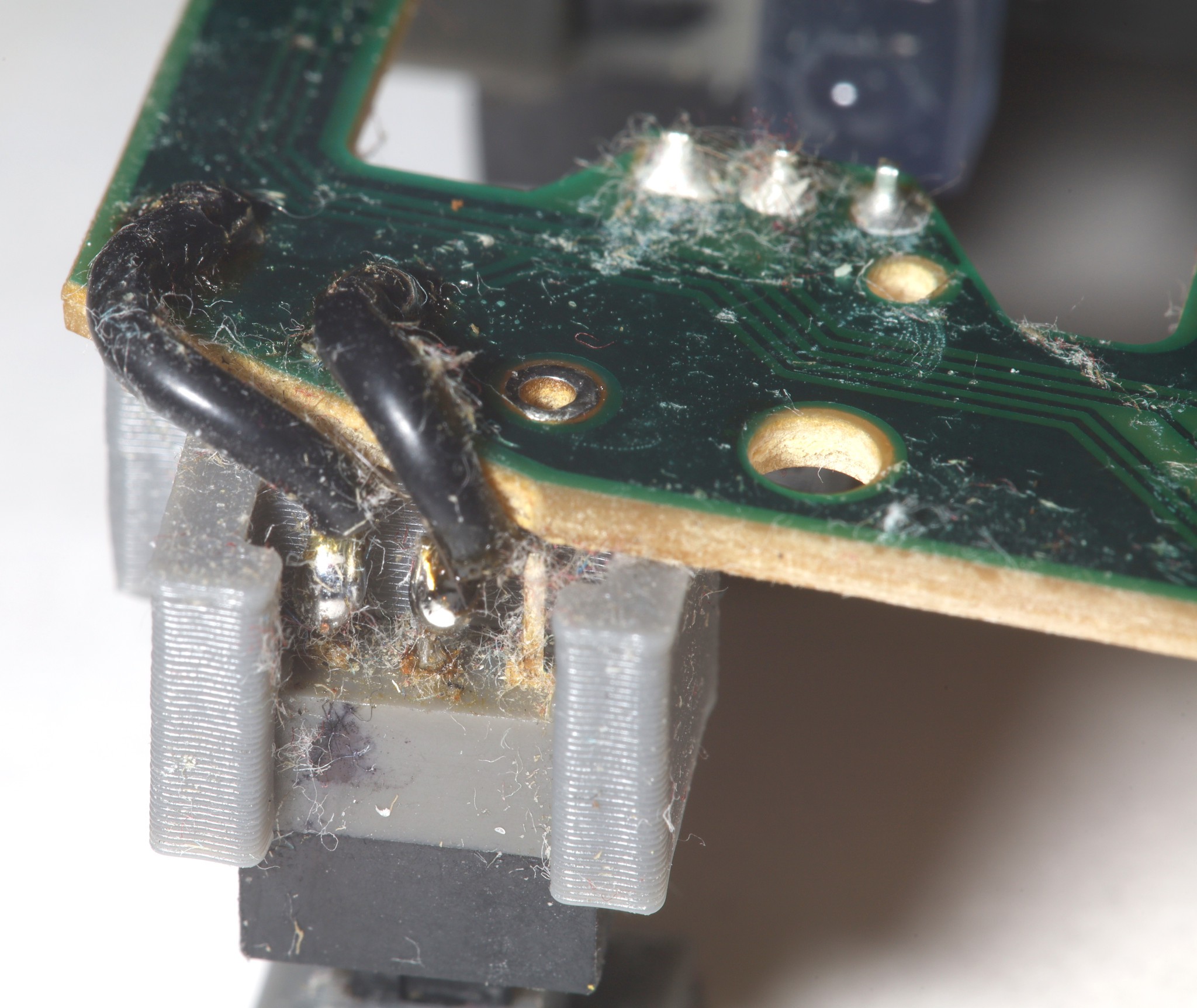
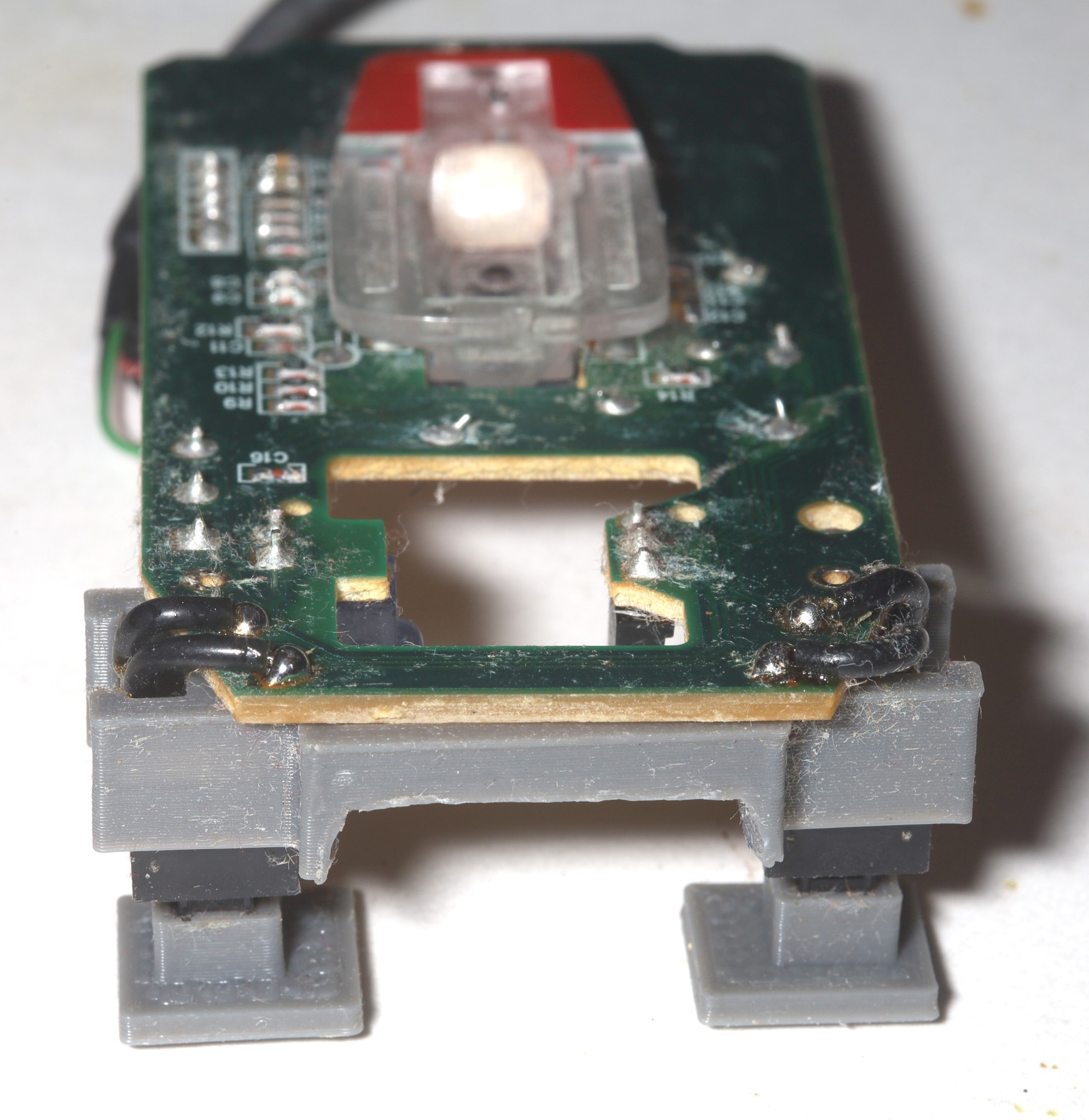
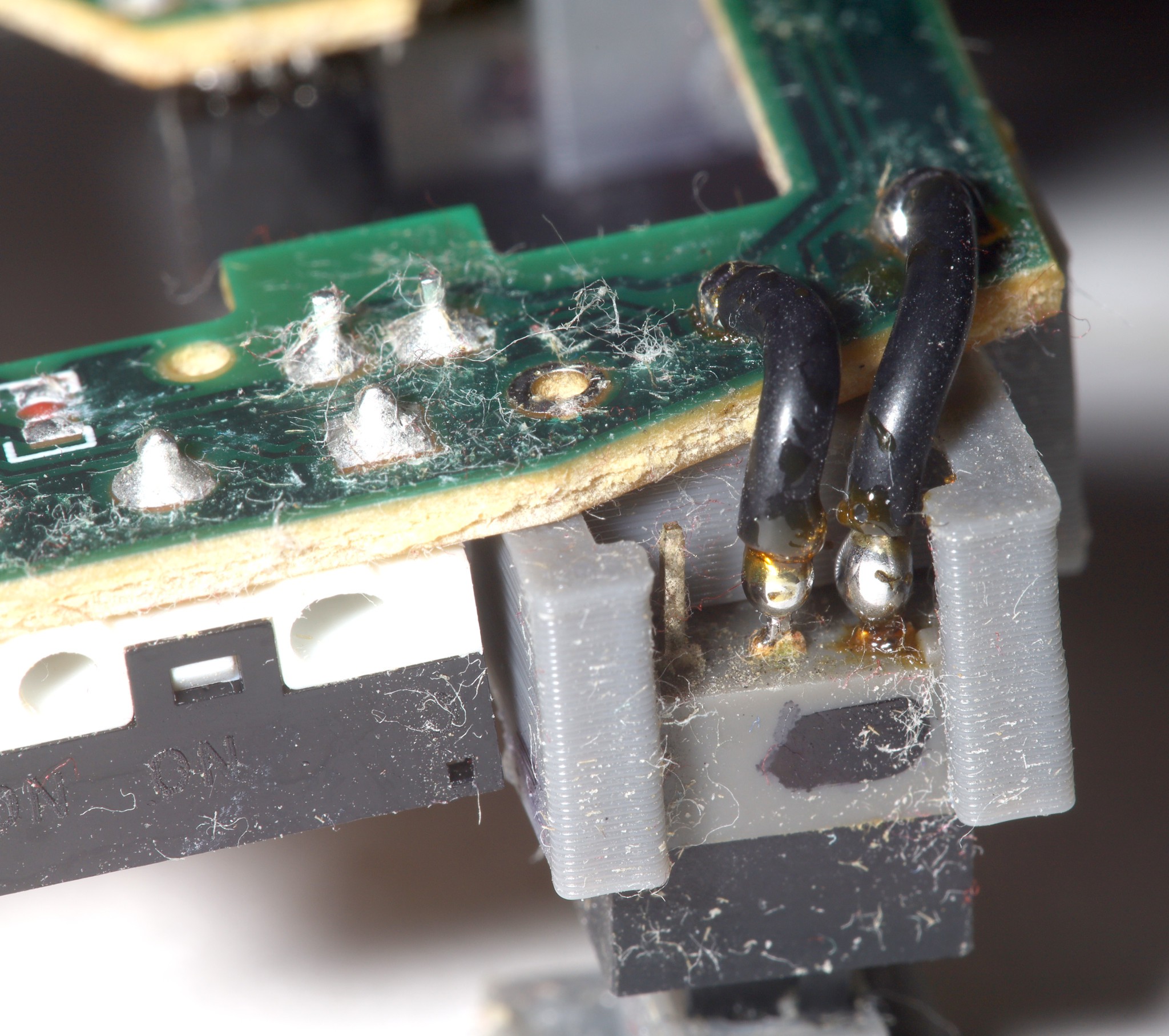
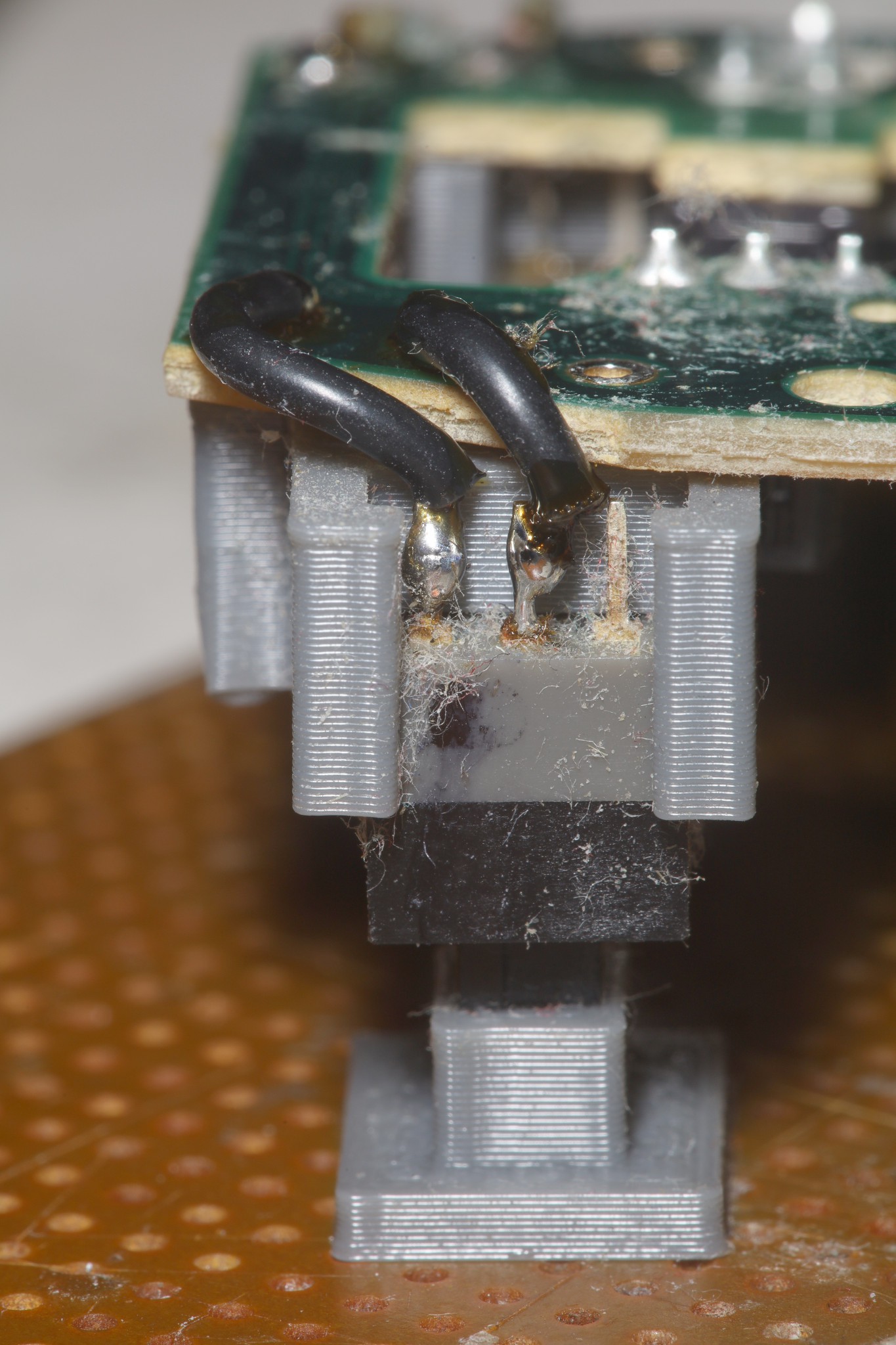
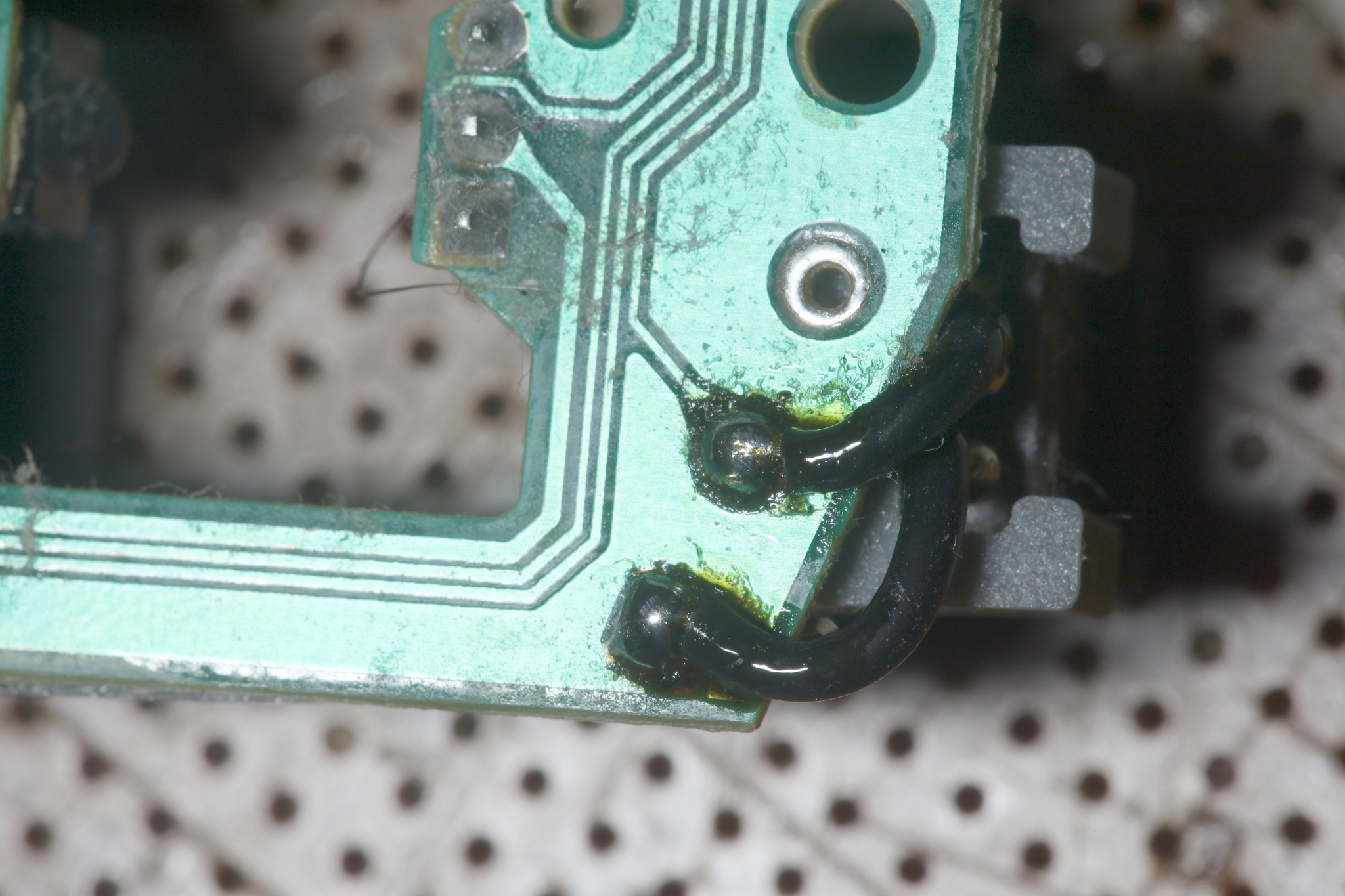
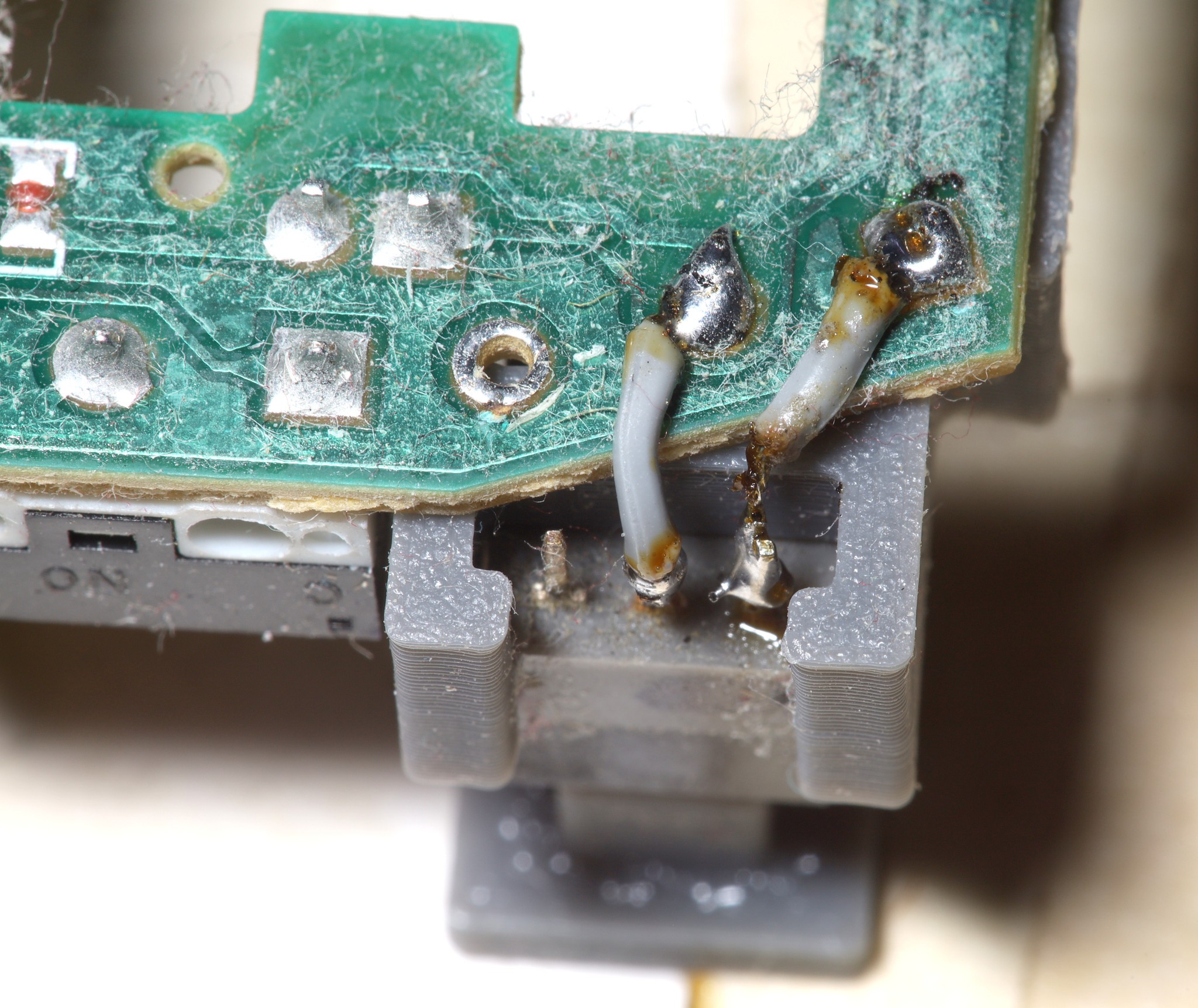
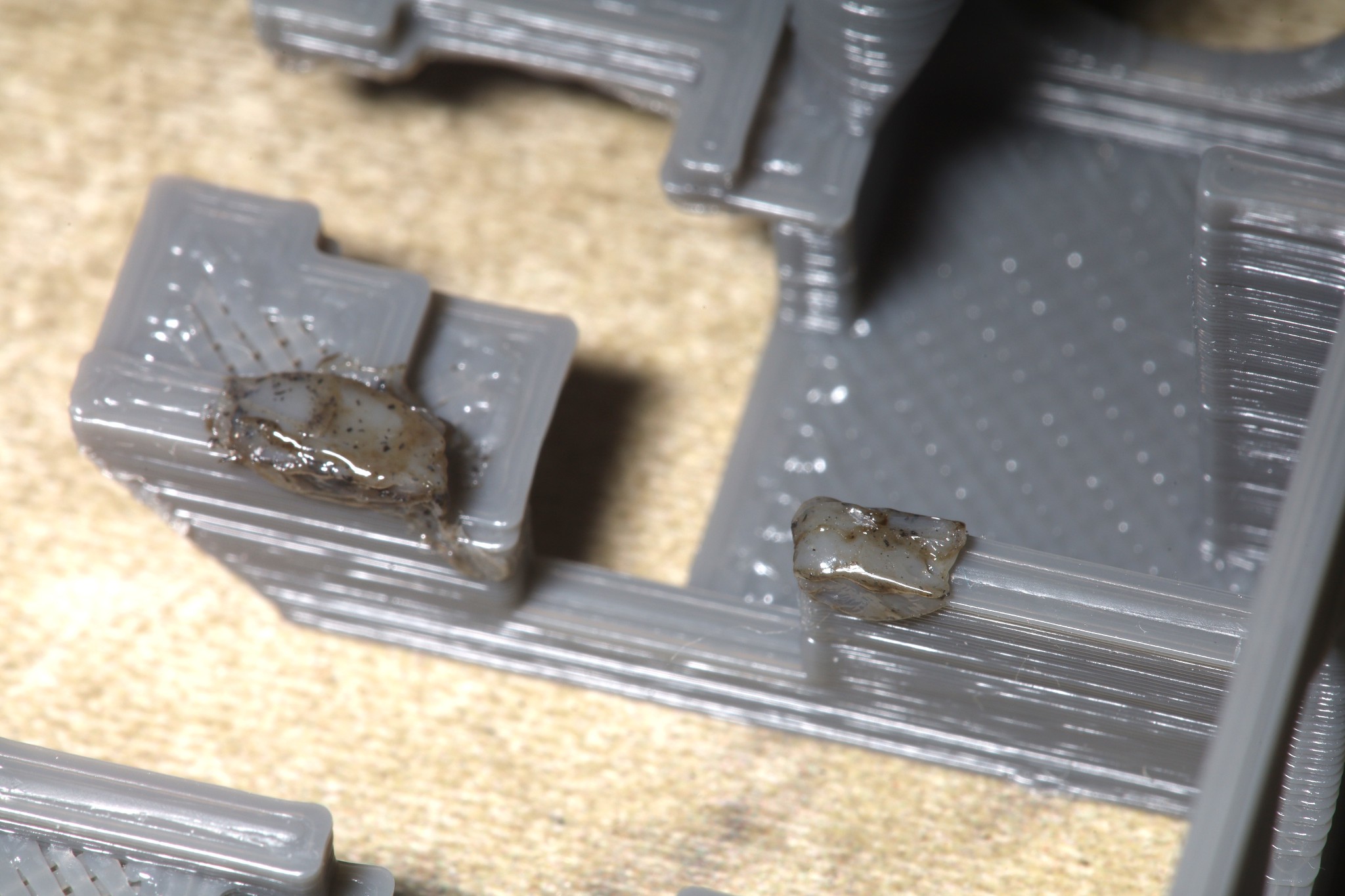
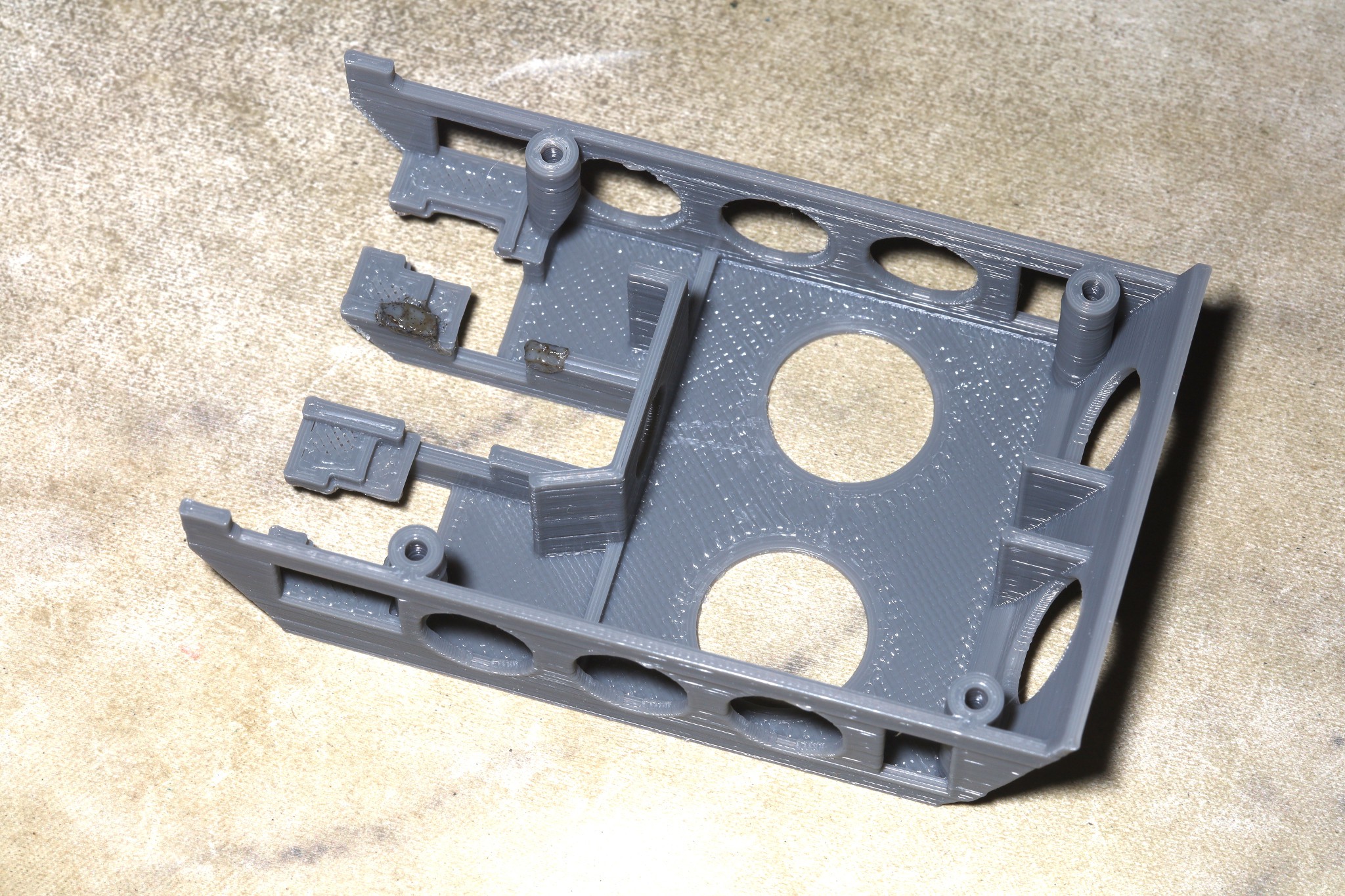
The last button attached by ribbon cable finally broke. Replacing the ribbon cable with 24 AWG silicone wire fixed it again. The progression has been from uninsulated bus wire to ribbon cable to all the buttons now using silicone flex wire.
Lions got into a habit of not pressing the buttons to the point of clicking, but instead just enough to conduct. The edges of the buttons also make lion paws raw. It might be smoother to go with the clickless MHPS buttons.
The next idea bouncing around is some kind of contactless button. It could be an optical cutoff sensor or capacitive. The entire front of the mouse could become a touch screen, sensing taps on the sides & scrolling in the center. It's one case where the modern world of stupidly tiny, surplus watch screens could be viable. The lion kingdom has 1 spare laptop touchpad to start with. It's prone to requiring resets & not waterproof. There are ways to etch capacitive sensors.
The end game would be that optical cutoff because that's closest to what lions are doing with the MHPS buttons.
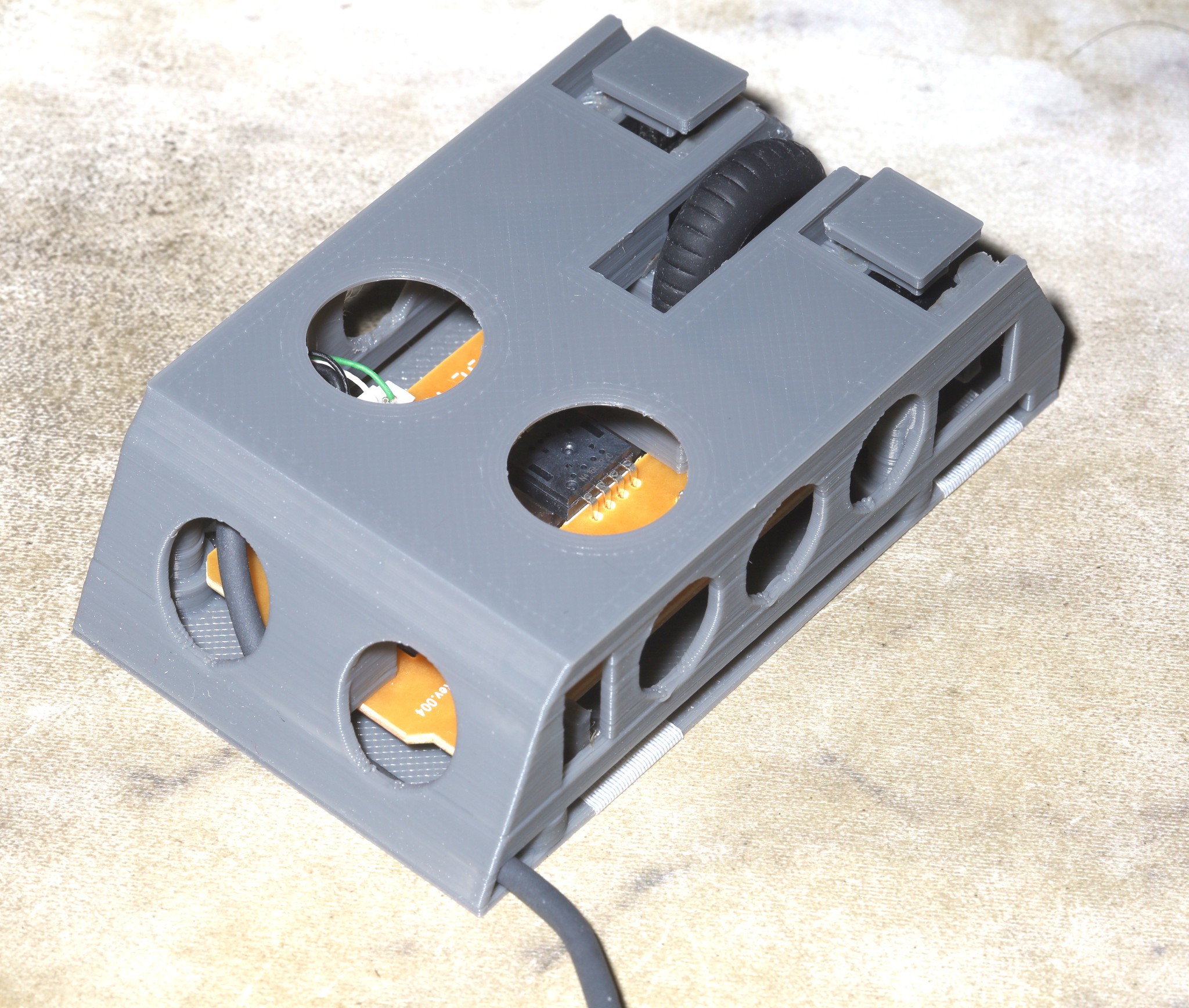
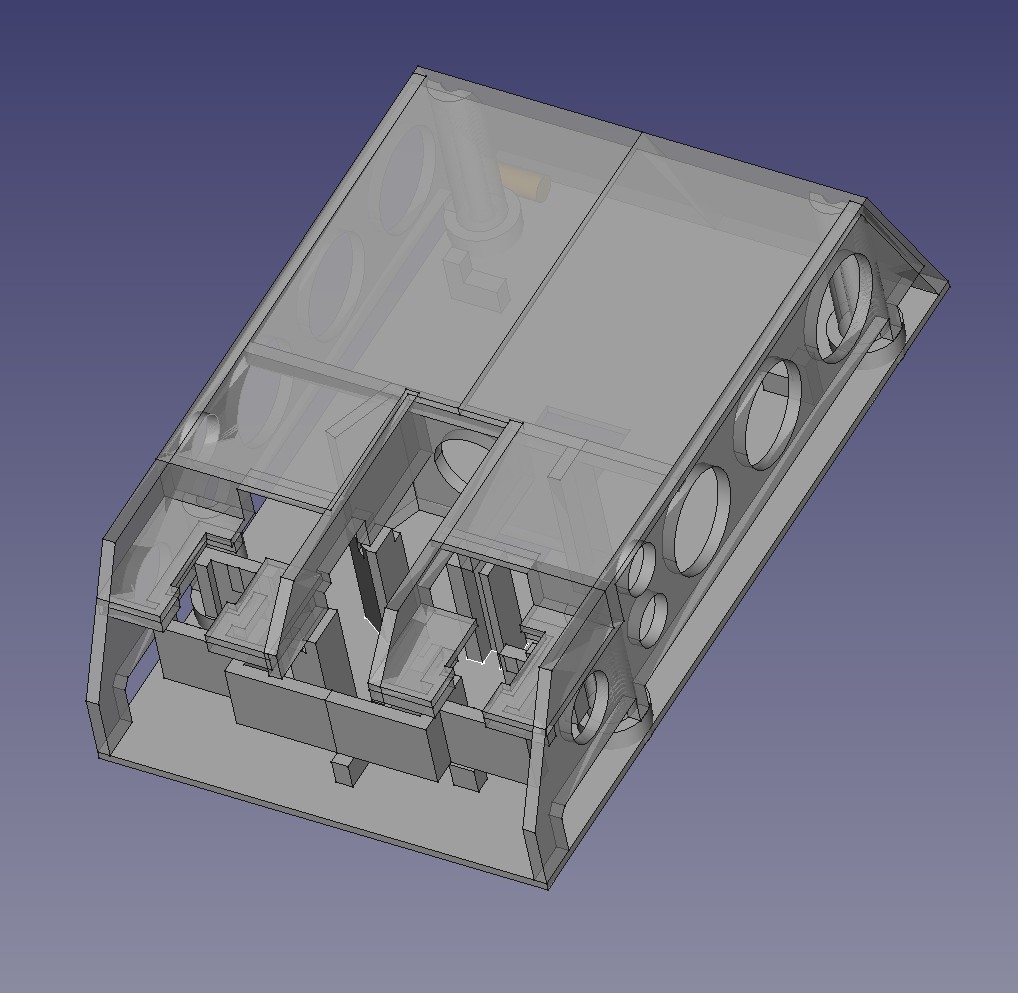
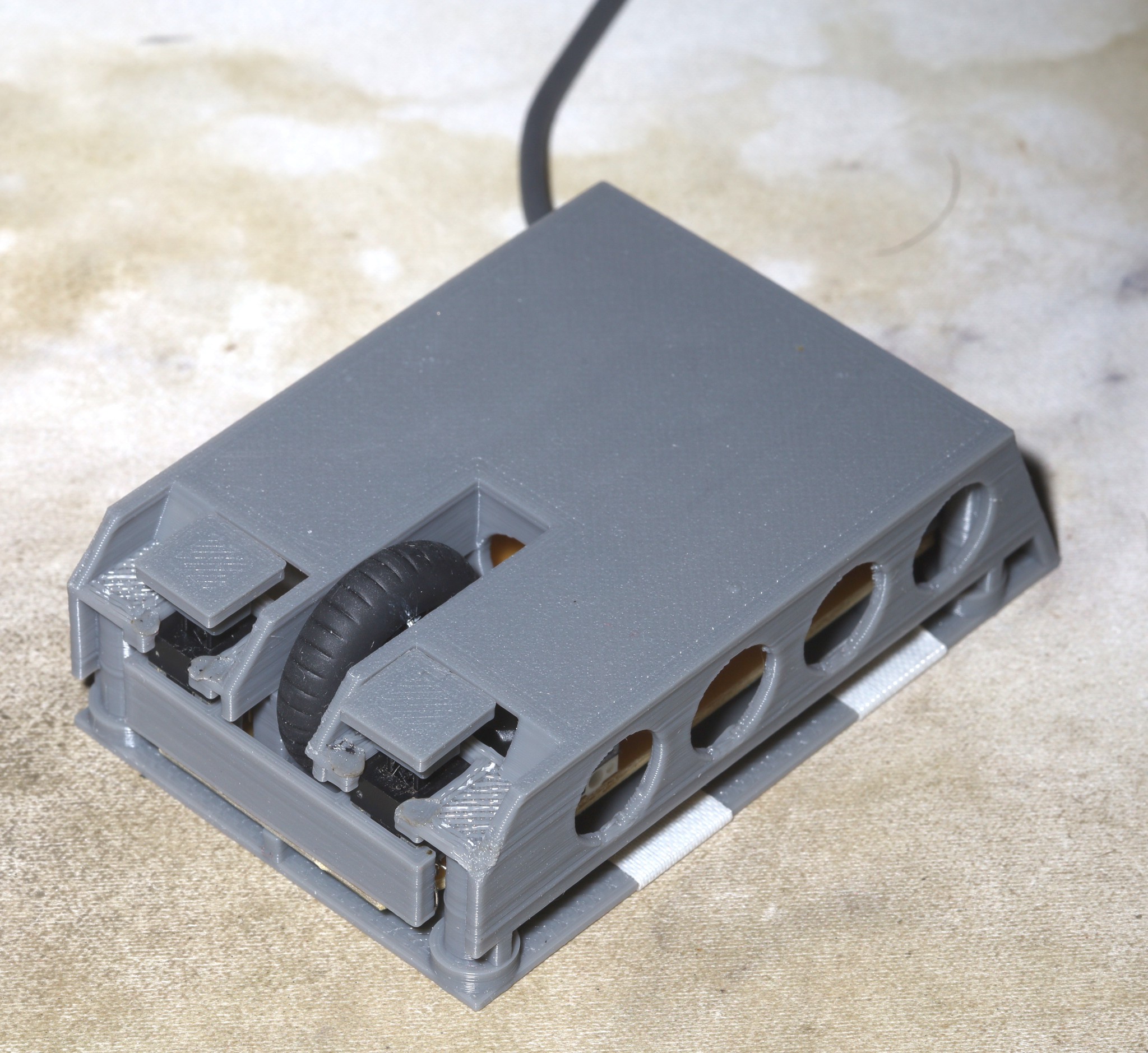
Finally, it collects so much dirt, it really needs to be fully enclosed. This would require some more cable routing features. It currently needs tweezers poking in the holes to assemble.
The last of the bus wires bonded to the buttons finally broke, so they got replaced with silicone flex wires.
The curved front corners are killing us. It's really hard to assemble. Note to melt off or bend those pieces before the next teardown.
As much as lions lusted after the buttons in the original VS-457R, they're a bit too stiff in a mouse. But traditional mouse limit switches are too soft & mushy. There was an idea of using mechanical keyboard switches. That would definitely need a wheel replacement.
The latest trouble spot is the flying leads for the buttons. They break. The former trouble spot USB wire has been surprisingly robust. The novel enclosure seems to give it more strain relief than the factory enclosure.
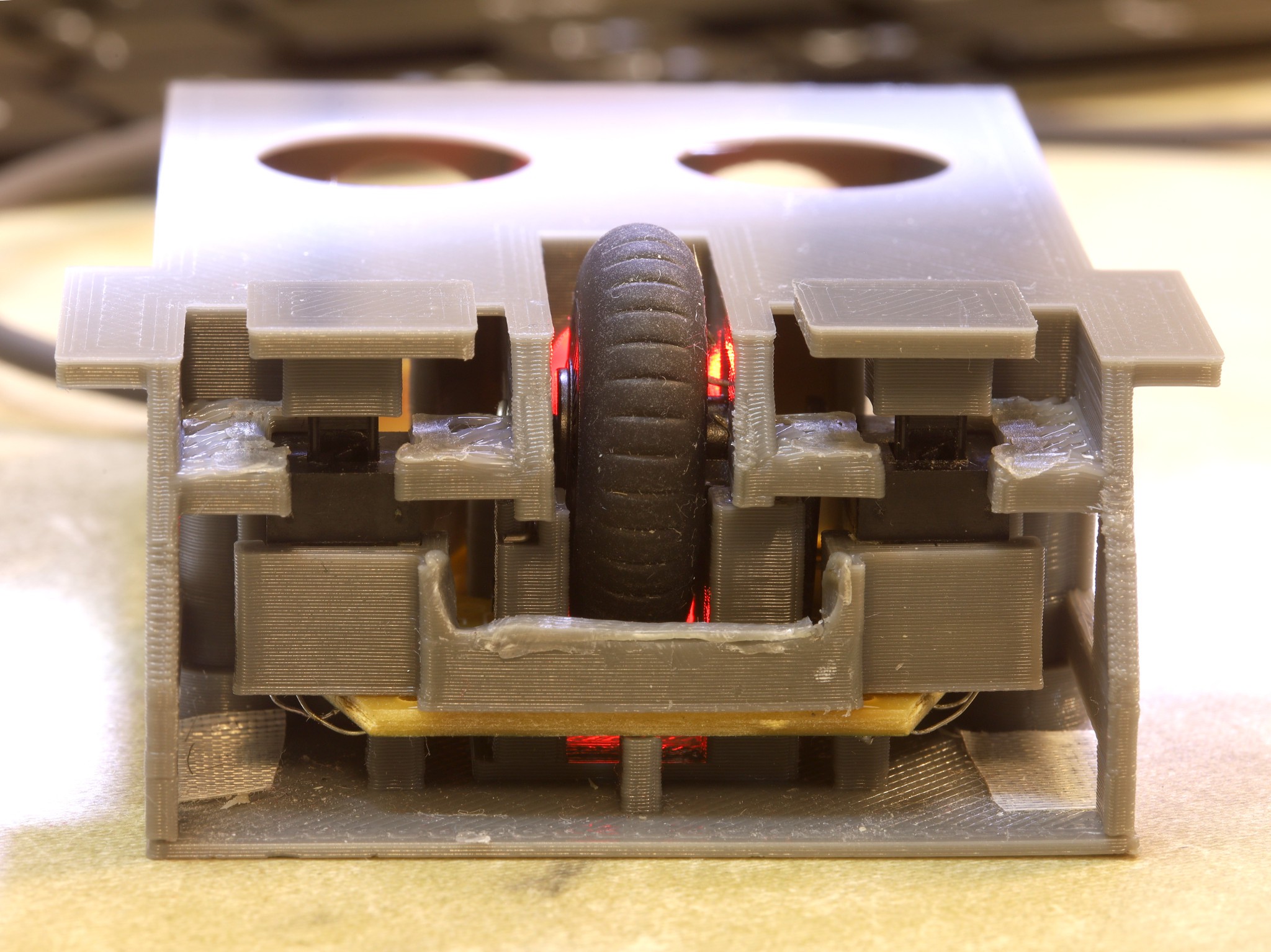
Noted continuing degradation in the wheel sensing. It started to appear the optical sensors were misaligned from front to back instead of vertically. Pushing the wheel forward or backward made it miss steps.
There's no way to perfectly align the wheel. There's always play, grease is always going to get in the encoder & it takes too long to print a test piece, rebuild it, & test it. A 1mm shift showed promise.
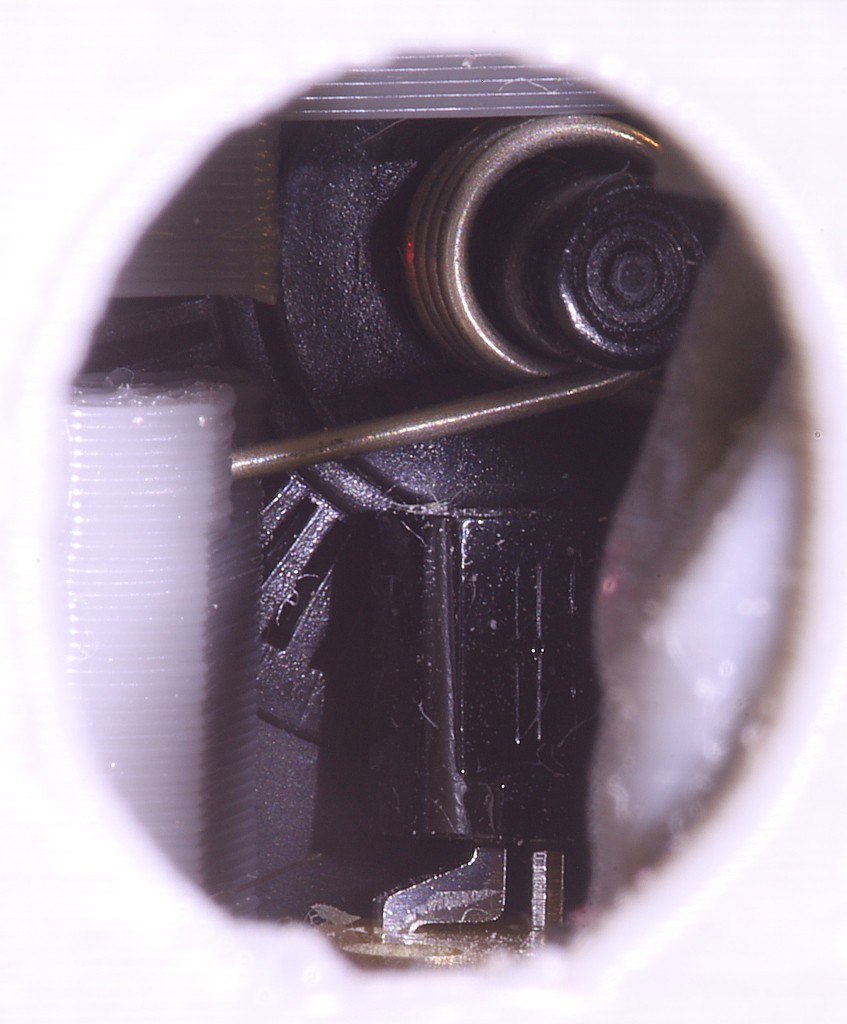
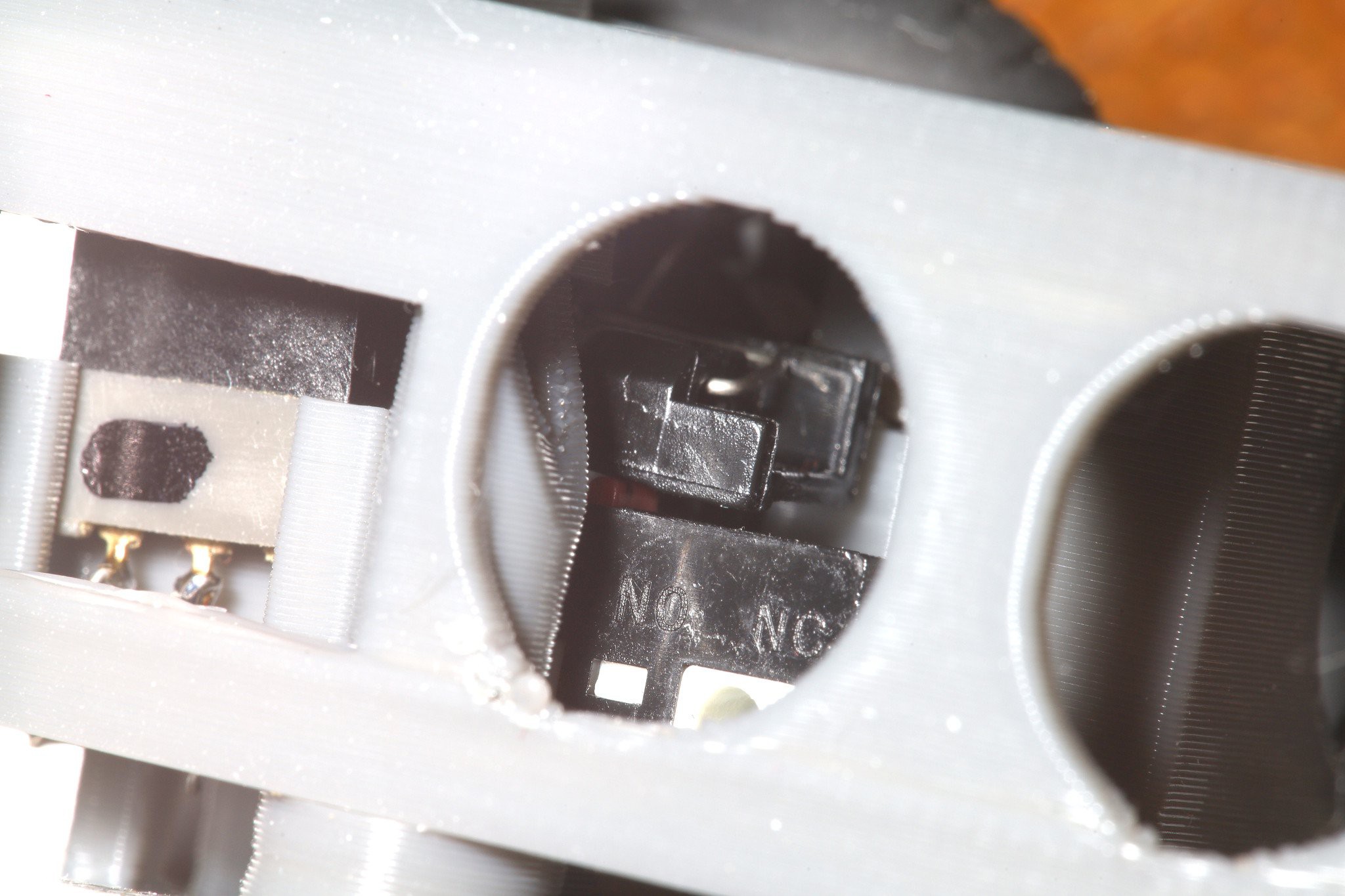
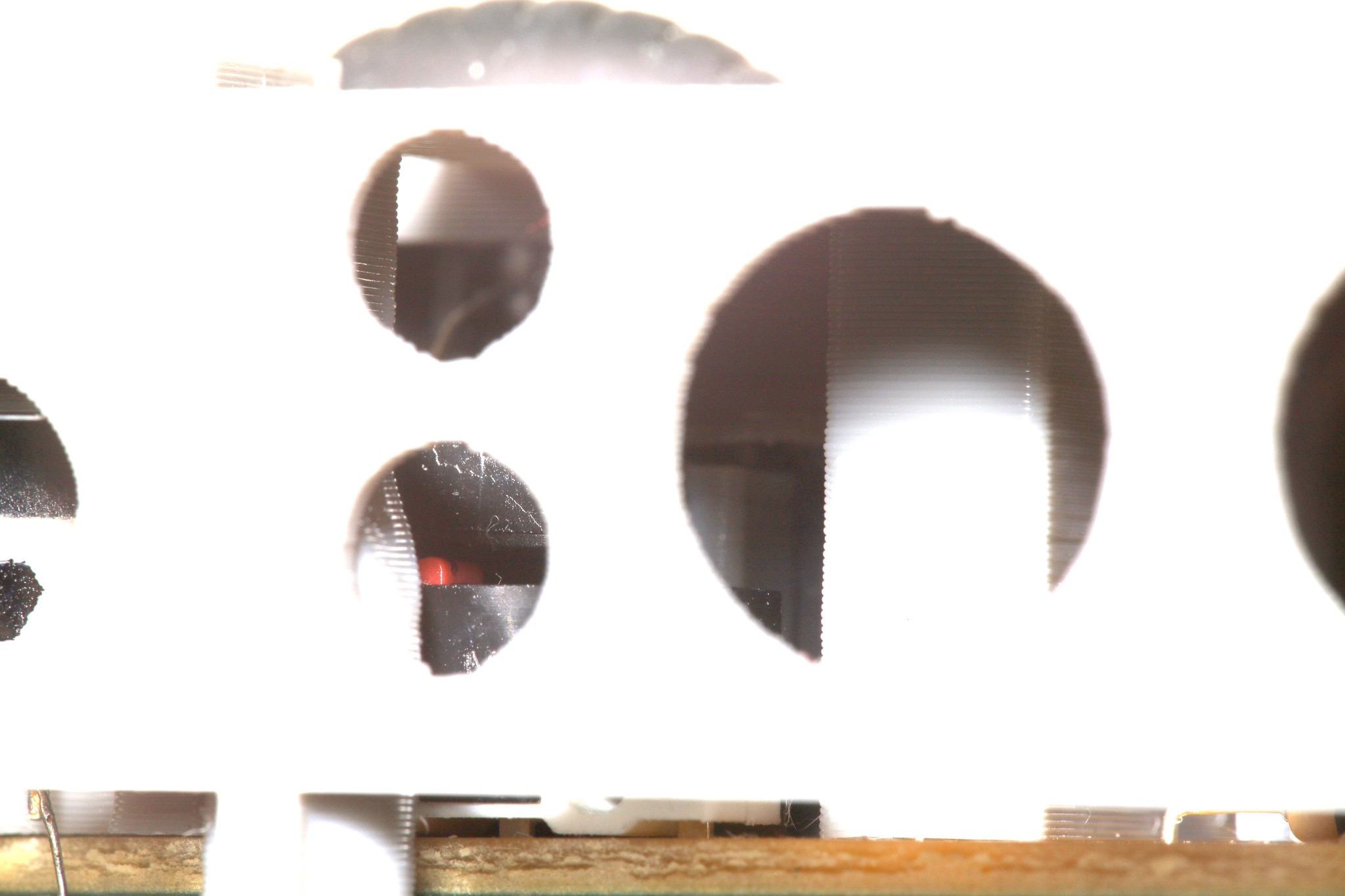
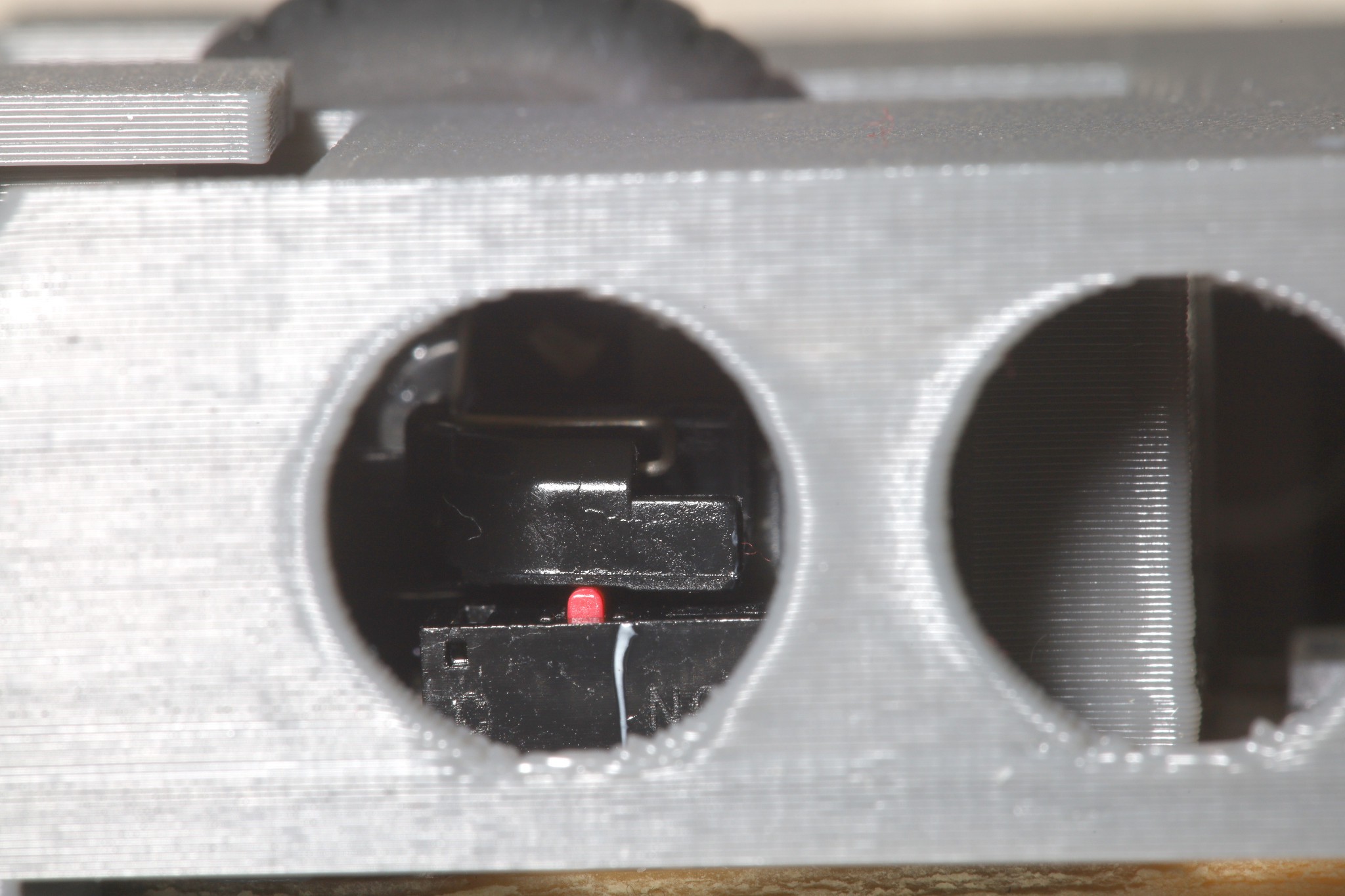
A peak through the open sides showed a small bit of the encoder alignment. The photo transistor center pin is supposed to be under the axle.
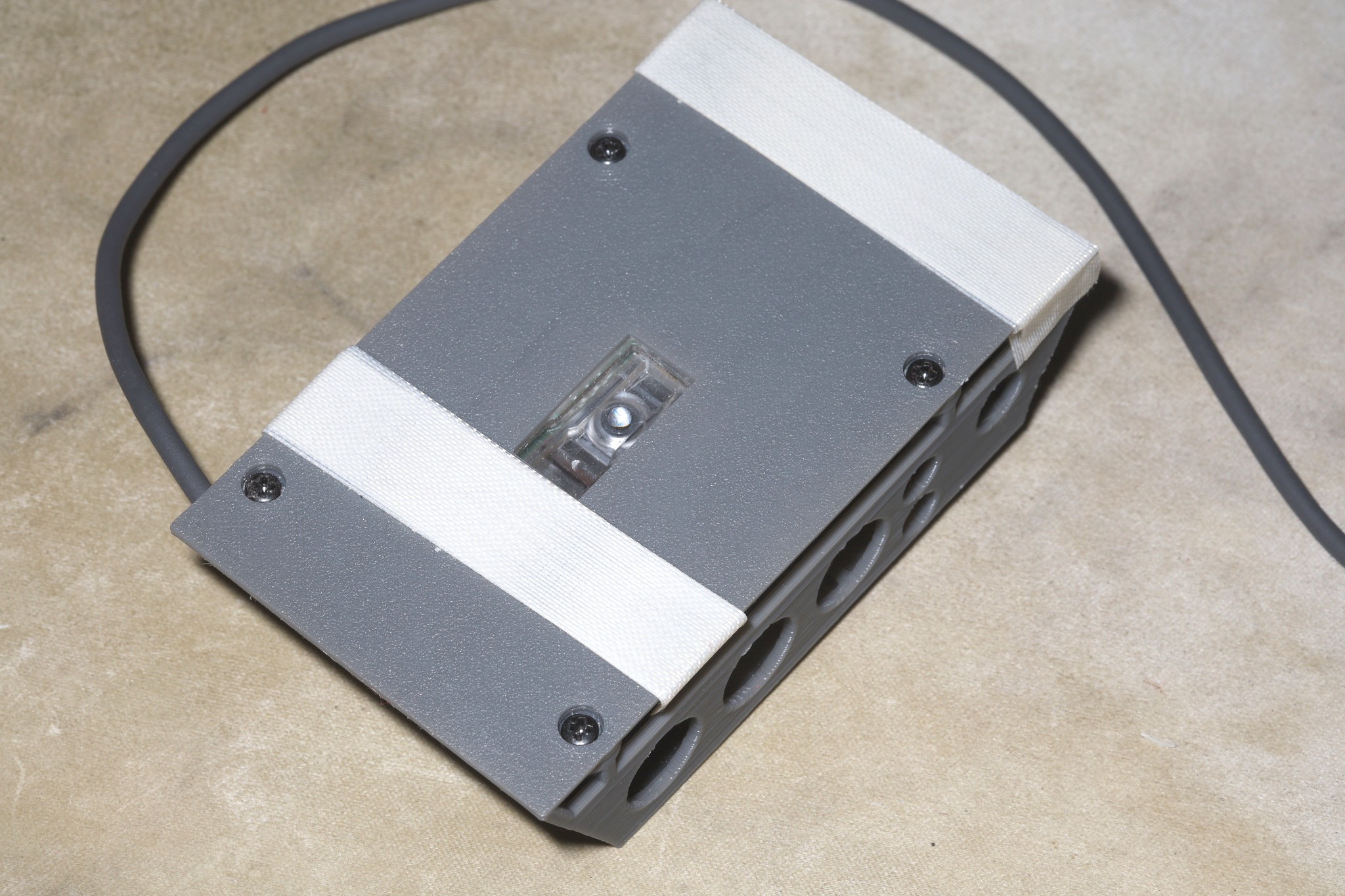
The right side glide tape tended to wear down more than the left side. It really needed more support on the right, but glide tape couldn't wrap around a large curved panel. Any panel would use more glide tape than no panel. A kind of heart shape came to mind.
After many glide tape replacements, bare PLA was actually doing better than glide tape.
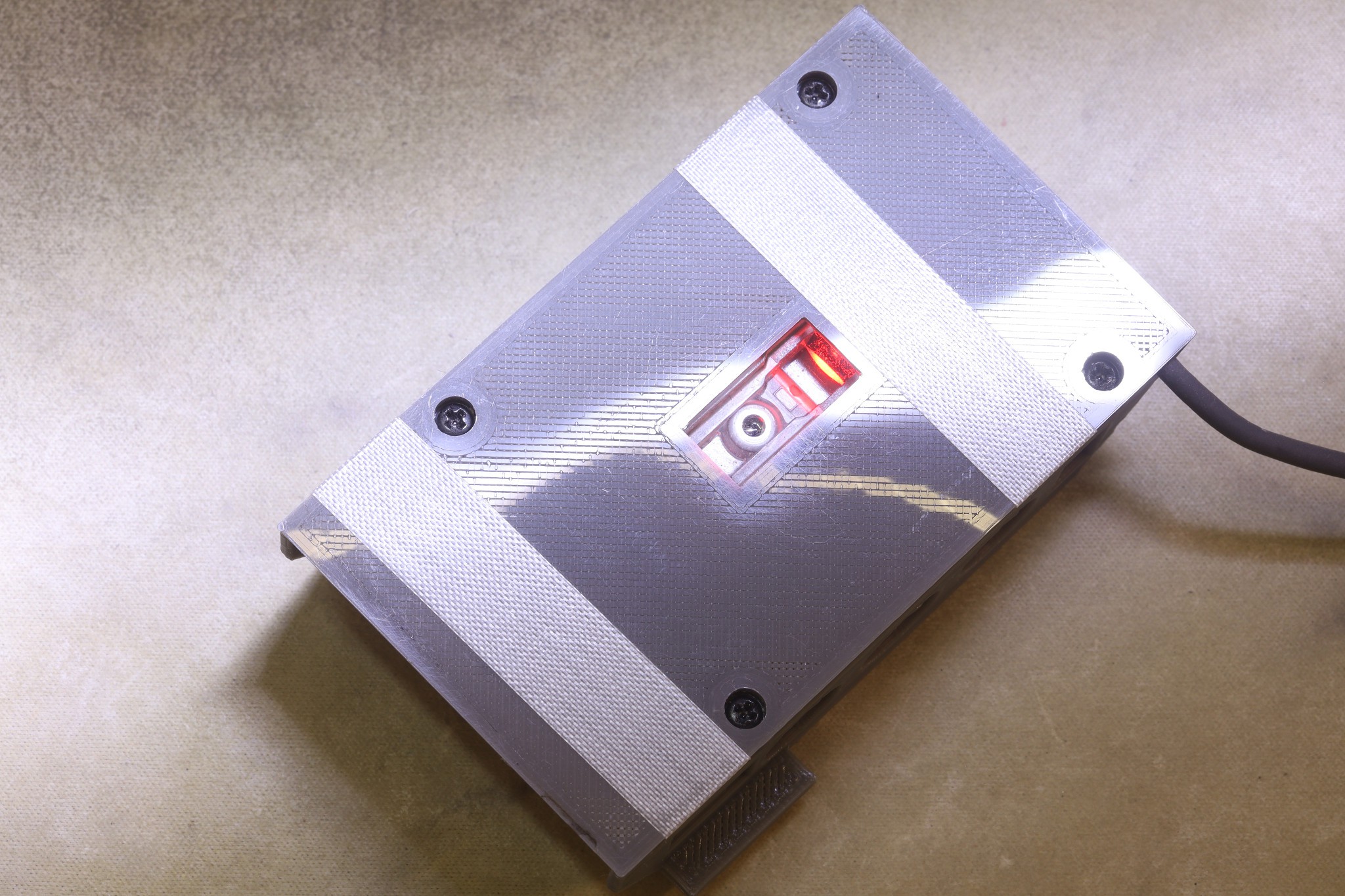
There was a definite wear pattern where the camera pressed down on the center.
The most wear was in the top right corner.
The next design expanded the top right corner in order to unload it & rounded more of the sides. It repositioned the wheel again to get it to detect more of the detents. Despite every effort at aligning it, the wheel continues to miss a lot of steps.
The corners were digging into the mouse pad, so the next step was to round those. A more desirable size for the wings finally emerged through use. The MHPS buttons took getting used to but proved superior. It's like adjusting the convergence all day on that childhood TV.
There were a few sharp corners which dug into the lion paw. Those had to be rounded.
It's still burning through glide tape.
Amazing how there's now an industry around PTFE glide pads because modern mice are so bad. They're real expensive & once they go on, they can't be reused on the next prototype.
The legendary 80's mice had such liberal amounts of PTFE, they worked on wood & seemed to last forever.
The wings definitely improve the connection between lion & mouse, but there's an optimum size. Too long & they get in the way.
The glossy underside is required to adhere gliding tape. A glossy top side & buttons are questionable but it would be a pain to change beds for just some parts.
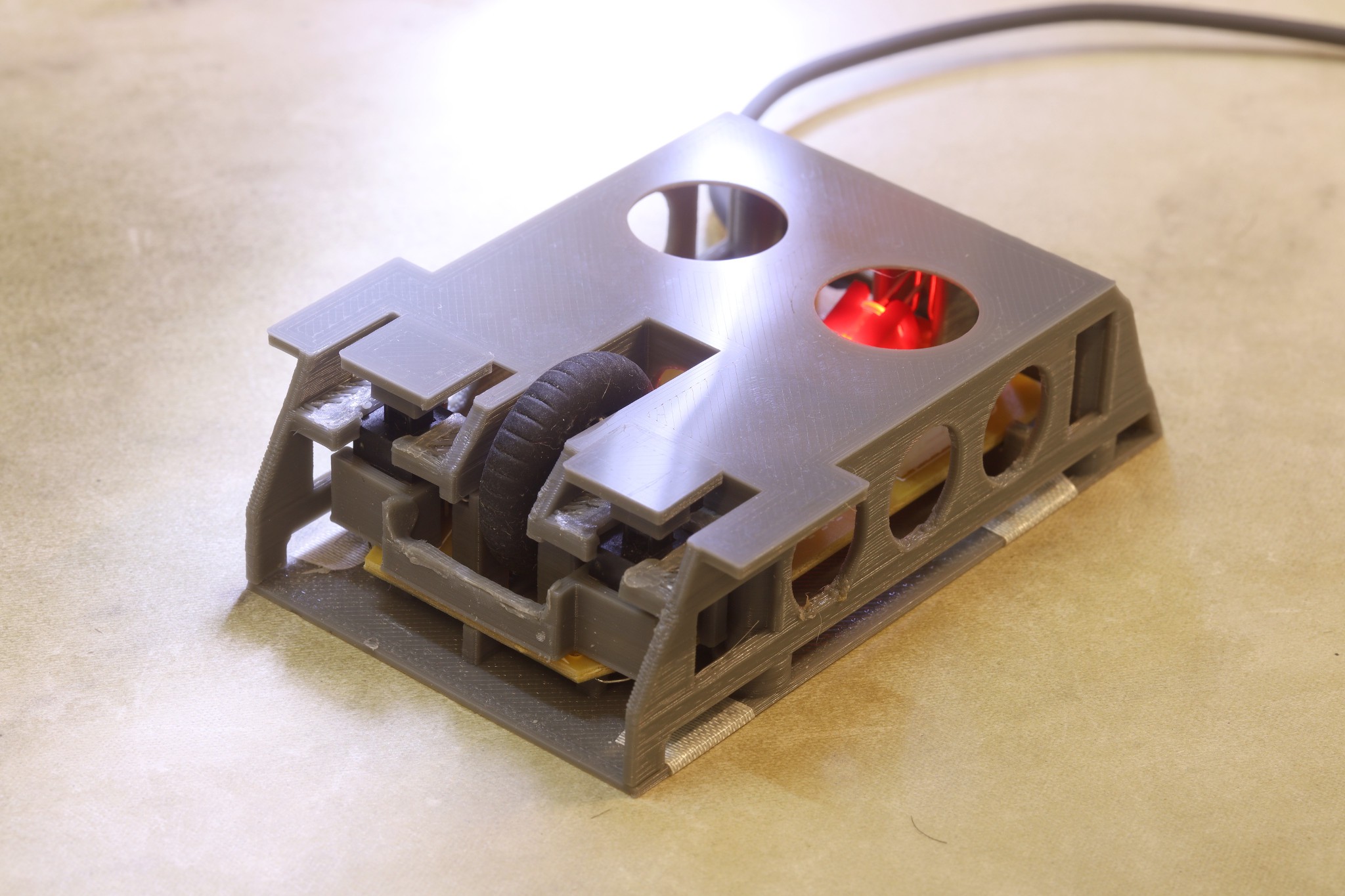
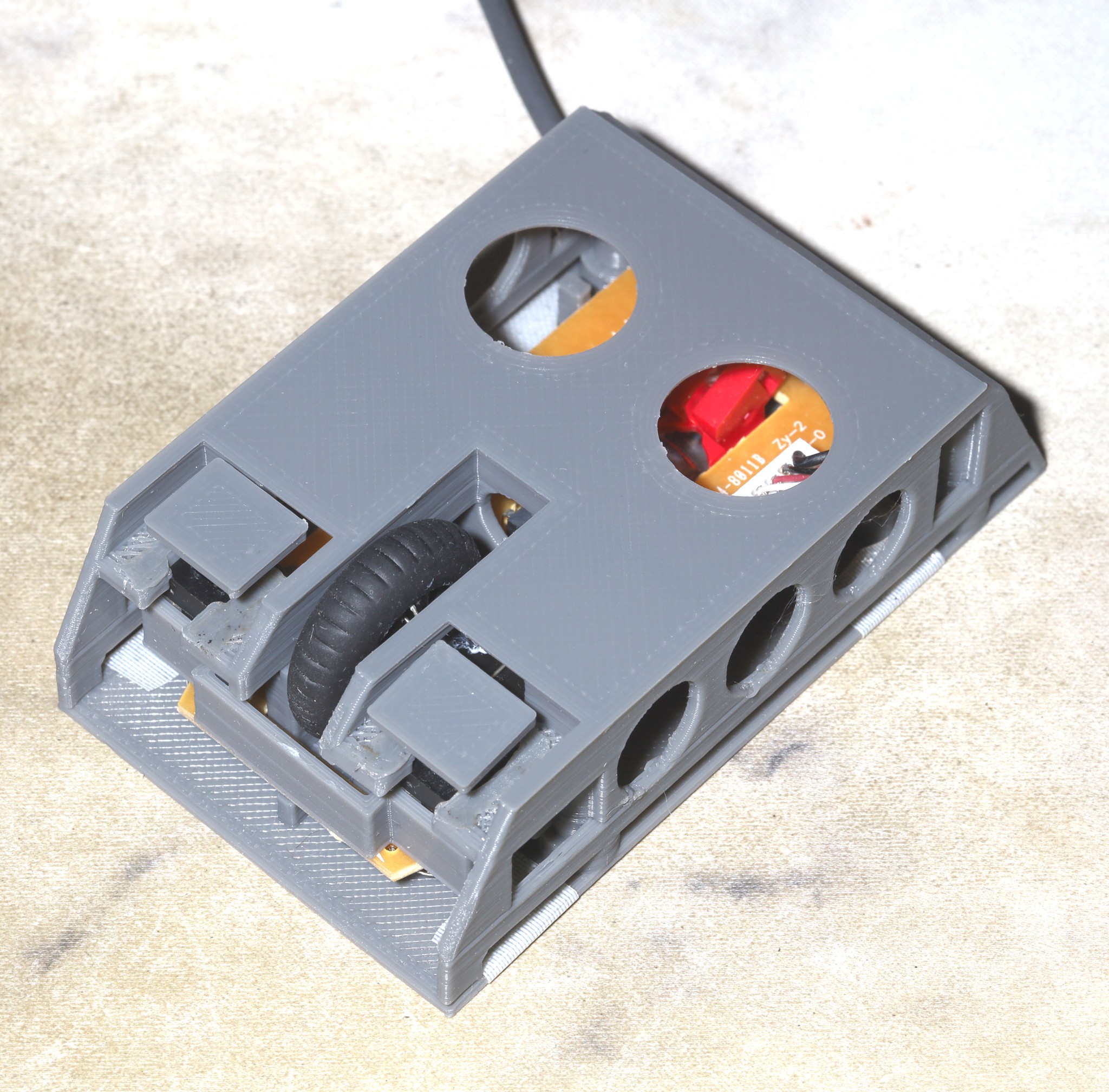
Reduced the button caddy to expose more of the wheel. There can never be too much exposed wheel.
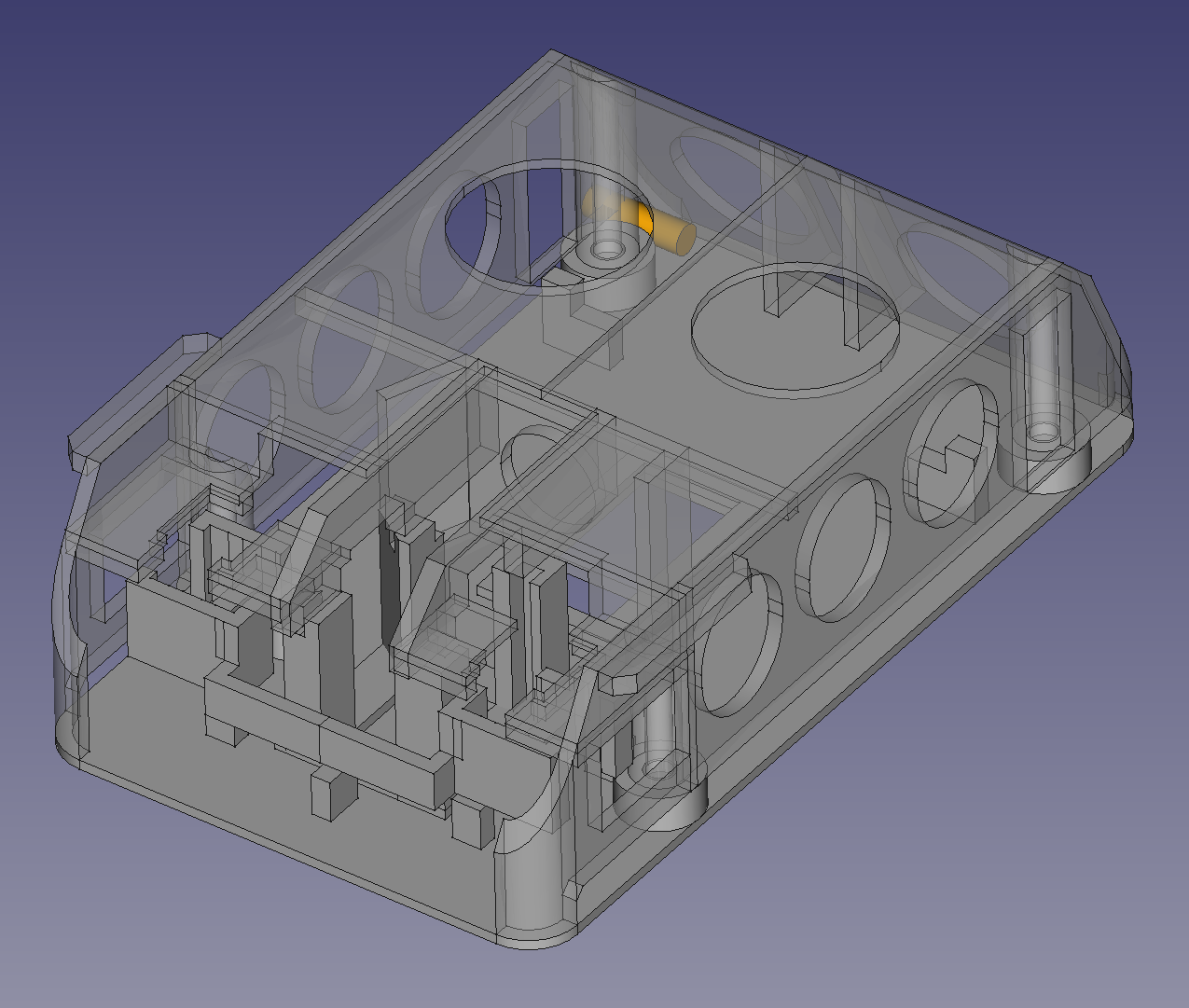
A new swiss cheese design made it easier to inspect the innards & provided more grabbing points.
The wheel has proven impossible to adjust perfectly. There's not enough difference between too low & too high to account for variations in layer height. It's either too close to the tact button or too high for the encoder to pass light.
Exposing more of the front of the wheel & rotating it from the front has proven desirable. If it's wheeled from in front, it still can only be pressed from above. The wheel could be fixed into a pure rotation role & a separate button could be added in this case.
There is a desire to have an overhang next to the buttons for grabbing.
Another deposit in the PLA fund yielded a bag of tolerance adjustments, new side panels, larger wheel opening. The cost of such a large model with so many fiddly parameters lived up to expectations.
The wheel doesn't detect rotation unless it's right on the switch. The top panel determines the wheel offset.
Exposing more of the wheel is better, but it requires a lower top panel. It could be lowered & a prosthetic shape welded on behind the wheel.
The camera suffers from a combination of ambient light & far sightedness. The more ambient light, the more far sighted it is.
The buttons are the biggest problem. They close before they click. If there's any auto repeat, it'll start repeating before the buttons click so there's rarely a click. A mouse button needs a very small travel for the kind of auto repeating it does. At least there's tactile sensation when the button is down. The stock buttons in all modern mice give no sensation when they're down.
Also noticed because the buttons require a lot more down force, the front sides need a bigger place to grip & the bottom front needs more support. It might be necessary to have a front pyramid like the microsoft mouse to support the buttons if they can't go behind the wheel.
All the problems made lions wonder if mice & trackpads just aren't pleasant anymore & it's time to move to trackballs.
This looks amazing. I want to try one out. I have been looking for a good mouse for a while.