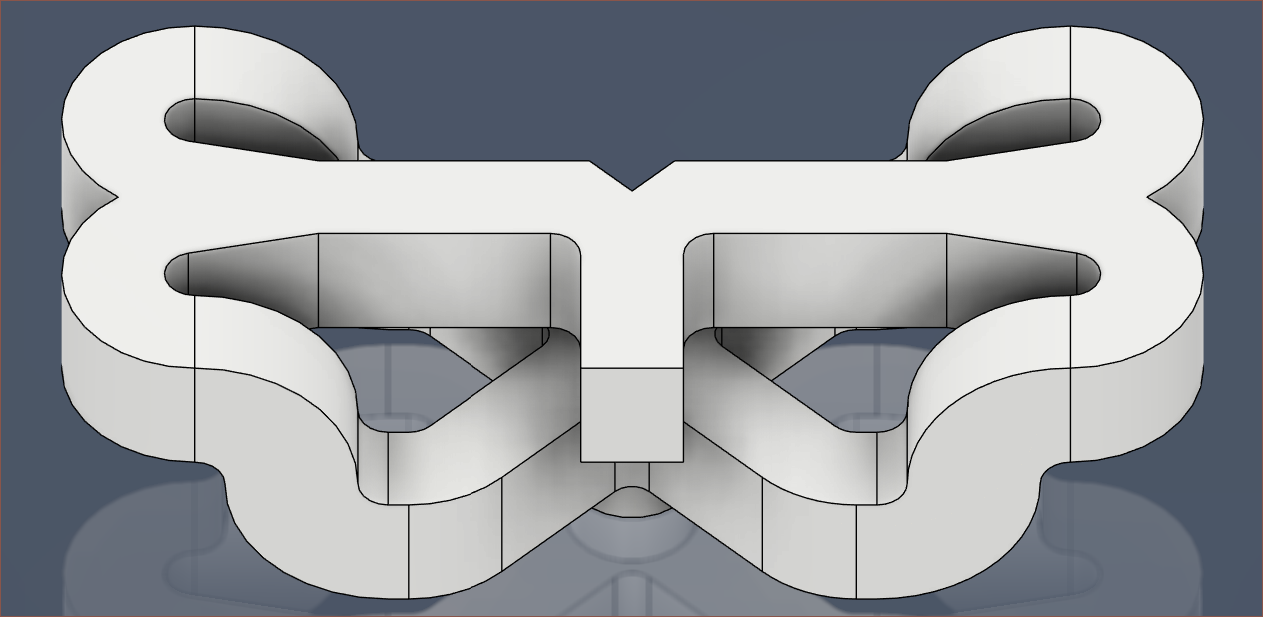
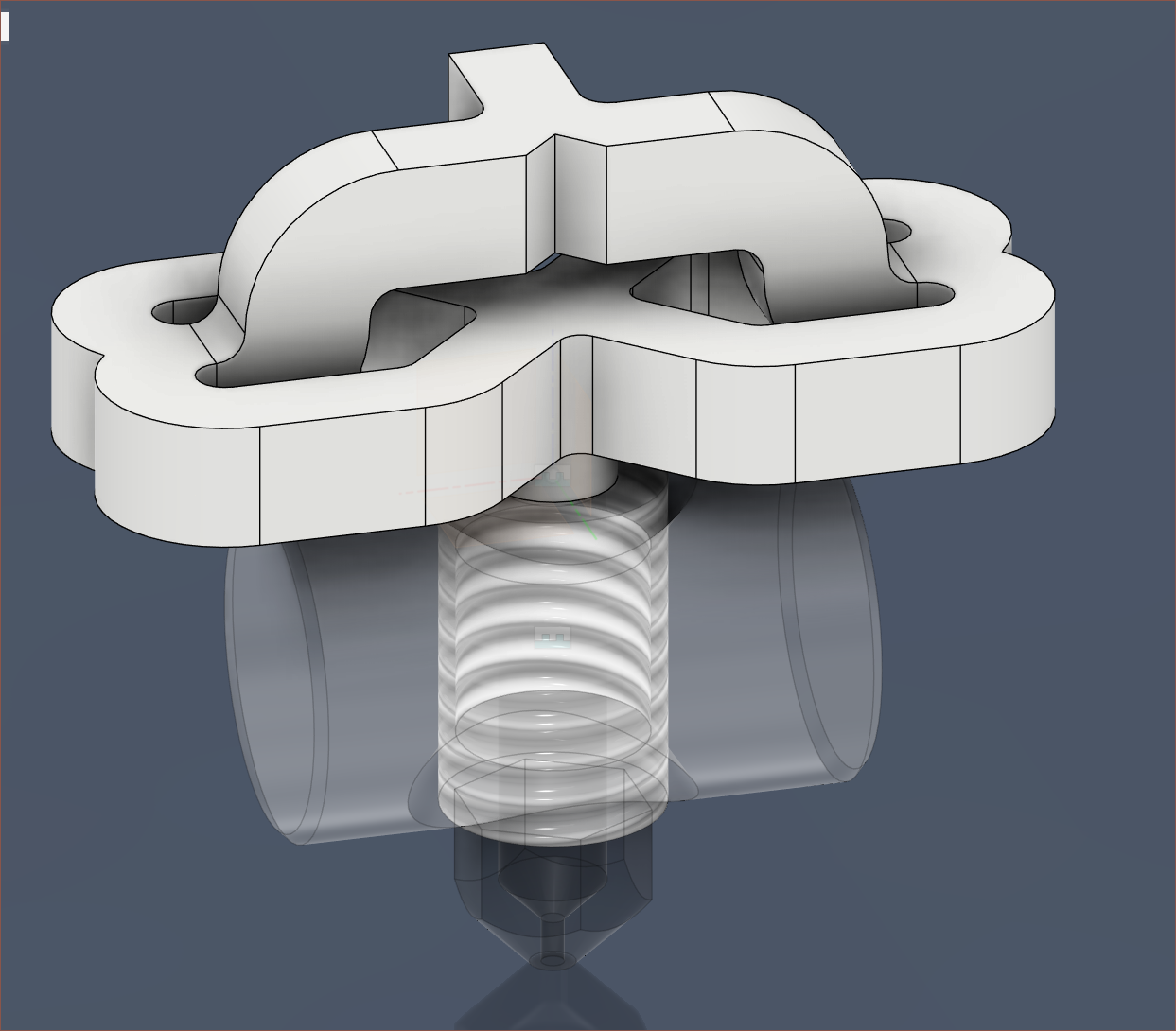
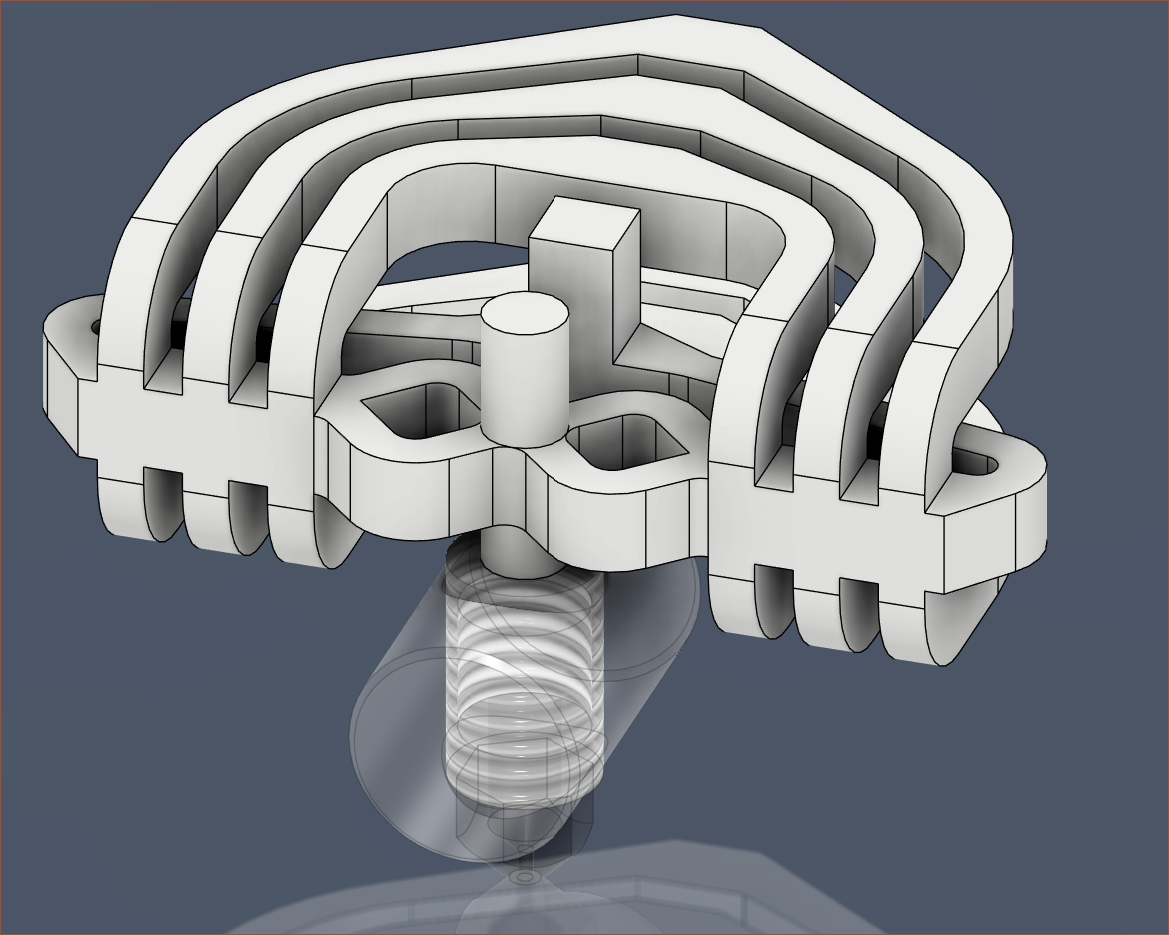
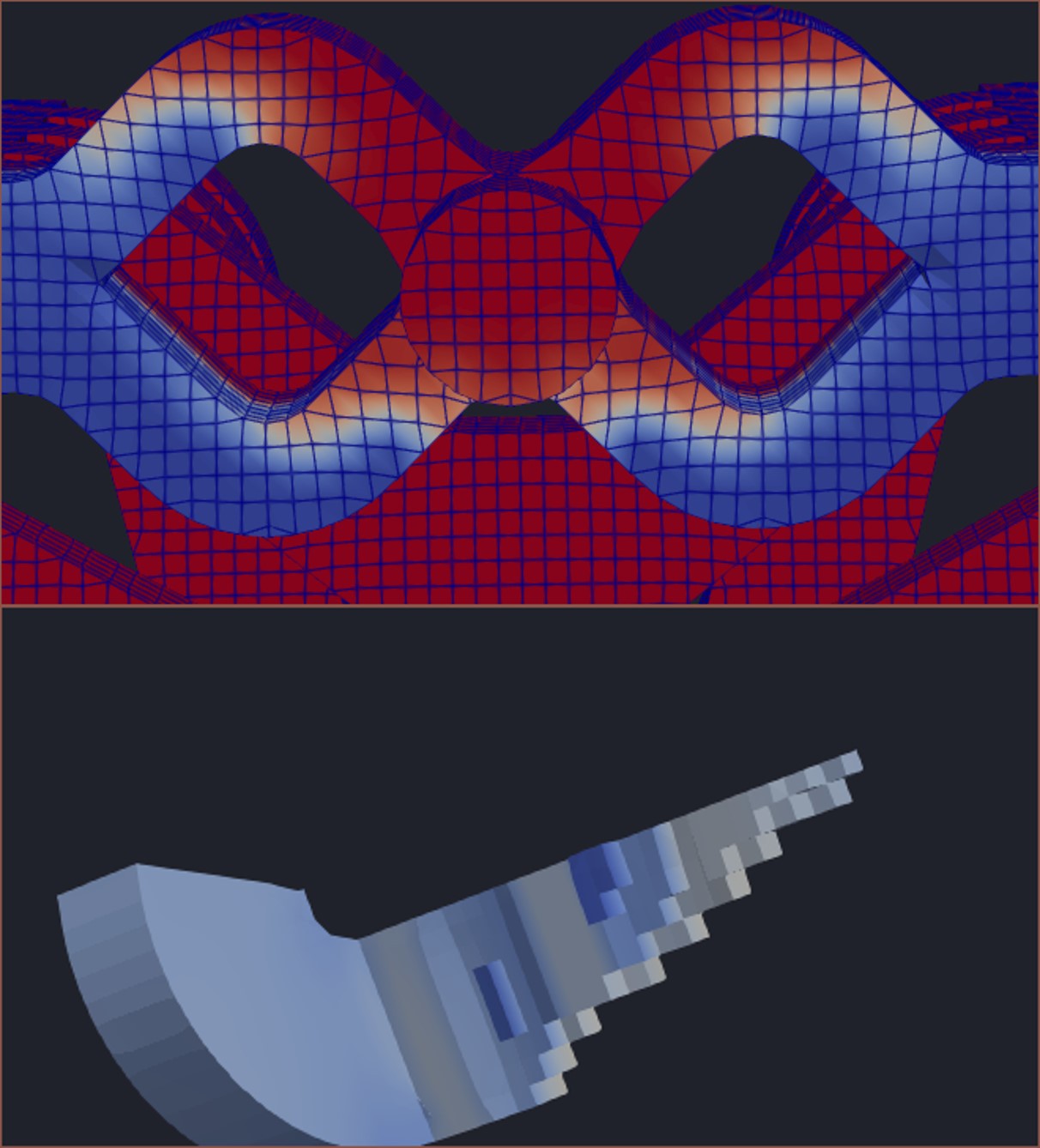
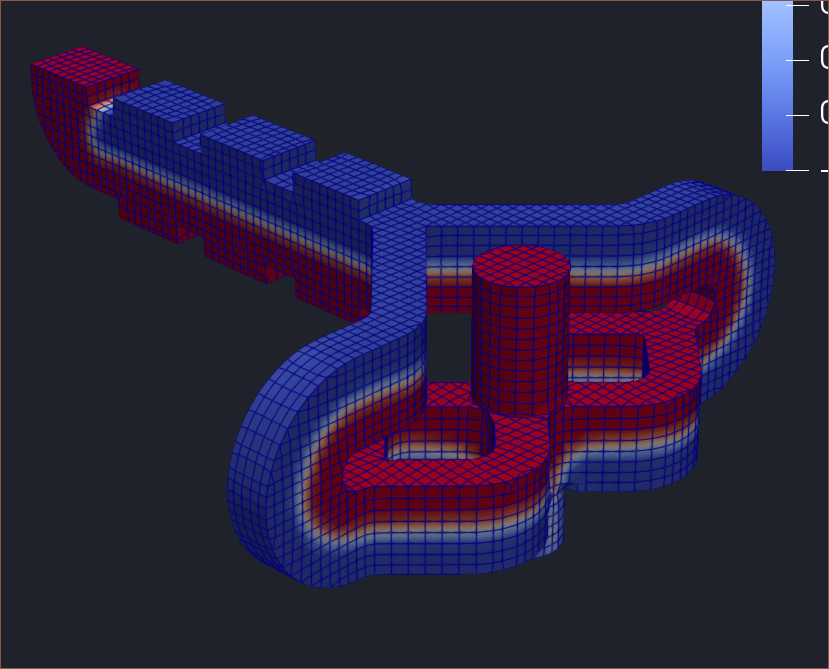
This solution uses approximately 0.6 mm3 of molten plastic. The side inputs are spaced 6mm appart.Here it is. After multiple days of thinking up and simulating multiple ideas, this is currently the smallest pathway solution I've obtained.
All the other things I tried, in chrono order
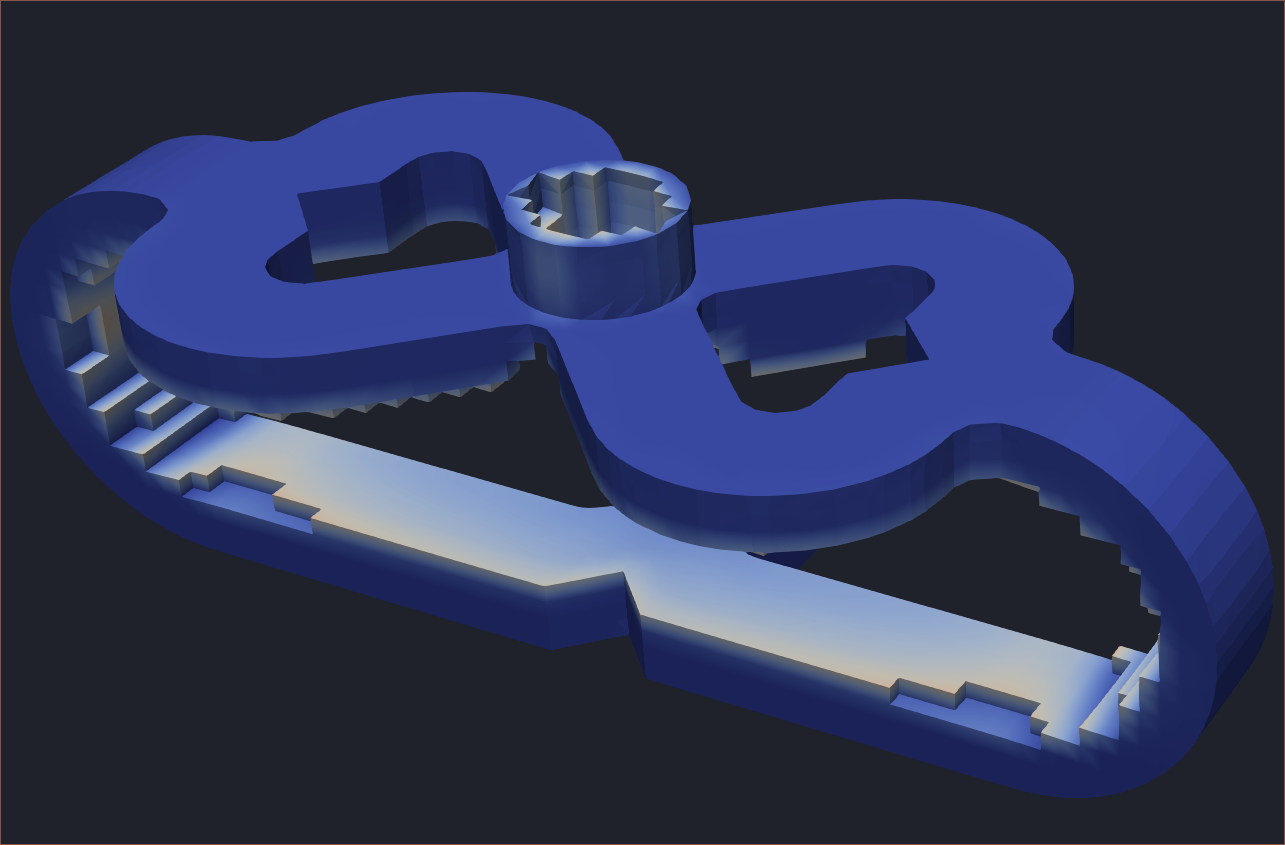
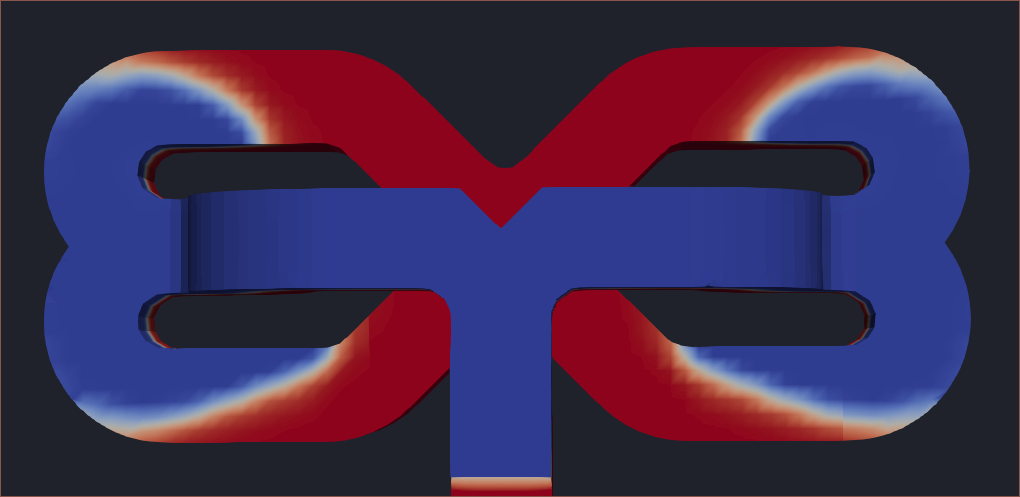
I started of simply adding 90-degree spikes to cut the material flow and keep everything moving. This had a volume of 234 mm3. I wanted to see if this could be a strategy. It's 20% more volume. These next two designs explored if I could split only after going down a level to save on volume. This is 11% less volume.This one is about the same volume as the first one.
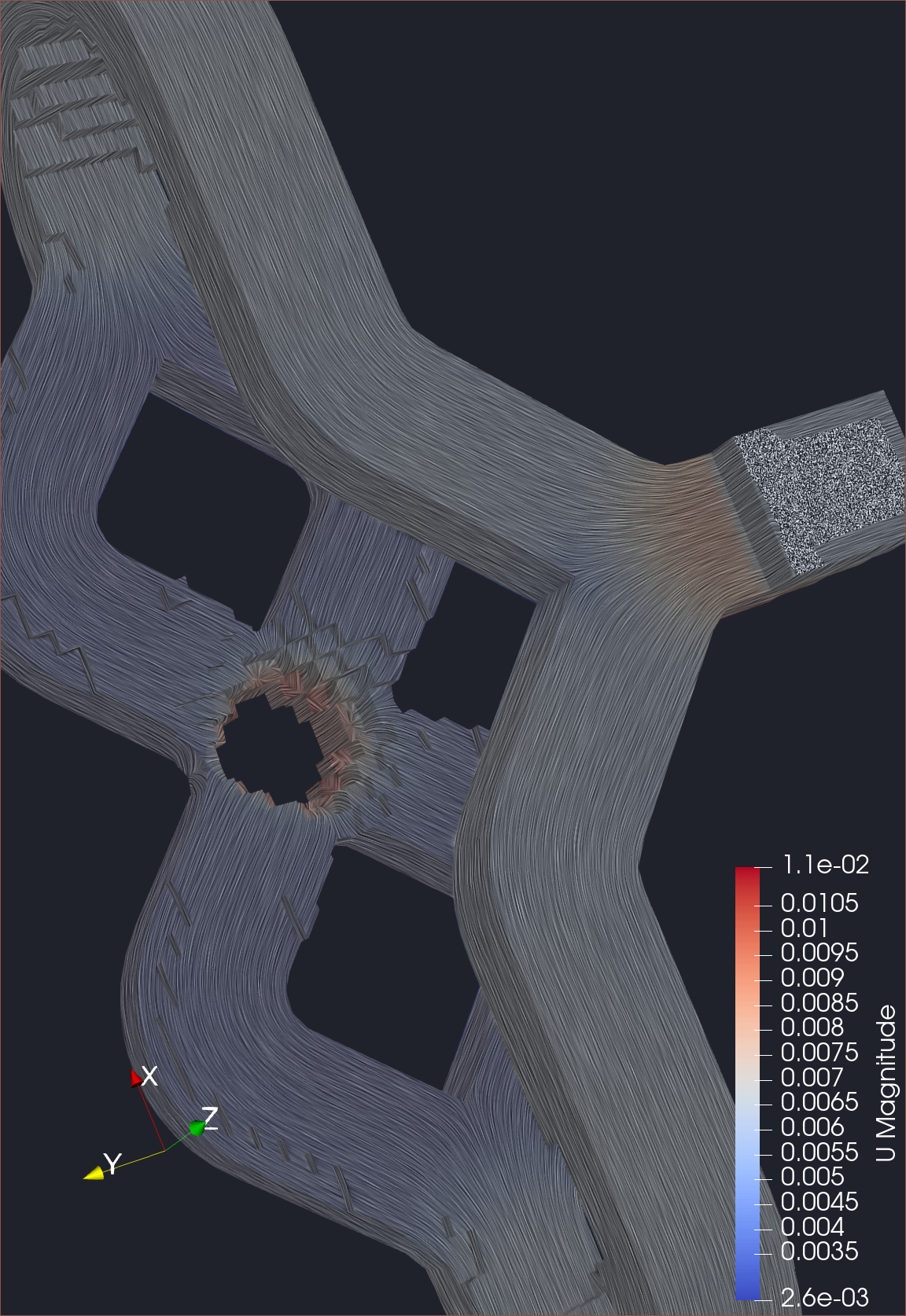
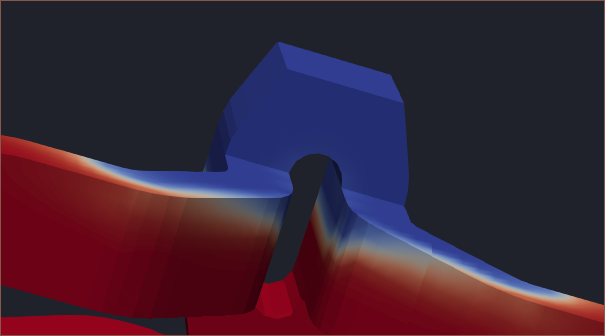
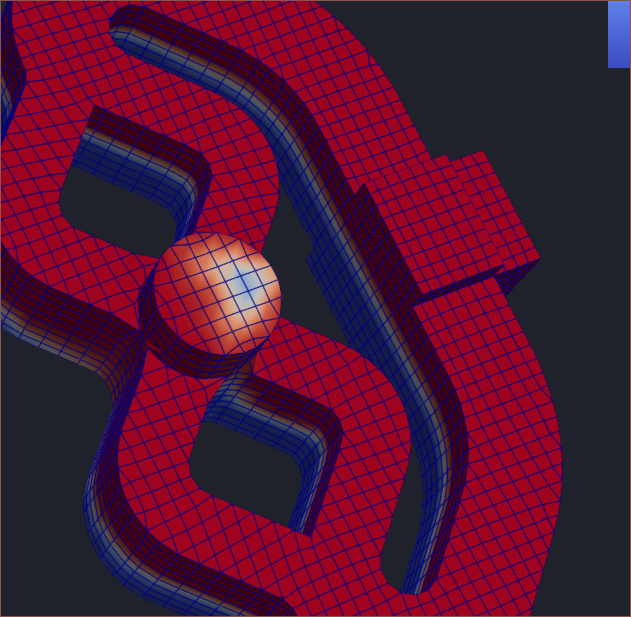
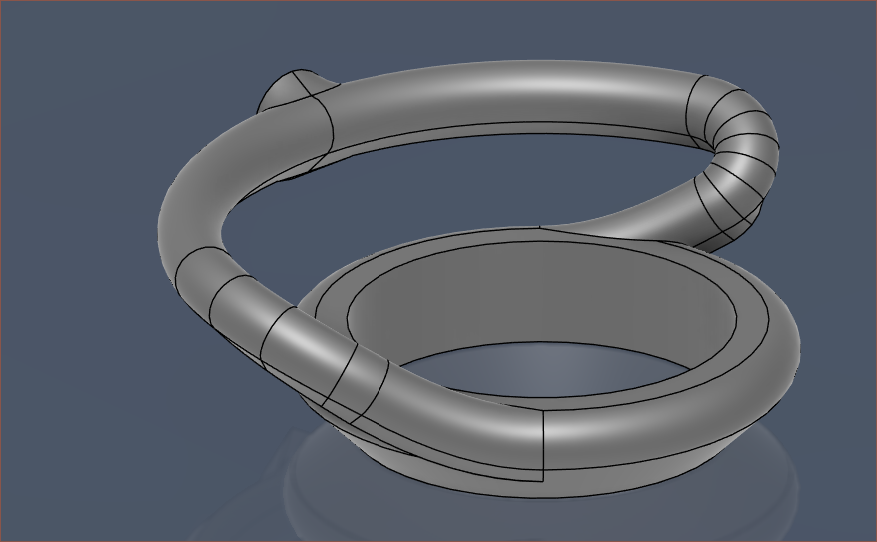
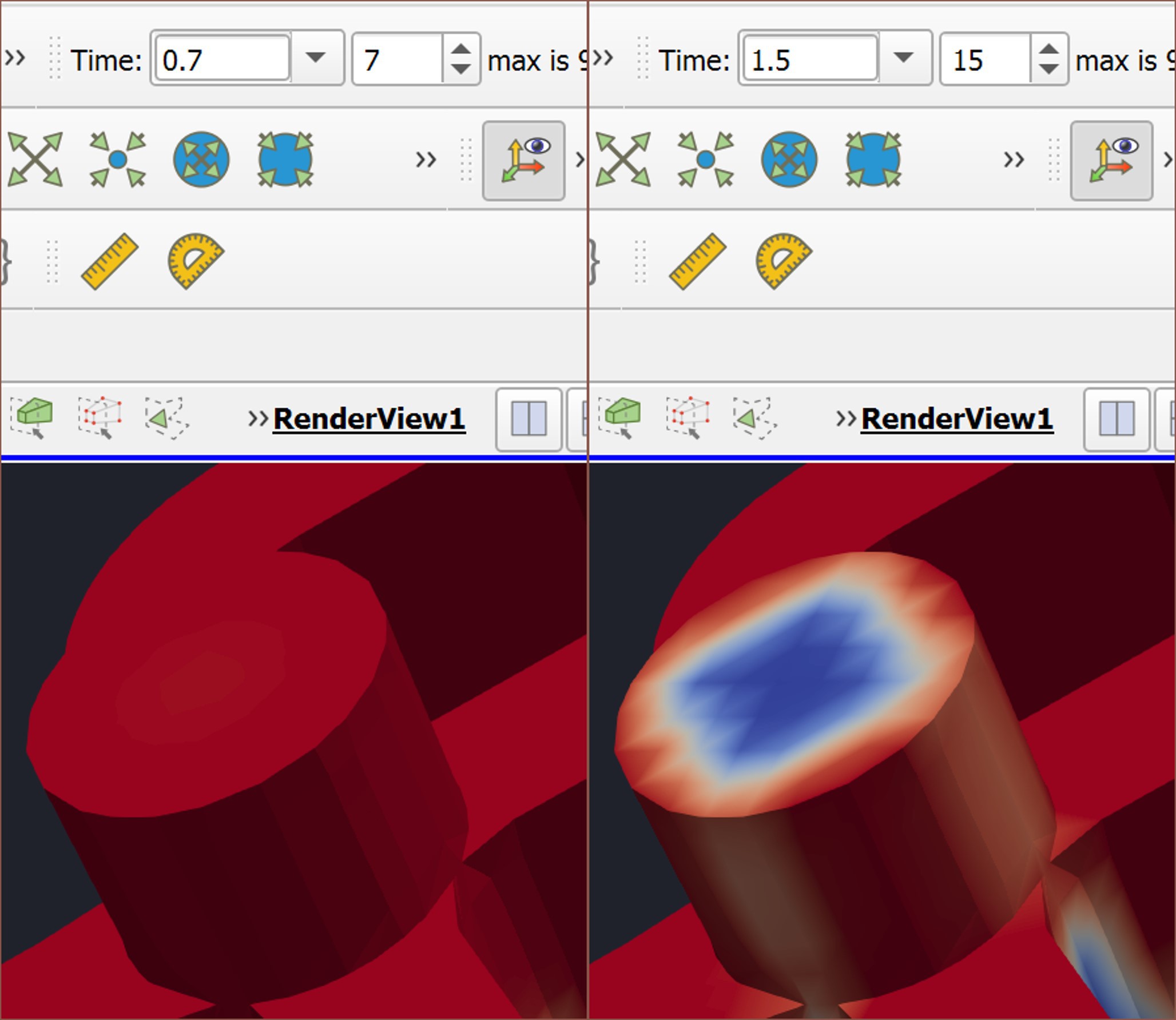
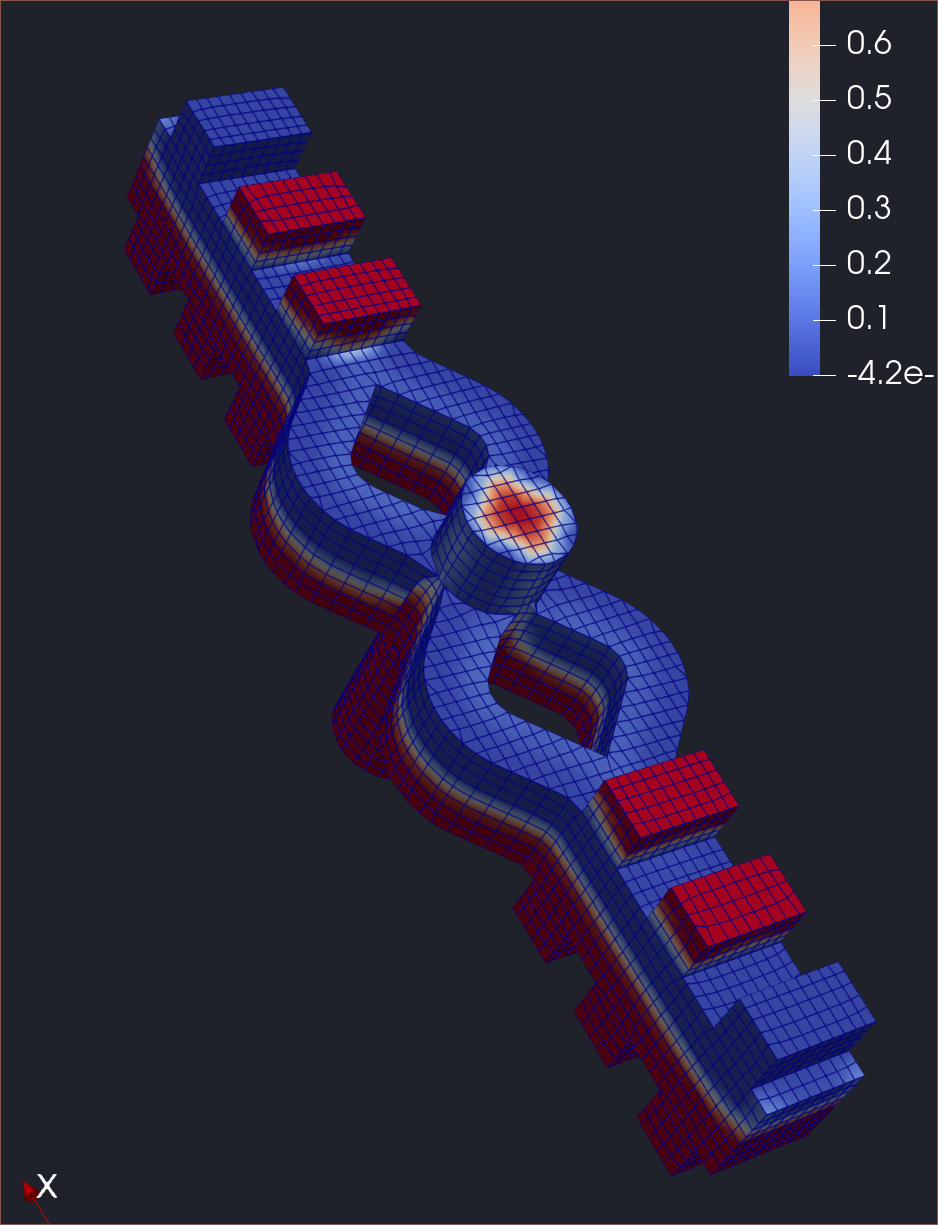
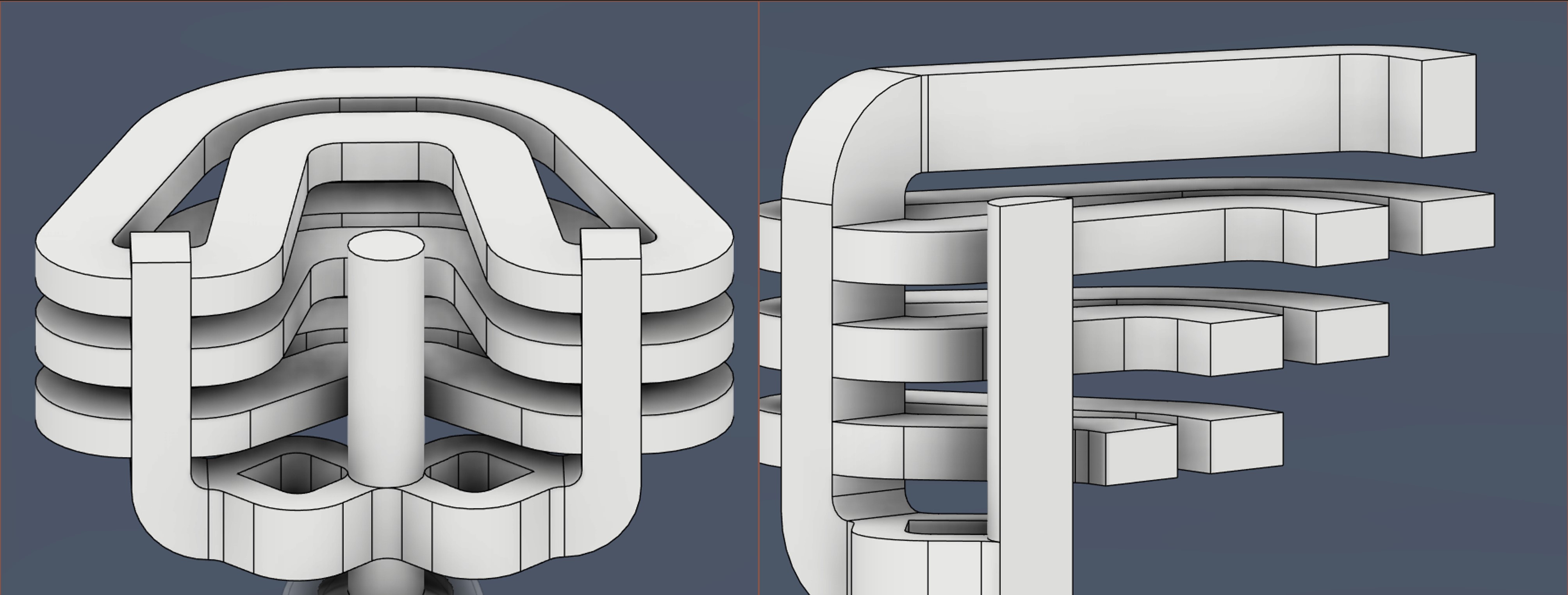
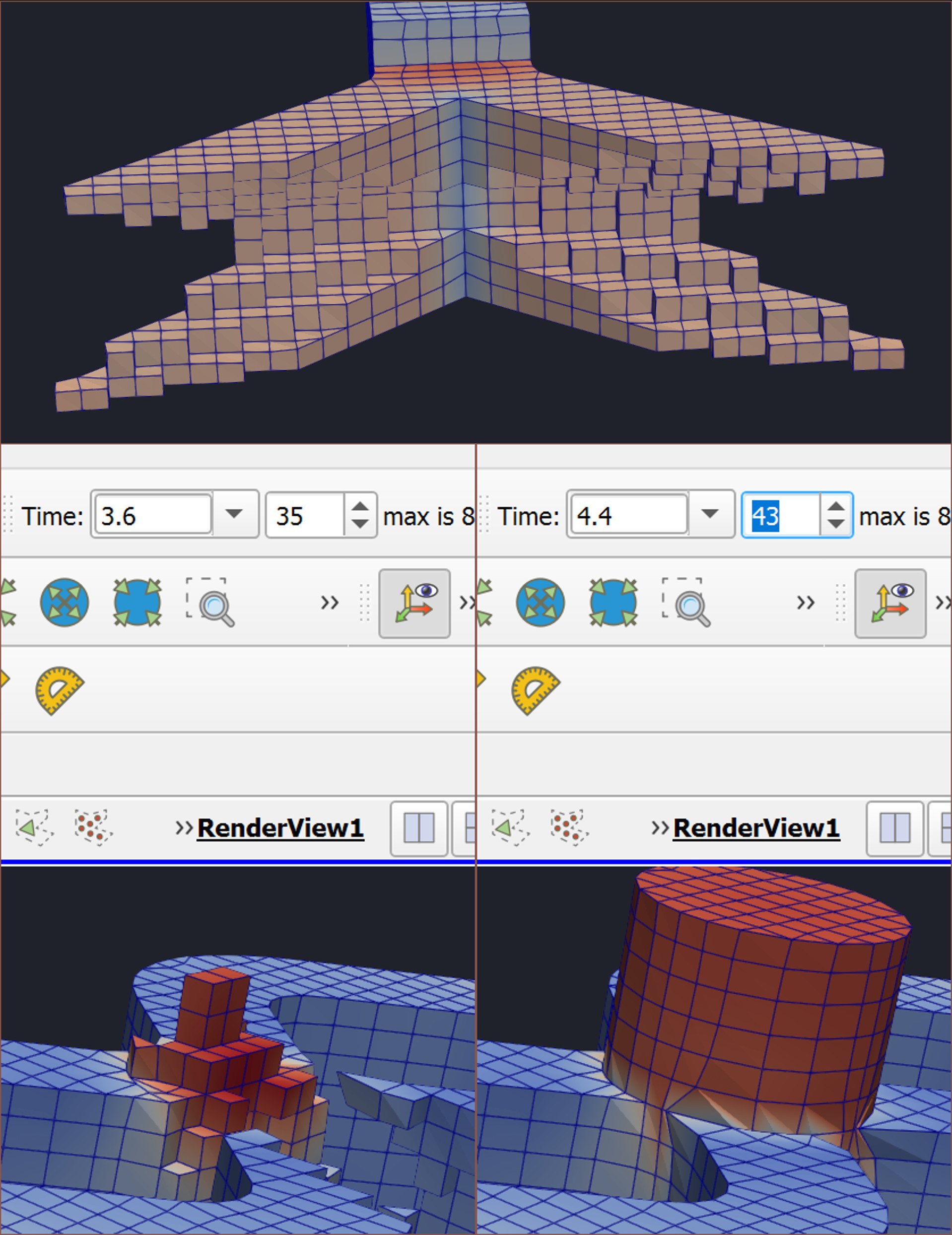
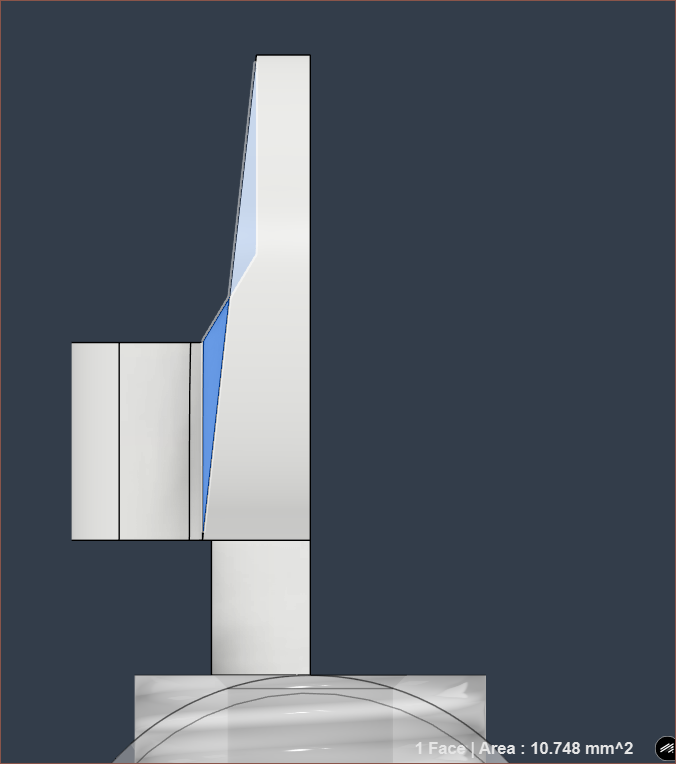
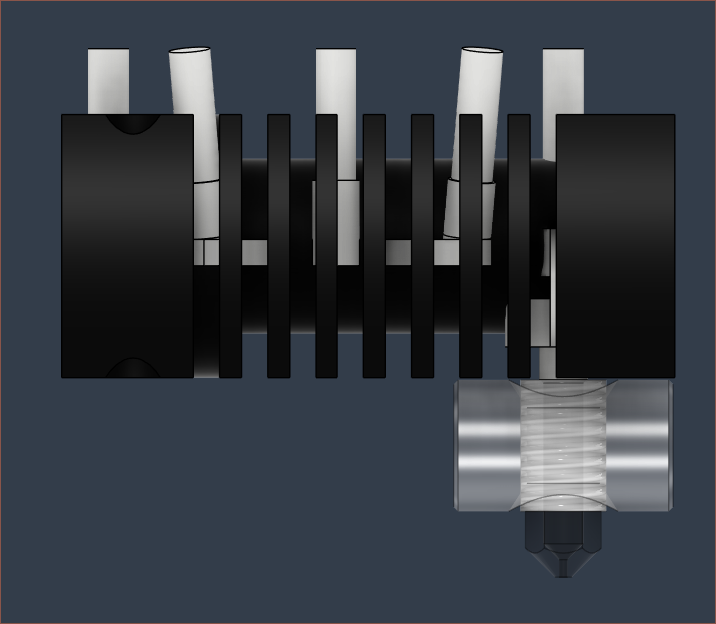
The 4th one seemed to work fine.The pathways were reasonably matched too.The same could not be said with the 3rd idea.I then decided that a reasonable way to further decrease volume and improve side-to-side matching was to make the paths thinner. I also looked at all the view modes ParaView has.LIC was nice because I could see the movement direction of the flow. U magnitude is in m/s.I tried pre-splitting and the transition time was 1.7s. Note that a total of 40 mm3/s is flowing through all these tests. Tried going up instead of down to potentially reduce the amount of material that needs to travel up from the tubes. I was assuming that the tubes would exit lower, accounting for the hole that keeps them in place. Transition was 1.5s.I tried a completely flat design, but transition speed was 1.7s, the same as with the 2nd design.I sent this off to PCBWay and they said that it would be possible to fabricate without powder in the channels.Tried this idea where it's mirrored but I couldn't think of a reason why it would be beneficial.Thought of having a FastPass input so that there could be faster transitions between support and the mix, for example.At this point, I was noticing that my solution was looking like a cleaner version of one section in Coaxial8or R0, but now this geometry for R4 does the job of the 7 rings.The transition takes 0.8s to complete. I was hoping for even less time.I tried seeing if I could split before and have 2 straight channels going straight into the diamond-squares. Obviously, it uses too much pathway material.The transition is 1.0s.In an attempt to reduce the amount of pathways needed, I tried bending upwards and staggering the inputs of these channels so that I could routhe paths in and out.I had quite mismatched channels and the reason was because of the starting condition. Once I fixed this, I had 0.8s transition.Then I ran this simulation and I got 0.9s transition. Then I did a simulation of a full mix change, which completed in 0.8s. I ran the FastPass input simulation afterwards and the transition was 0.6sI tried to loft-curve to save on volume, but it ended up slightly increasing it instead.Then I tried shuffling the inputs around to get a solution that was both symmetrical (to cut down on modelling/fabrication time) and didn't intersect with things. This solution doesn't work with the heatsinks, but I decided to model the internal channels anyway.The end result is barely larger than a CR-10/Ender-3 heatsink.
 kelvinA








Discussions
Become a Hackaday.io Member
Create an account to leave a comment. Already have an account? Log In.