 100dollarhacker
Use method #17 to get Nitric acid. Then use gentle method to get IC to the right temperature and use ultrasound bath to clean residue.
Since the beginning of the project I've never measured the temperature of IC but of the heating head, which is correlated but definitely not equal. Now I've made some simple Arduino based IR temperature sensor plus mosfet to control heating head temperature.
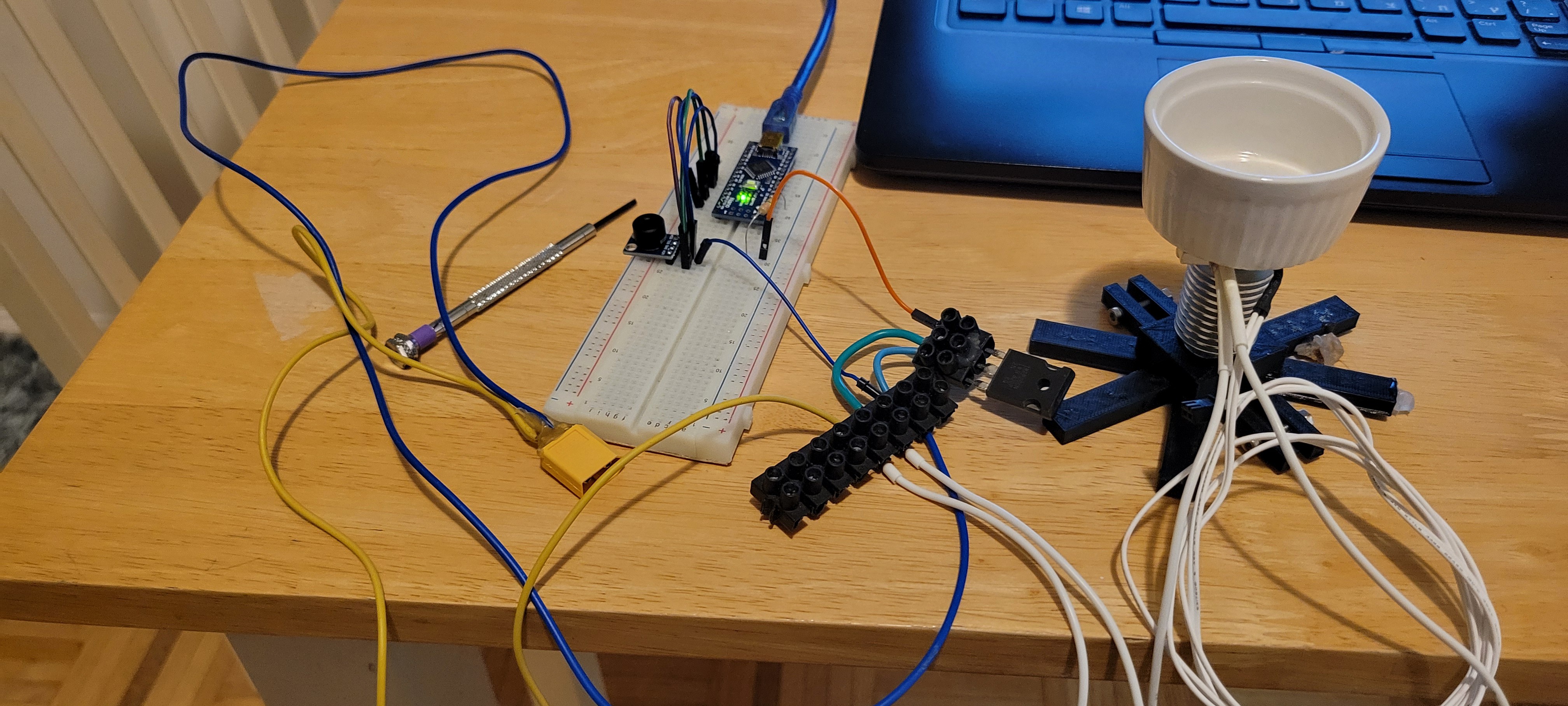
This way I can set 80°c and be sure that no acid is wasted and IC is not above it's maximal temperature.
Printed a nice holder for temperature sensor.
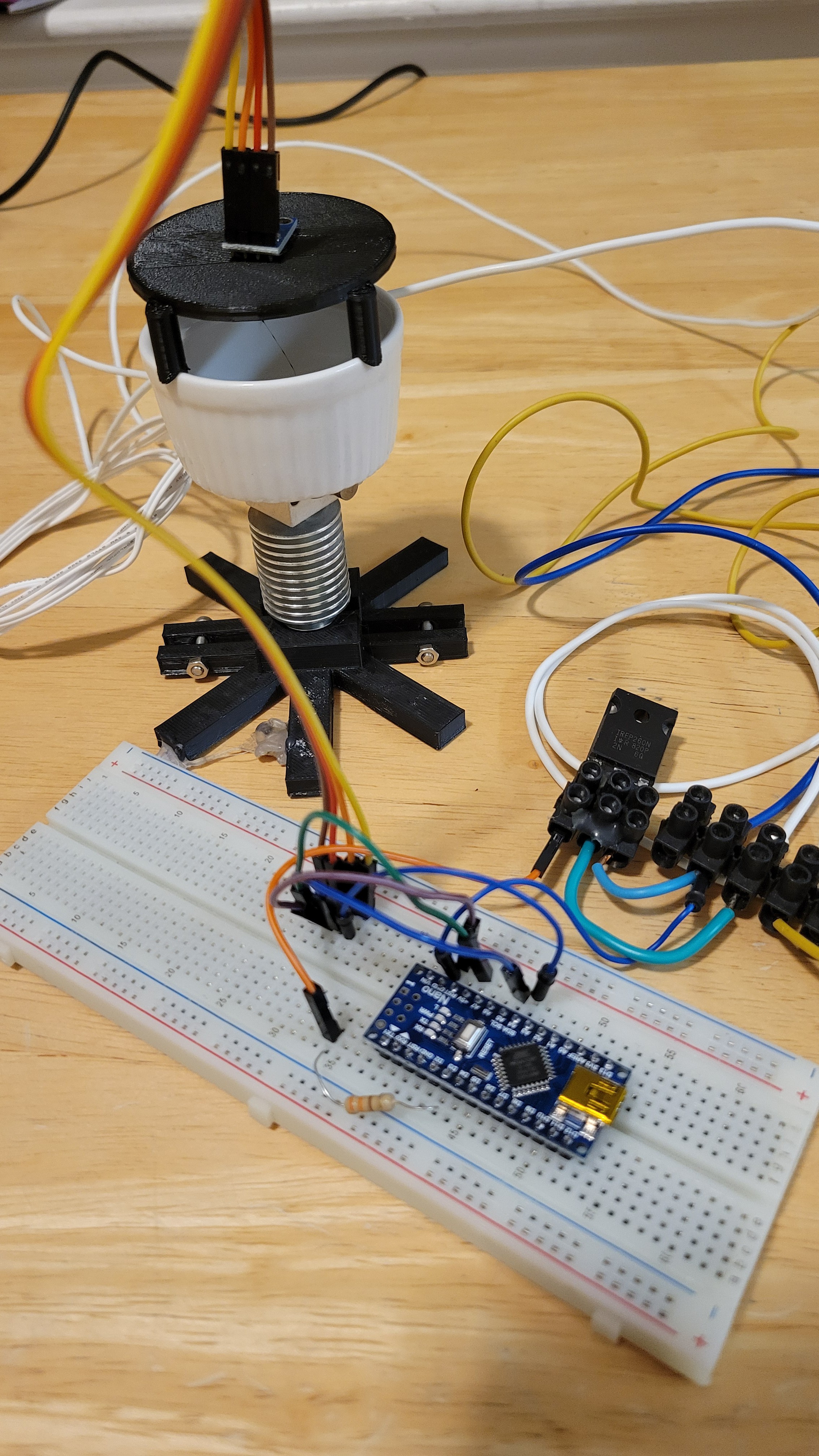
Tested, found out that MOSFET getting really hot. So, adding a heat sink is a must. Except that, heating up until 80 degrees Celsius was not a problem.
Spring time is here, waiting for warm and not raining day to test this idea.
Done in two steps: first made the nitric acid. Second step put drops on Nitric acid in a temperature controlled environment.
Although some say that it doesn't matter exact quantity I believe it just not true. I made the acid and for a test spilled a few drops on nitrile gloves if the concentration is high it will catch fire. Although they deformed no fire. So I guess exact quantity is important.
After two days of idle the jar with Nitric acid got red fumes.
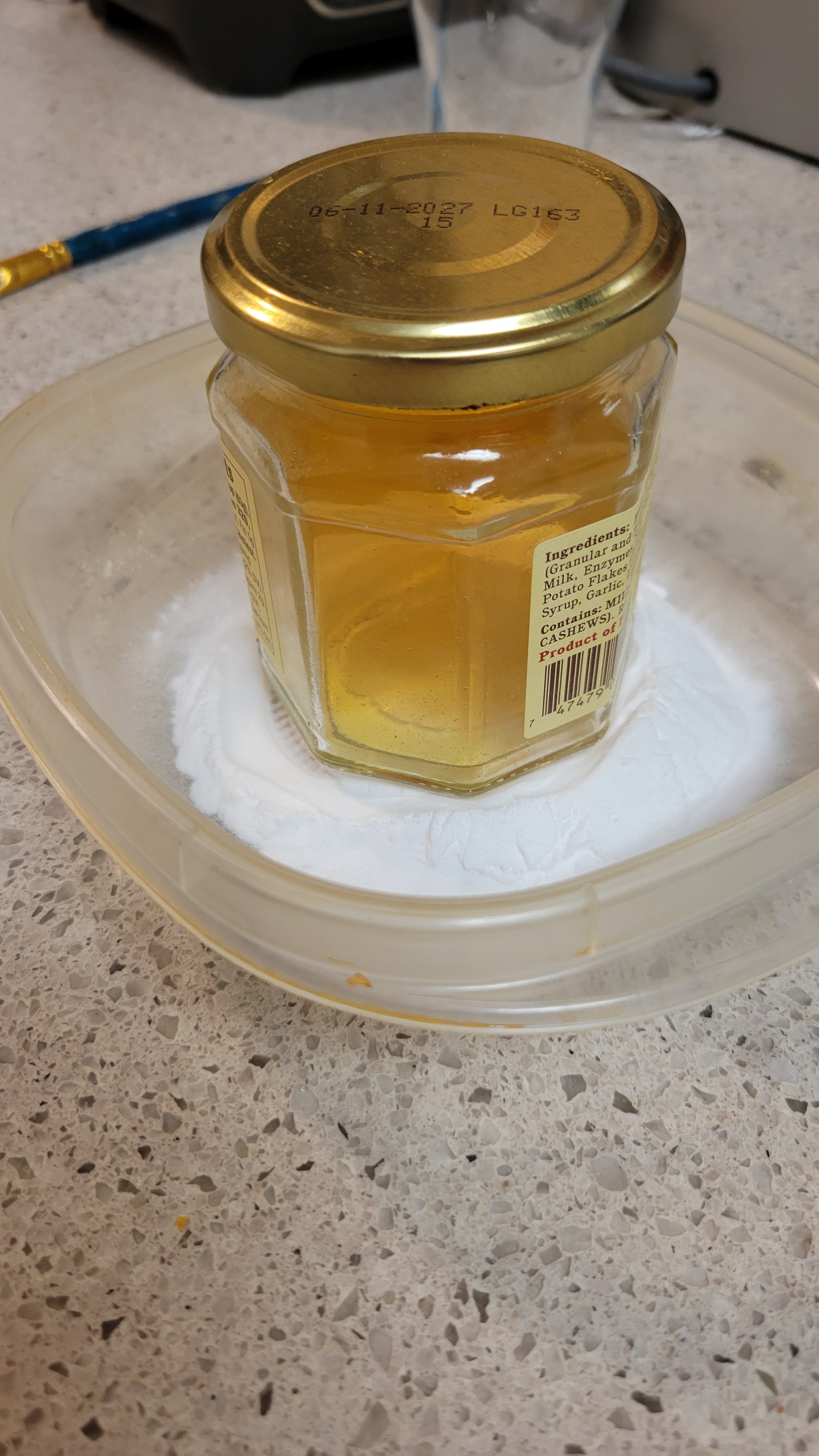
Probably it's wrong to store Nitric acid in such jar as fumes probably escapes a bit.
Anyways, running with low temperature of about 62 degrees got me nowhere. I got the green thing which is dissolved copper.

Although I was able to decap few still without bonding wires

This how it goes in action
Well, failed again... probably I should use exact rations of Sulfuric acid and Potassium nitrate.
Funny thing was that I got two transistors I didn't use and few drops of nitric acid. It was late and I didn't want to throw it and I had no idea what to do. So, I just dropped two transistors into the acid. I did this experiment before nothing happened. To my surprise the acid got dark brown color. That means some reaction with Nitric acid. I wonder what is different?
I will give it time and see what happens... Stay tuned
Discussions
Become a Hackaday.io Member
Create an account to leave a comment. Already have an account? Log In.