 Yann Guidon / YGDES
After some computations, I'm sticking to the balanced configuration with 7-14 avalanche for both decoder and encoder, and I have chosen the first one specified below:
14  188 168  14  7   14  7 - 1965 7515 4021

Perm1965 =
 forward(  3  5  9 17 16 10 15 12  1  2  0 14  6  7 13  8 11  4 )
 reverse( 10  8  9  0 17  1 12 13 15  2  5 16  7 14 11  6  4  3 )
Perm7515 =
 forward( 17  2 11  0  6 16  8  9 10 14  1  7 13 15  5 12  4  3 )
 reverse(  3 10  1 17 16 14  4 11  6  7  8  2 15 12  9 13  5  0 )
Perm4021 =
 forward(  4 17  6  5  1 15  7 14 16 13  0  9 10  8 12  2  3 11 )
 reverse( 10  4 15 16  0  3  2  6 13 11 12 17 14  9  7  5  8  1 )
There are 4 variants but they are just exposing the symmetries of the tiles.
With these sequences of number, it's now time to implement the circuit, starting from the last layer (4021)

A first obvious feature is that the end of each cascade loops back directly to a quad inverter, so it looks good.
Level 2, the middle permutation layer, implements Perm7515.
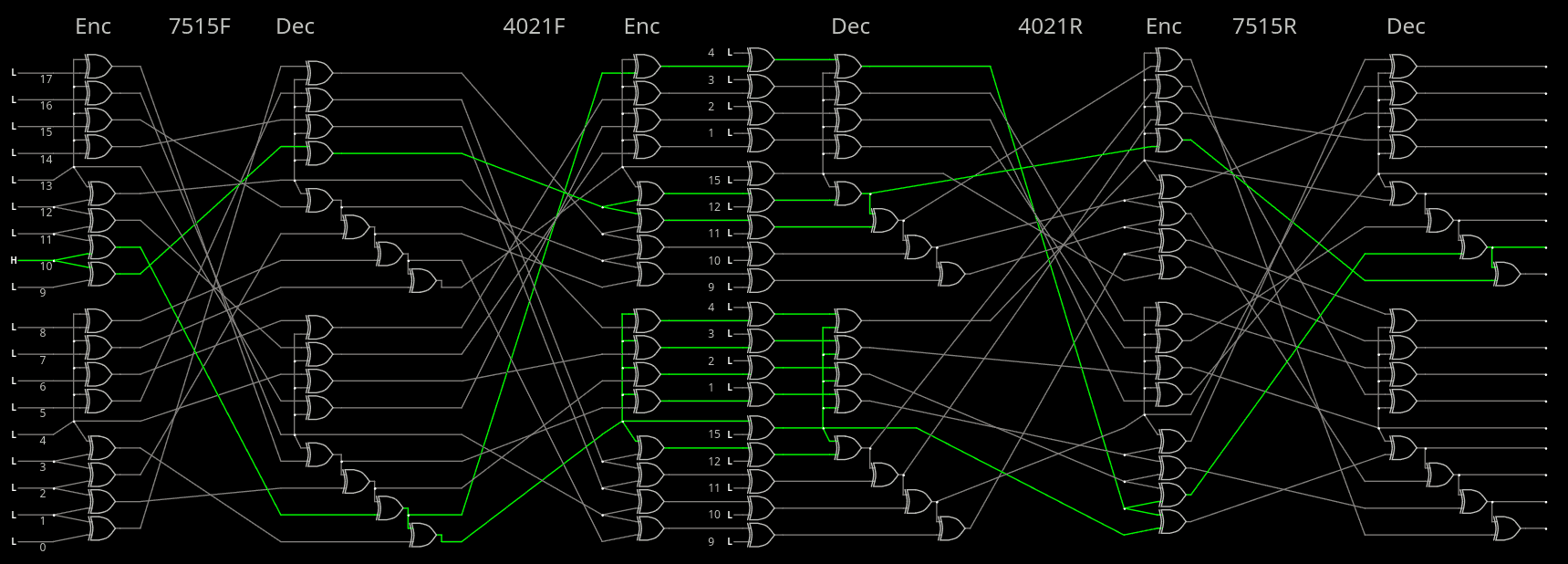
Things start to look great!
And finally the outer permutation Perm1965. But the circuit has exceeded the size of links so I have split the decoder from the encoder.
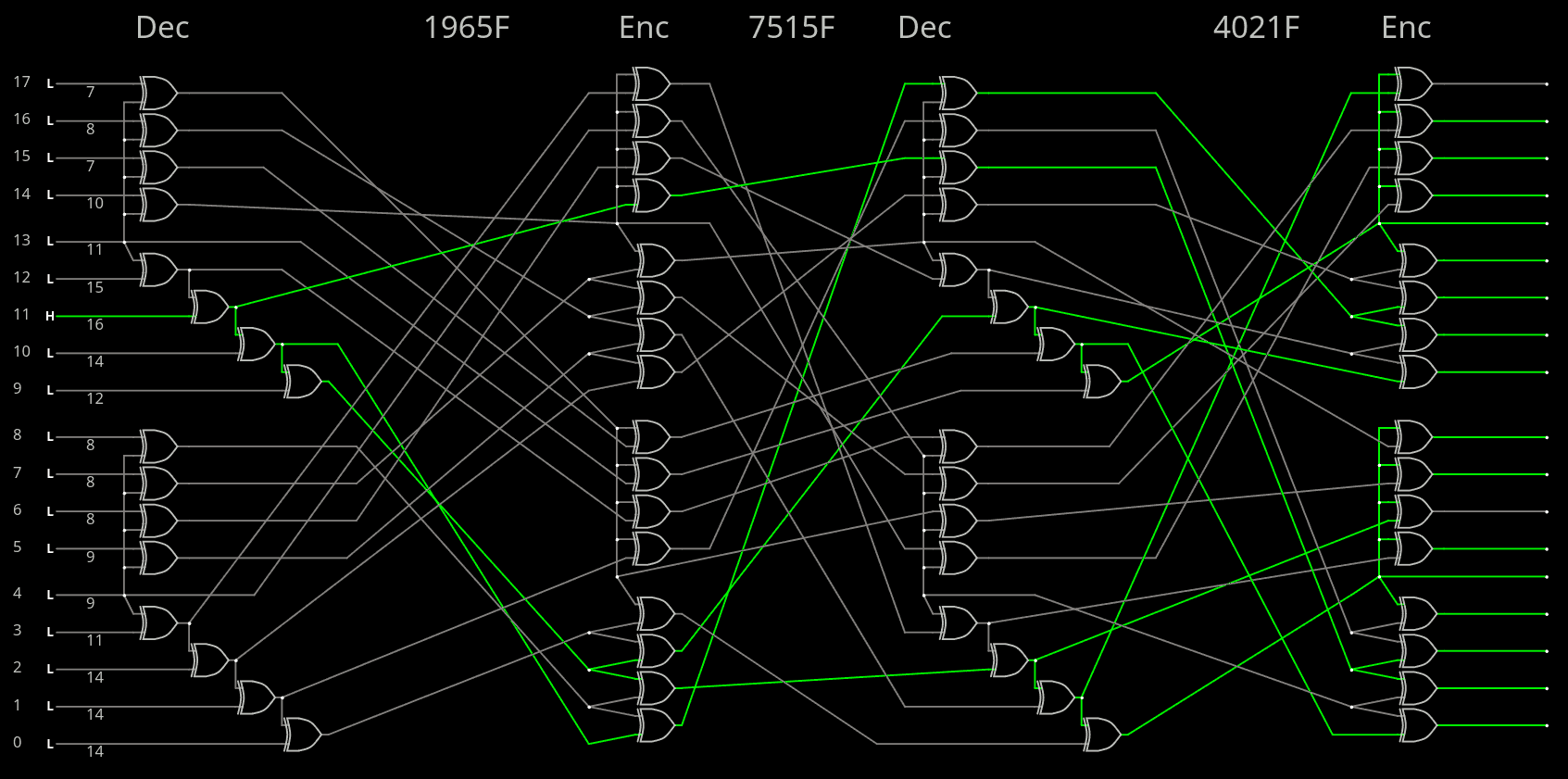
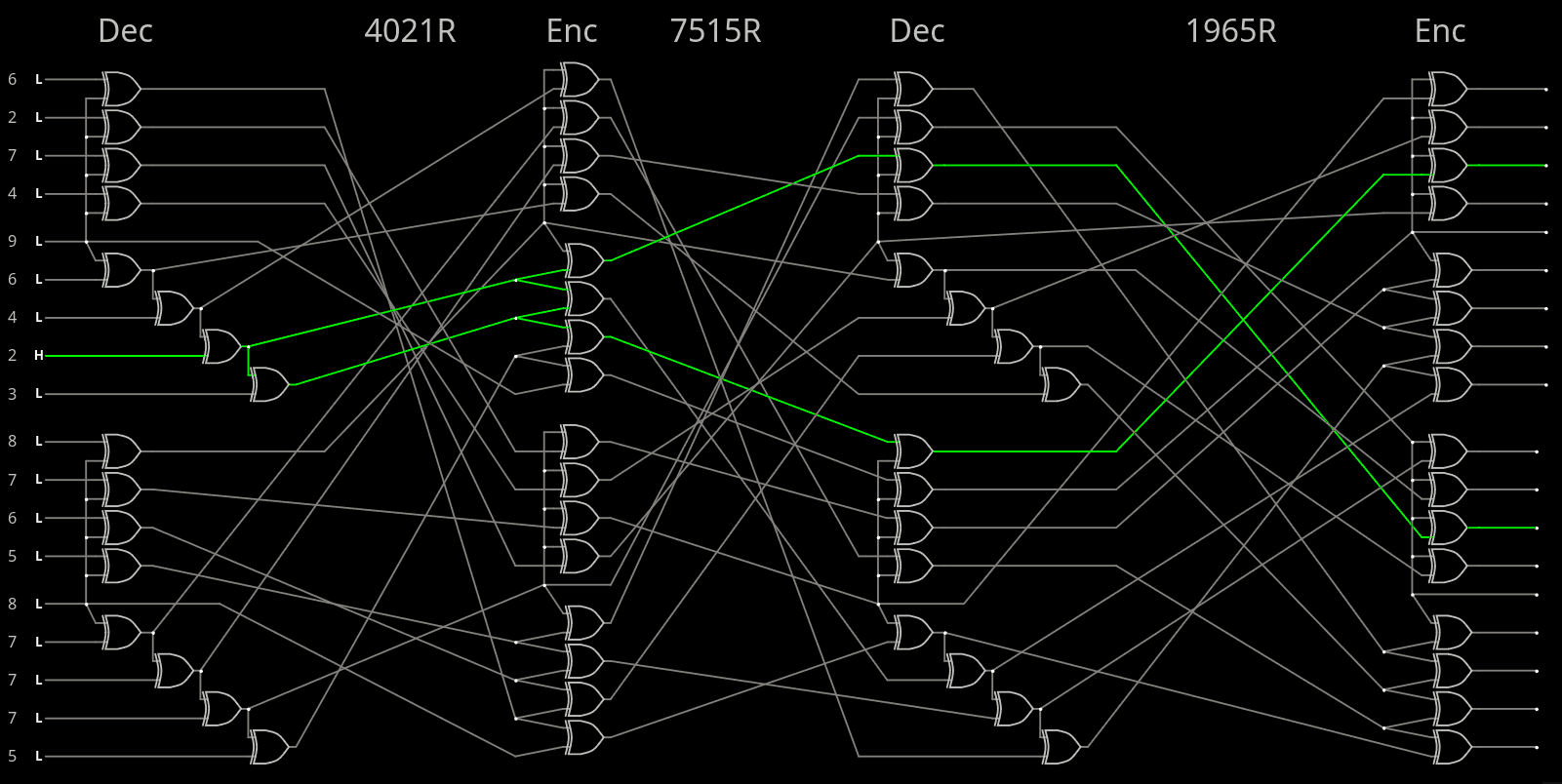
The manual checks have found that the advertised numbers don't work as expected, and look like the previous two manual version I had created before. So a 5th layer and 4th permutation would be required for a full coverage but... Let's stick to the current config for now, because that's already a lot of gates.
- Encoder: 7 7 8 8 8 8 8 9 9 10 11 11 12 14 14 14 14 15 16 is very good !
- Decoder: 2 2 3 4 4 5 5 6 6 6 7 7 7 7 7 8 8 9 is lousy, worse than 121. MaxHam gen2 !
The discrepancy has no apparent reason for now. But there is a simple workaround: swap the decoder and the encoder, so avalanche is better on the receiving side.
Another "solution" would be to loop the circuits back for another round.
3rd solution : use the highly efficient encoder in the loop of the NRZI converter, to form a combined unit.
Discussions
Become a Hackaday.io Member
Create an account to leave a comment. Already have an account? Log In.