 jianwei wang
1. Executive Summary
The purpose of this test is to evaluate the feasibility of the RV1126 development board as a core processing unit for the second generation of reCamera, focusing on:
- Real-time video analysis capability (YOLOv5/SSD model performance)
- Long-term operational stability (temperature/power consumption)
- Development Environment Maturity (Toolchain Integrity)
Conclusion:
Final Recommendation: RV1126 may not be a good choice for 2nd-gen products(But RV1126B may be suitable), with the following conditions:
- Usage Constraints:
- Suitable for single-stream 1080P@30fps detection (7-10FPS YOLOv5s)
- Not recommended for multi-channel or high-precision scenarios
- Critical Improvements Required:
- Enhanced thermal design
- Real-time detection performance
- Outstanding Risks:
- Stability
- OpenCV-Python compatibility with quantized models
This report evaluates two commercially available RV1126 development boards (large: 10×5.5cm, small: 3.5×3.5cm) through:
- Network bandwidth testing
- Thermal and power measurements under CPU/NPU loads
- RTSP streaming performance
2. Test Results
2.1 Large RV1126 Board Performance
Network Bandwidth Results:
Test Type | Protocol | Bandwidth (Mbps) | Transfer | Packet Loss | Jitter (ms) | Duration | Key Findings | Conclusion |
Single-thread TCP | TCP | 93.1 | 222 MB | 0% | - | 20.03s | Fluctuation (84.4~104Mbps), 1 retransmission | Suboptimal TCP performance (93Mbps) |
Multi-thread TCP | TCP | 97.6 (total) | 233 MB | 0% | - | 20.01s | Thread imbalance (20.8~30.5Mbps per thread) | Multithreading provides minimal improvement |
UDP | UDP | 500 | 596 MB | 0% | 0.165 | 10s | Achieves physical network limit | Validates gigabit-capable hardware |
Thermal/Power Characteristics:
Scenario | Ext. Temp (°C) | Int. Temp (°C) | Power (W) | Observations |
Idle | 36 | 40 | 0.6~0.75 | Baseline measurement |
CPU stress test | 62 | 70 | 1.2~1.4 | 30°C temperature rise |
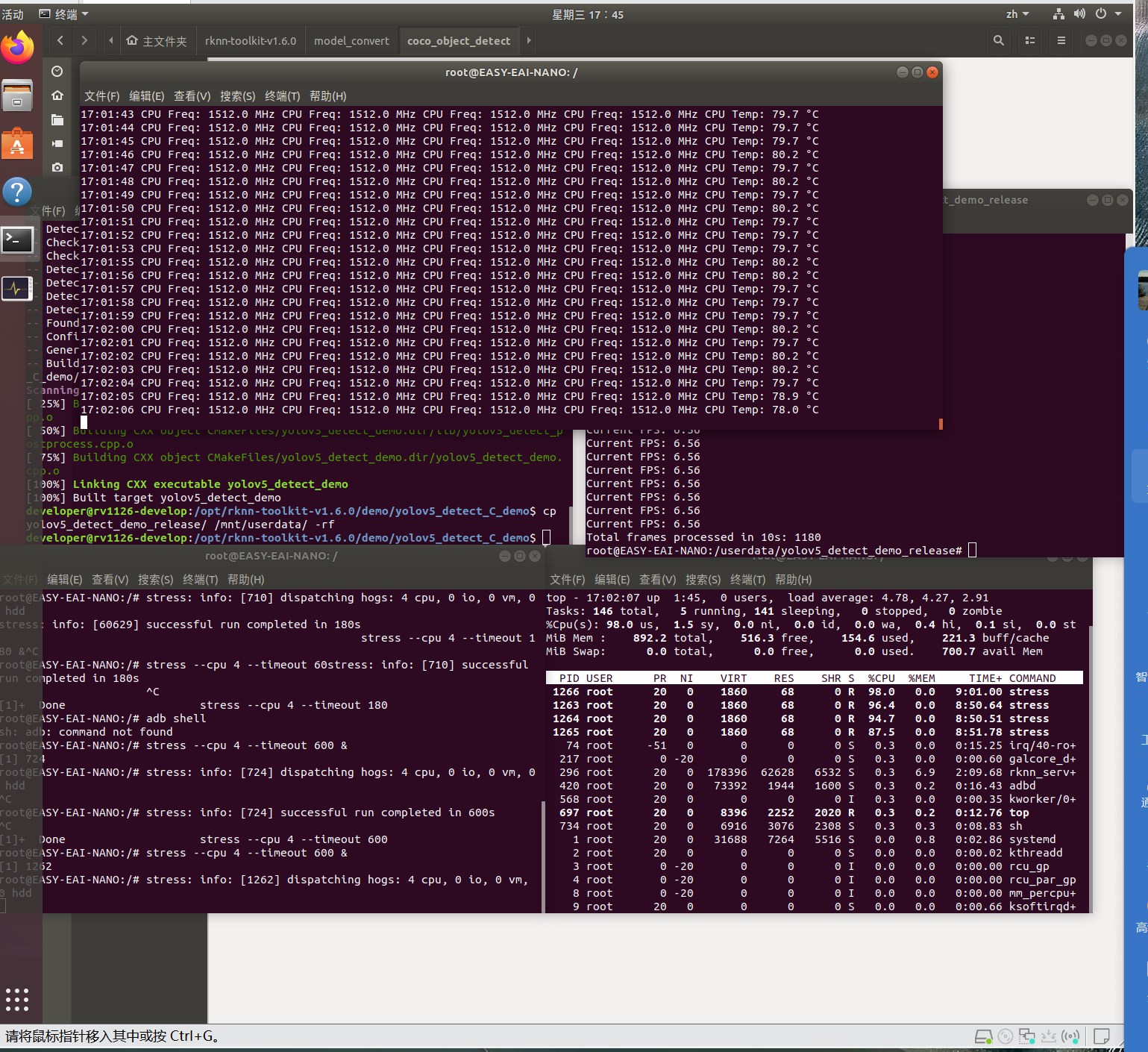
YOLOv5 inference | 73 | 81 | 2.5~2.8 | Frame rate drops from 7.35 to 6.56 FPS after 10 mins at 80°C thermal equilibrium |
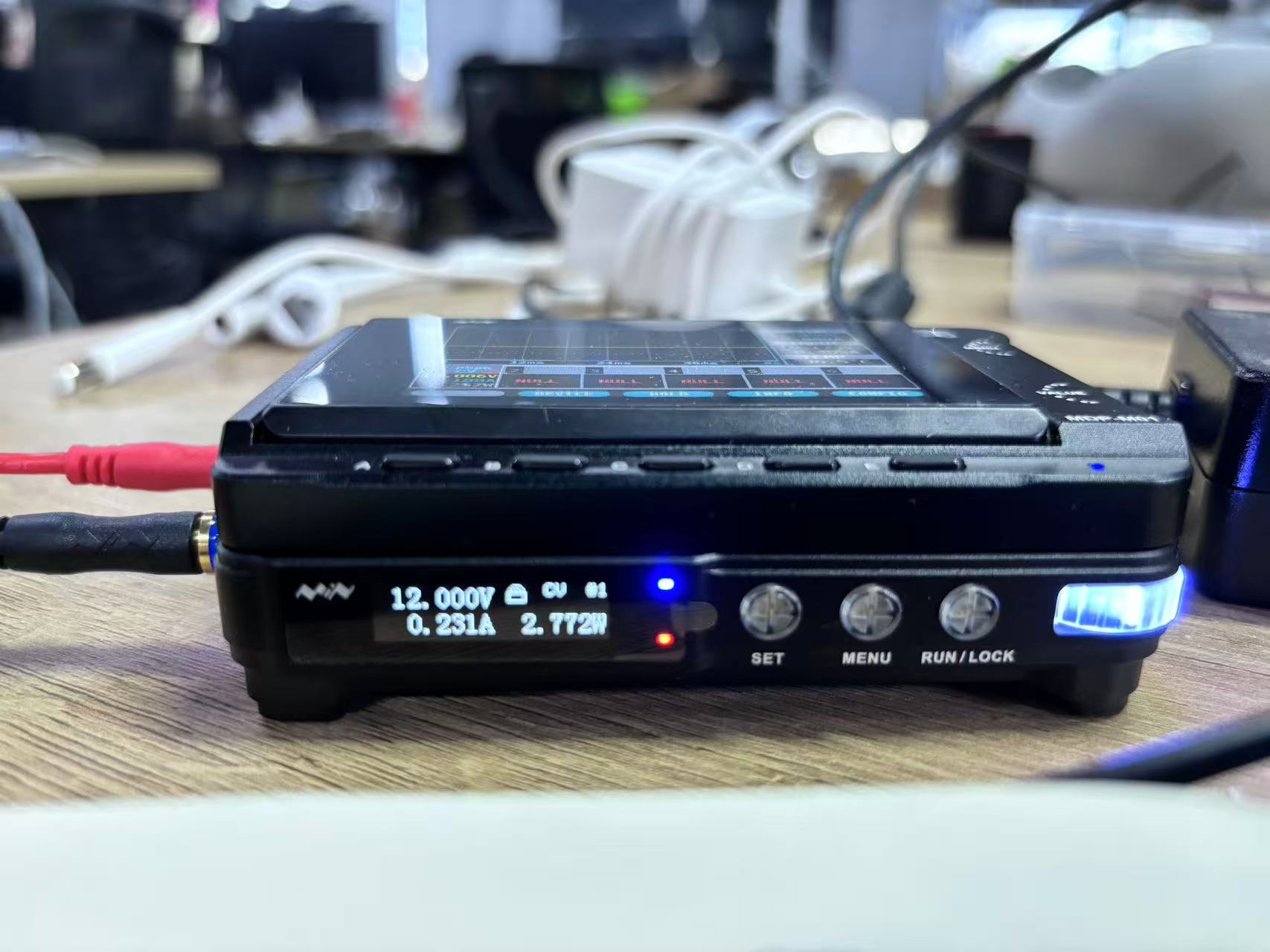
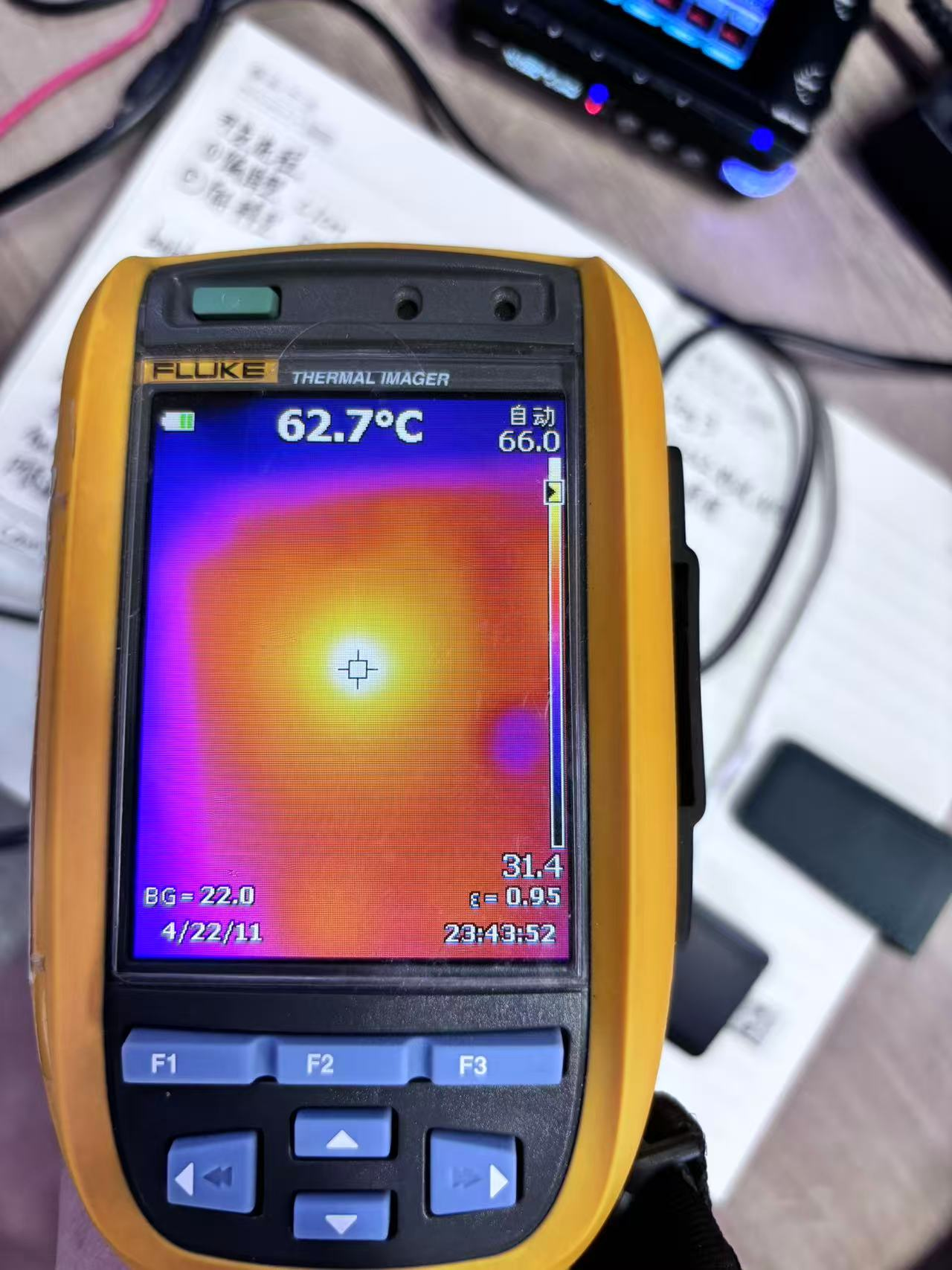
2.2 Small RV1126 Board Performance
Scenario | Ext. Temp (°C) | Int. Temp (°C) | Power (W) | Observations |
Idle | 36 | 45 | 0.6~0.7 | Higher baseline temperature than large board |
CPU stress test | 45 | 52 | 1.05~1.2 | 7°C temperature rise |
RTSP streaming | 73 | 80 | 3.0~3.1 | 1920×1080 @ 2s latency, 15% CPU utilization |
SSD detection | 72 | 81 | 3.0~3.4 | Power stabilizes below 3W despite 90% CPU load |
Notes:
- Board size: ~10cm²
- RTSP streaming: 73-74°C, 2.65-2.7W power draw
3. Test Methodology
3.1 CPU Load Testing
export TERM=linux

stress --cpu 4 --timeout 60 &

top
3.2 Network Performance
Connectivity Test:
ping 192.168.253.2 -c 10
Bandwidth Measurement:
# Server side:

iperf3 -s -B 192.168.253.1


# Client side:

iperf3 -c 192.168.253.1 -t 20 -P 4
3.3 Thermal Monitoring
while true; do

    echo -n "$(date '+%H:%M:%S') ";

    cat /sys/devices/system/cpu/cpu*/cpufreq/cpuinfo_cur_freq | awk '{printf "%.1f MHz ", $1/1000}';

    cat /sys/class/thermal/thermal_zone0/temp | awk '{printf "%.1f°C", $1/1000}';

    echo "";

    sleep 1;

done
3.4 Power Consumption Testing
Testing Methodology :
1. Power the BV1126 development board using an adjustable power supply
2. Simultaneously monitor input power
3. Execute full-load test:
stress --cpu 4 --timeout 180 & # 4-core full load for 180 seconds
Important Notes :
1. Temperature sensor paths may vary across devices (common paths include thermal_zone0 through thermal_zone3)
2. Power testing requires real-time power monitoring capability
3. Recommend using heat sinks during full-load tests to prevent thermal throttling
4. Temperature data conversion: Divide raw values by 1000 (e.g., 45000 = 45.0°C)
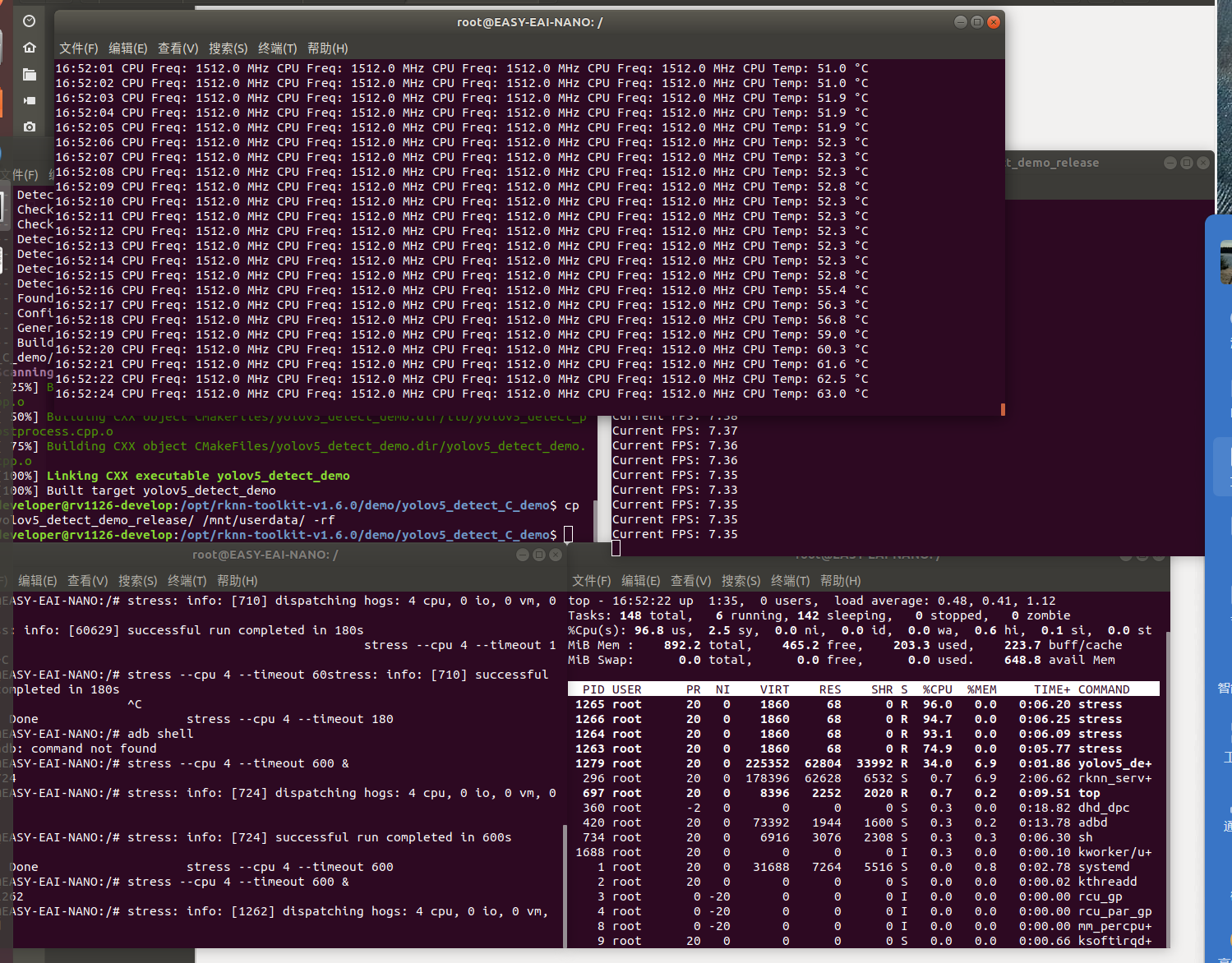
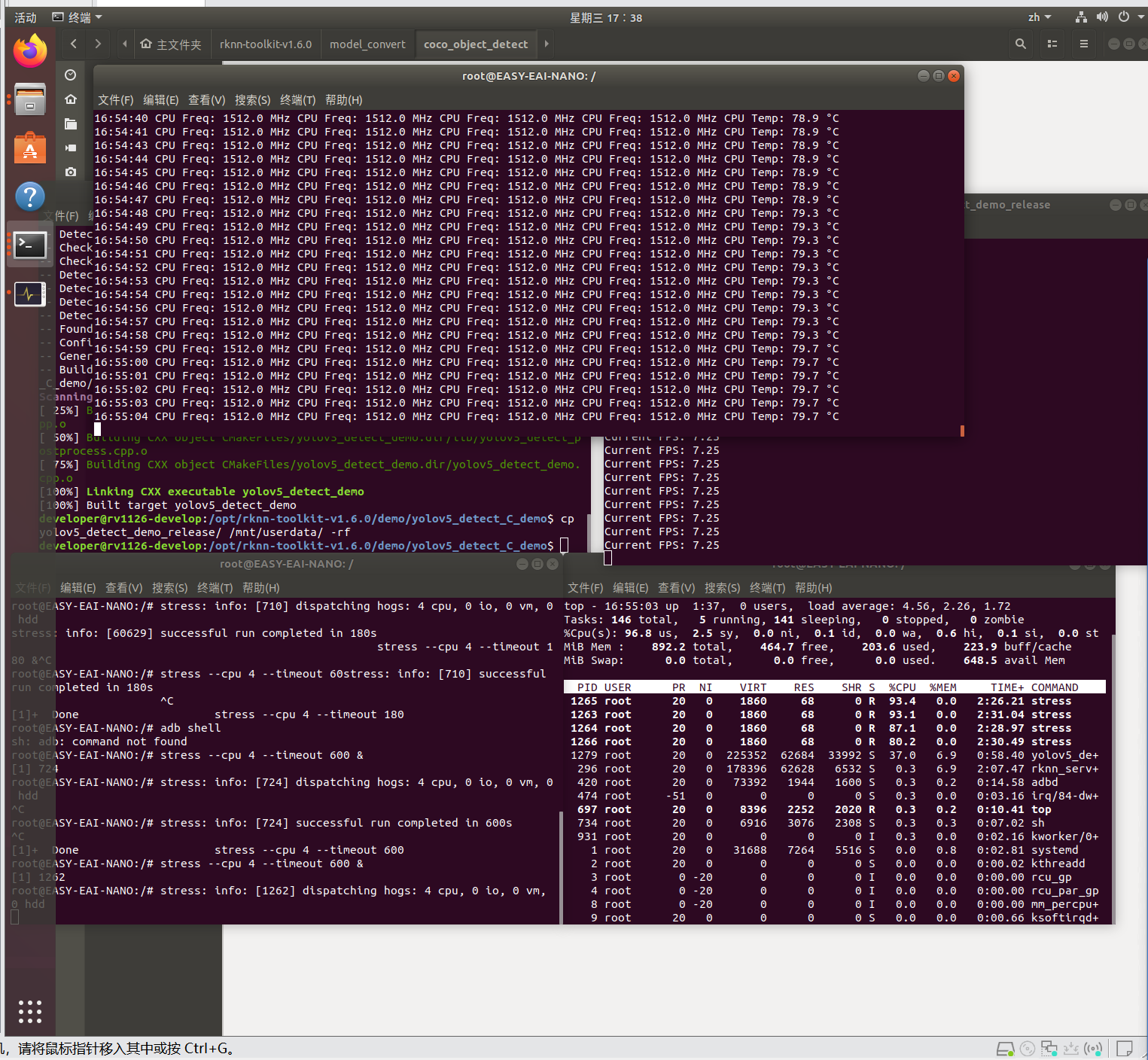
3.5 NPU+CPU Co-Loading Test (YOLOv5 on Large RV1126 Board)
Implementation Workflow :
1. Model conversion
2. Pre-compilation (PC-to-board cross-compilation)
3. Deployment of quantized algorithm model
Performance Observations :
● Reaches 80°C internal thermal equilibrium after ~3 minutes under dual full load
● After 10 minutes continuous operation:Inference frame rate decreases from 7.35 to 6.56 FPS
● Power consumption stabilizes at 2.5-2.8W
Starting state:
After 3 Minutes :
After 10 Minutes :
Overall
RockChip's official toolchain has good support, and the basic API documentation is complete, but it lacks detailed code files to show demos, and there is still a gap in community support compared with mature manufacturers such as Nvidia and Intel.
Requirement Scenario | Remarks |
1080P@30fps Object detection | It can run stably, and the inference frame rate is about 7FPS |
Long-term outdoor operation | requires improved heat dissipation scheme (the internal environment can easily exceed 60 degrees) |
multi-channel video analysis | Not yet |
Discussions
Become a Hackaday.io Member
Create an account to leave a comment. Already have an account? Log In.