 Rupin Chheda
The PCBs finally arrived from Lioncircuits, and I kicked off the initial hardware bring-up!
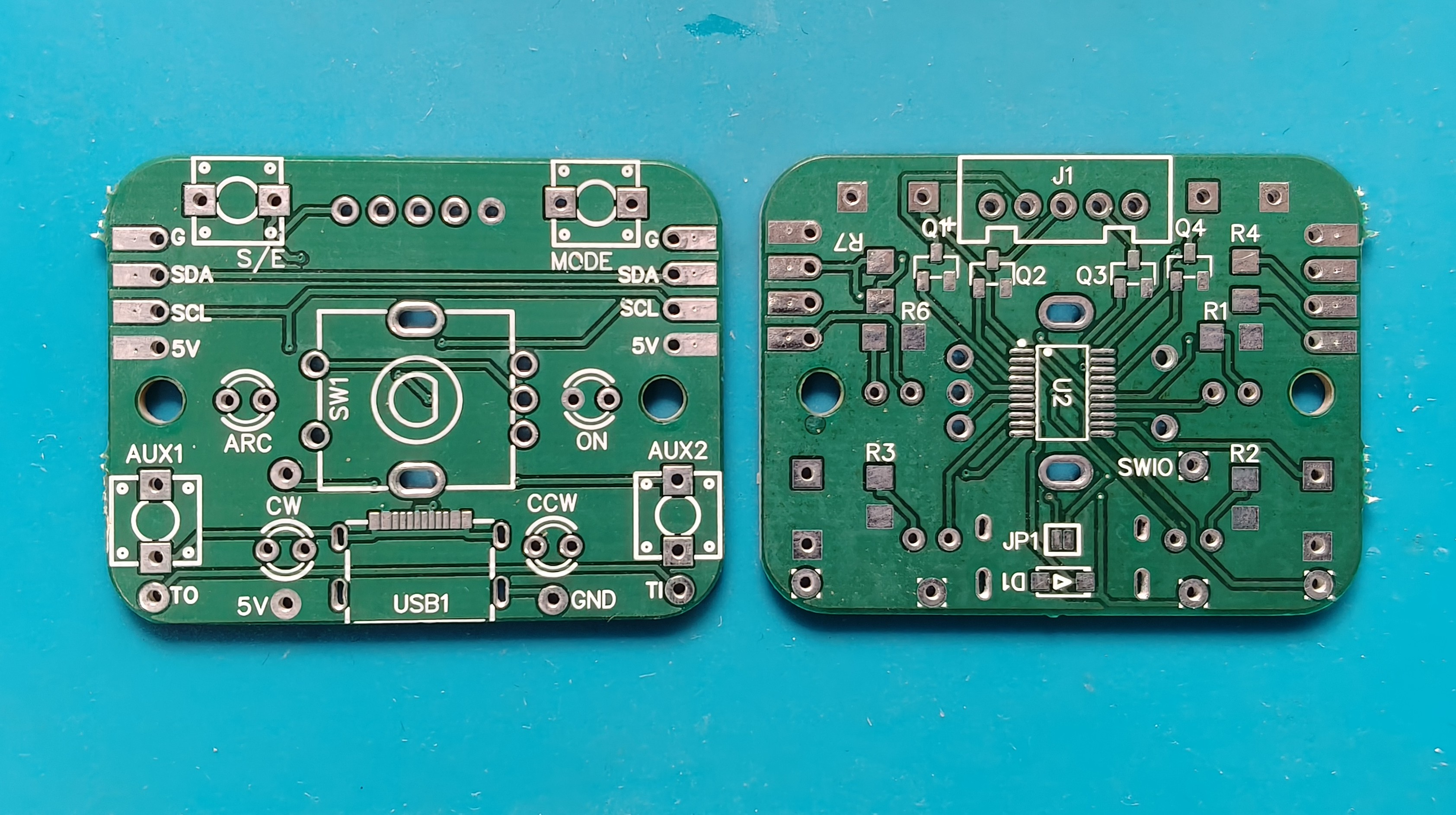
Assembly Progress
-
The USB-C port footprint didn’t align with the mounting holes — a mechanical mismatch. This means the USB port won't be populated in this revision.
-
I began with soldering SMD resistors:
-
1kΩ for LEDs
-
10kΩ pull-ups for I2C (SDA & SCL)
-
-
Next came the A03416 MOSFETs, followed by a careful hand-solder of the CH32V003 microcontroller.
![]()
-
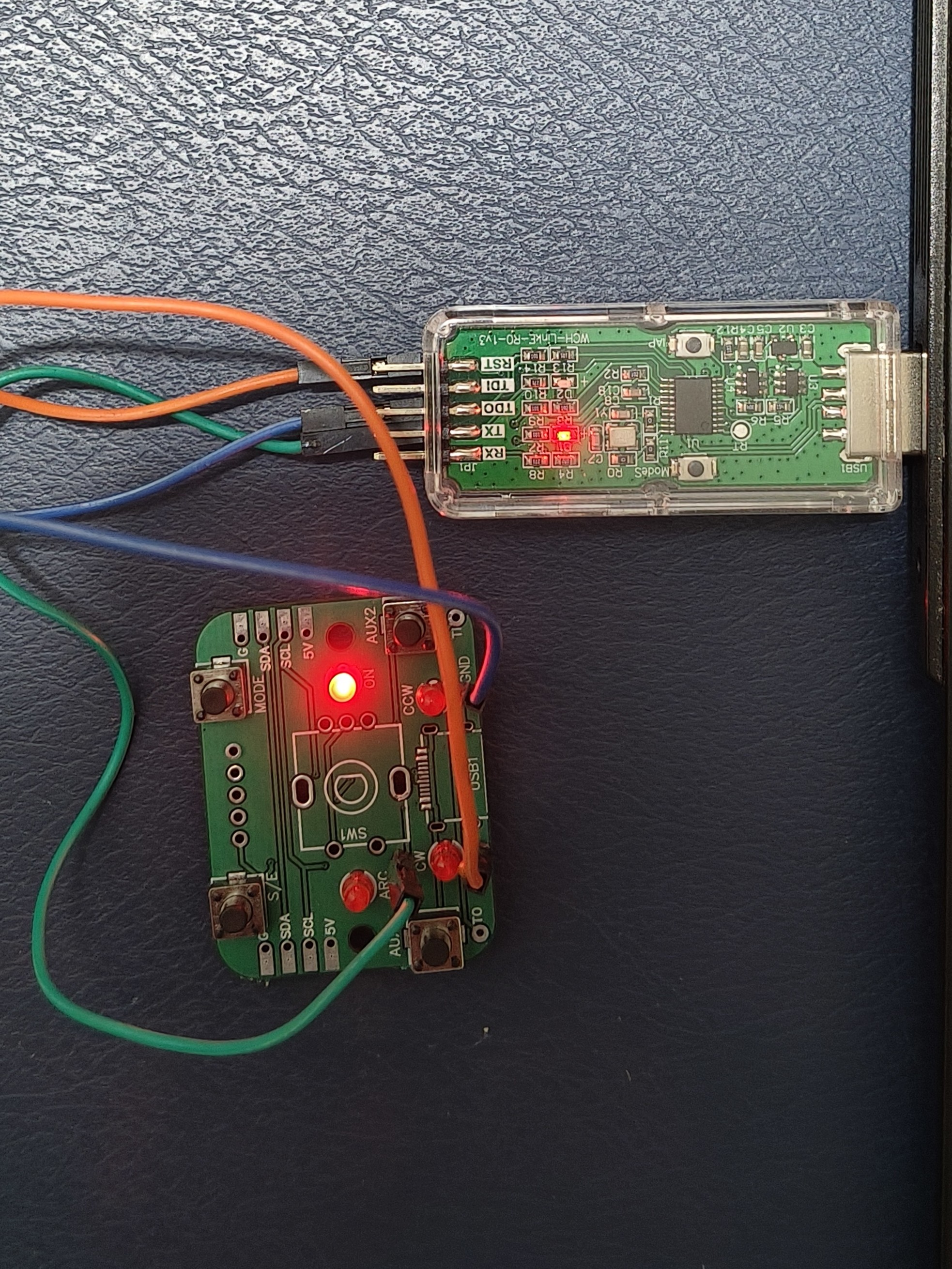
To test programming, I added a simple pin header breakout for 5V, GND, and SWIO, which worked flawlessly.
-
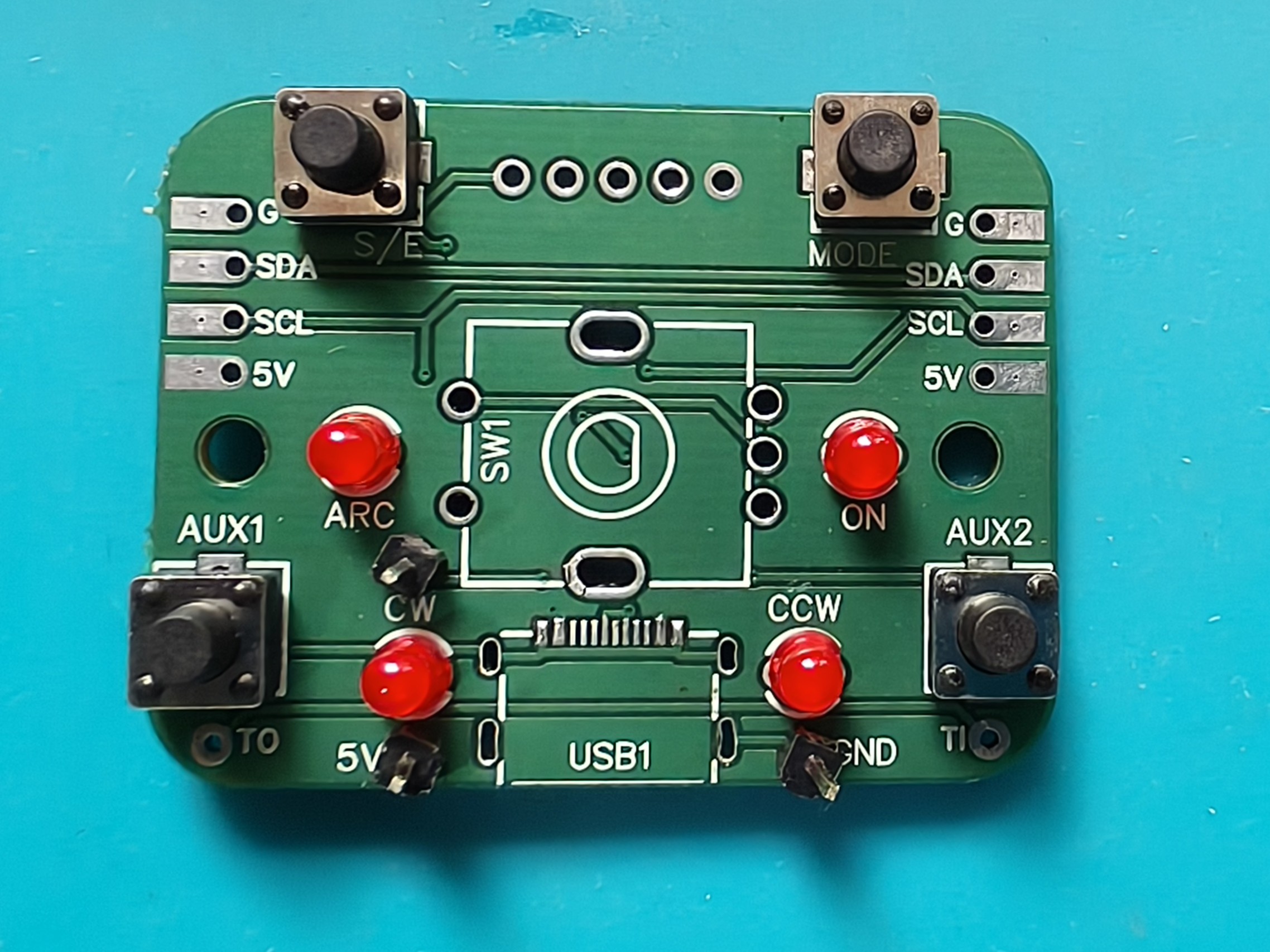
Finished off with all through-hole parts: switches, LEDs, the rotary encoder, and the stepper motor connector.

All components passed individual tests — switches and LEDs functioned correctly.
Debugging the Stepper Motor
I encountered a strange issue — the stepper motor wouldn’t move.
To isolate the problem, I connected an LED in place of the motor to observe the pin sequences. Strangely, the LED connected to PD7 wasn’t toggling. I checked the MOSFET for shorts — no issues there.
After digging into the datasheet, I realized the root cause:
PD7 is also the NRST (reset) pin, which is pulled high at startup, unintentionally turning the MOSFET on and grounding the connected pin.
Solution?
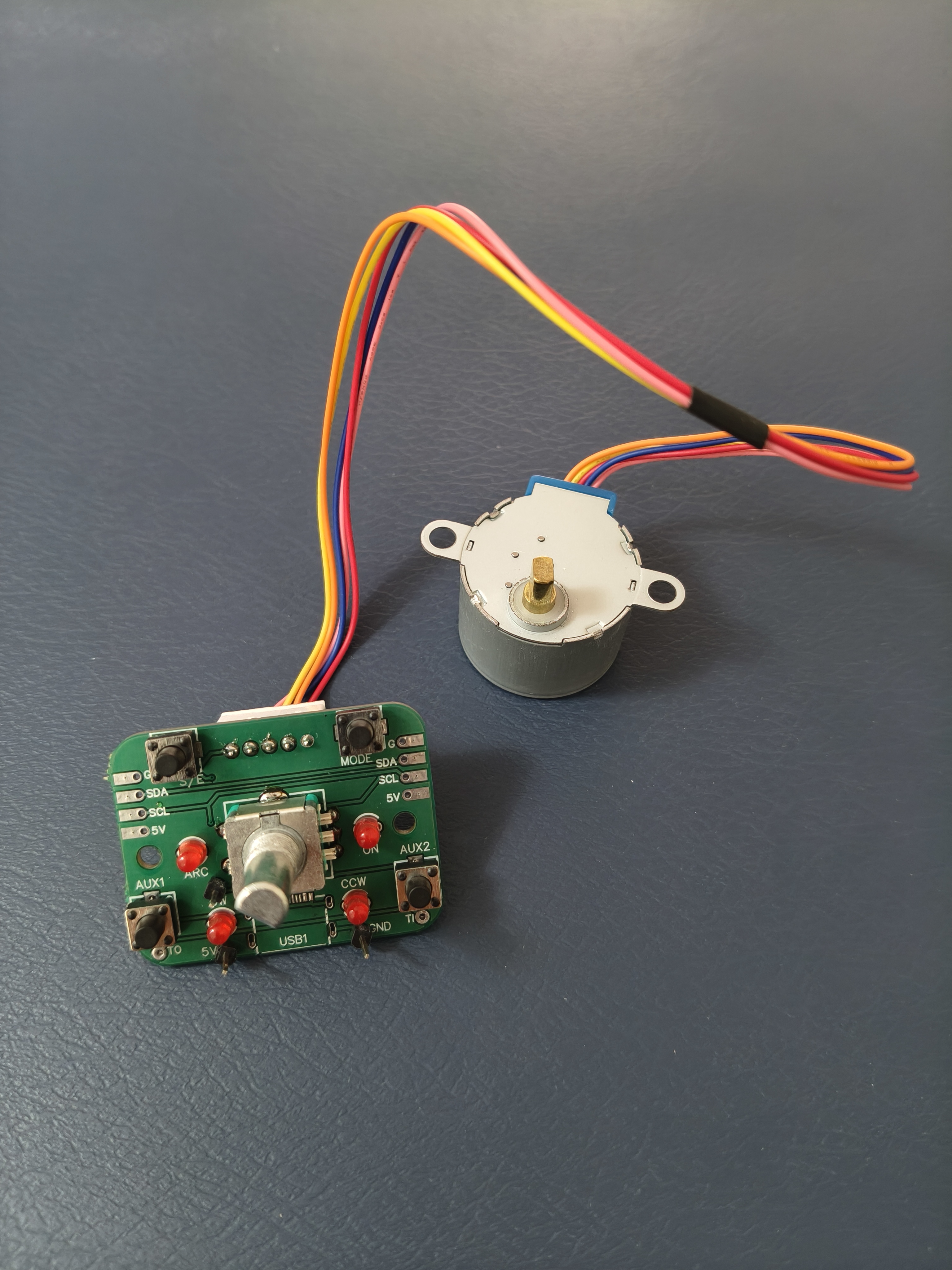
I used the WCH-Link Utility to reconfigure PD7 as a general I/O pin. Once that was done, the sequence worked — and the stepper motor spun beautifully.
⚡ Power Concerns
While testing the motor, I noticed the power LED dims significantly when the stepper coil energizes. Measuring current draw showed around 200mA, which is expected.
The issue appears to be a voltage dip when coils energize. I’ve switched to an external power supply for now, but will be adding a beefy capacitor across 5V and GND to buffer the current surges and stabilize power delivery.
🧪 What’s Next?
-
Fix the USB-C footprint in the next revision
-
Tune power filtering with appropriate capacitance
-
Begin firmware work for motion configuration and I2C chaining
-
Build mounting brackets and start integration with real-world mechanisms
More to come — but for now, I’m thrilled the first spin of the motor is live!
Discussions
Become a Hackaday.io Member
Create an account to leave a comment. Already have an account? Log In.
Very nice Idea ! I was looking for a very small I2C to 28BYJ-48 board (small uC & Driver with external I2C interface) and thought this could be a very nice basis :-)
Are you sure? yes | no