Close
0%
0%

X65 Microcomputer

X65 - modern 8-bit computer for the modern era
:: 65C816, 16MB RAM, 256 colors 384×240px, FM-synth, USB…

Similar projects worth following
X65 is a modern 8-bit microcomputer built around the W65C816 CPU, featuring 16 MB flat RAM, custom CGIA video with 256-color palette, sprites, layers, and scrolling, Yamaha SD-1 FM audio plus DAC sampling, USB and Wi-Fi/Bluetooth, and its native OS/816 for multitasking, shell access, and low-level programming.

  • CPU: WDC 65C816 @ ~4MHz
  • RAM: 16MB PSRAM (flat, no banking)
  • Video: CGIA (custom VPU chip)
    • Output: DVI-D, 384×240px @480p
    • 256-color palette
    • 4 graphics/sprite planes:
      • Background graphics Display List (ANTIC-style)
      • 6 graphics modes (C64-style + HAM + MODE7)
      • Hardware scrolling
      • 8 sprites (per plane), up to 64px wide; built-in multiplexing
    • Three types of programmable raster interrupts
  • Audio:
    • Yamaha SD-1 YMF825 (FM synth, OPL3-class)
    • 2× sample playback channels
    • stereo sampling ADC
    • 2× RCA out, 2× RCA in, 2+1 Exp-in via ROHM BD34602FS-M audio mixer
  • I/O:
  • Ports & Expansion:
    • 6× USB ports + 2× internal USB headers
    • 2× DE-9 Joystick / GPIO (via TI TCA6416A)
    • Expansion: CPU bus, 4× IO_EN, 4× IRQ, Audio-In (mixed), I²C
  • Interrupt controller: memory-mapped flags register
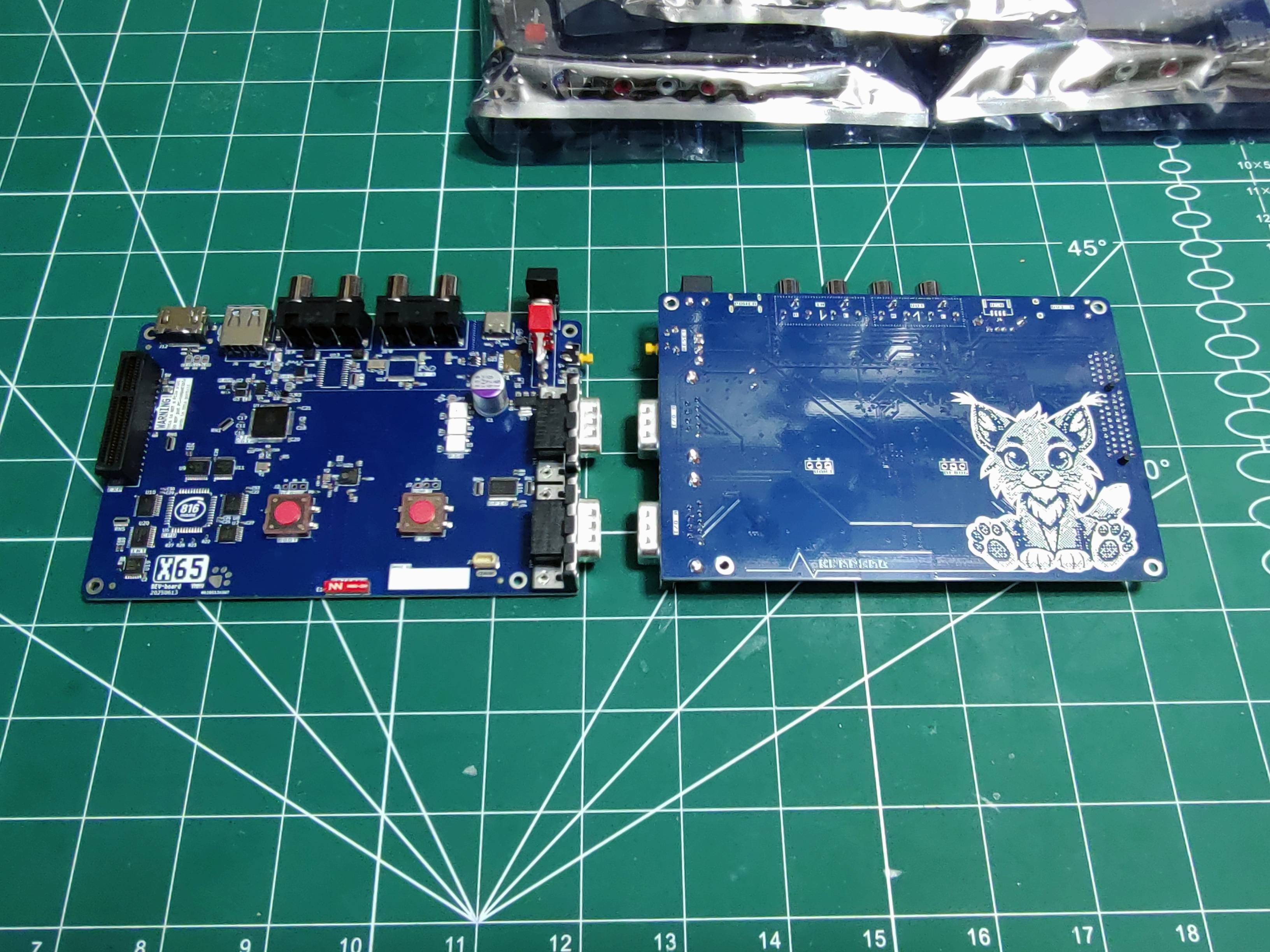
Current Milestone 1 prototype is available as a DEV-board for developers to experiment with.
Final hardware is going to be an all-in-one keyboard computer form factor.
  • 1 × WDC 65C816 8/16-bit CPU, descendant of the venerable 65C02
  • 1 × RP2350B Microcontroller from Raspberry Pi implementing the RP816 hardware bridge and CGIA VPU
  • 1 × ESP32-C3 WiFi/BT modem
  • 1 × Yamaha YMF825 Yamaha SD-1 FM synthesizer
  • 1 × SGTL5000 2 channel out / 2 channel in digital audio CODEC

View all 7 components

  • X65 goes Gen2

    Tomasz Sterna11/30/2025 at 23:48 0 comments

    There are some big changes coming for #X65 #microcomputer project.

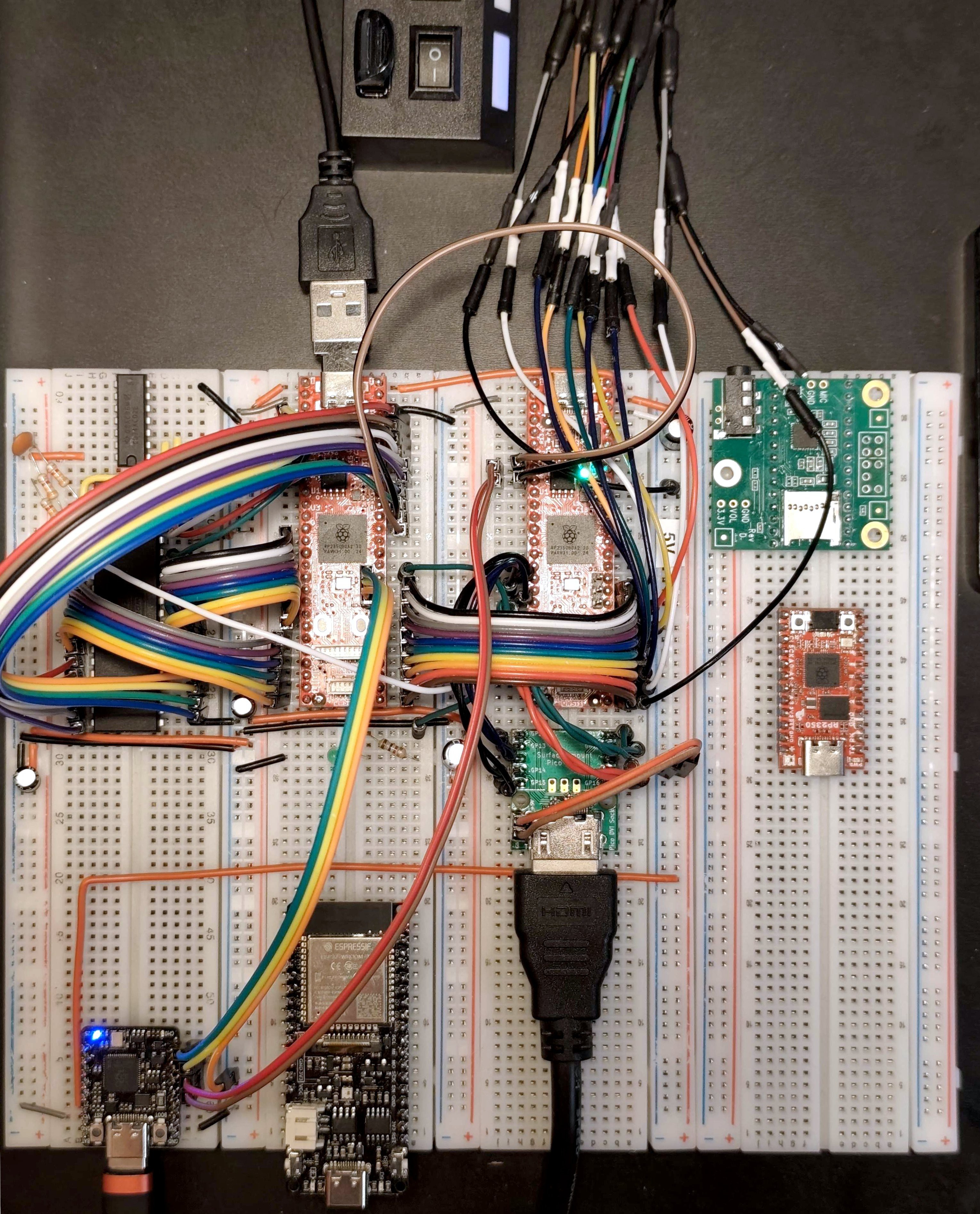
    After testing the first version of DEV-board, I've decided to make a huge implementation change - instead of implementing both RIA and CGIA in one #RP2350 #microcontroller, X65 will use two separate #MCU chips communicating over a high-speed bus, each implementing one functional chip.

    First chip takes the role of North Bridge - interfacing CPU and memory.

    Second chip takes the role of South Bridge - interfacing to external hardware and implementing the VPU with its spare processing power.

    With all the available #GPIO pins of two MCUs I can get rid of all the discrete components from the board.

    After a long discussion with community, I've also decided to not go with Yamaha SD-1 FM synthesizer as the sound chip of X65. SD-1 is not produced anymore and the supply is sketchy.

    Instead, we will go with yet another RP2350 MCU, implementing our own custom Sound Processor unit, driving a modern CODEC/DSP chip.

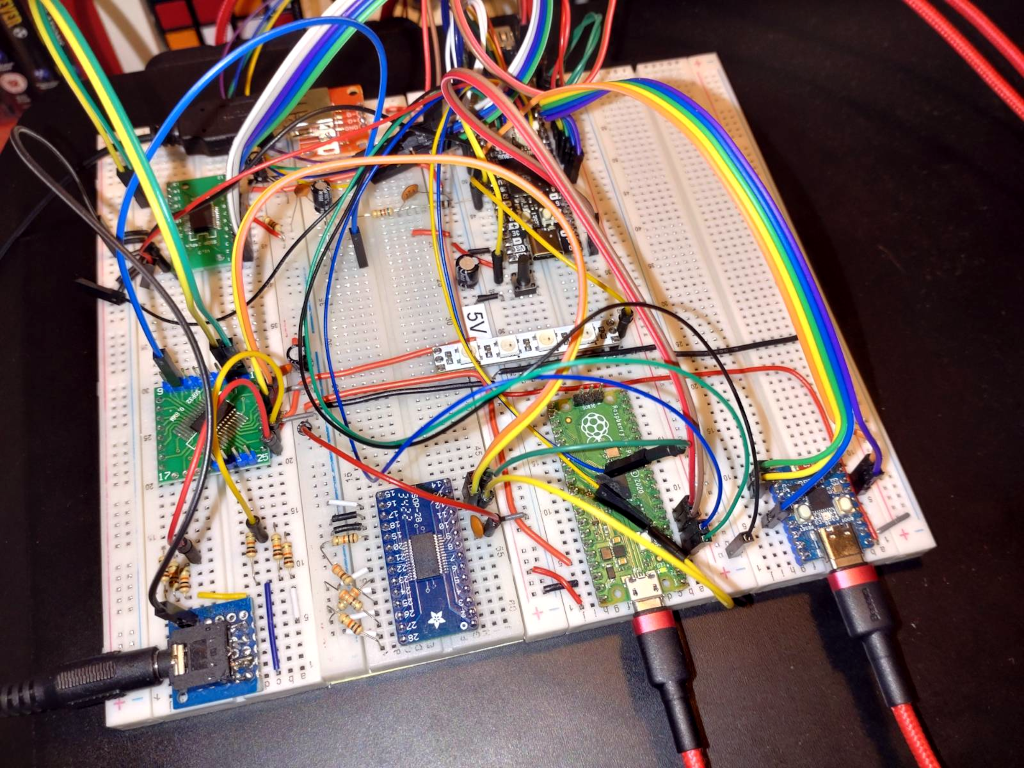
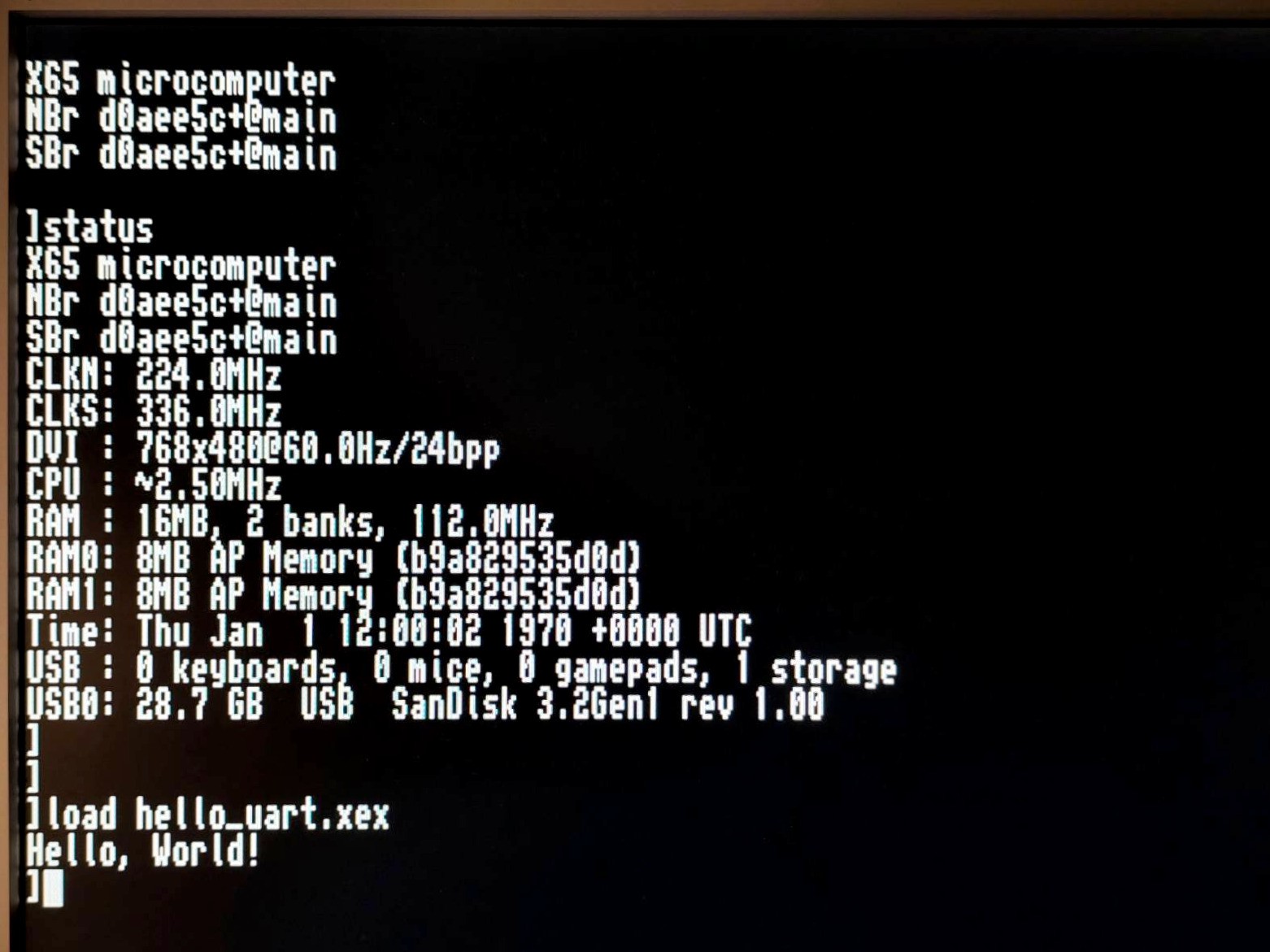
    The prototype of Gen2 X65 is already taking shape and mostly working.

    The breadboard prototype already works better than the Gen1 PCB.

    The future looks bright for the machine…

    #retrocomputing #neoretro

  • EXPansion port breakout boards

    Tomasz Sterna09/29/2025 at 11:52 0 comments

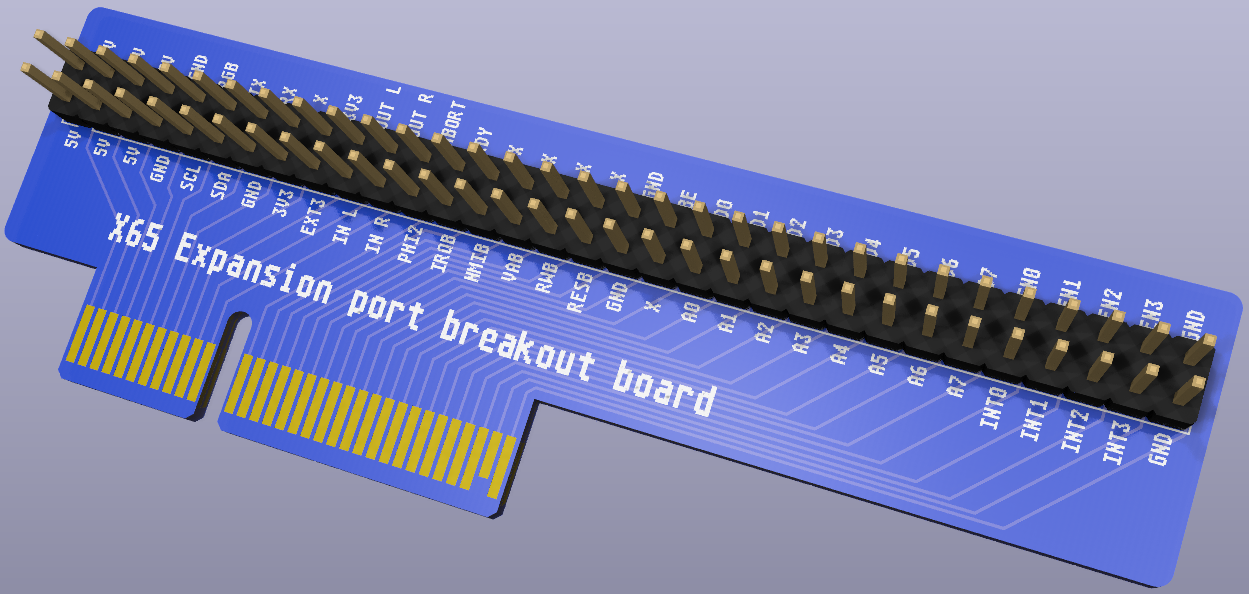
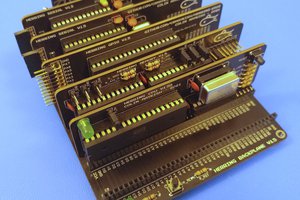
    I needed a way to test the EXPansion port on the DEV-board, so I've quickly designed a simple breakout board for the PCIe slot present in X65.

    Few days later the boards arrived from PCBWay… and they look awesome! 🚀

  • DEV-board feature parity with Emu-lator

    Tomasz Sterna09/06/2025 at 12:31 0 comments

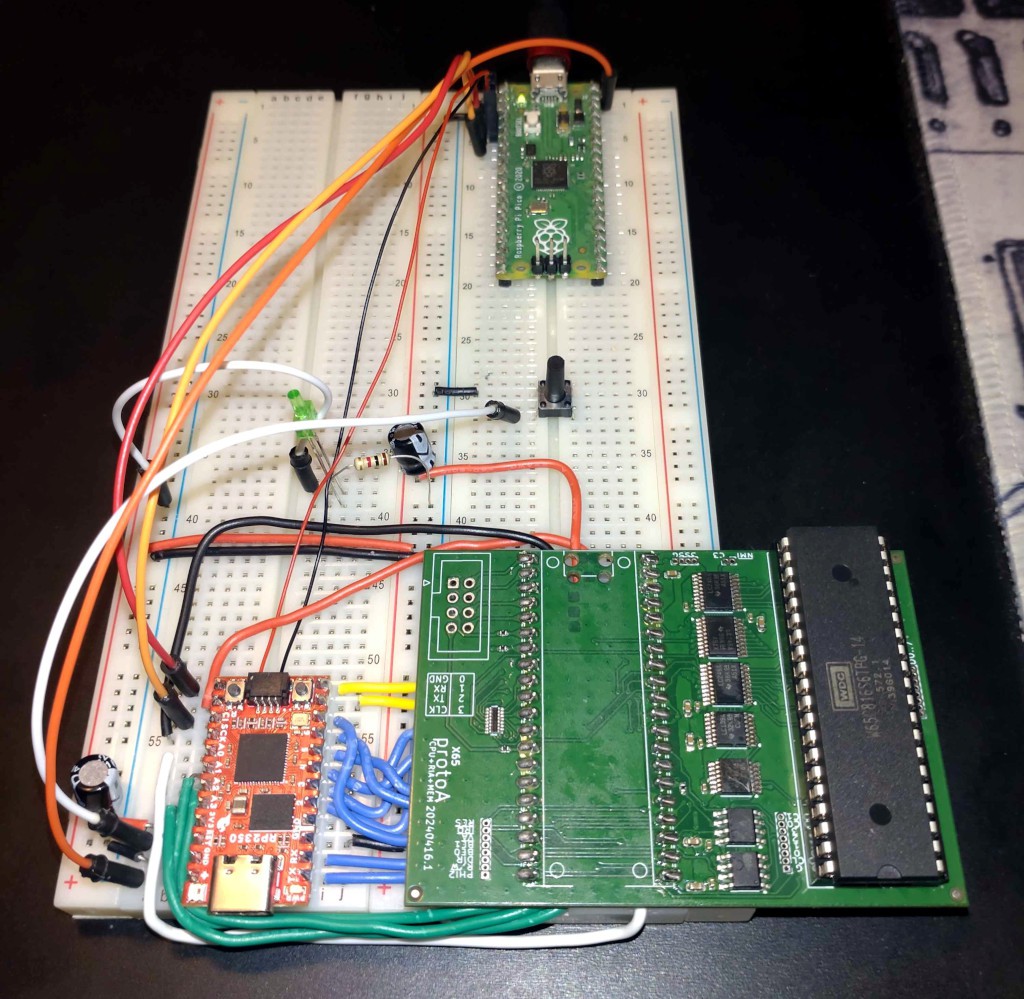
    After the DEV-boards produced by PCB Way arrived, I needed to update and fix the RP2350 firmware to work both with I/O and display together. On prototyping stage I used Pico 2 devboards with RP2350A chips, that do not have enough GPIO pins to drive both WDC 65C816 CPU interface and the RP816 hardware bridge interface + CGIA VPU (video processing unit) implementation driving DVI-D output. I worked with two prototype boards - one implementing CPU interface and second implementing hardware+display interface.

    When waiting for RP2350B chips availability and DEV-boards production run, I've decided to implement X65 software emulator, which aids development of the software for 65816 CPU. It is implemented in a way, that the internals of the emulator wrap parts of the Pico2 firmware as internal implementation. This allowed me to use Emu (the X65 emulator) not only as a 65816 software development tool, but also to work on extending microcontroler firmware features.

    With the DEV-boards ready, integrating all components on one board, I had a slew of demo programs developed on the emulator, waiting to be run on real CPU. It turned out that to be a lot of work, as like every single ROM needed an update in the firmware, updating memory-mapped device addresses that I changed, or implementing missing features available in the Emu-lator only.

    It's done now. Every single demo ROM available on https://x65.zone/emu/ page is now running on real hardware. 🎉

View all 3 project logs

Enjoy this project?

Share

Discussions

Similar Projects

Does this project spark your interest?

Become a member to follow this project and never miss any updates