 Rohan Barnwal

Introduction
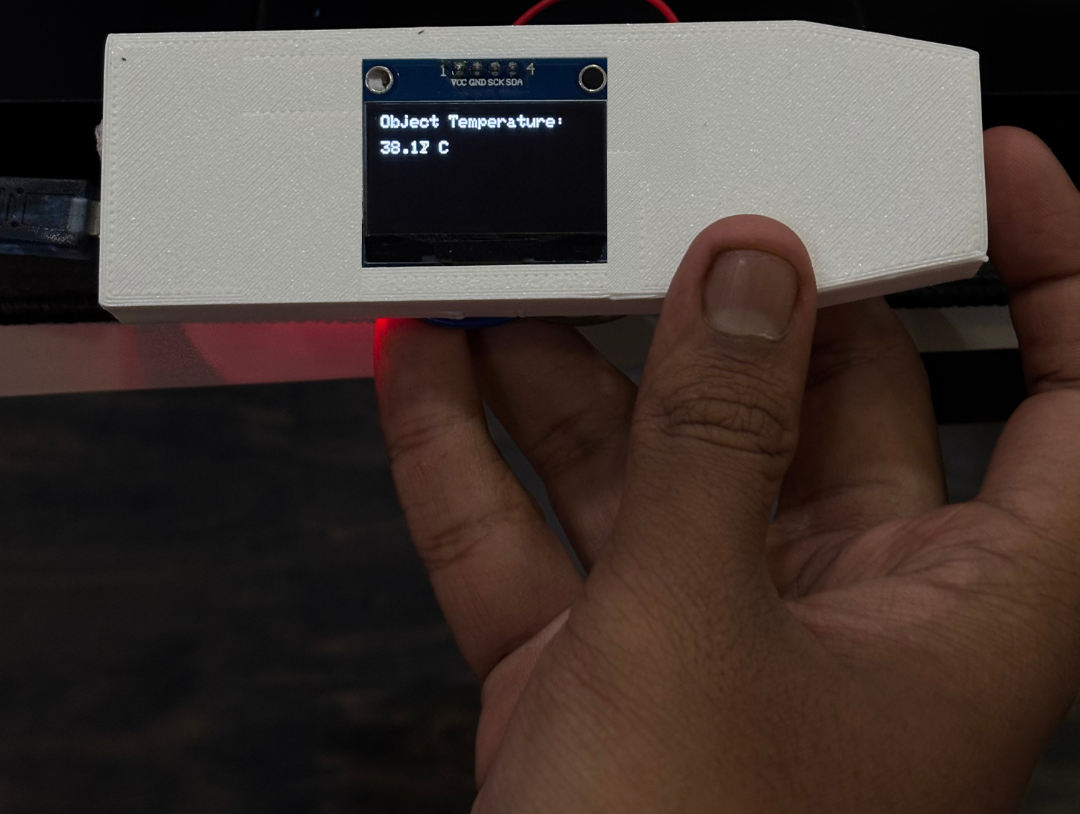
In today's world, contactless temperature sensing is everywhere - from medical checks at airports, to smart HVAC systems, to DIY projects for IoT and automation. One of the most reliable sensors for this purpose is the MLX90614 Infrared Temperature Sensor, which can measure object temperature without direct contact.
In this project, we'll build a portable digital thermometer using:
- Arduino Nano - the compact brain of the project
- MLX90614 IR Sensor - for accurate, non contact temperature readings
- OLED Display (SH1106, 0.96") - to neatly display the temperature values
This thermometer is compact, lightweight, and powered bey Arduino, making it a perfect DIY tool for students, hobbyists, or startups looking to build a consumer-ready device.
How It Works
The MLX90614 sensor communicates over I2C and gives us the object temperature directly in Celsius. The Arduino Nano fetches this data and processes it, while the OLED SH1106 display outputs the live reading in small, sharp text.
- Sampling Rate: Updates every 500 ms (twice per second).
- Display: Shows temperature in Celsius with two decimal accuracy.
- Serial Output: Also logs readings to Serial Monitor at 9600 baud (useful for debugging or data logging).
This combination makes it a real-time digital thermometer that you can carry in your pocket.
Component Used
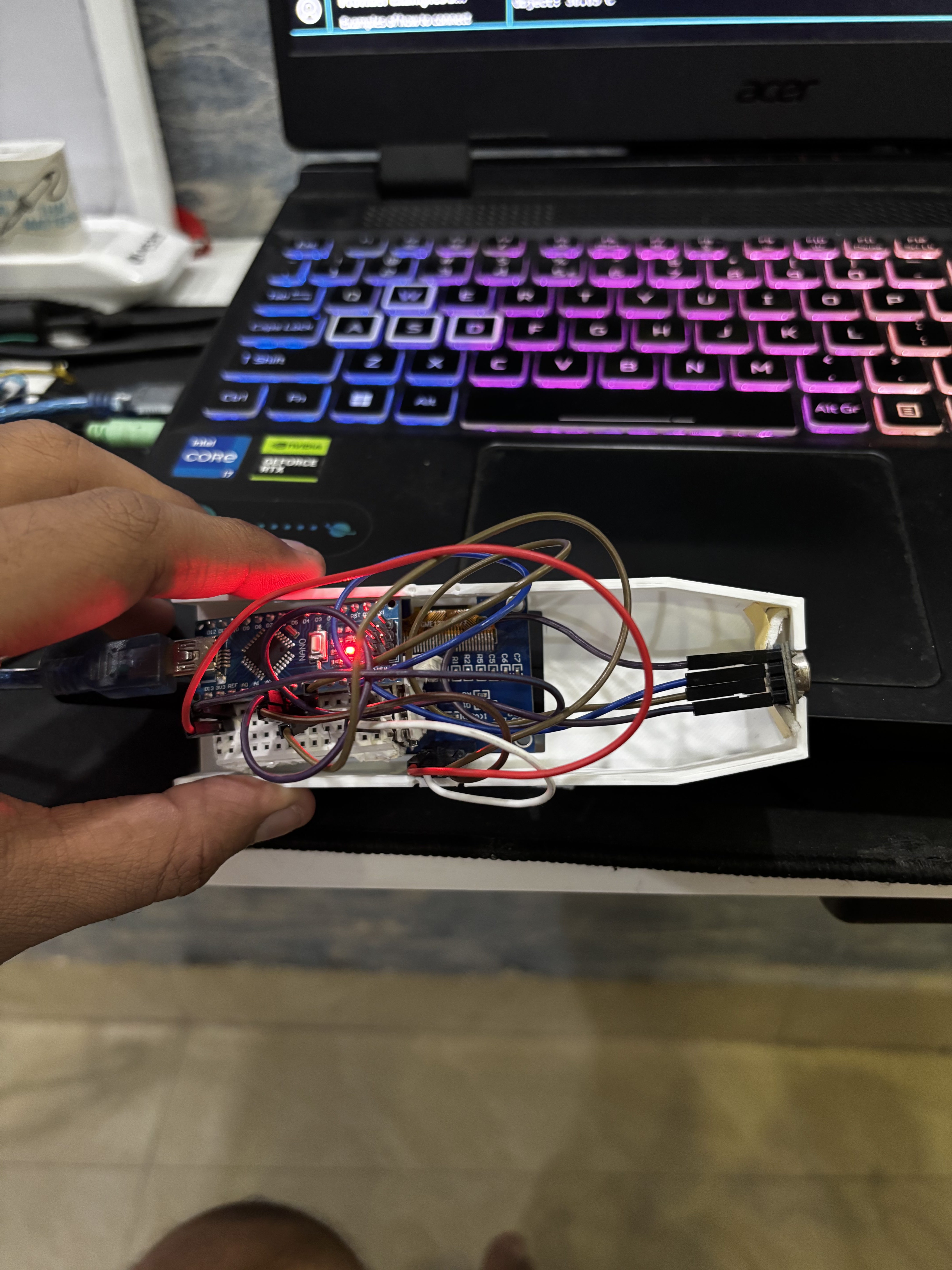
1. Arduino Nano: The Arduino Nano is a compact breadboard-friendly microcontroller board based on the ATmega328P. Despite its small size, it packs all the features of a standard Arduino Uno, including:
- 14 Digital I/O pins (6 PWM capable)
- 8 Analog input pins
- Operating Voltage: 5v
- Clock Speed: 16MHz
- Flash Memory: 32 KB
Its biggest advantage is the tiny form factor - perfect for portable and wearable projects like this thermometer. Because of its USB interface, uploading code is quick and easy. the Nano is widely used for DIY gadgets, embedded projects, and IoT prototypes.
2. MLX90614 Infrared Temperature Sensor: The MLX90614 is a highly accurate, non-contact infrared thermometer, it uses infrared radiation detection to measure the temperature of an object from a distance.
Key Features:
- Measurement Range: -70 C to + 380 C (object)
- Accuracy: 0.5 C in the human body range (36 C - 39 C)
- Output: Digital (I2C) and PWM
- Field of View: 35 standard lens (ideal for spot readings)
This makes it ideal for human body thermometers, industrial temperature checks, and IoT devices. Its ability to measure without touching the surface makes it hygienic and reliable - perfect for our portable thermometer.
3. OLED Display (0.96", SH1106 Driver): The OLED display used here is a 0.96 inch monochrome screen driven by the SH1106 controller IC. OLEDs (Organic Light Emitting Diodes) provide crisp, high-contrast text that is easy to read even in bright conditions. Unlike LCDs OLEDs don't need a backlight - every pixel emits its own light, resulting in low power consumption and sharp visuals.
Key features:
- Resolution: 128 x 64 pixels
- Interface: I2C
- Display Color: White (on black background)
- Low Power Usage (ideal for battery-powered devices)
For this thermometer, it neatly displays the temperature values in real-time, making the project compact, modern, and user-friendly.
Real-Life Applications
This project is not just a toy - it has practical applications:
- Portable body temperature measurement (medical use).
- Surface temperature checking of machinery, electronics, or appliances.
- Integrating into smart devices like IoT home automation systems.
- A teaching project for students learning embedded systems.
Basically, it's a pocket-size digital thermometer, useful in both personal and professional settings.
Taking the Project to the Next Level - With JUSTWAY
Now, here's the truth: a bunch of wires and a naked PCB might work on your desk, but when you want to show your project in showrooms, tech fairs, or startup pitches, presentation matters.
That's where JUSTWAY comes in.
With an enclosure from...
Read more »
 Lithium ION
 electronicsworkshops
 bhaskar.anil430
 ProgressTH