-
Dummy
3 days ago • 0 comments![]()
-
What in the firmware !?
12/26/2025 at 16:50 • 0 comments
Successful flash of ESP32-S3-WROOM-1-N16R8 using Meshtastic Web Flasher and the Heltec V3 Firmware oldest stable beta version. It has no Lora radio so all it can do is listen to MQTT currently, Bluetooth has to be shut off and it is connected to MQTT through WiFi network connection. At the moment sending messages to public MQTT channel is unsuccessful however I can view and log messages with it making it useful to me as I do not want to use MQTT on the Lily Go devices. I can connect to the ESP through usb on the Pi or over network on the tablet running the Meshtastic app. -
Firmware
12/22/2025 at 11:22 • 0 commentsThe T-Beam Supreme is running Meshtastic firmware 2.7.16 alpha now, and the T-Deck is still on 2.7.15. I flashed the alpha to the T-Beam because I was having random Bluetooth dropouts on the stable version. It just wouldn’t stay paired after a couple weeks of use. Since switching, Bluetooth has been solid. No issues reconnecting, no lag or weird behavior in the app. Everything feels smoother and more reliable so far.
I have the Neighbor Info module turned on with the update interval set to 900 seconds. That gives me updates every fifteen minutes, which seems just right for how I use the device. It’s usually powered on for long stretches and rides with me, so I want to keep some awareness of what’s around without flooding the channel with unnecessary updates.
For history and memory, I’ve got it storing up to 50 records locally. That’s enough to remember which nodes I’ve seen more than once but not so many that it holds onto ghosts forever. I set the history return max to , and the return window to 30 min, so if another node asks for history, it only gets the latest stuff. That keeps the RF traffic clean and focused on what’s actually current instead of replaying old contacts from earlier in the day.
Range test mode is off. I’m not trying to flood the map or run fake signal spam just to make the mesh look more active. I’ve been running with MQTT off for a while now to keep the map honest, so range test would just mess that up also. It’s better to let actual signal interactions show up over time and build a real picture of what the mesh looks like around me.
The way it’s running now, the T-Beam is basically a quiet observer. It’s not trying to be the center of attention. It listens, tracks what’s nearby, and only sends what matters. No unnecessary noise, just real, useful contact. The alpha firmware has been running stable, and overall this setup feels solid. I’ll keep watching it, but so far no regrets.
Phone app does crash every once in a while during heavy load however the T-Beam is fully operational. No further Bluetooth issues.
-RR
-
Cold
12/18/2025 at 15:42 • 0 commentsWhile running the T-Beam node for overnight data collection in my car, I initially used a 1P 3S battery pack built from LG 18650 cells manufactured in 2014. Despite matching cell voltages at full charge and rebuilding the pack twice, I consistently observed that one cell would drop below minimum voltage during overnight runs. This was especially prominent during cold conditions, with ambient temperatures reaching as low as 16°F (-9°C).
The failure pattern repeated: one cell would underperform and trip the pack, even after manual voltage balancing. This behavior is consistent with aged lithium cells showing increased internal resistance and reduced cold-weather capacity.
After two failures, I replaced the pack with a drone battery rated at 3000 mAh, consisting of two 1500 mAh 3S packs wired in parallel. These cells are newer (purchased this year), were always run in parallel from the start, and appear to be well balanced. Since switching, the system has remained stable and reliable during cold overnight use.
This confirms the expected behavior of degraded lithium-ion cells in cold conditions, especially when not capacity-matched. Future deployments will prioritize newer, pre-matched packs rated for temperature and discharge consistency.
-RR
-
Density Map
12/15/2025 at 10:22 • 0 comments![]()
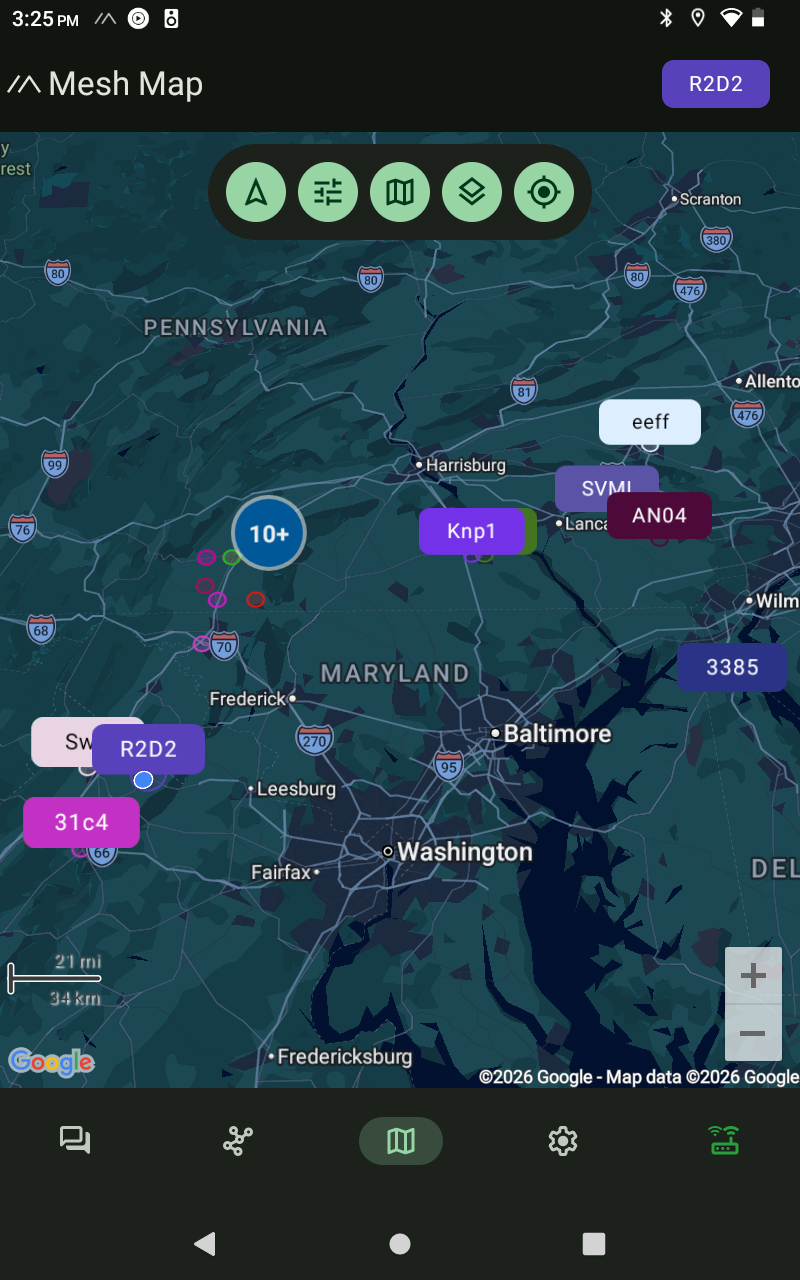
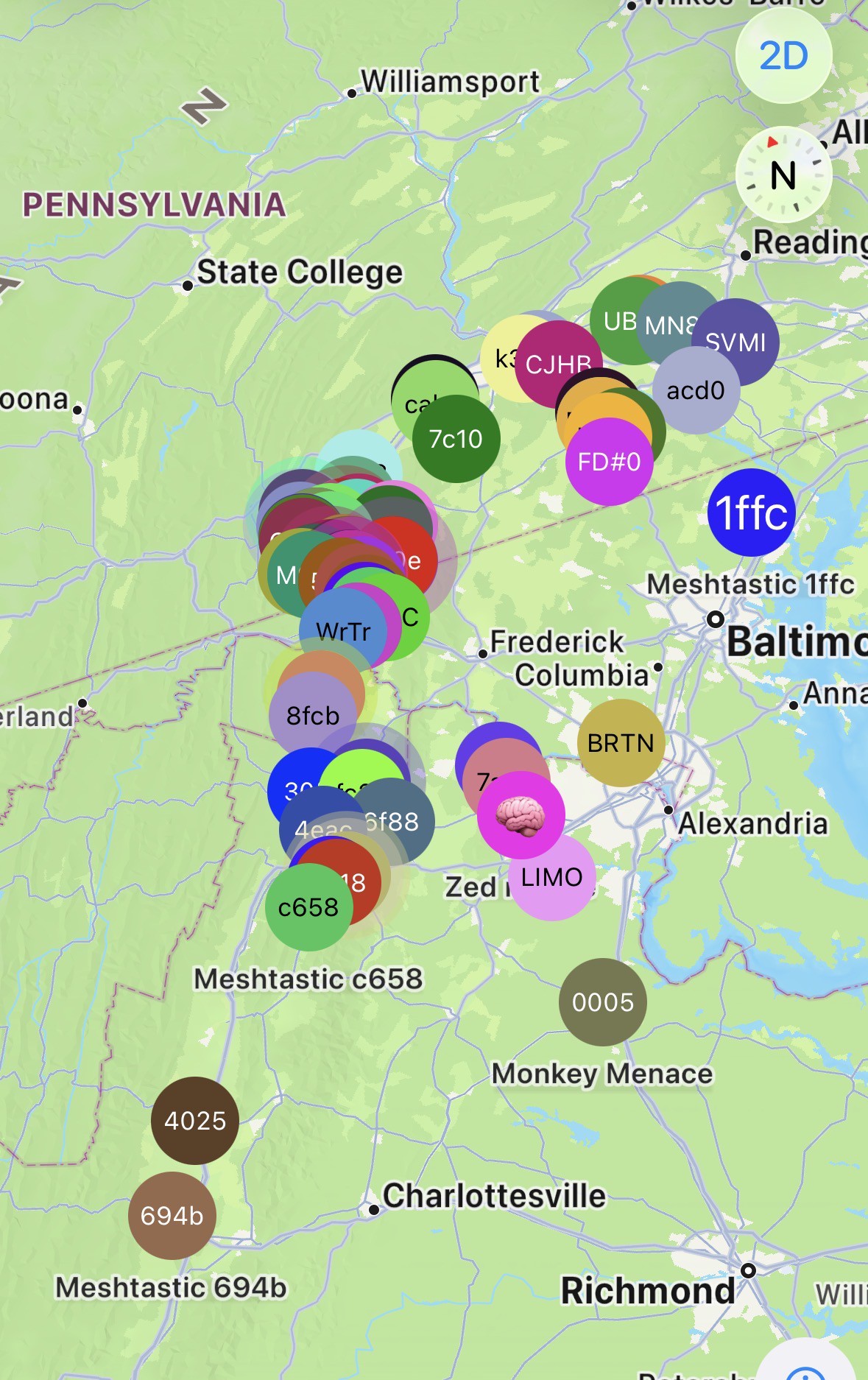
This map shows the density of Meshtastic nodes detected across the region using LoRa radio only, with MQTT disabled. Each marker represents a unique node discovered through over the air communication, with store and forward enabled and neighbor discovery and is configured for a maximum of seven hops. The result highlights how far low power radios can reach when operating purely as a mesh, without relying on any internet backhaul or centralized infrastructure. Even with limited bandwidth, the network spans a wide geographic area, emphasizing the strength of distributed, peer to peer communication over unlicensed spectrum.
-RR
-
Drok
12/15/2025 at 09:45 • 0 comments![]()
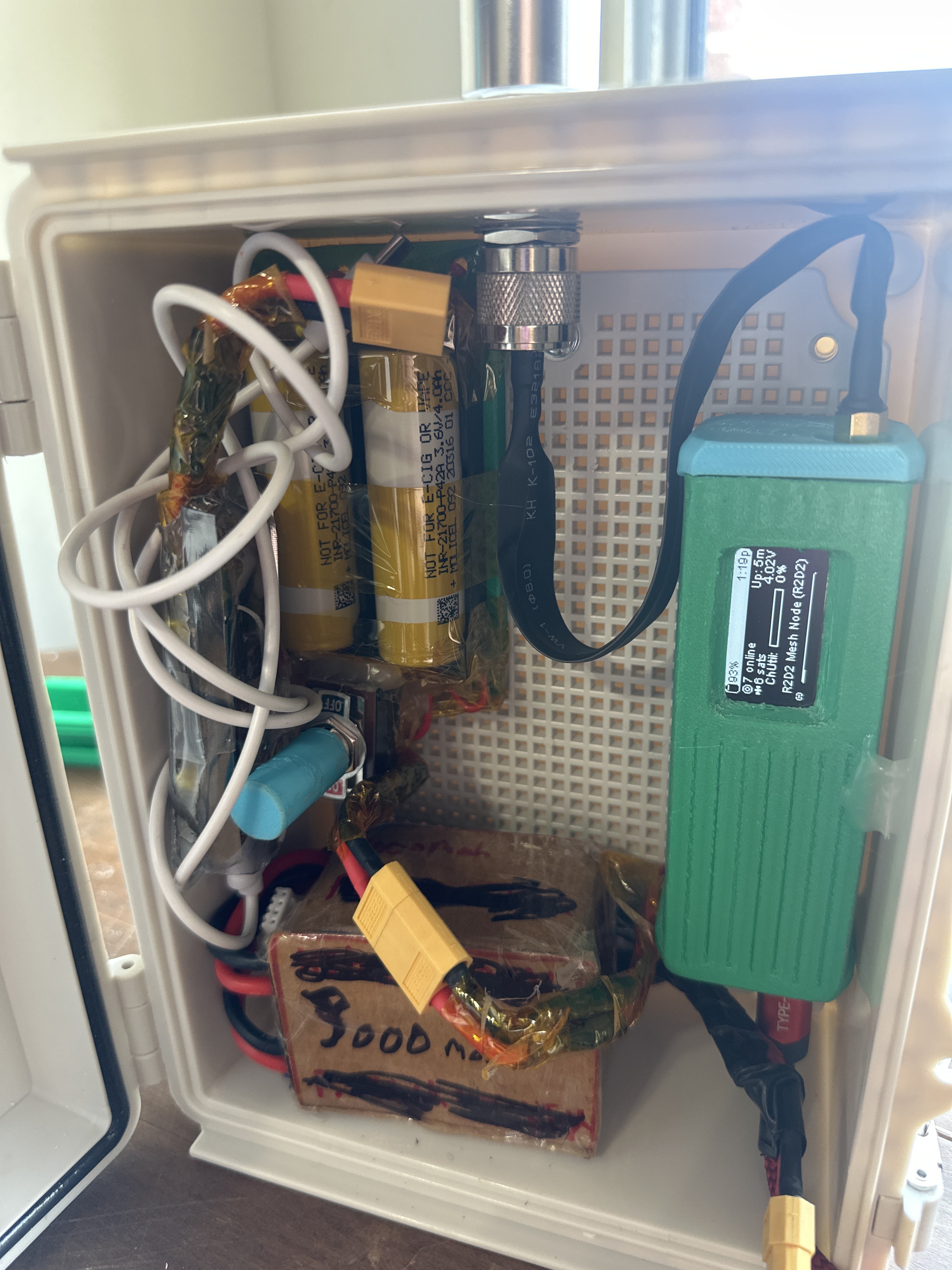
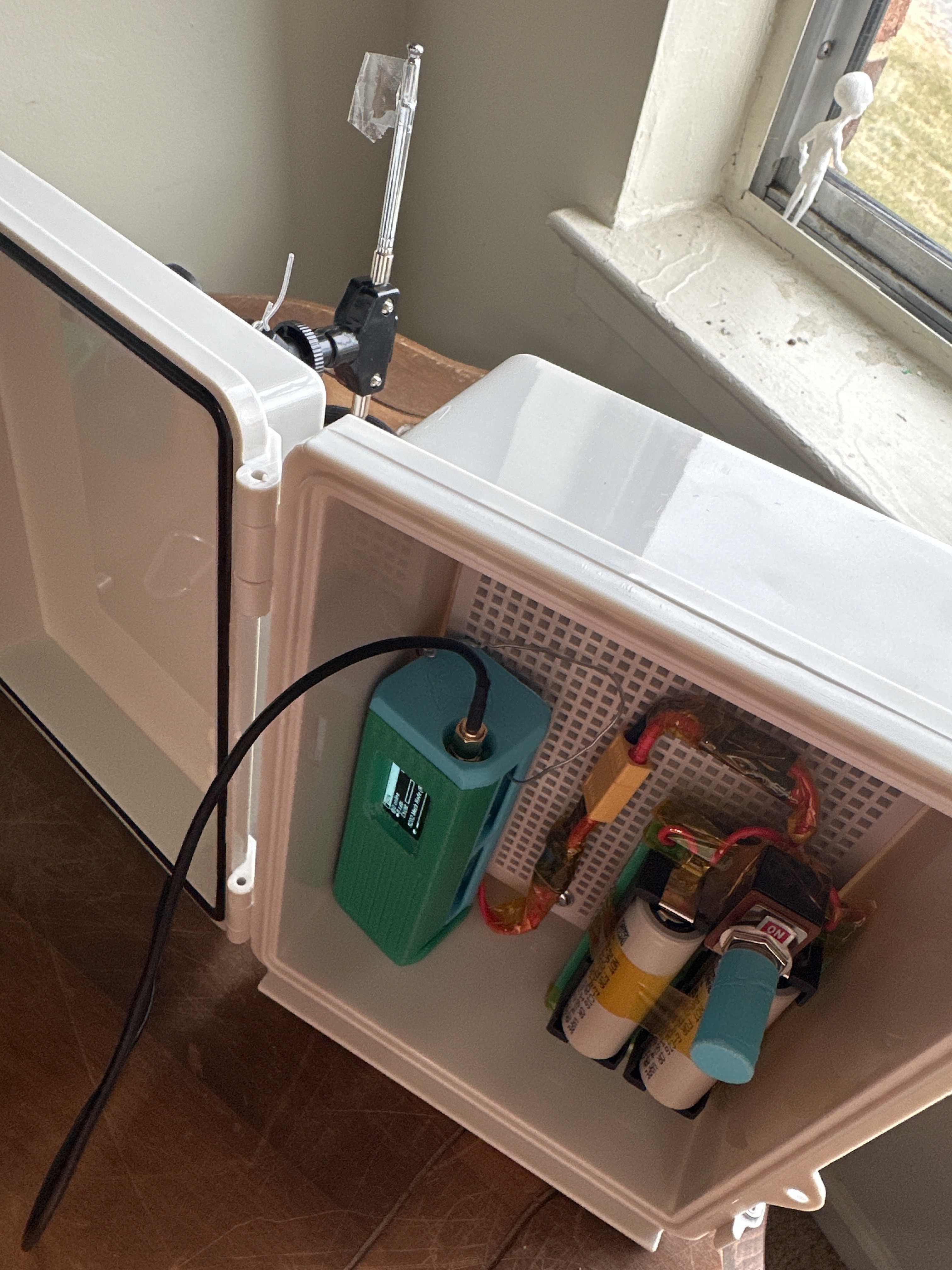
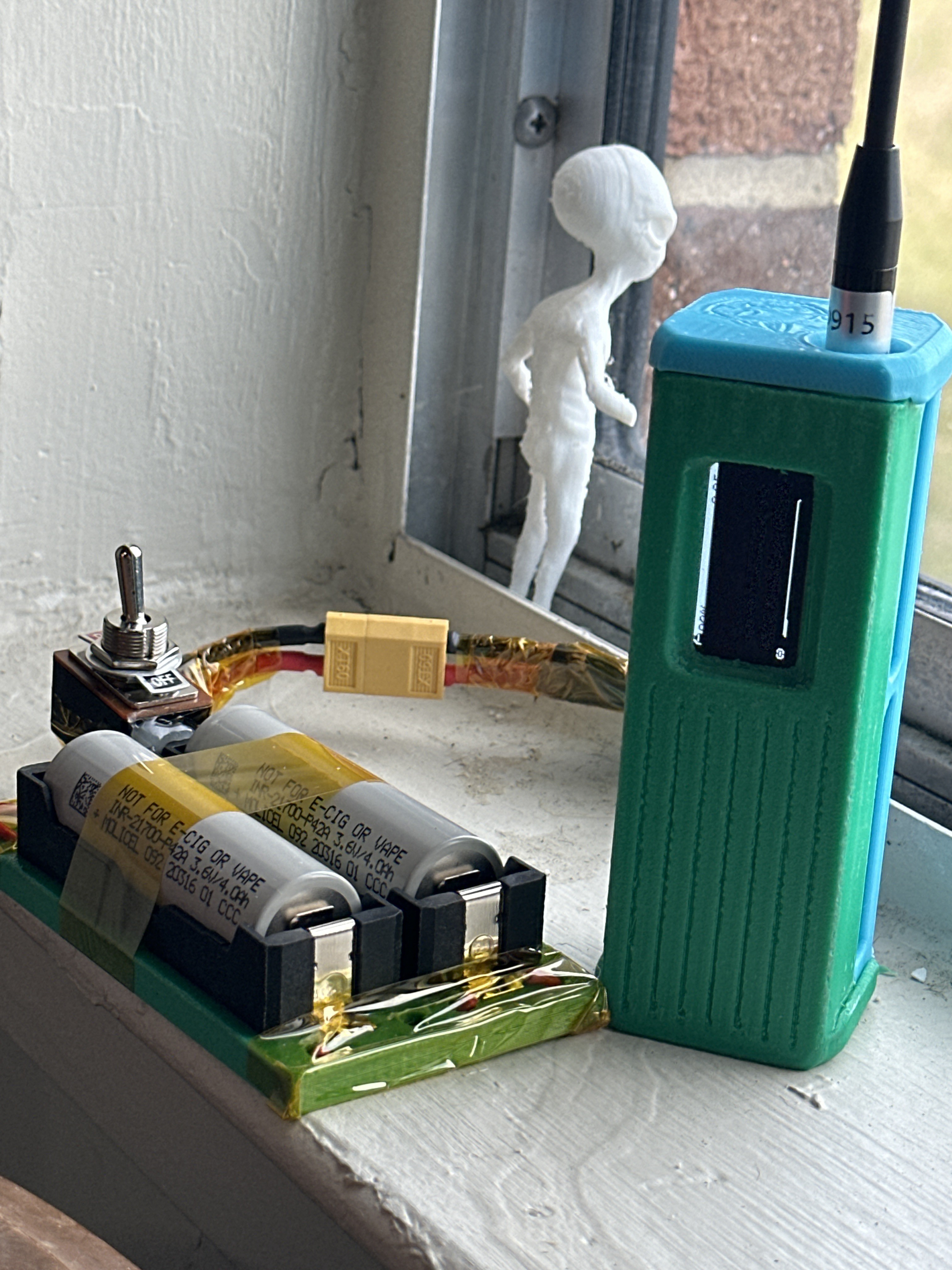
Powering the nodes is handled by a small Drok DC to DC buck converter. It’s a compact switching regulator, wrapped in Kapton tape for insulation and durability, and fitted with an XT60 connector for easy connection to battery packs. Using a buck converter allows the system to efficiently step down higher input voltages while keeping power loss and heat to a minimum, which is especially important when running low-power radio hardware for extended periods.-RR
-
Testing
12/13/2025 at 08:44 • 0 commentsI’m not entirely sure why I felt inclined to post this project here, other than the fact that Hackaday feels like the right place to share it. Setting up Meshtastic nodes is fairly straightforward, with only a small learning curve, but the hardware itself is a big part of what drew me in. Seeing inexpensive, low-power radios form a working mesh that can move messages without any existing infrastructure is what made this project click for me.
The ability to send text messages over radio immediately raised more questions. If this works on LoRa, could similar ideas be applied to other radio frequencies as well? Frequencies like 915 and 433 MHz come to mind, along with others that fall within unlicensed or lightly regulated bands. Staying within those bands is important, both to remain legal and to avoid interfering with existing users. With those constraints in mind, it’s still interesting to ask how far these systems can be pushed.
That naturally leads to a larger question: could larger amounts of data ever be transmitted over LoRa, or similar low-power radio systems, in a way that begins to resemble cellular communication?
This project sits at the intersection of hands-on hardware experimentation and curiosity about what these radio systems might evolve into. I hope that comes through in this log.
Rhea Rae
Successful flash of ESP32-S3-WROOM-1-N16R8 using Meshtastic Web Flasher and the Heltec V3 Firmware oldest stable beta version. It has no Lora radio so all it can do is listen to MQTT currently, Bluetooth has to be shut off and it is connected to MQTT through WiFi network connection. At the moment sending messages to public MQTT channel is unsuccessful however I can view and log messages with it making it useful to me as I do not want to use MQTT on the Lily Go devices. I can connect to the ESP through usb on the Pi or over network on the tablet running the Meshtastic app.