 Colin Pate
My criteria for this build were:
- Mechanical strength: It's gotta stay in one piece when I land 5 feet short on a tabletop jump and bottom out my suspension hard enough to pop both tires
- Water resistance: PNW winter means muddy water everywhere, both from the sky and from my tires
- Brightness: >1k lumens, ideally closer to 2k from what I've read online
- Battery life: >2 hours on full brightness (I'm rarely descending for this long, but it's good to have a buffer)
- Brightness levels: At least 2; full power for descending and sorta bright for climbing
- Beam pattern: Wide so I can see around corners but with a decent throw for when I'm going fast
- No sharp edges, to minimize danger in a crash
- Easy to install and remove from handlebars
- Easy charging (ideally USB-C)
- Weight: not too heavy I guess
These requirements, and their implications for the mechanical and electrical design, made the project more involved than I initially expected. Not that I'm complaining.
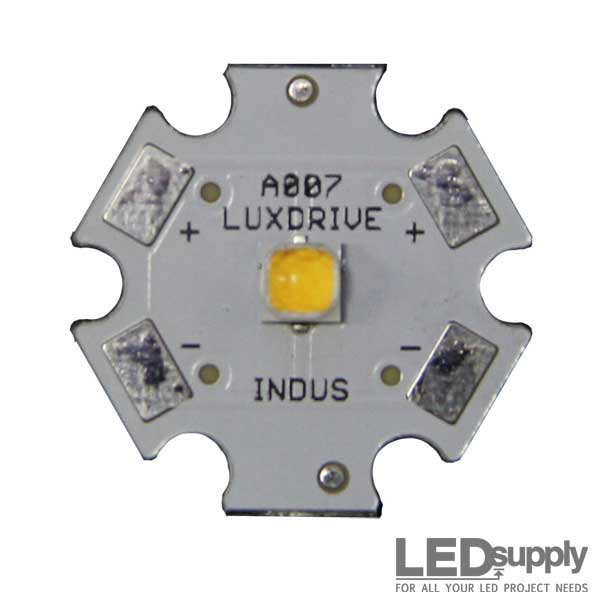
My choice of LED was mostly based on availability. There's plenty of white LEDs out there with tradeoffs between CRI, brightness, thermal resistance, and so on. The Cree XP-L HD is older but still holds up alright, and you can get it mounted on a star MPCB from LEDSupply for a decent price.
 For the battery, the choice of 21700 cells was easy. They're mechanically robust and readily available with excellent energy density. Plus, I built a battery for my eBike with this cell format a couple years ago so I already had a spot welder from Maletrics. With the format selected, the Samsung 50S cell was a great choice - 5Ah/18Wh per 70g cell, for around 250Wh/kg!
 Doing the math on power, if I want 1500 lumens and assume I can get 100 lumens per watt, that means the LEDs would pull around 15 watts. Add a little extra for loss in the LED driver, and two 18Wh cells should give me right around 2 hours of light.
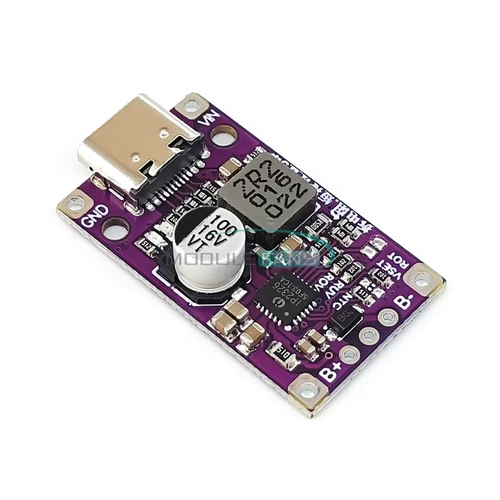
I put the two cells in series because my original design was based around the Sparkfun Picobuck LED driver, which has a minimum input voltage of 6V. The annoying thing about this is that when you have Lithium-Ion cells in series, you should really have a way to keep an eye on the voltage of each cell and make sure they stay balanced. Luckily, I found this cool little charger board that can charge and balance 2 Lithium cells at 15W from USB-C! It's based around the IP2326 chip that handles the USB QC negotiation, voltage conversion, and charge monitoring.
Doing the math on power, if I want 1500 lumens and assume I can get 100 lumens per watt, that means the LEDs would pull around 15 watts. Add a little extra for loss in the LED driver, and two 18Wh cells should give me right around 2 hours of light.
I put the two cells in series because my original design was based around the Sparkfun Picobuck LED driver, which has a minimum input voltage of 6V. The annoying thing about this is that when you have Lithium-Ion cells in series, you should really have a way to keep an eye on the voltage of each cell and make sure they stay balanced. Luckily, I found this cool little charger board that can charge and balance 2 Lithium cells at 15W from USB-C! It's based around the IP2326 chip that handles the USB QC negotiation, voltage conversion, and charge monitoring.
Discussions
Become a Hackaday.io Member
Create an account to leave a comment. Already have an account? Log In.