 Ignorant of Things
My fridge has a mystery "eco" button on it. When I press it, it plays a happy tune and a letter "e" shows on the display. I'd like to think that I'm doing good by my fridge and the environment by pressing it.
But I have no idea. What does it do? Is it more economical? Or am I just being offered... cold comfort? ❄️

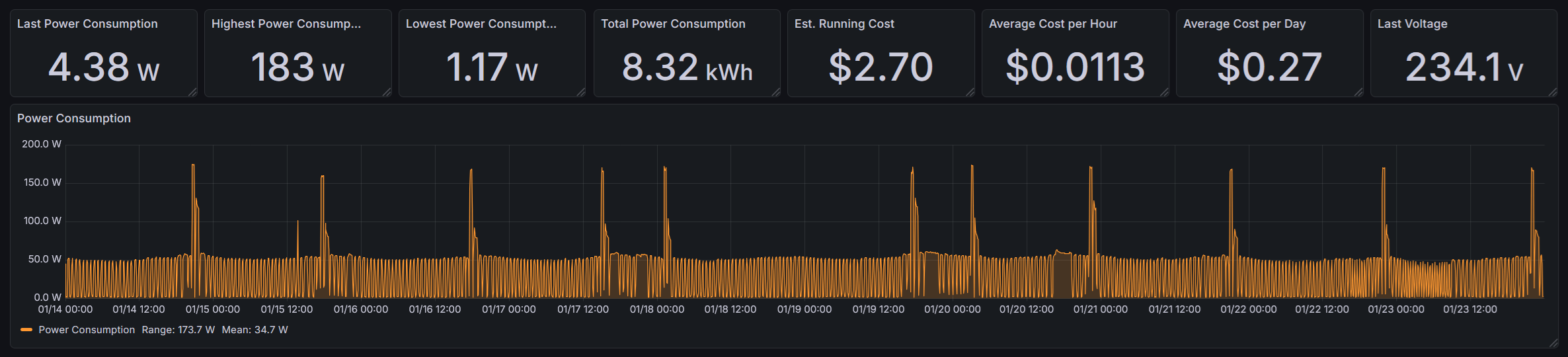
To test, I ran the fridge in normal mode for a month, then in another month in eco mode. I then had a look at weather data for the test period and made sure there were no excessively hot days to skew the results - it's summer at the moment and it reached 44 degrees C here at one point! Using this data, I selected 10 consecutive days from each sample that were roughly comparable.
Here's what those 10 days look like in full power mode:
And here's the eco mode for the comparison period:
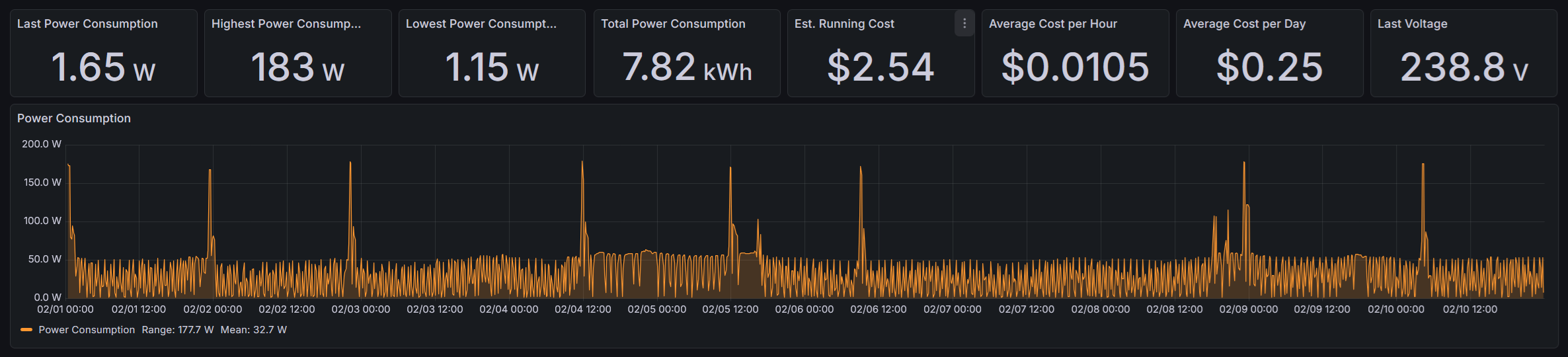
Already, I can see a notably different duty cycle, and the numbers are in! I'm saving an underwhelming 2c a day 💰 or around 50 watt-hours. At least I won't die wondering, but with that said... we need to go (slightly) deeper.
Zooming into an 8-hour section of each, the difference in cycles is apparent:
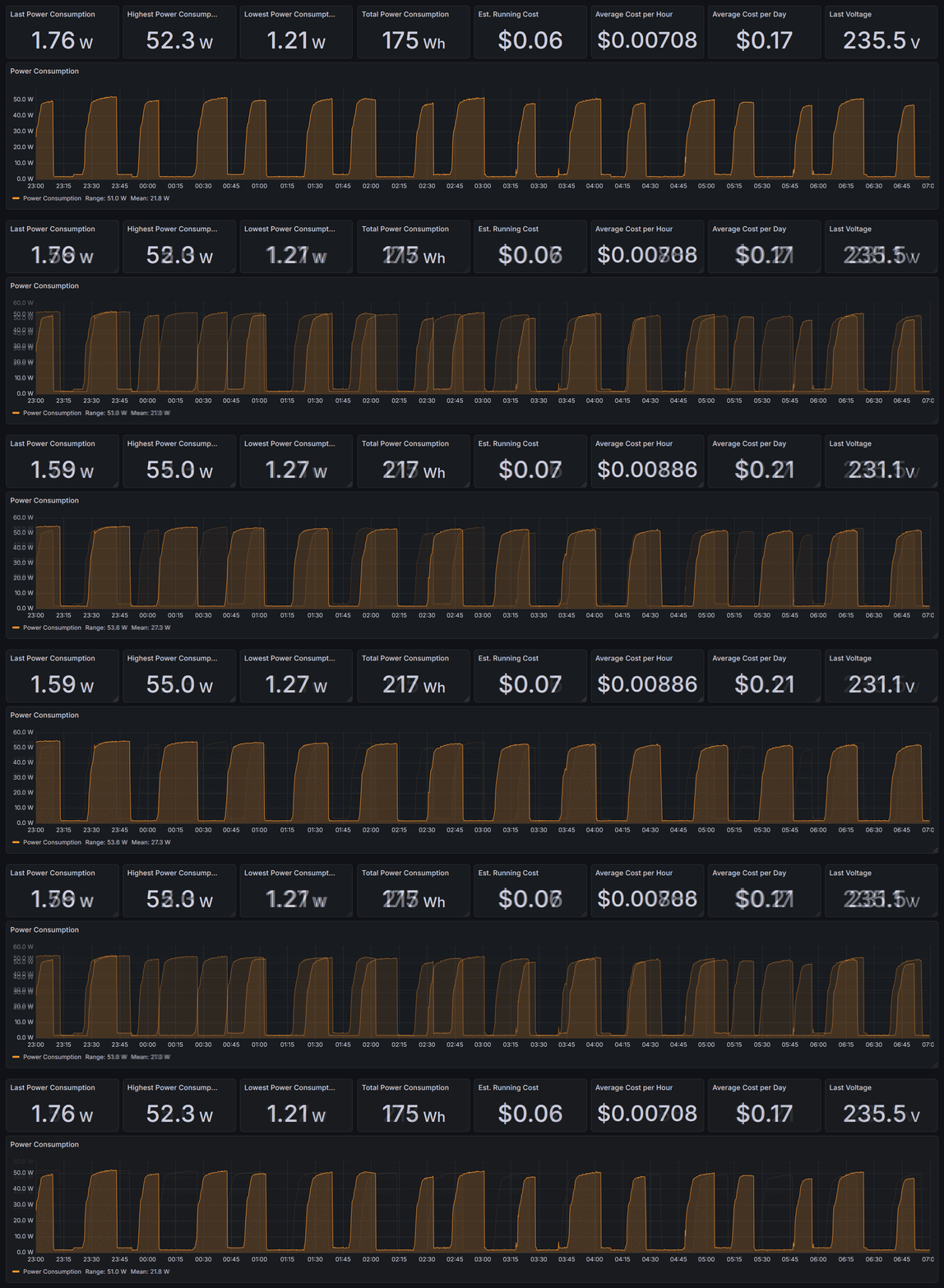
The longer duty cycle is the normal mode, with the shorter/variable duty cycle being the economical mode. The ramp up and down remains the same, as does the peak power (within a few W), which tells us that only the modulation of the compressor is changed, and it's not otherwise being driven any differently.
The histogram suggests a narrower hysteresis band, giving shorter, more frequent cycles. If the eco mode is a user setting, it implies some sort of tradeoff... with temperatures being set the same, it may just come down to compressor wear or noise preference 🤷
So, I guess it can stay. Adjusted for inflation and power price rises, I stand to save maybe $100 over the lifespan of the unit.

Discussions
Become a Hackaday.io Member
Create an account to leave a comment. Already have an account? Log In.