 Masahiro Furukawa
Beyond "PLC Lite": Designing for "Soft Coupling" and Openness
Currently, many "Industrial Arduinos" (such as the Arduino Opta) are emerging, but they suffer from a fundamental flaw: they are becoming "PLC Lite." In their pursuit of being "official industrial products," they have inherited the "black box" nature of traditional vendors—closed enclosures, rigid board-to-board (B2B) connectors, and limited extensibility. I call this "Mechanical Debt." While it offers reliability, it kills the open-source spirit that made Arduino great in the first place.
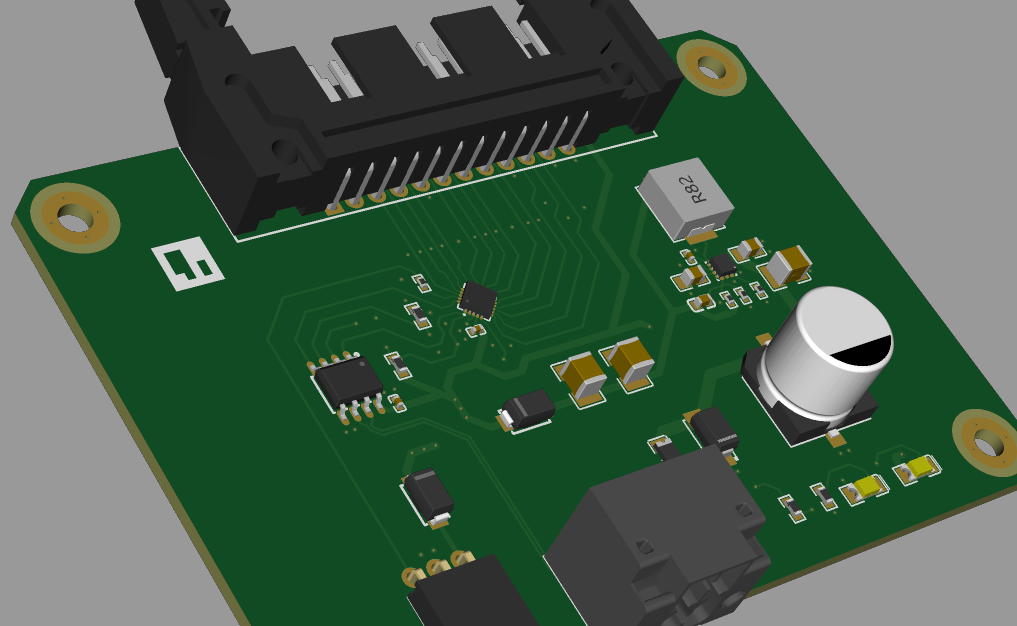
- ADX-Core v0 proto
ADX is my attempt to break this cycle. Here is how I am designing it to be different:
1. The "Soft Coupling" Strategy: Why IDC24?
Instead of rigid B2B connectors that lock you into a specific proprietary enclosure, ADX utilizes a locking IDC24 connector.
- Why? To allow for physical "play." By using ribbon cables to connect to expansion modules, we decouple electronic reliability from the sub-millimeter precision of a plastic case.
- This is my vision for an "Industrial ATX"—a world where the controller and the housing are independent. You should be able to mount it on a DIN rail, a camera screw, or even zip-ties without losing connectivity.
2. Choosing the ATtiny1616-MNR
I chose the ATtiny1616 as the heart of ADX because it is simply the most practical "Modern-Classic" chip for the field.
- Cheap & Abundant: It is extremely affordable and has excellent stock availability worldwide. No more supply chain headaches when you need to scale.
- Industrial Temperature Range: It natively supports -40°C to +105°C, making it tough enough for factory floors and outdoor agricultural use right out of the box.
- Arduino IDE Ready: Thanks to megaTinyCore, you can develop with the familiarity of the Arduino IDE while leveraging the modern features of the tinyAVR 1-series.
3. The Path to PL4 (Power over LIN based RS-485)
On-board RS-485 is standard, but the ultimate goal for ADX is a field network I call PL4. It is a LIN-based RS-485 architecture that can carry power over distances up to 1,000 meters. In environments where Wi-Fi is unreliable and cables run long, we don't need "fragile" connections—we need raw, stable communication.
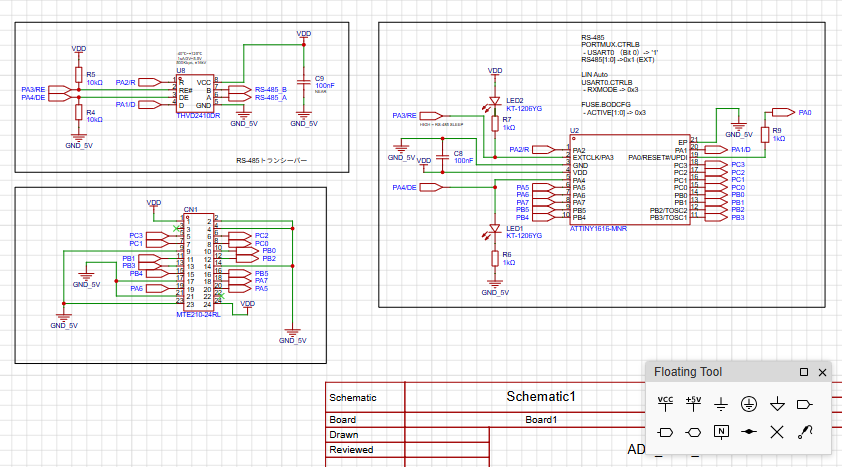
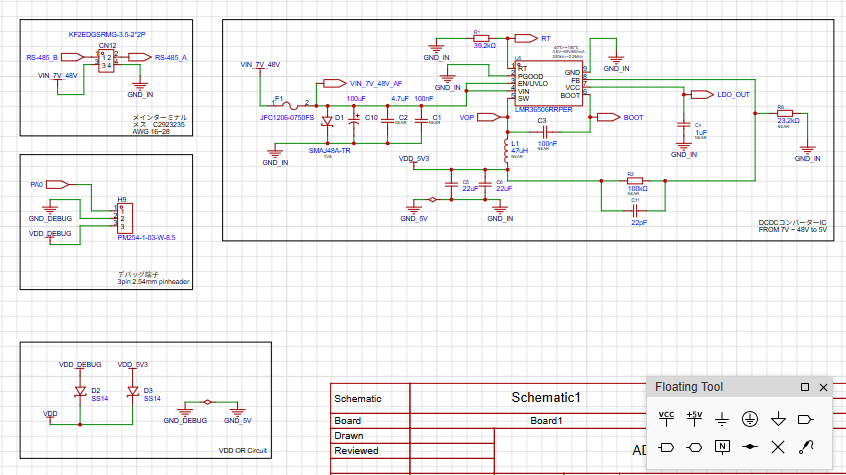
- Current circuit diagram
Stay Updated & Feedback Welcome
ADX is still in its early stages, and I’ll be sharing my progress, technical iterations, and lessons learned here as I go. I’m also documenting the nitty-gritty technical details and deeper philosophy on my development blog:
I’m looking forward to building this in the open, so please feel free to chime in with your thoughts, suggestions, or questions in the comments. Any feedback is welcome as the project evolves!
Discussions
Become a Hackaday.io Member
Create an account to leave a comment. Already have an account? Log In.