mircemk

In several of my previous videos, I presented you with different ways to make a Rife Machine, from the simplest with metal electrodes as a medium for the transfer of frequencies, to an advanced Plasma Rife Machine. This time I will stick to the more advanced versions which, like the original device, use plasma as a medium that radiates into the environment.
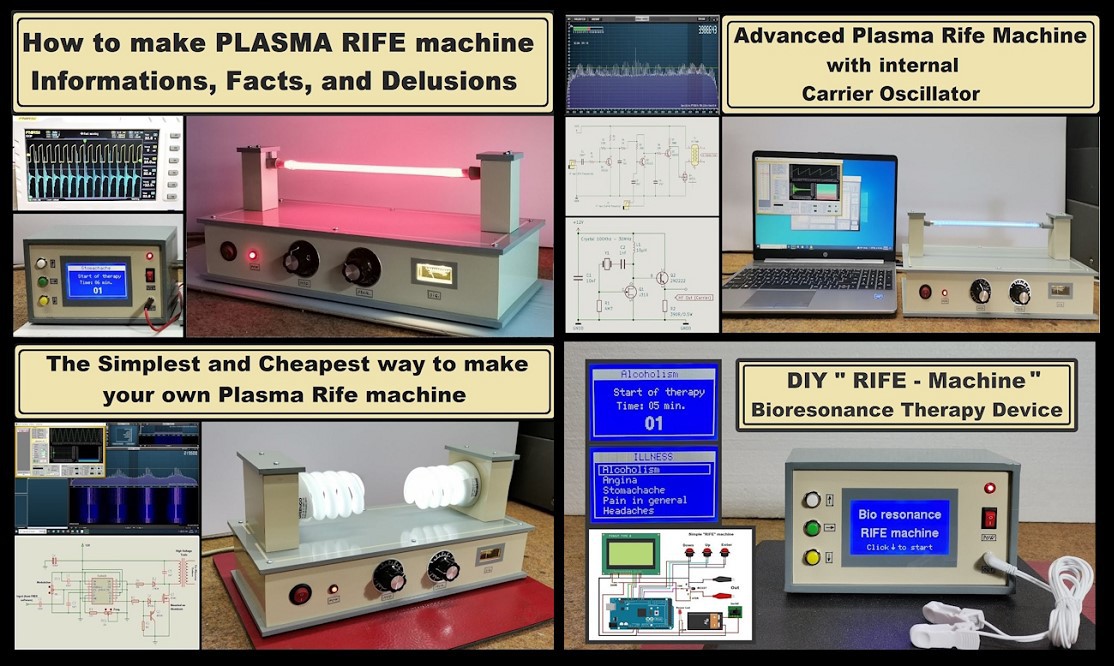
With the previous devices, I mostly used a configuration that consisted of: a carrier signal generator, a modulator, an amplifier, a HV transformer and finally a Plasma Tube. A quality HV Transformer retains its characteristics up to a few hundred kHz, and above this frequency the signal weakens. In the original Rife machine, the carrier frequency is much higher, specifically about 3.1 MHz. What you see in the spectrogram from the previous videos is that 3.1 MHz carrier signal, but significantly weakened due to the characteristics of the HV transformer. That is why very weak parasitic signals are visible around it and in the entire spectrum.
I spent more time thinking about how to solve this deficiency, and I came up with the idea of using a Tesla Coil to generate a clean carrier signal.
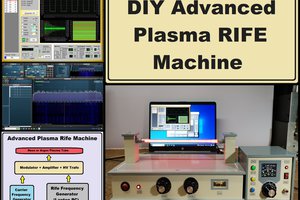
Since the Tesla Transformer is actually a high voltage generator, with it we can directly drive the plasma tube without the use of an amplifier and HV Trafo. Also, the tesla transformer can work even at frequencies of several tens of MHz without any problem. In fact, the original Rife machine works in roughly the same way. Instead of vacuum tubes like the original, I use modern solid state components. Next, as can be seen from the schematic diagram, I perform frequency modulation of the oscillator (carrier) with an external "Rife" frequency.
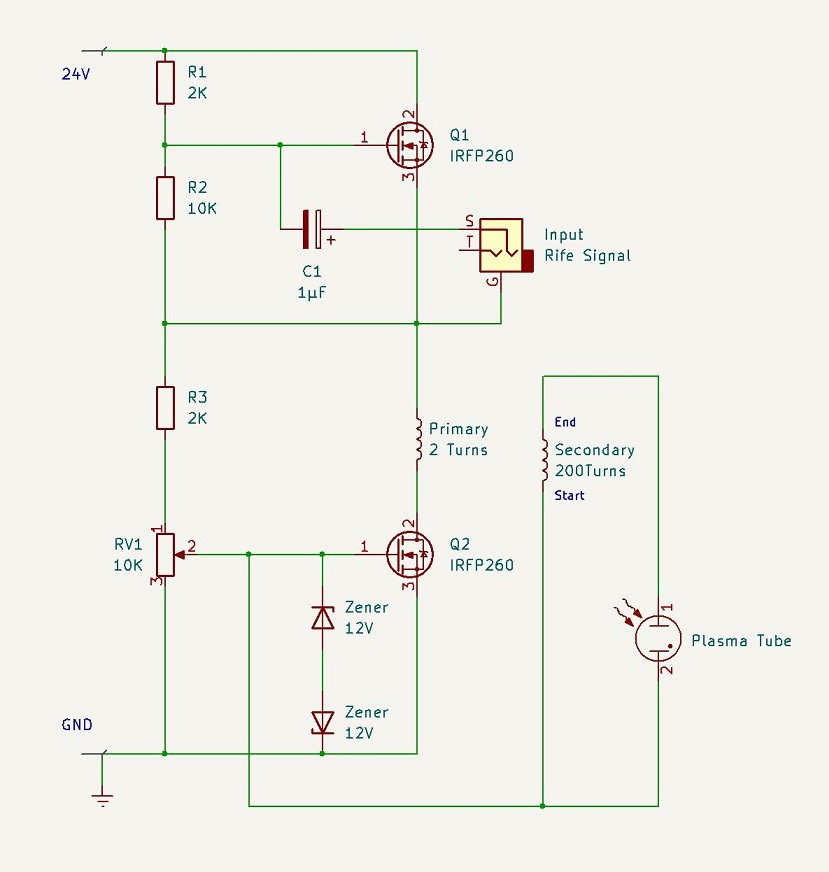
Now let's focus specifically on this new project. This is the Rife Tube driver, which is actually a modulated Tesla Coil. I set the resonant frequency of this transformer to be exactly 3.1 MHz using one of the online calculators for this purpose. The primary coil consists of 2 turns around the secondary with an insulated copper wire with a cross section of 1mm. The secondary coil is wound on a body with a diameter of 5 cm and contains 200 turns of varnished copper wire with a cross section of 0.35 mm.
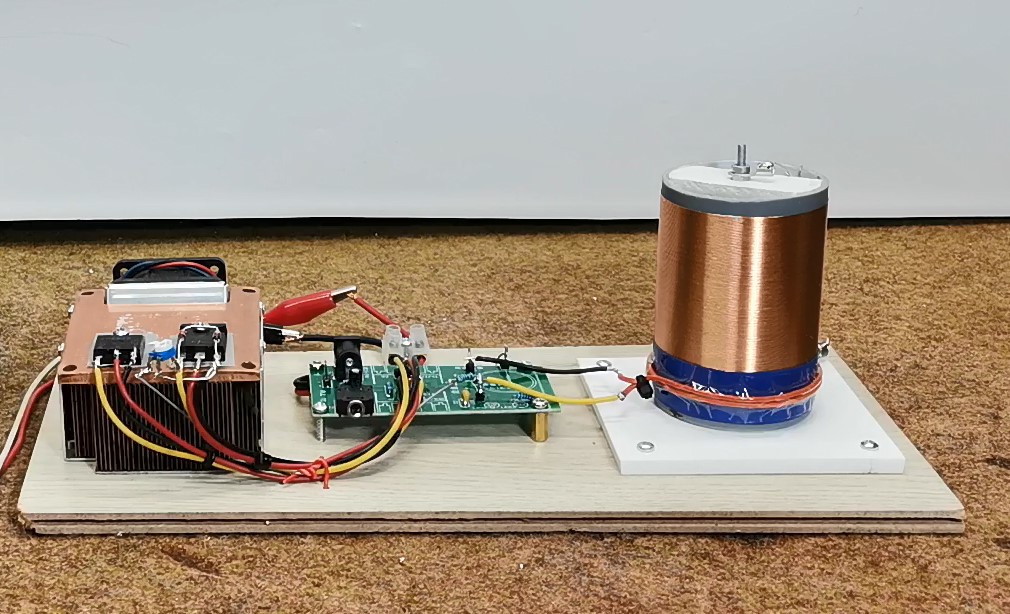
One mosfet drives the primary coil, actually the transformer itself, and the other mosfet is a modulator and modulates the supply voltage with a "Rife" frequency. Otherwise, this is the simplest practical way of modulation. The mosfets are mounted on a massive heatsink for better heat dissipation. Since this is a test sample, I am using a laboratory power supply with a voltage of 24V and a constant current of 1.5A, in order to protect the mosfets. Now let's first perform measurements and look at the characteristics of the driver (tesla coil) without a connected plasma tube. Since I do not own a classic spectrum analyzer, as usual I will use my SDR radio SDRPlay for this purpose, together with the accompanying software SDRuno. Through small antenna I will receive the signal emitted by the Tesla transformer, and then I will analyze it in the software. As a source of Rife frequencies, we can use various commercial or non-commercial devices, and in this particular case I use the excellent Frex16 software which is free and you can find it on the Spectrotek website.
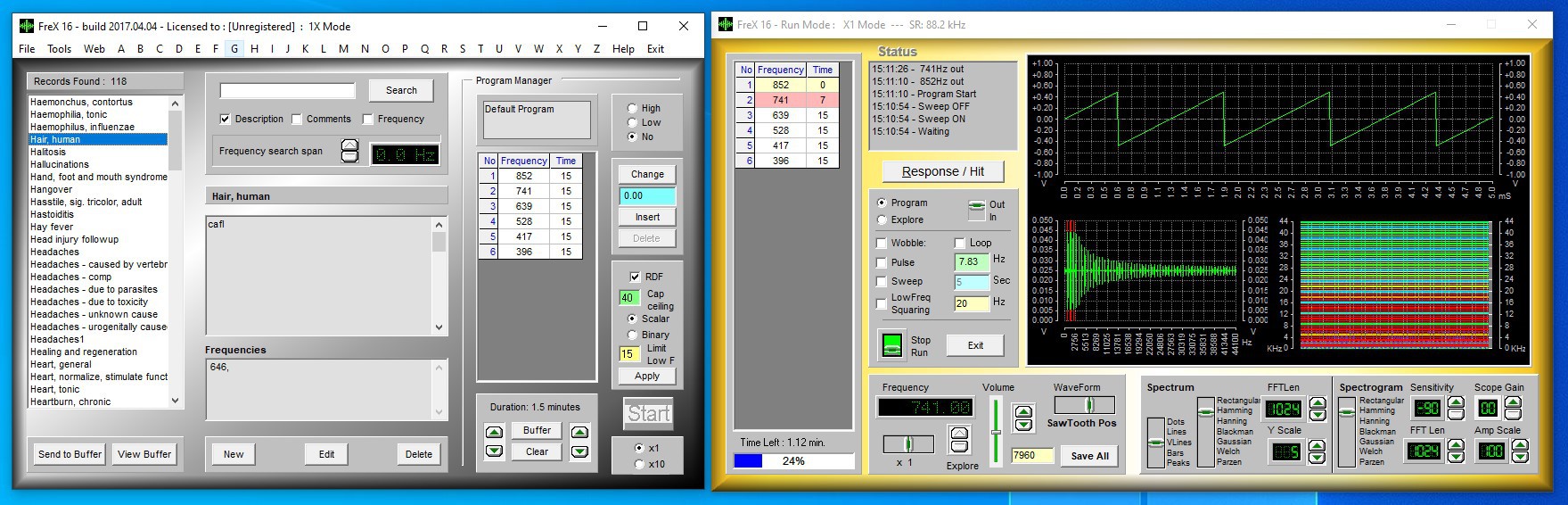
This software also contains a database of many ready-made frequency sequences for treating various diseases.
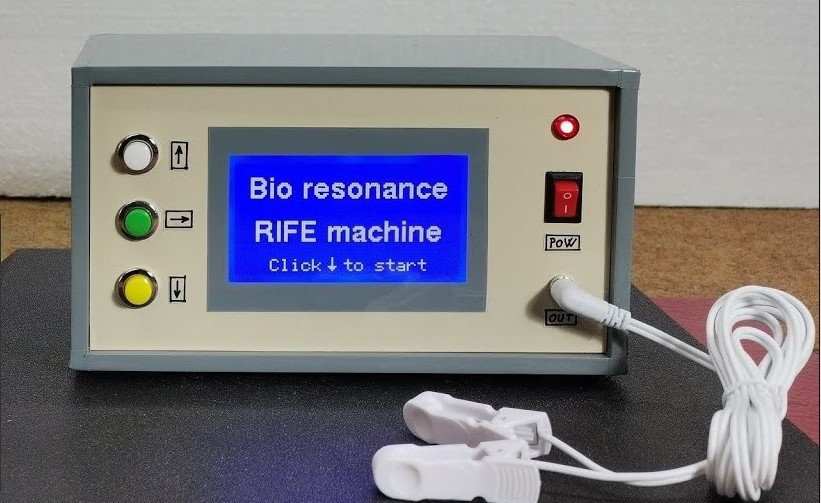
Of course, you can also use the Arduino device for which you can find a detailed description of the construction in one of my previous videos.
First we start the Tesla coil and adjust the small trimmer potentiometer to a position where the device draws a current of several hundred milliamperes. This adjustment is made only when first turned on. Regarding the making of the secondary coil, according to the calculations that I performed on online calculators, the frequency it radiates should be around 3.1 MHz. If we look at the spectrum analyzer, we...
Read more »