 Ken Yap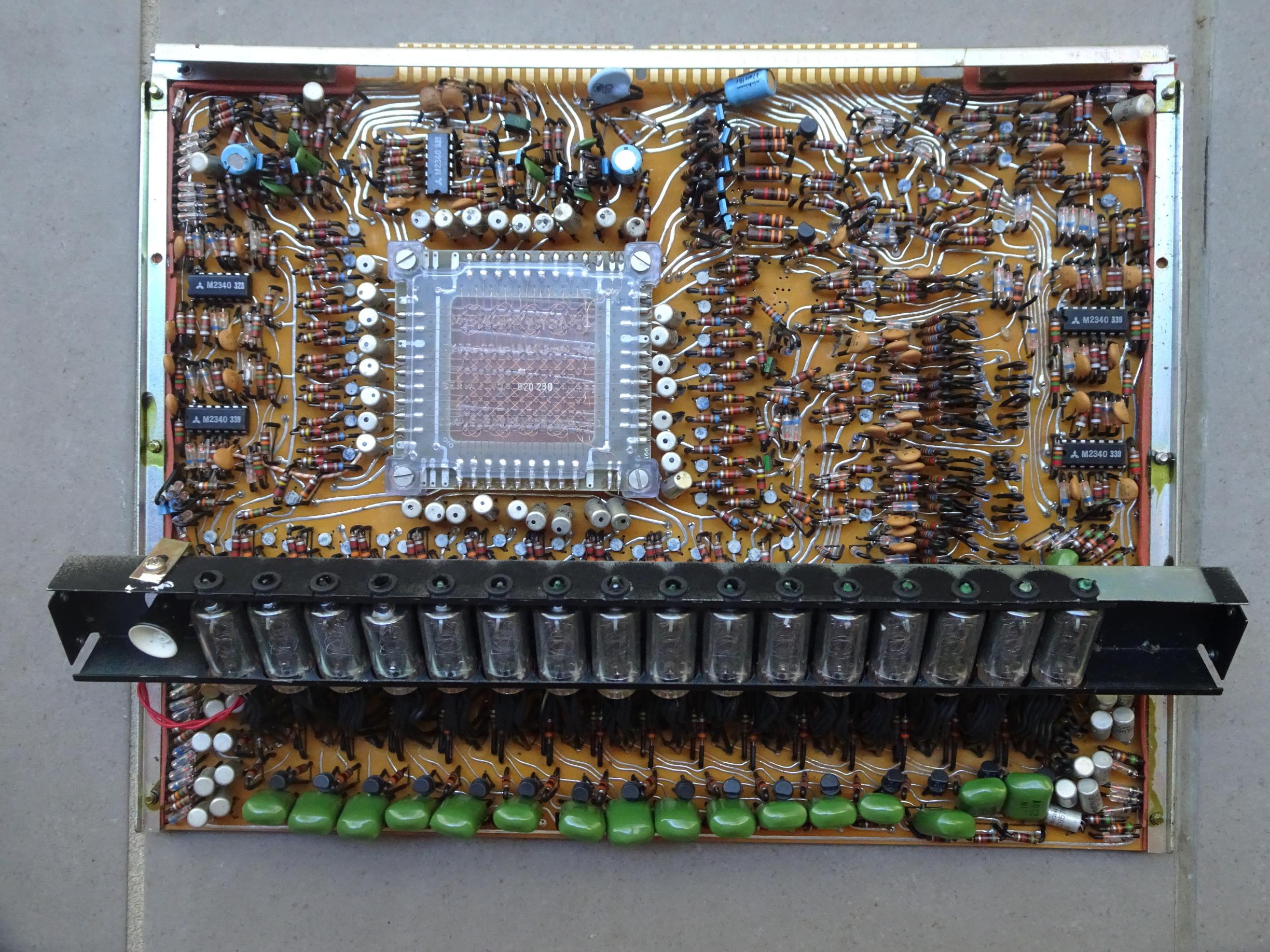
My early attempt at a 32-bit CPU. No, just kidding.
Having decided to move on from the MCUs I am using, now that 32-bit MCUs are cheap commodities what are the candidates?
Before that, one advantage is clear: going to 32-bit gets decent HLL support. You can have a gcc/g++ toolchain, or one based on the up and coming rival, LLVM. You can also have other languages like Rust.
ARM
ARM is everywhere. A lot of hobbyists got introduced to ARM via Raspberry Pi. But the range extends from small MCU boards like the STM32 Blue Pill, to smartphones and tablets, to desktops, and to 64-bit servers in the datacentres. The PlasticARM project put a minimal Cortex-M0 on a flexible substrate, providing more areas for IoT to colonise.
ARM will be around for a long time. It should be noted here that the core architecture is licensed but the MCU chip manufacturer has absorbed that cost for you.
In practical terms, I could develop with the STM32 family or the RP series. I probably will for high performance uses.
RISC-V
RISC-V is an open architecture, there is no licensing to deploy it, so it has become attractive to chip makers as an alternative to ARM. I have a GigaDevice 32V dev board, but it's really the WCH series of 32V chips that are challenging the low-end uses of ARM. This makes them attractive to me.
Xtensa
Xtensa is the MCU architecture that Espressif Systems used in their popular series of WiFi and Bluetooth capable modules, such as the ESP8266 and ESP32. It's very popular due to the wireless capabilities, just look at the number of projects on Hackaday. I have several Espressif modules that badly need a few round tuits from me, so I will also develop with these.
But here's the rub: Espressif is shifting their product lines to RISC-V cores. The Xtensa based MCUs will be around for a while, if only because there's so much stock around.
Also the RP2350 has an interesting design: two ARM cores and two RISC-V cores, the first use of RISC-V in the RP series.
Which will it be?
Actually, with a good toolchain, I don't have to stick exclusively to one family. I'll just let the project, the available MCUs, and my wallet provide the decision parameters. More about toolchains in another log.
Discussions
Become a Hackaday.io Member
Create an account to leave a comment. Already have an account? Log In.
It's all the same. The ISA does not influence much, more so the periphery.
A lot of the chinese MCUs, RISC-V and ARM alike, are basically cloning the STM32 periphery.
Are you sure? yes | no
Yes and with a HLL you don't see the ISA, so it's just down to features, price and development platform.
Are you sure? yes | no