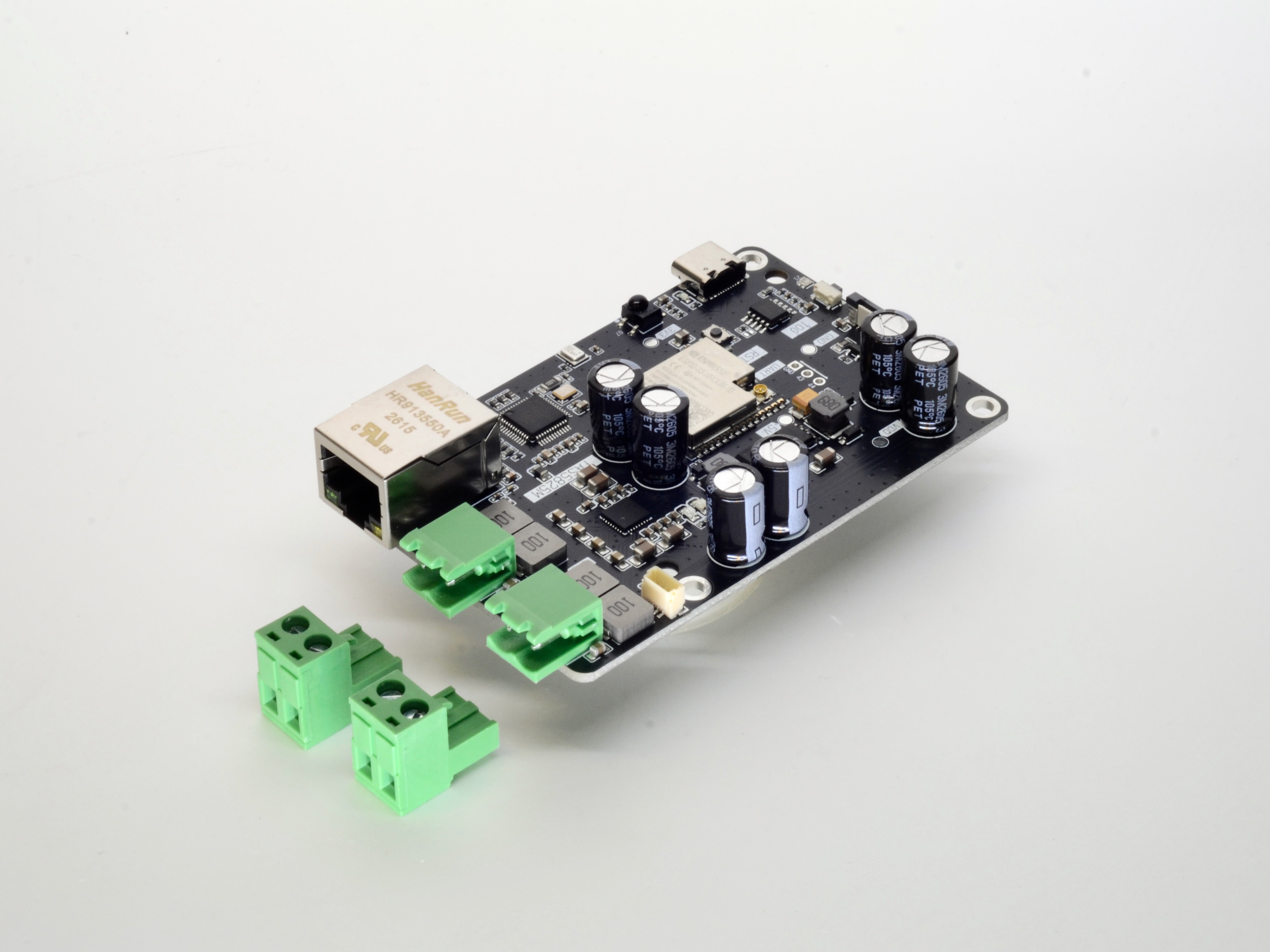
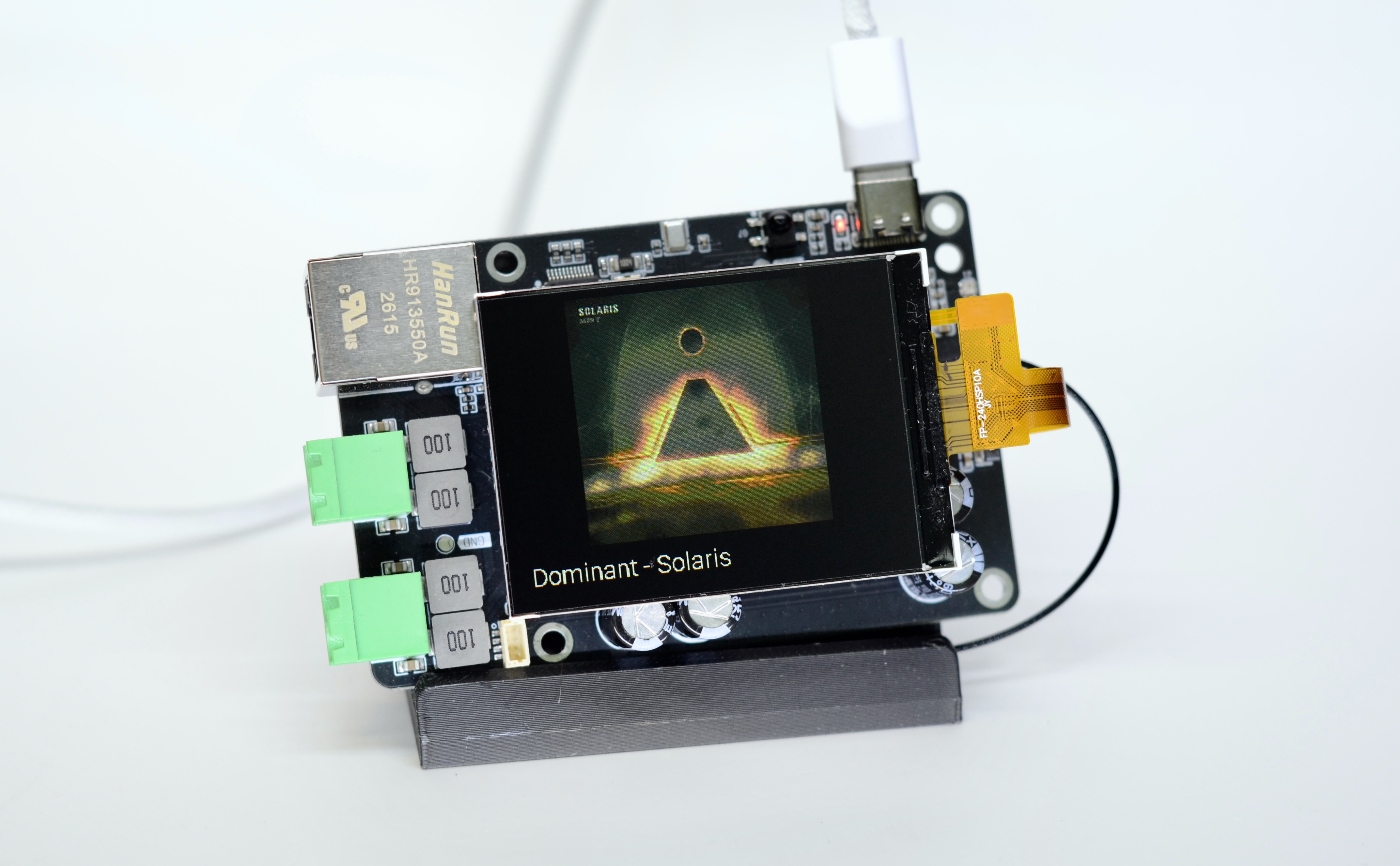
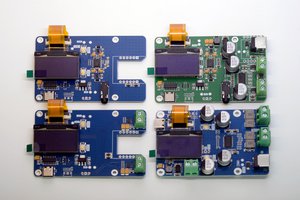
Louder-ESP32-Pro is a feature-packed version of the Louder-ESP32-Plus, which hosts most of the optional extras as standard, adds support for color TFT screens, and, perhaps most importantly, adds an industrial-grade heat release solution for reliable heavy-duty operation.
It comes in Raspberry Pi 5 shape with the most important component placed to follow the original heat release pattern. This allows the use of Raspberry Pi aluminum radiators, including those with soft-controlled fan connectors, that can be driven through Louder-ESP32-Pro software when operating in hot conditions.
Louder-ESP32-Pro is equipped with a high-quality TAS5825M DAC with powerful DSP features, allowing audio tuning to turn your speakers into high-quality audio streamers, big or small likewise. Onboard ESP32-S3 with 8MB PSRAM is there to ensure enough horsepower for solid streaming capabilities.
It is designed to be used with USB-PD-enabled power sources, so powering it is as easy as plugging in a stan
Louder-ESP32-Pro has finally passed all tests and is ready for launch.
Over the last few weeks, I tested the peripheral, starting with that pretty standard now (DAC, Ethernet, IR, RGB, Mic, USB-PD), and then new ones: TFT and Fan controller. As usual, I made a small mistake, it is around the TFT backlight pin, but in the end, I was able to disable the backlight control pin, but save the rest of the board. Have a small todo item for revision B :)
The Fan control worked from the first attempt. It uses a 4-pin fan from the Raspberry Pi 5, so you can both set the fan speed from the ESPHome and read back the actual rpm readout, which is kind of fun. The idea of hooking it up to the DAC overtemperature warning comes into my mind immediately.
But the biggest elephant in the room is a Raspberry all-aluminum case, of course. I had to wait for a 65W USB-PD power source to run it af full blast, but I'm very happy with the result. While my test load (50W 8Ohm resistor pair) started to smell funny, the case was warm, and the OT warning sit quiet. It took ~10 minutes at full blast to trigger the OT warning, but I think it is a good result, considering how much continuous power it sends to the speakers.
The thermal camera is on the way to do a few measurements, but I'm happy with it after fairly scientific "oh that's hot" tests.
As usual, you can get it on Tindie and Lectronz, while Elecrow's availability is coming a little later this year
The PD power source that I use is also available now as an optional extra at Tindie and Lectronz.