 ElectroScope Archive

Features
- Real-time object detection using a Raspberry Pi
- Cloud-powered AI inference without local model training
- USB webcam image capture
- Python-based implementation
- Detection labels with confidence scores
- Lightweight solution suitable for entry-level Raspberry Pi boards
- Easy to customize for future AI applications
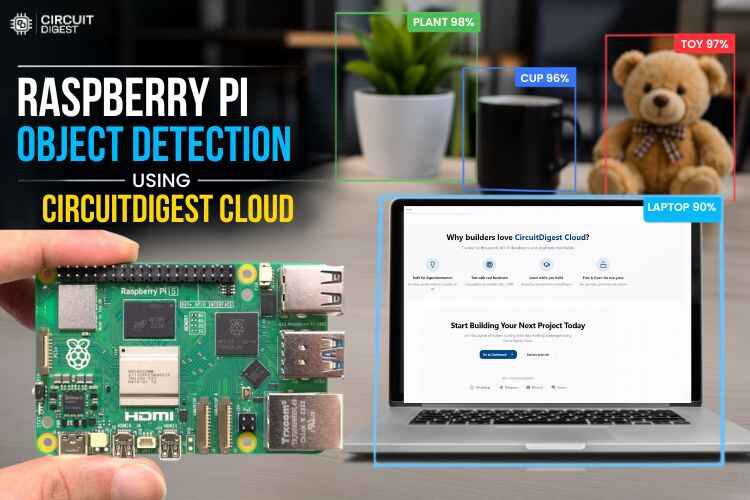
Hardware Required
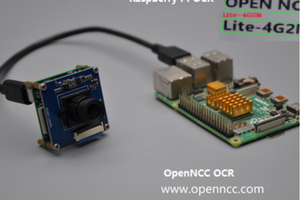
- Raspberry Pi (with Raspberry Pi OS)
- USB webcam
- MicroSD card
- Stable internet connection
- Power supply
- Keyboard, mouse, and monitor (or SSH access)
Software Requirements
- Raspberry Pi OS
- Python 3
- OpenCV
- Requests library
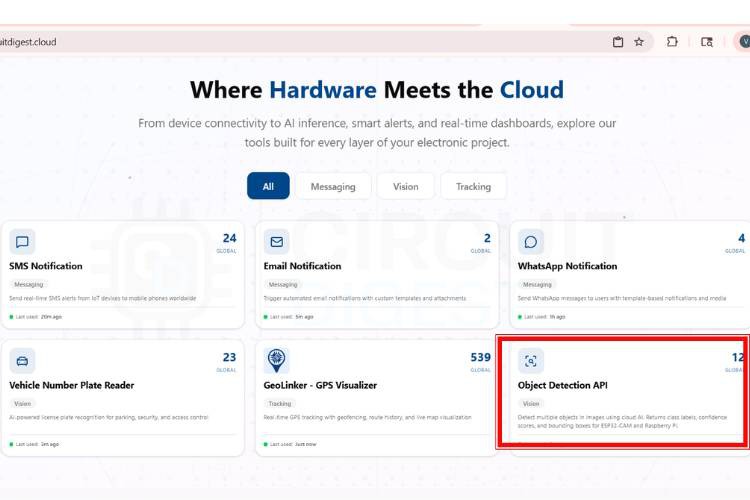
- Cloud object detection API credentials
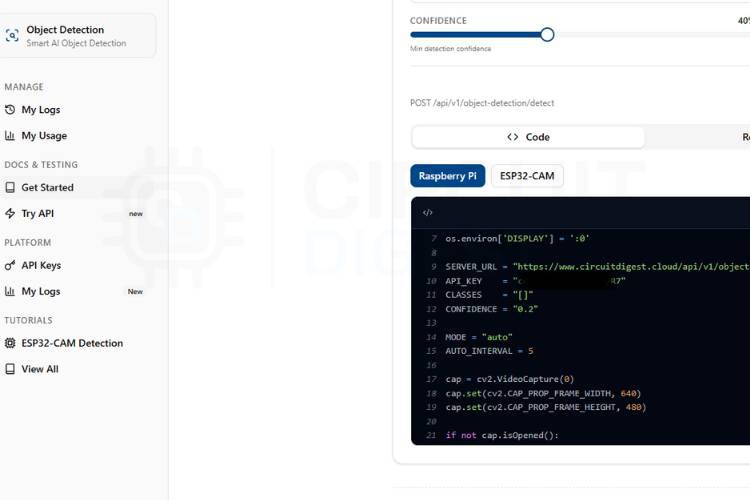
How It Works
The project follows a straightforward workflow:
- Capture an image using the USB camera.
- Convert the captured frame into the required format.
- Send the image to the cloud AI service through an authenticated API request.
- Process the returned JSON response.
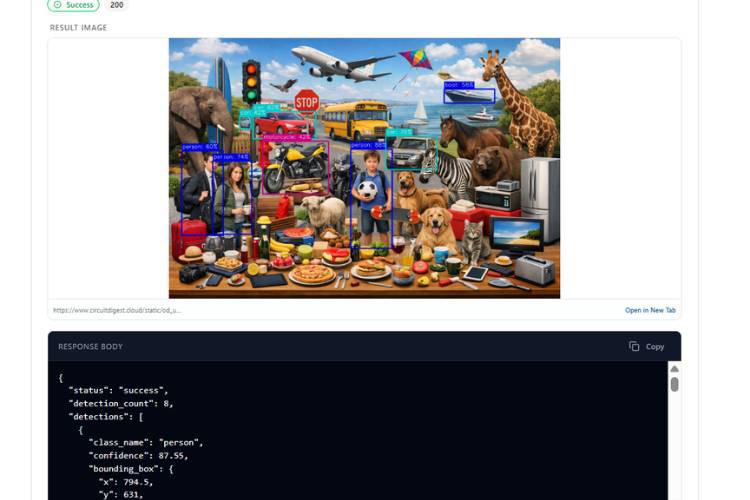
- Display each detected object's name and confidence score.
- Repeat the process for continuous monitoring if desired.
Since all deep-learning inference runs in the cloud, the Raspberry Pi only handles image acquisition, network communication, and result visualization.
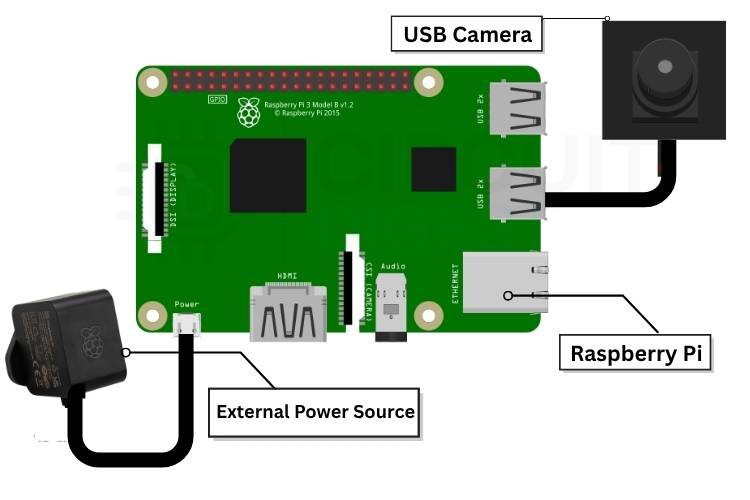
Setting Up the Project
- Install Raspberry Pi OS and update the system packages.
- Install Python dependencies such as OpenCV and Requests.
- Connect a compatible USB webcam and verify that it is detected by the operating system.
- Create or configure your cloud AI account and obtain the required API credentials.
- Store the API information securely before running the Python application.
- Once configured, execute the detection script. The Raspberry Pi captures an image, uploads it to the cloud service, and prints the detected objects along with their confidence values.
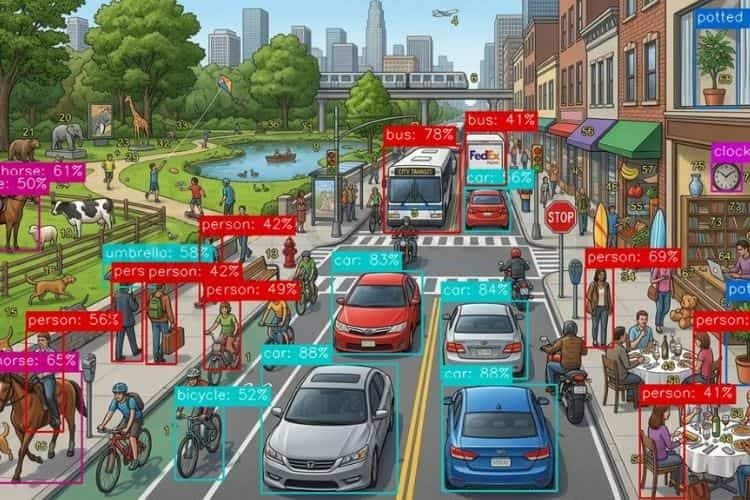
Example Workflow
Imagine placing a coffee mug, keyboard, and laptop in front of the camera.
The Raspberry Pi captures the scene and uploads the image to the cloud.
Within a short time, the AI service returns results similar to:
- Laptop
- Keyboard
- Cup
- Mouse
Each detected object is accompanied by a confidence score indicating the prediction accuracy.
Applications
- Smart surveillance
- Home automation
- Inventory monitoring
- Robotics
- Classroom AI demonstrations
- Smart agriculture
- Industrial monitoring
- Prototype computer vision systems
Advantages
- No GPU required on the Raspberry Pi
- Minimal local processing
- Fast deployment
- Scalable cloud infrastructure
- Easy integration into IoT projects
- Suitable for beginners and experienced makers alike
Possible Improvements
Future versions of this project could include:
- Live video detection
- Bounding box visualization
- Object counting
- Telegram or email alerts
- MQTT integration
- Home Assistant integration
- Local caching during network outages
- Dashboard for detection history
Final Thoughts
Cloud-powered AI allows inexpensive embedded devices to perform sophisticated computer vision tasks without the overhead of training or running large neural networks locally. This Raspberry Pi project demonstrates how a Raspberry Pi Object Detection can become an intelligent vision node capable of recognizing everyday objects with only a camera, Python, and an internet connection.
If you're looking to explore AI at the edge without investing in specialized hardware, this project offers an approachable and extensible foundation. From hobby projects to IoT prototypes, the same architecture can be adapted for countless real-world applications.
I hope these IoT projects inspire you to build your own intelligent vision systems and experiment with new AI projects.
 ecd1012
 Johanna Shi
 Marcelo Valeria