Close
0%
0%

Molde

Modular platform where electronics snap together without wires.

Similar projects worth following
Molde is an open-source modular hardware platform for building custom physical interfaces. Modules connect magnetically using pogo pins and communicate over a CAN bus. The long-term goal is to make hardware prototyping flexible while remaining simple, reusable and easy to configure.

Why?

Building hardware prototypes usually means connecting dozens of wires, redesigning PCBs, and rebuilding the same circuits over and over again.

Molde explores a different approach.

The idea is to build a reusable hardware ecosystem where the same modules can be combined in many different ways without rebuilding the entire project.

The Concept

The system consists of two main parts:

Main Panel – the base platform that provides power, communication and mechanical support.
Modules – interchangeable functional blocks such as displays, sensors, buttons, joysticks, communication interfaces and other electronics.

Modules attach magnetically using pogo-pin connectors, allowing them to be installed or replaced in seconds.
  • 5 × CH32V203F6P6 Modules

  • TLV Protocol and Universal Message Serializer

    Oleg08/08/2026 at 09:20 0 comments

    This development time was spent on designing the communication protocol between Molde modules and the main controller.

    Initially, I considered using something similar to JSON with a key-value structure. However, to reduce communication overhead and improve performance, especially for more demanding modules such as displays, Bluetooth interfaces, and similar devices, I decided to develop a custom binary protocol based on the TLV (Type-Length-Value) principle.

    As a result, a universal and easily scalable message serializer was created.

    ## Dictionary-Driven Architecture

    Each module contains a descriptor table that describes all available data:

    typedef struct
    {
        uint16_t object;
        uint16_t id;
        uint8_t  access;
        uint8_t  value_type;
        uint16_t size;
        const void *ptr;
    } descriptor_t;

    Each descriptor contains:

    object class
    object ID
    access permissions
    value type
    data size
    pointer to the actual variable

    For example, the joystick module contains descriptors such as:

    descriptor_t dictionary[] =
    {
        { OBJECT_STATE,    AXIS_X, ACCESS_RO, VALUE_TYPE_UINT16, sizeof(joystick_state.axis._x), &joystick_state.axis._x },

        { OBJECT_EVENT,    AXIS_XY, ACCESS_RO, VALUE_TYPE_UINT16, sizeof(joystick_state.axis), &joystick_state.axis},

        { OBJECT_METADATA, FIRMWARE_VERSION, ACCESS_RO, VALUE_TYPE_UINT8,  sizeof(joystick_metadata.firmware_vers),  &joystick_metadata.firmware_vers},
     .......
    };

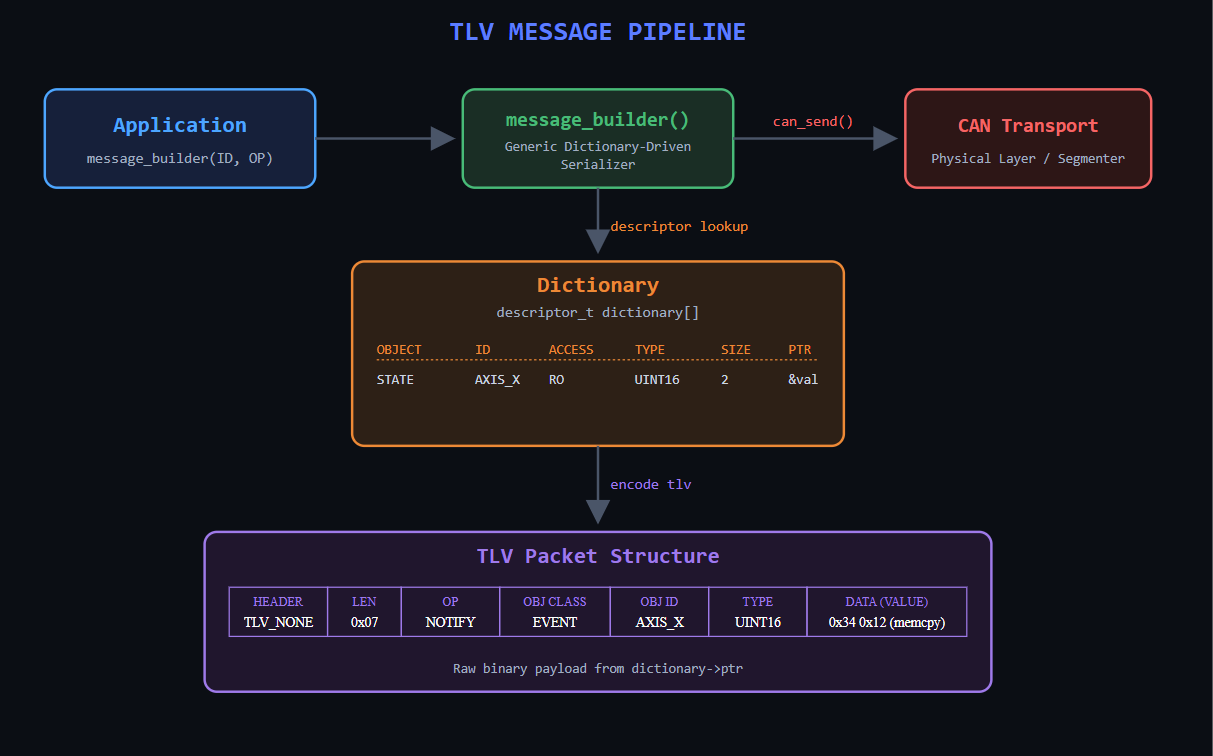
    The message builder searches this table and automatically serializes the requested data.

    This means that adding a new object normally requires only adding a new descriptor to the dictionary, without modifying the serializer itself.

    ## Two Message Types

    At the moment, the protocol uses two basic message types.

    1. Single-object message

    A TLV_NONE message transfers one complete object together with its value:

    TLV_NONE length OP_NOTIFY OBJECT_EVENT AXIS_X UINT16 value

    This is used when the module needs to transmit an actual value or event.

    2. Enumeration message

    A TLV_LIST message is used for discovery.

    For example, the main controller can request the properties supported by a module. The module then generates the response from its descriptor table:

    TLV_LIST length OP_RESPONSE OBJECT_PROPERTY AXIS_X ACCESS_RO AXIS_Y ACCESS_RO AXIS_CENTER ACCESS_RW

    The same mechanism can be used to enumerate supported commands, events, metadata, and other objects:

    TLV_LIST length OP_RESPONSE OBJECT_METADATA FIRMWARE_VERSION ACCESS_RO INTERFACE_VERSION  ACCESS_RO MODULE_DIRECTION ACCESS_RO MODULE_GEOMETRY ACCESS_RO MODULE_TYPE_ID ACCESS_RO

    This allows the main controller to discover the capabilities of a module.

    A message is identified not only by the TLV header, but also by the least significant bit of the module CAN address.

    The module uses this bit to indicate the beginning of a TLV message. Therefore, the receiver use both the CAN identifier and the first TLV field to determine where a new message starts.

    ## Universal Message Serializer

    The main message-building function is:

    void message_builder(uint16_t header,uint16_t operation, uint16_t object,uint16_t tag_id);

    The builder performs three main steps:

    Dictionary lookup
    TLV packet encoding
    Transfer of the resulting binary data to the CAN transport layer

    The important part of this architecture is its scalability.

    Adding a new hardware module does not require changing the protocol or serializer. The module only needs its own descriptor table describing its objects and data.

    The same serializer can therefore be reused for future Molde modules such as displays, LED matrices, sensors, relays, and other devices.

    The communication layer remains completely generic, while the description of each individual module is contained in its descriptor table.

    Picture 1. TLV MESSAGE PIPELINE

    Dictionary-driven TLV message pipeline used...

    Read more »

  • Experimental Module Prototypes

    Oleg07/24/2026 at 13:52 0 comments

    Today Molde reached another important milestone.

    ## Modules.

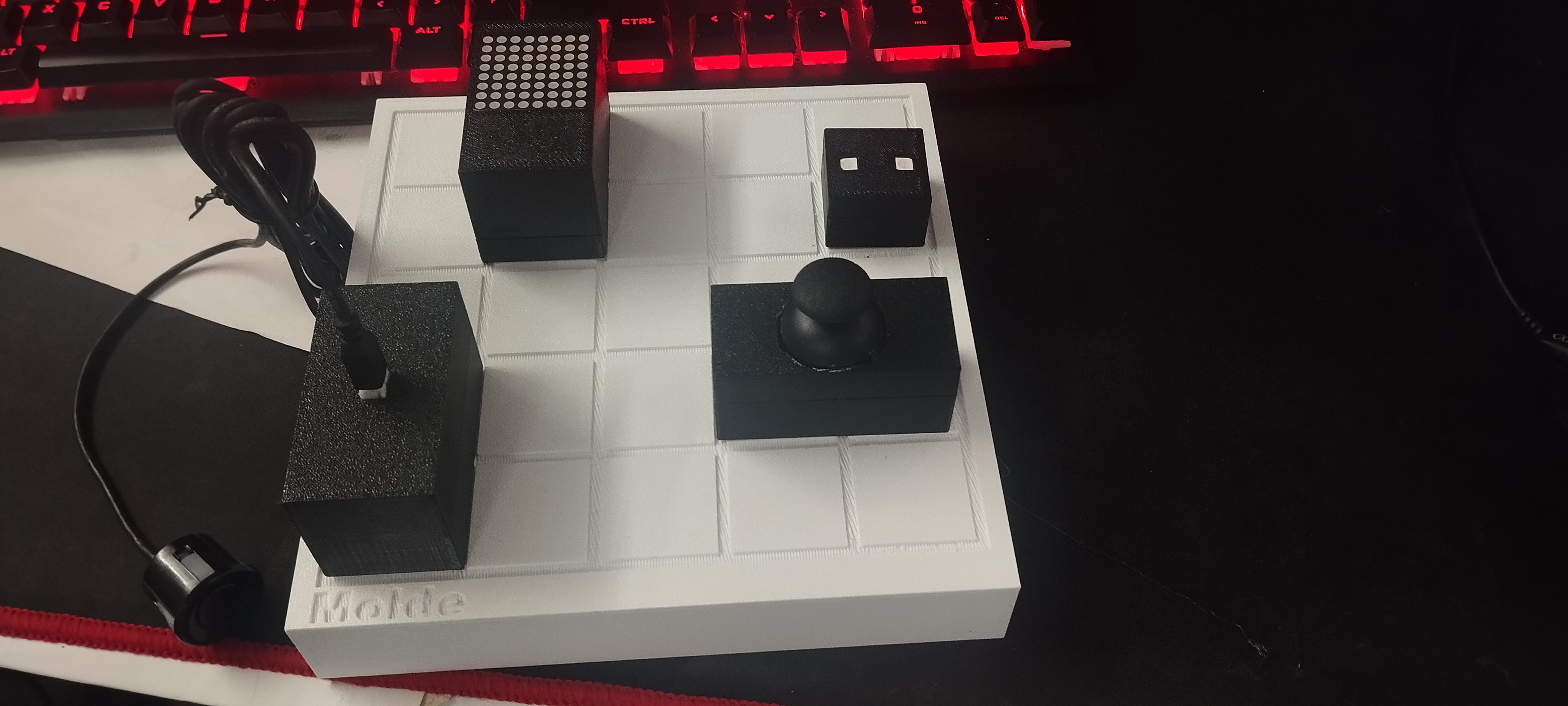
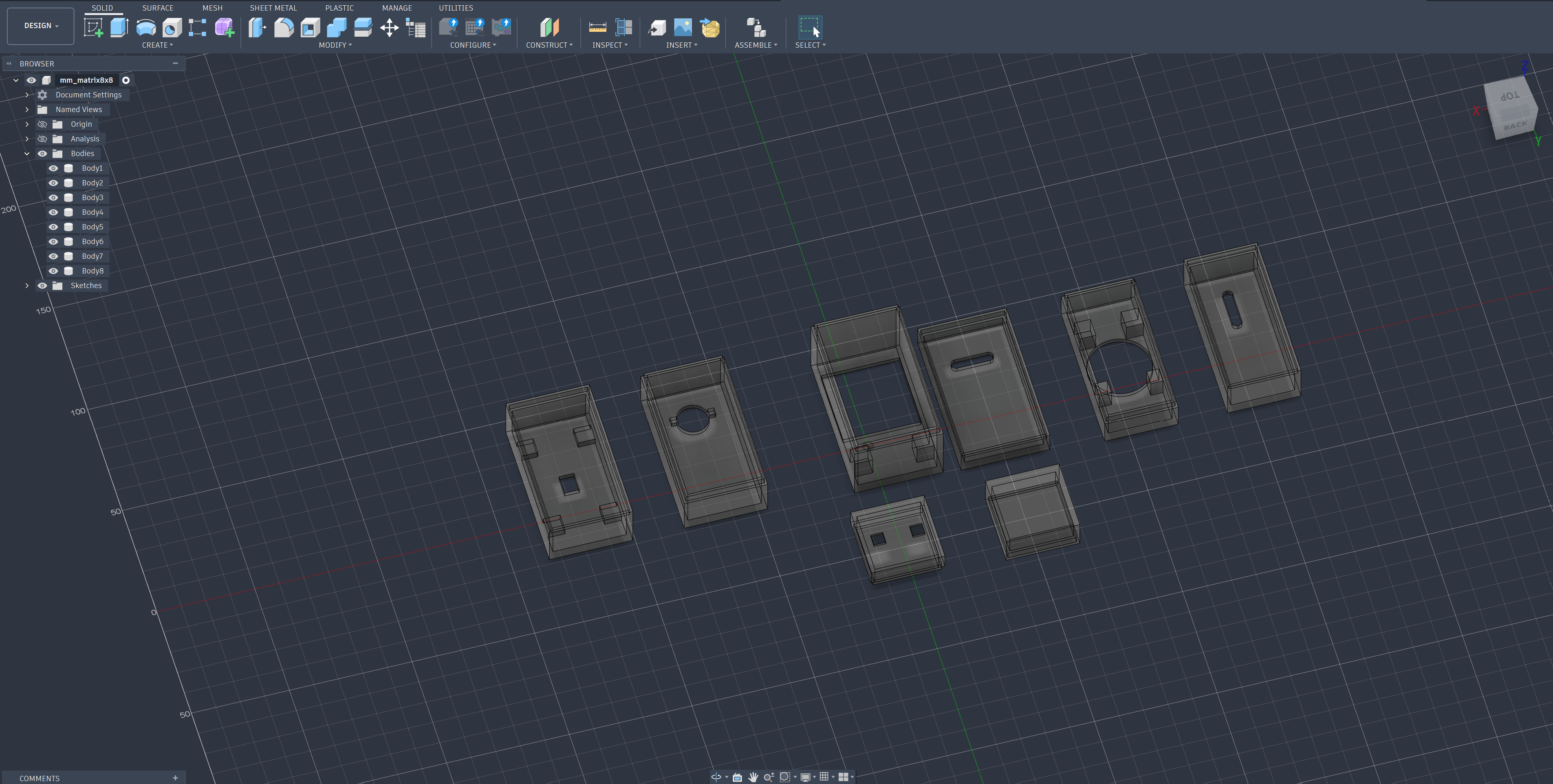
    The first set of experimental modules has been designed and 3D printed. These are not intended to become final products—they are simply test platforms for evaluating mechanics, connectors and future electronics.

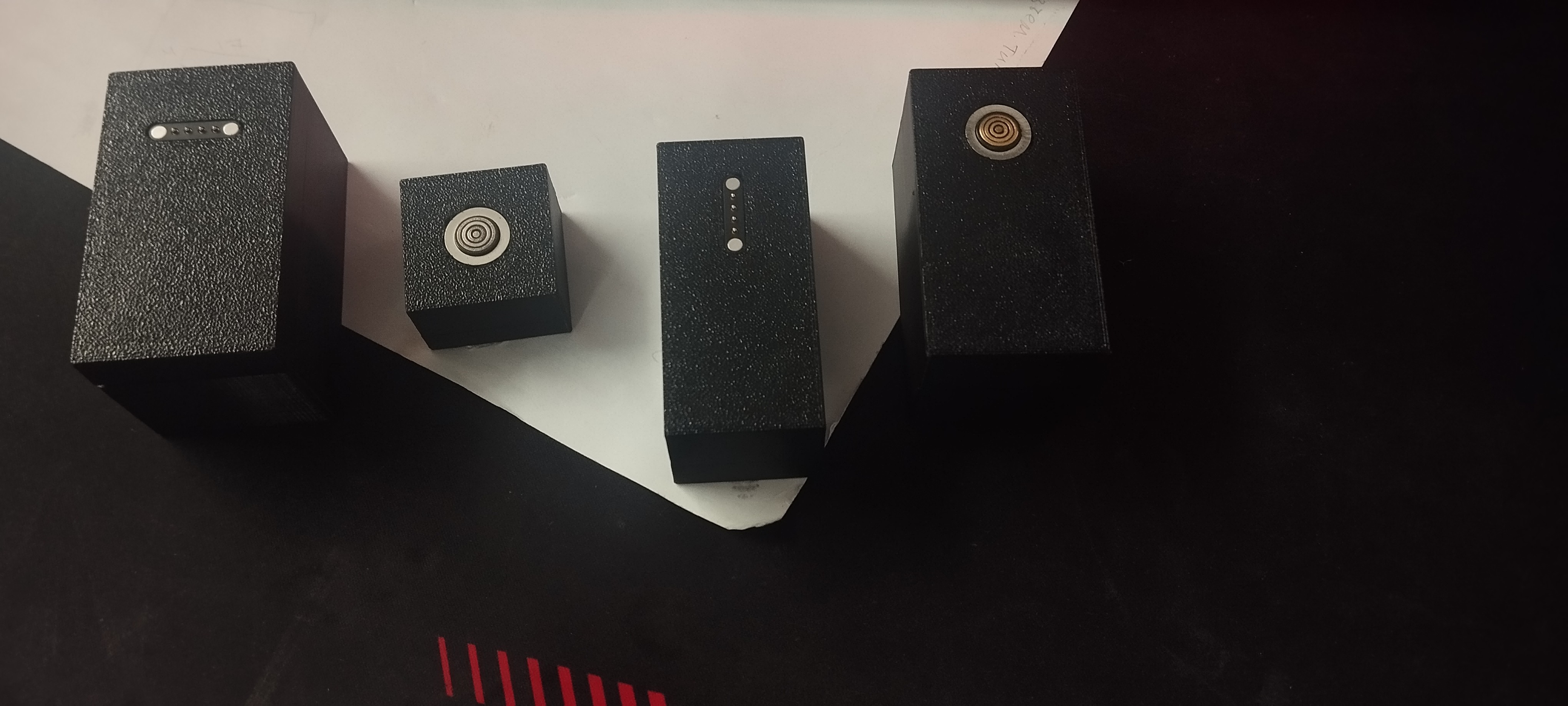
    At the moment I have 4 magnetic connector pairs available  only, so I builded 4 different modules. Some are designed as 1×1 modules, while others occupy 1×2 cells. Supporting different module sizes has been part of the concept from the beginning.

    Current modules:

    2-axis analog joystick with push button

    8×8 LED matrix (MAX7219)

    Ultrasonic distance sensor

    Dual RGB LED module.

    I use MCU CH32V203 for driving each module ( any recommendations?).

    ## The Main Panel Evolves

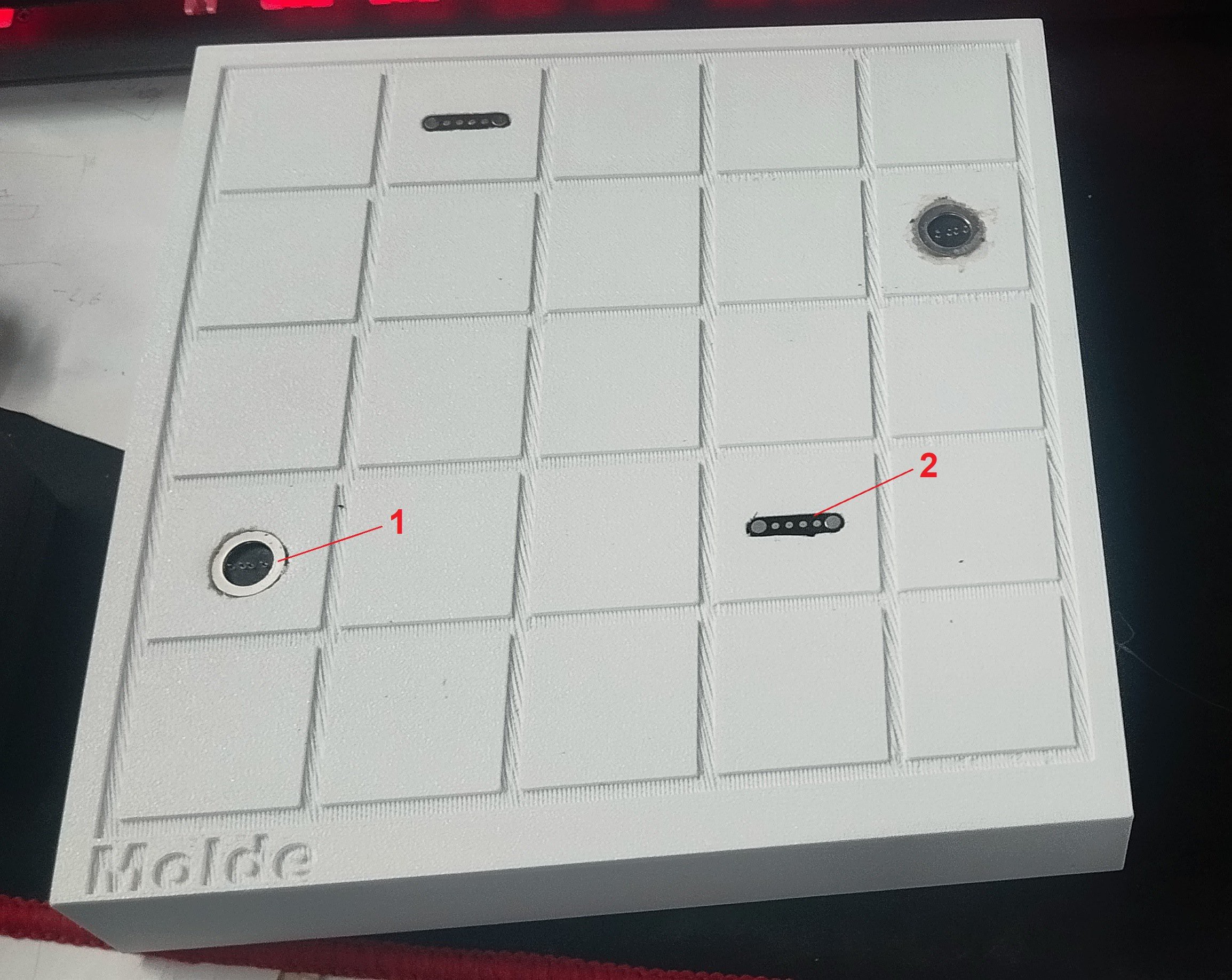
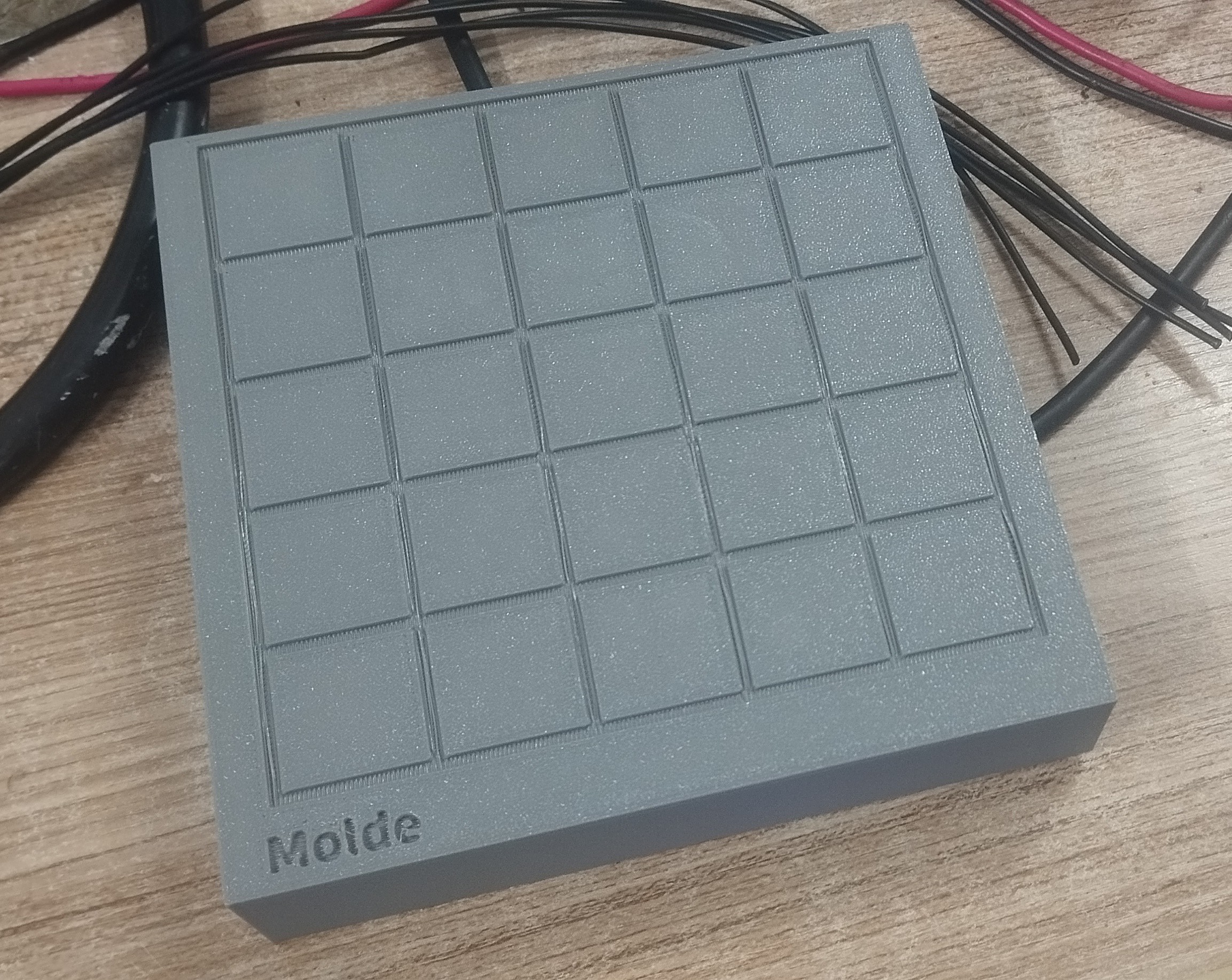
    First printed panel 25×25 mm grid but after that I redesigned the base and increased the cell size to 30×30 mm. It already feels more comfortable, but I'm still not convinced this is the final size.

    Possible directions:

    reduce to 20×20 mm;

    increase to 35×35 mm;

    keep 30×30 mm but change the spacing between cells.

    ## Connector Evaluation

    One of the big open question is still the magnetic connector.

    So far I'm testing two different concepts.

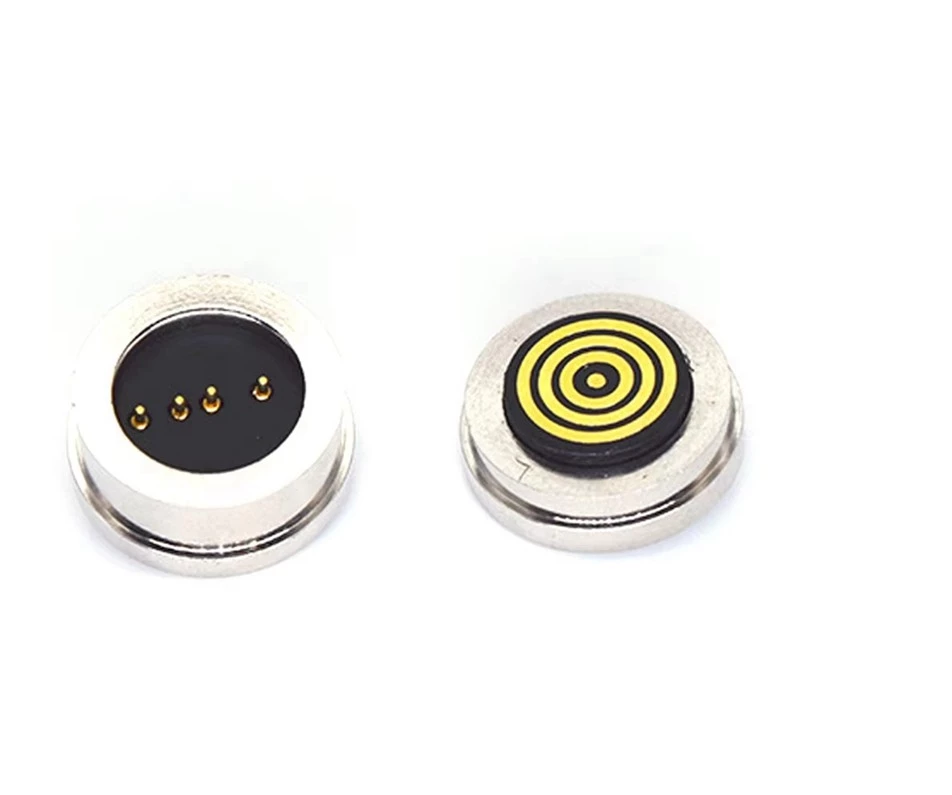
    Type 1 — Circular connector

    allows free module rotation.

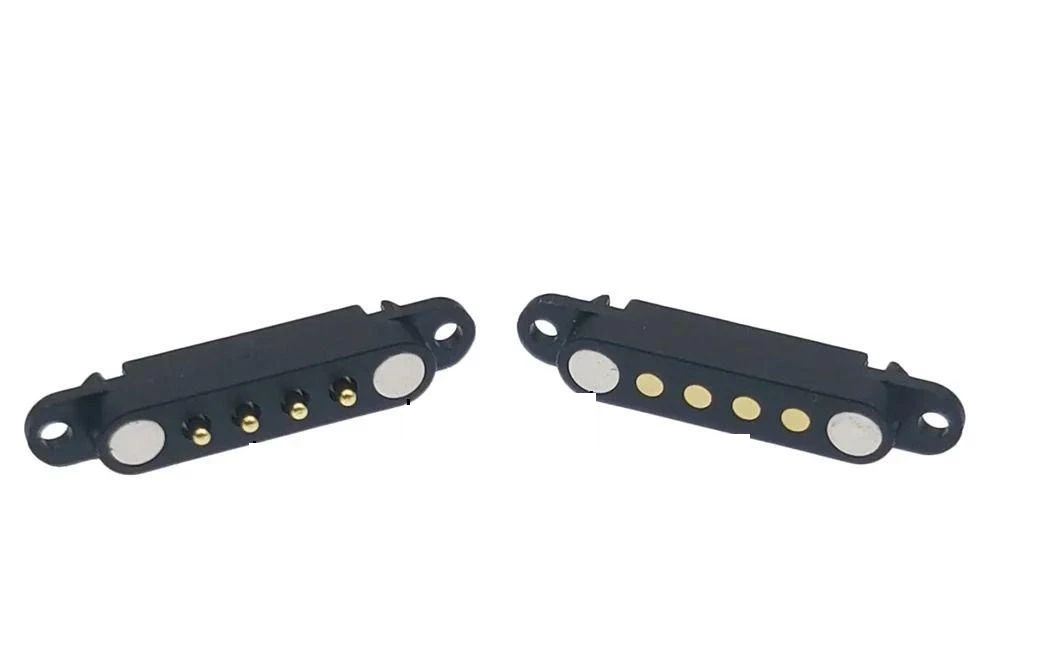
    Type 2 — Linear connector

    noticeably stronger magnetic attraction;

    aligns modules much more accurately.

    At this point I honestly don't know which solution is better. The circular connector offers more freedom. The linear connector offers better precision.

    ## Next Steps

    Develop the initial firmware for the CH32V203-based modules.

    Assemble the electronics for the Main Board prototype.

    One step closer. See you in the next update.

  • The First Physical Prototype

    Oleg07/18/2026 at 17:37 0 comments

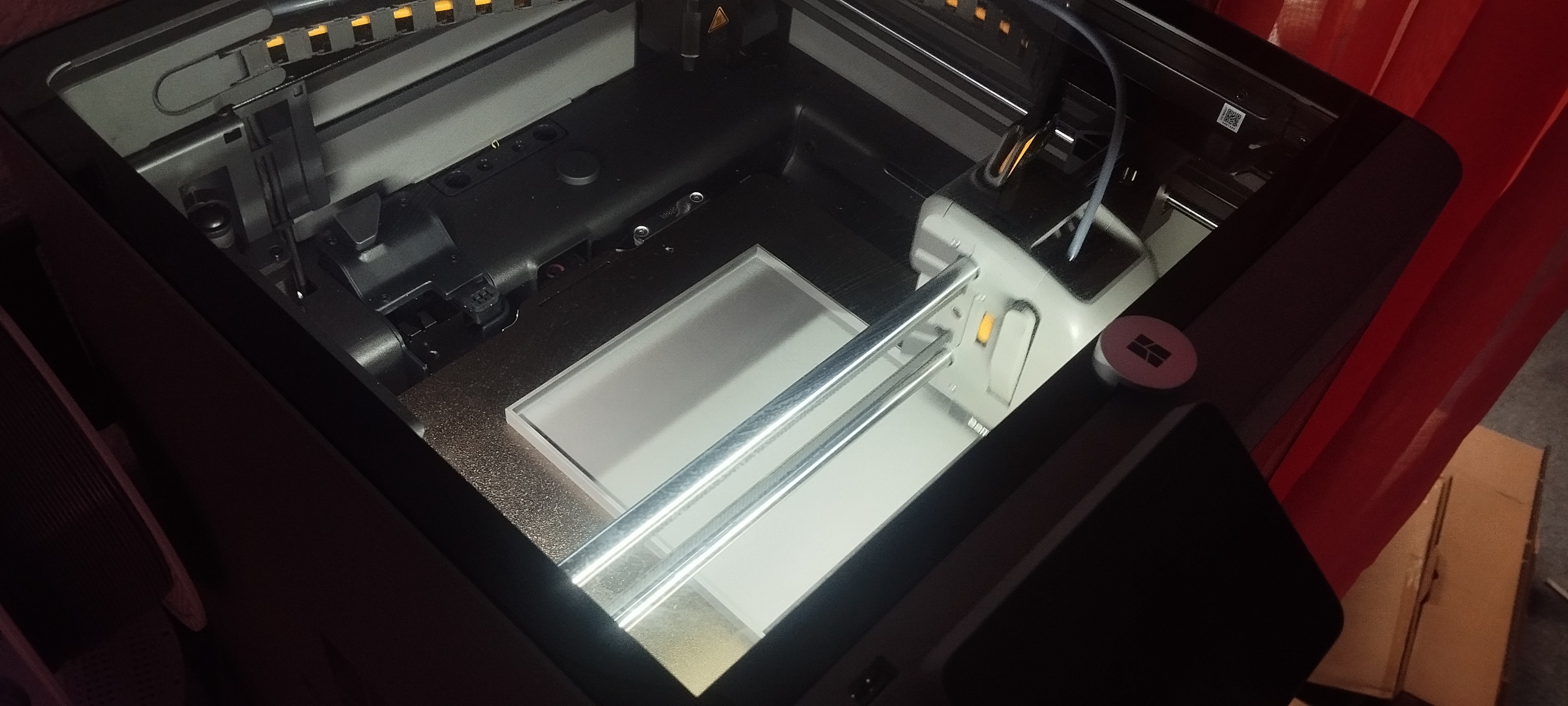
    Today Molde took its first physical form.

    I 3D printed the first 5×5 prototype panel...

    The panel uses a 5×5 grid with 25×25 mm cells.

    Im not sure about size yet but anyway its a good starting point. 

    The next step is turning this mechanical prototype into an interactive hardware platform.

    ## Connector Evaluation

    I also ordered two different types of magnetic connectors for evaluation.

    Each one has pros and cons. Will see

    ## Next Steps
    Design the first test modules. 
    3D design and print boxes.
    Try to Integrate both connector types.
    Evaluate electrical reliability and holding force.

    One step closer. See you in the next update.

  • Project Goals

    Oleg07/17/2026 at 15:50 0 comments

    # Project Goals

    Molde has begun.

    This project is still at a very early stage. There are no working prototypes yet, and many engineering decisions are still ahead.

    The purpose of this log is to document the initial goals of the project before development begins.

    ## Main Goals

    - Create a modular hardware platform.
    - Use magnetic modules that can be placed anywhere on the panel.
    - Build a universal interactive base with reusable hardware modules.
    - Make the platform open source.
    - Keep the system simple enough for beginners, yet powerful enough for experienced developers.

    ## Long-Term Vision

    Users should be able to assemble, rearrange, and reuse hardware modules within seconds.

    ## Current Status

    At the moment, I have:

    - the initial concept;
    - several ideas that need to be validated.

    The next step is to validate the core mechanical and electrical concepts before designing the first Main Board.

View all 4 project logs

Enjoy this project?

Share

Discussions

Similar Projects

Does this project spark your interest?

Become a member to follow this project and never miss any updates