Close
0%
0%

Soft Start & Speed Control for Angle Grinder

Limits the high starting current and allows the motor to start more smoothly.Allows the motor speed to be adjusted using a potentiometer.

Similar projects worth following
0 followers
An angle grinder can jerk suddenly when it is switched on directly from the AC mains. This sudden start can be uncomfortable and may create a safety risk for the user.

In this project, I designed a compact Soft Start and Speed Control circuit for an angle grinder.

The circuit has two main functions:

Soft Start: Limits the high starting current and allows the motor to start more smoothly.
Speed Control: Allows the motor speed to be adjusted using a potentiometer.

The circuit uses two 120-ohm, 5-watt resistors for the Soft Start function and a 12-volt DPDT relay to bypass the resistors after approximately 2 seconds.

For speed control, a BTA41 TRIAC is used to control the AC power supplied to the motor.

The PCB is compact and can be adapted for other motor-driven power tools such as drills and cutting machines.

Let's build it!

This project is a compact Soft Start and Speed Control circuit for an angle grinder. The PCB from JLCPCB.

The circuit combines two functions on a single PCB. The Soft Start section uses two 120-ohm, 5-watt resistors to limit the high starting current and reduce the sudden jerk when the grinder is switched on. After approximately 2 seconds, a 12-volt DPDT relay bypasses the resistors and connects the motor directly to the AC power.

The second section uses a BTA41 TRIAC to control the motor speed. The output voltage can be adjusted using a potentiometer, while a small trimmer is used to set the minimum output voltage.

I designed the PCB to be compact and easy to integrate with different power tools. The circuit can be used not only for angle grinders, but also for drills, cutting machines, and other suitable motor-driven tools.

In this project, I will document the complete process, from schematic design and PCB manufacturing to component assembly and testing.

WARNING: This circuit operates directly from 220-volt AC mains voltage. Proper electrical safety precautions must be followed during assembly and testing.
  • 1
    DIY Soft Start & Speed Control for Angle Grinder

    An angle grinder can jerk suddenly when it is switched on directly from the AC mains. This sudden start can be uncomfortable and may create a safety risk for the user.  The PCB of this project from JLCPCB

    In this project, I designed a compact Soft Start and Speed Control circuit for an angle grinder.

    The circuit has two main functions:

    • Soft Start: Limits the high starting current and allows the motor to start more smoothly.
    • Speed Control: Allows the motor speed to be adjusted using a potentiometer.

    The circuit uses two 120-ohm, 5-watt resistors for the Soft Start function and a 12-volt DPDT relay to bypass the resistors after approximately 2 seconds.

    For speed control, a BTA41 TRIAC is used to control the AC power supplied to the motor.

    The PCB is compact and can be adapted for other motor-driven power tools such as drills and cutting machines.

    Let's build it!

  • 2
    The Schematic

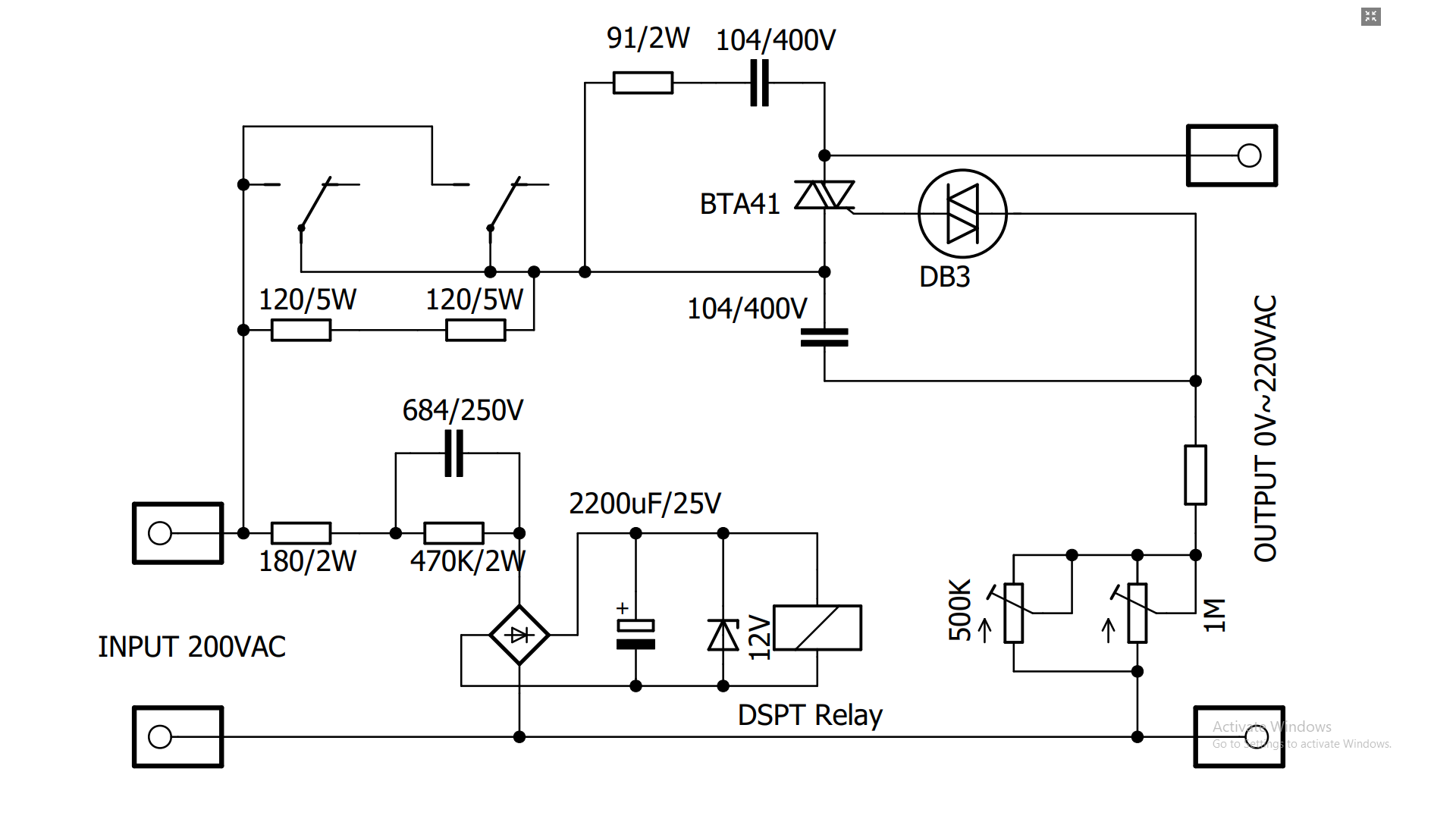
    The circuit consists of two main sections: the Soft Start and Speed Control circuits.

    The Soft Start section uses two 120-ohm, 5-watt resistors to limit the starting current.

    When the grinder is switched on, the motor initially receives power through these resistors. After approximately 2 seconds, the relay activates and connects the motor directly to the AC mains.

    The Speed Control section uses a BTA41 TRIAC to adjust the motor speed.

  • 3
    PCB Design

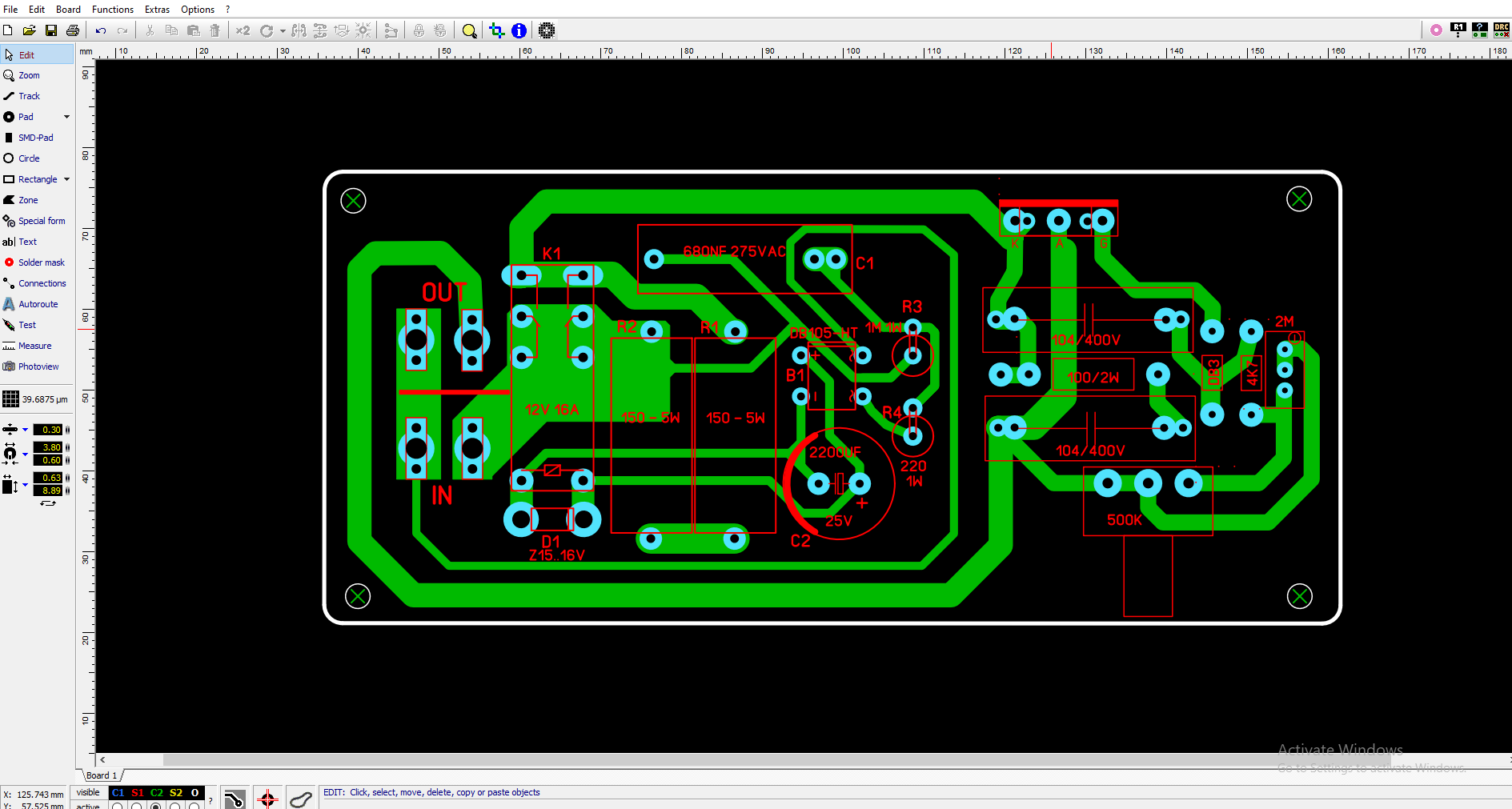
    After completing the schematic, I designed a compact PCB to fit all the components into a small space.

    The PCB contains the Soft Start circuit, relay, power supply section, TRIAC Speed Control, and adjustment potentiometers.

    The goal was to keep the board as compact as possible while maintaining enough space between the high-voltage sections.

View all 9 instructions

Enjoy this project?

Share

Discussions

Does this project spark your interest?

Become a member to follow this project and never miss any updates