 Mindaugas Mickus


## How Dynamic Zero Works
Dynamic Zero uses the pneumatic state retained from the preceding half-cycle as part of the interaction that creates the new acoustic state.
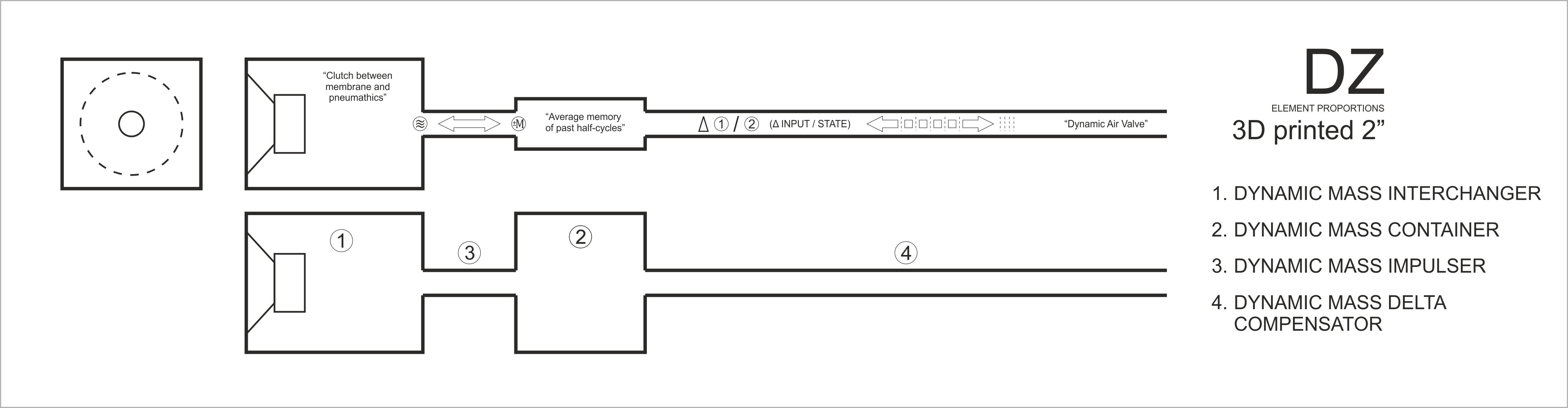
The previous pneumatic state does not disappear when the next half-cycle begins. Pressure distribution and air-mass momentum remain physically present inside the DZ network and interact with the new driver input.
### MOPA Analogy
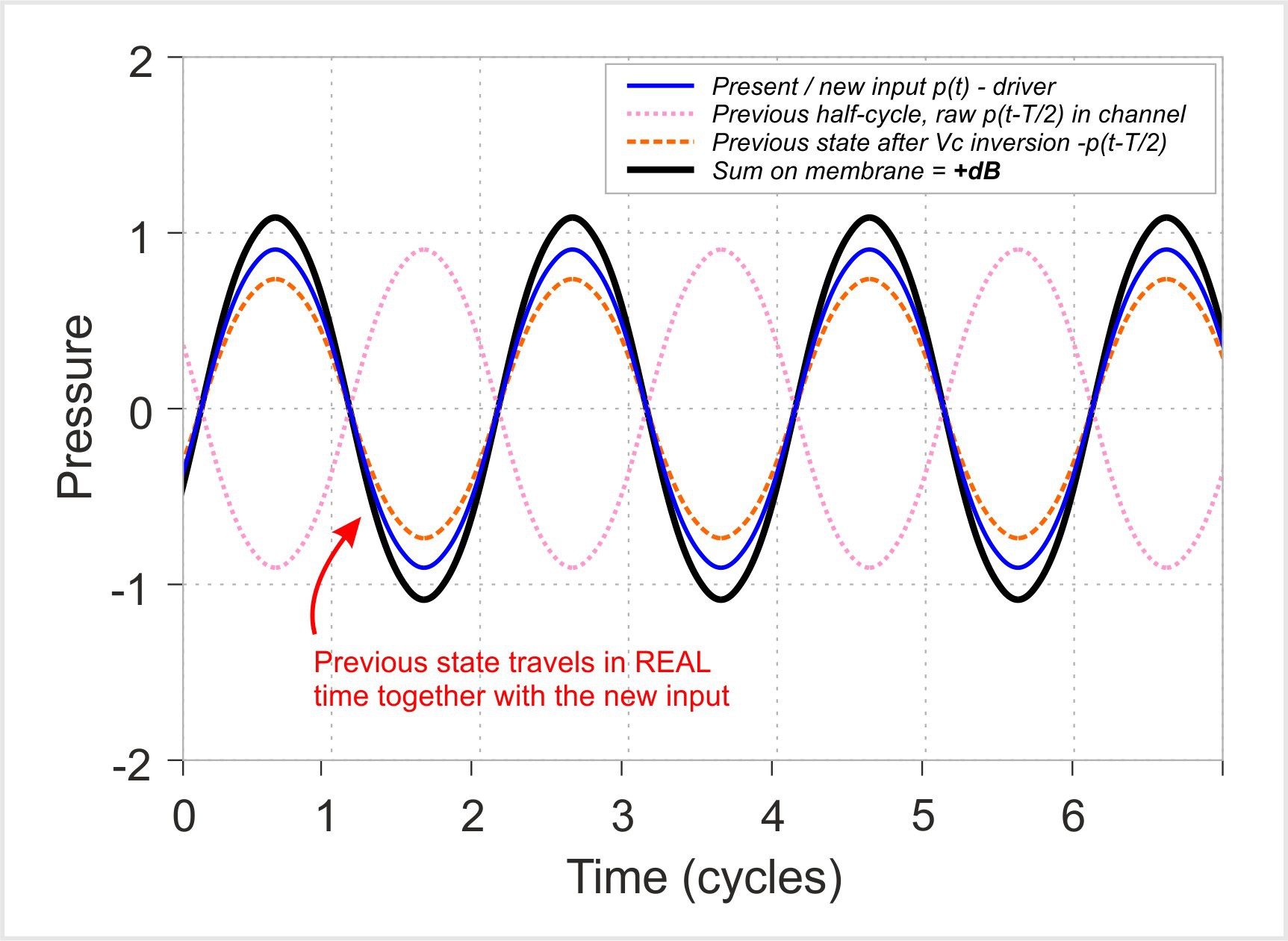
A useful conceptual analogy is a Master Oscillator Power Amplifier (MOPA). DZ is not an acoustic implementation of an optical MOPA; the analogy refers only to combining retained energy from a preceding state with new input energy.
In the ideal periodic T/2 case:
p(t-T/2) = -p(t)
After pneumatic inversion:
p(t) + [-p(t-T/2)] = 2p(t)
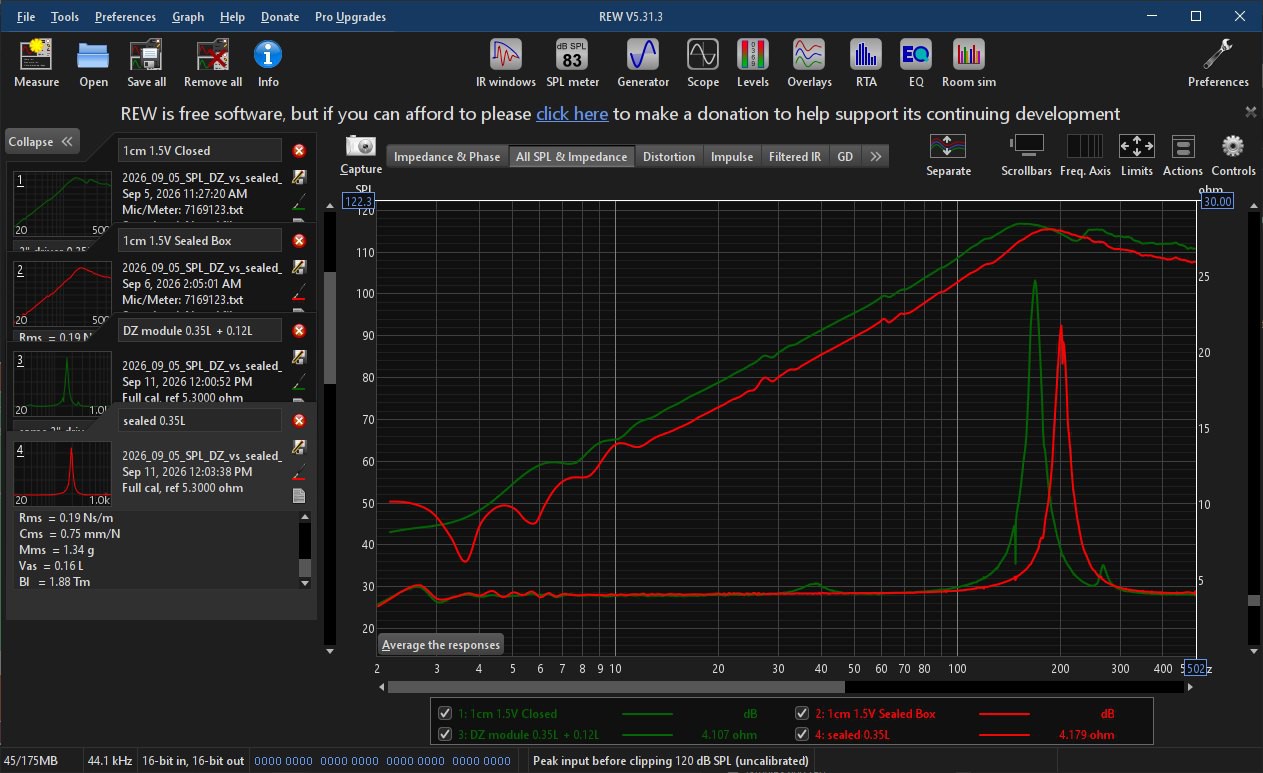
The ideal pressure ratio is therefore 2:1, corresponding to approximately +6 dB. This theoretical value cannot be achieved in a real DZ system due to unavoidable losses.
The important point is simple:
**The new input does not start from zero. It interacts with energy retained from the preceding state.**
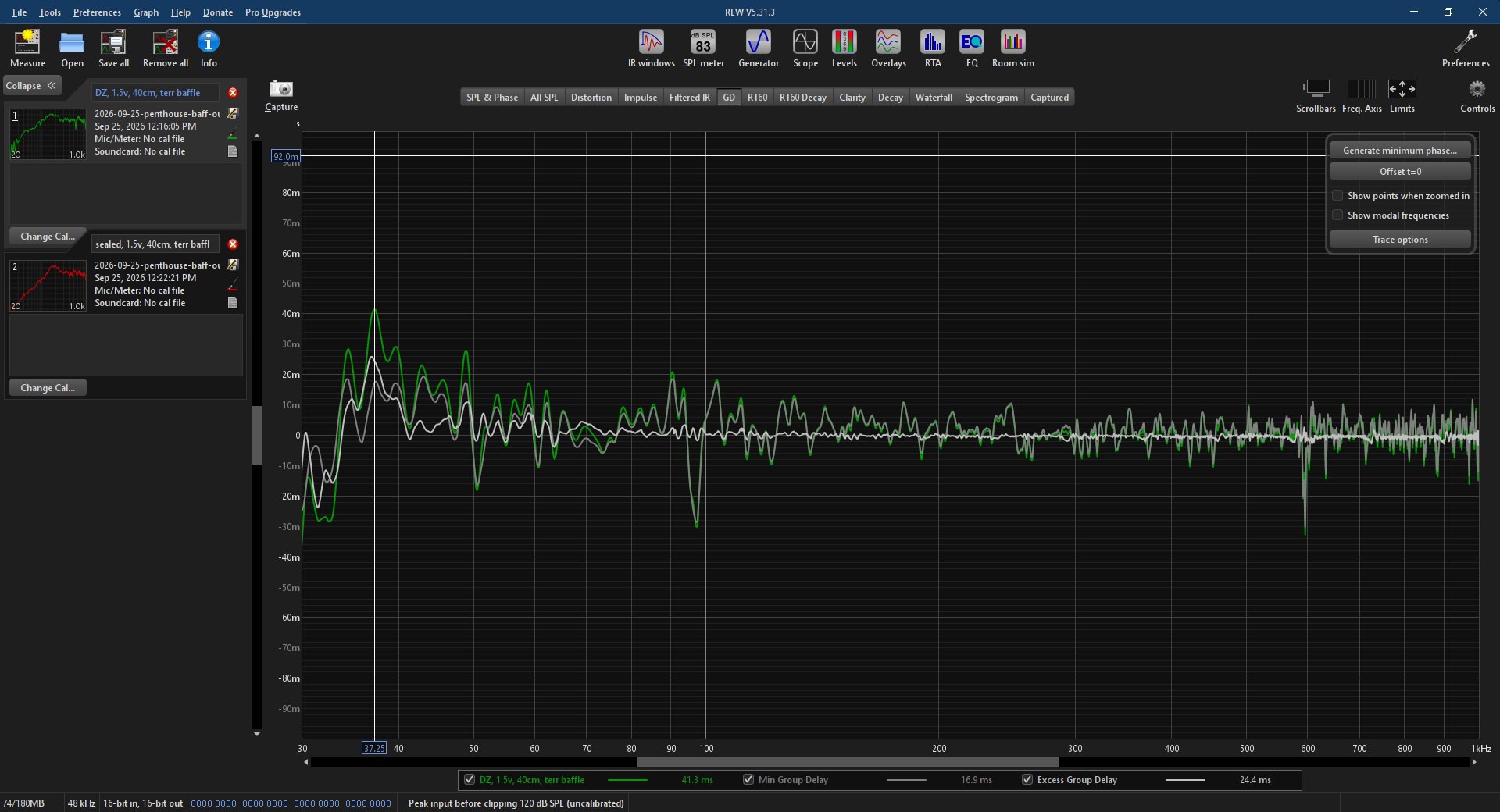
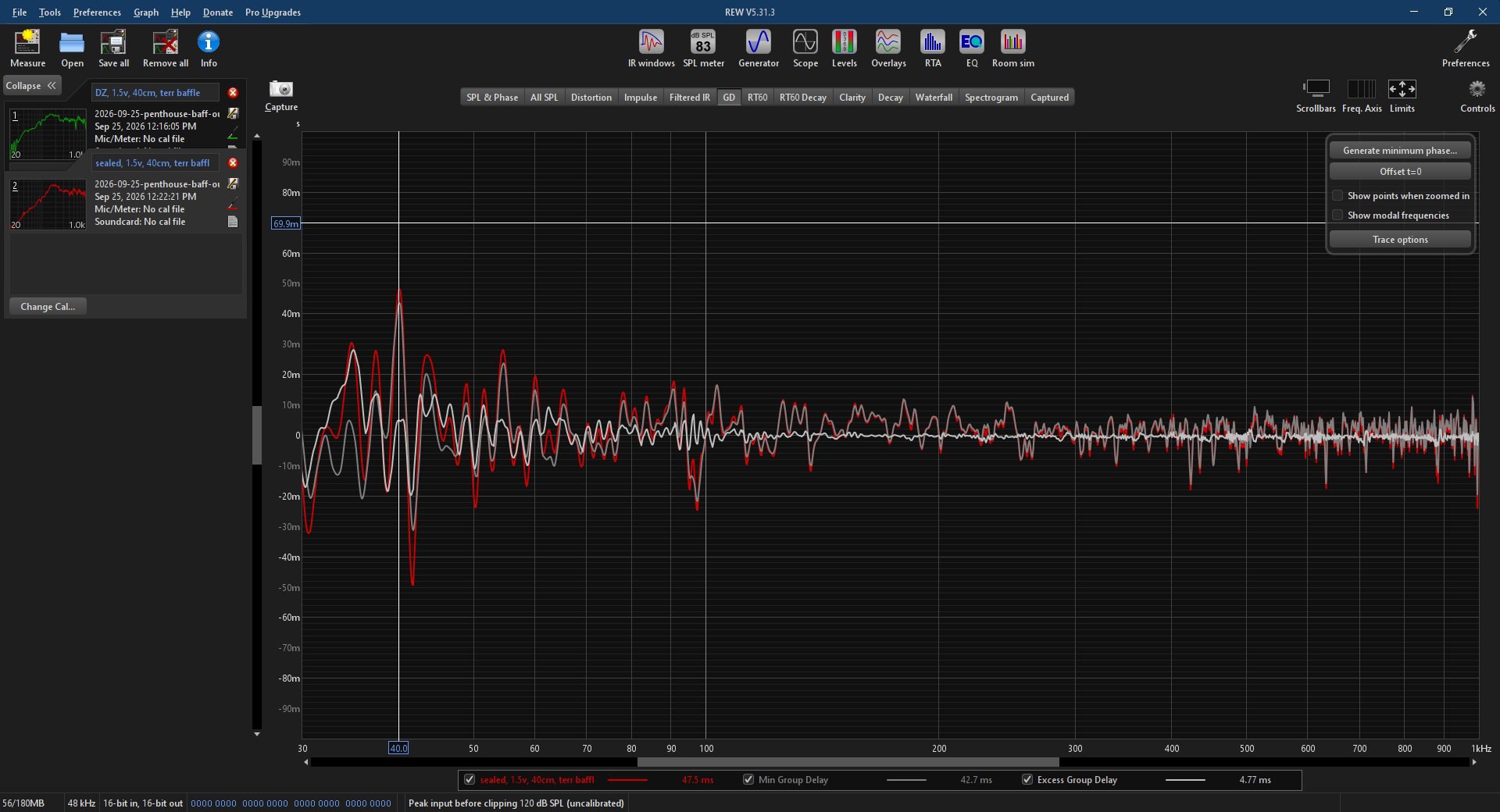
DZ is not tuned by resonance. Internal resonances inevitably exist, but they are treated as parasitic conditions to be minimized rather than as the operating mechanism.

 Alan Cyr

 gpicron

 nobcha


 Bart//Bratke