 Alan Cyr

THE PRIORITY ORDER
━━━━━━━━━━━━━━━━━━━━━━━━━━━━━━━━━━━━━━━━━━━━━━━━━━━━━━━━━━━━━━━━━━━━━━
First: low power consumption.
Second: speed of work output.
Byproducts like desalination: real and valuable, separate from the
primary design goals.
Earth first. Man second.
Every design decision in this system follows that order. Not as a
slogan -- as an engineering constraint that shaped every circuit.
━━━━━━━━━━━━━━━━━━━━━━━━━━━━━━━━━━━━━━━━━━━━━━━━━━━━━━━━━━━━━━━━━━━━━━
THE PROBLEM BEING SOLVED
━━━━━━━━━━━━━━━━━━━━━━━━━━━━━━━━━━━━━━━━━━━━━━━━━━━━━━━━━━━━━━━━━━━━━━
The AI industry's current trajectory: build $5B-$15B nuclear power plants
to run inference on architectures that generate most of their heat before
doing any useful computation. Clock trees. Decode trees. Memory bank
access. Bus traversal. All of it generating heat on every token lookup,
every millisecond, at gigahertz speeds.
The structural response: eliminate the overhead architecturally, generate
the remaining power from tidal flow, recover the motor energy that would
otherwise dissipate as heat, and cool the facility with the same motor
technology that generates the power.
None of these are optimizations. They are structural replacements.
━━━━━━━━━━━━━━━━━━━━━━━━━━━━━━━━━━━━━━━━━━━━━━━━━━━━━━━━━━━━━━━━━━━━━━
LAYER 1: POWER GENERATION
━━━━━━━━━━━━━━━━━━━━━━━━━━━━━━━━━━━━━━━━━━━━━━━━━━━━━━━━━━━━━━━━━━━━━━
THE TIDAL PULSE TOWER
~290kW per tower. LCOE ~0.123 cents/kWh. Build cost ~$153K. Firm floor
145kW. Net wind value $1.18M/yr per tower. Fuel: zero. Emissions: zero.
The tower uses an annular vortex design with dual-Pelton wheels on a
common shaft. The center tube performs three functions simultaneously:
air highway (air rises freely while water falls in annular), structural
spine (fliprole of hourglass), and vortex core (the Rankine solid body).
18+ innovations. All public domain.
THE TRIPLE DRIVE PMM/PMG COMBO
The Triple Drive version of the Permanent Magnet Motor/Generator compound
runs at a 4:1 wheel ratio (inner 9, outer 36). Four points push and pull
simultaneously. At any moment when one cog on any single rotor is in phase,
the electromagnetic pass-and-collect cycle captures BEMF.
The single PMM runs at a 2:1 ratio. The Triple Drive compounds this to 4:1
-- four active push/pull points versus one, with the same structural BEMF
recovery available at each phase crossing.
The 38.17 degree extraction angle: peak EMF does not occur at dead center
alignment. It occurs at arcsin(phi-1) = arcsin(0.618) = 38.17 degrees
before it. This has been confirmed in combustion engine ignition timing
for 140 years. Applied here to generator design, it eliminates the peak
EMF vs peak cog fighting that standard generators accept as unavoidable.
THE HOURGLASS GENERATOR
Dual-Pelton annular vortex. Air and water fully separated throughout
the cycle -- no competition, no alignment. PMG stays energized.
Continuous output with zero dead zones.
PMM COOLING FANS
The same PMM design that generates facility power also drives the cooling
fans. Precision, efficient, and subject to the same BEMF recovery as
the generators. The Adaptive Switching principle (Fibonacci-integer
switching frequencies, see below) eliminates beat frequency heat from
the fan motors as well as the generators.
━━━━━━━━━━━━━━━━━━━━━━━━━━━━━━━━━━━━━━━━━━━━━━━━━━━━━━━━━━━━━━━━━━━━━━
LAYER 2: POWER DISTRIBUTION AND STORAGE
━━━━━━━━━━━━━━━━━━━━━━━━━━━━━━━━━━━━━━━━━━━━━━━━━━━━━━━━━━━━━━━━━━━━━━
PHWM / SPLIT POSITIVE / PASS THE BUCK TOPOLOGY
Pulse Height Width Modulation with Split Positive multi-stack architecture.
The boost and motor drive circuits float between positive rails at all times.
Ground contact exists only at battery stacks, controls, and the BEMF
collapse diode -- never in the motor drive path during active phases.
Four-phase energy cycle per pulse:
Phase 1 Boost: source stack pulses through coil, sinking to lower
storage stack as boost reference. Capacitor charges above supply voltage.
Phase 2 Drive: elevated pulse releases through motor coil. Mechanical
...
Read more »
 Anteneh Gashaw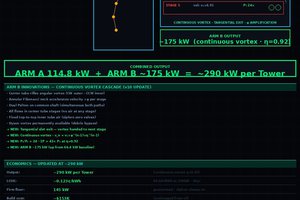

 sean d'epagnier