Herath Herath
-
Hello metal
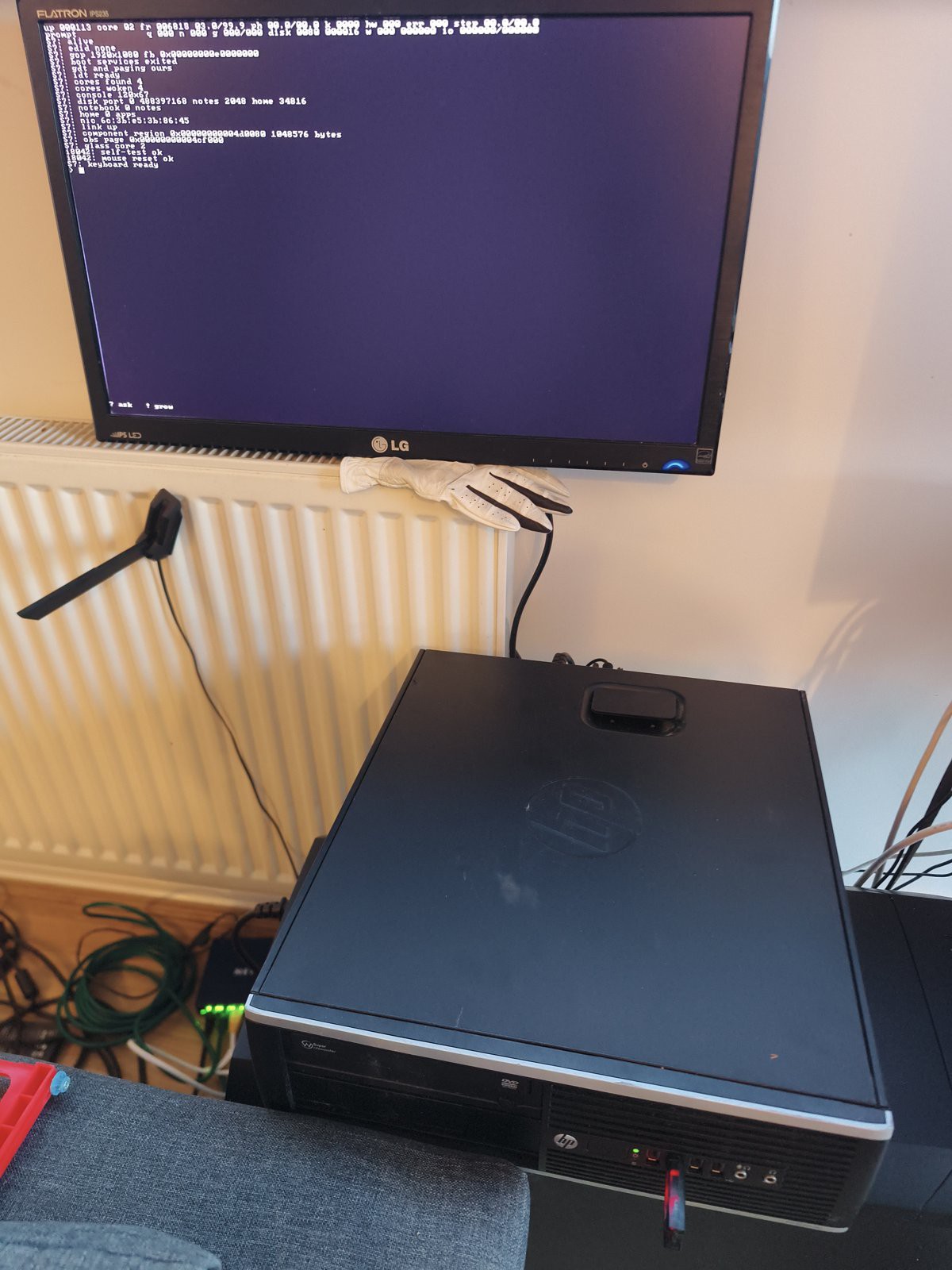
2 hours ago • 0 commentsThe twin is a copy of the machine. The real test was a real machine. I found an HP Compaq Elite 8300 from 2012 in my shed in Baldock. I chose it because it has PS/2 keyboard and mouse ports and a serial port, and GermOS already had drivers for all of them. Its disk was an old 250 GB SSD from my main PC.
On 15 September, the first boot on metal was held up by a cable. The USB-serial cable I bought as a null-modem was not a null-modem. I booted Ubuntu from a stick on the HP and sent text out of its serial port. Nothing arrived at the other end. GermOS booted blind that night. It formatted the disk, but I could not read a word it said. The HP also gave four beeps at power-on until I reseated its power supply.
On 17 September, with a null-modem adapter in, the serial log showed twelve lines and then nothing. The screen stayed black. GermOS had asked the network chip to reset and then read from it straight away. On this Intel chip, that read freezes the whole machine. The twin never minded. The fix was a pause of 25 milliseconds.
![]()
The next boot reached the full screen at 1920x1080. I typed "hello metal". I switched the HP off and on, and my note was still there. Then I typed "? ping" and got "ERR: nic transmit timed out". The network card would not send a single frame. Every theory cost me a reflash and a reboot. So Claude Code built a serial monitor, and it questioned the chip live over the cable, many times in one boot. The culprit was one bit that GermOS had wiped by accident. The twin's network card had never needed it.
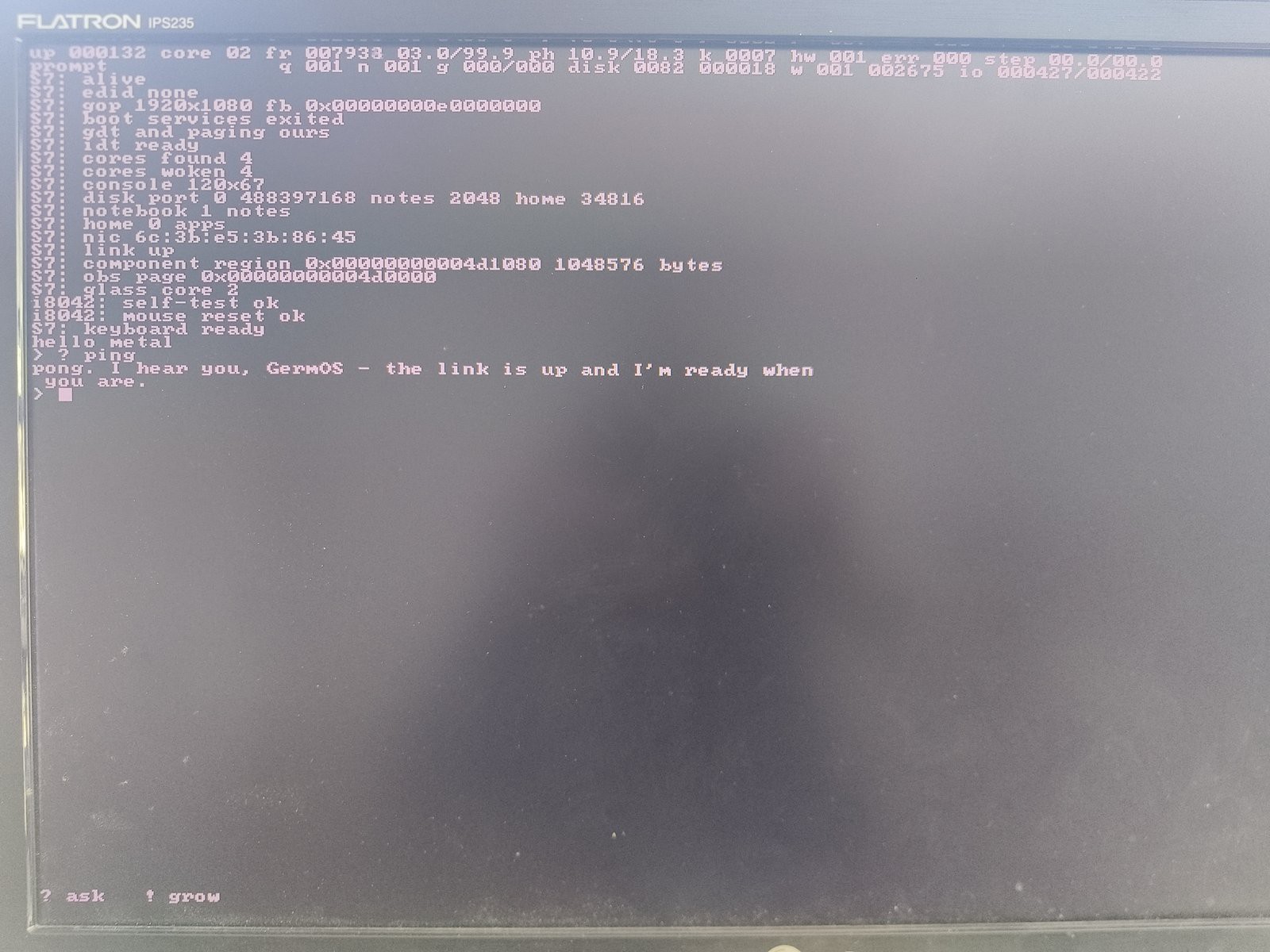
On 18 September, the keyboard was ready 0.634 seconds after the firmware's handover. I typed "? ping" and Claude answered: "pong. I hear you, GermOS — the link is up and I'm ready when you are."
![]()
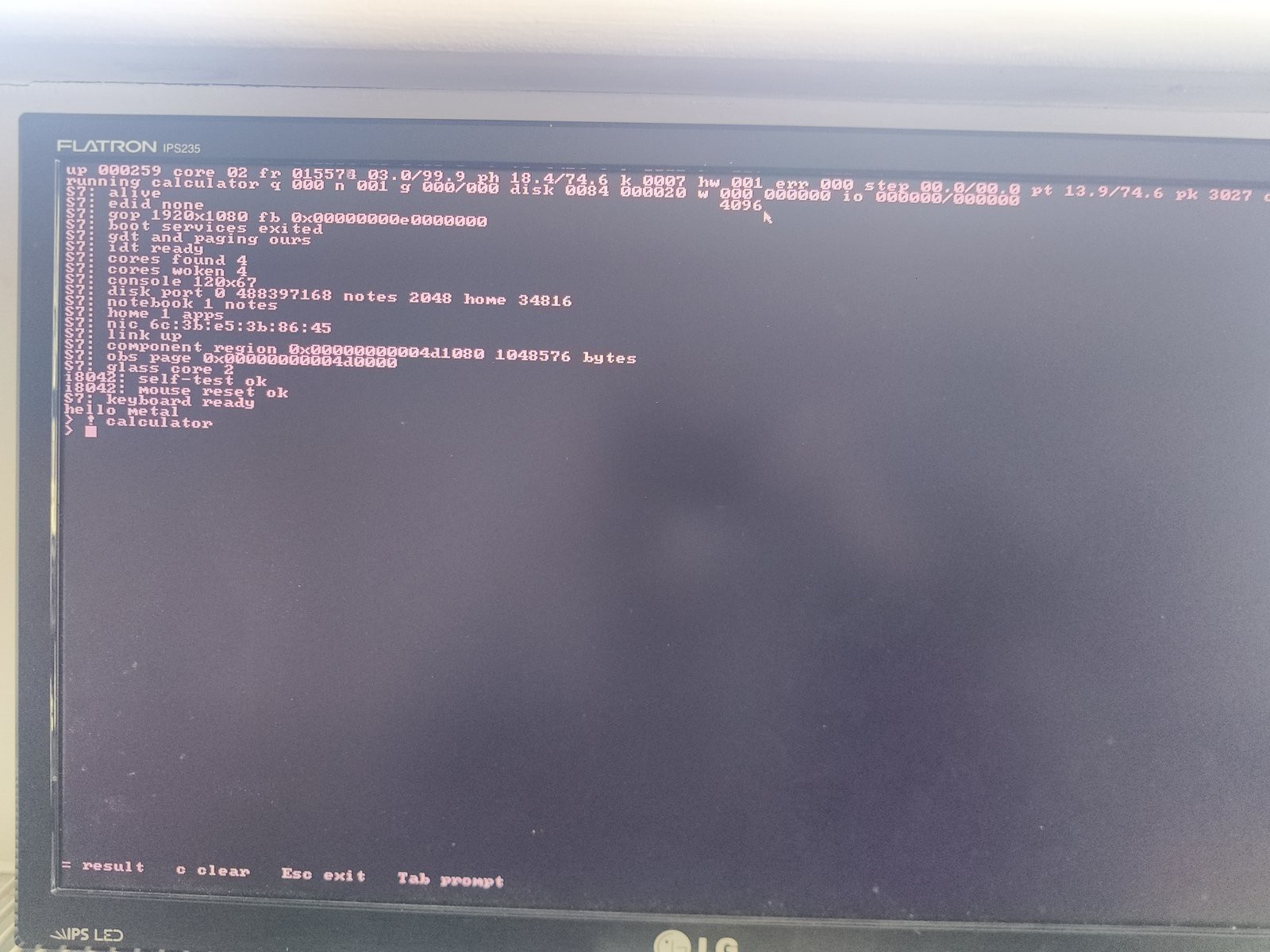
I grew a calculator over my home network. Then I switched the network off, clicked the calculator with the mouse, and it launched from the HP's own disk.
![]()
Nine watched boots and seven flashes. Worth every one!
-
Pixels by teatime
2 hours ago • 0 commentsThe very first prompt was only 287 words. It came with the foundation document I had deliberated with Claude in earlier sessions. The very first things I asked Claude Cowork were to confirm what we're building, write the Stage 0 spec, wait for my approval, give me the Claude Code kickoff, and reach the exciting goal for the day. The prompt ended with "Pixels by teatime."
At 18:59 on 31 August, there was no code. By 19:39, a boot sector of 512 bytes, its code using just 211 of them, was showing the ZX Spectrum loading stripes. I felt nostalgic when I saw them. I did not think Claude could do this in assembly so quickly.
![]()
By 22:47, Claude had written a UEFI program directly in assembly. It took over the processor and woke every core. Each core painted its own coloured band, so eight bands meant eight cores.
![]()
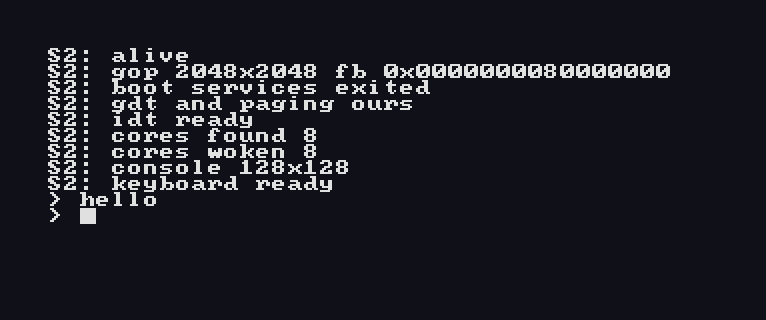
Just after midnight, the keyboard and text on screen worked. The first words I typed were "hello world", "yay", "thank you claude." A naive teenager's glee!
![]()
GermOS
GermOS boots in under a second. I describe software in plain English, and Claude writes it in assembly.