My home has 1-wire DS18B20 temperature sensors inside every light switch to report the room temperature to our loxone smart home system.
This is a very cost effective way of mounting the sensors. Approx £0.50 for the sensor and £0.50 for the connector. Links to the Aliexpress source are in the components list.
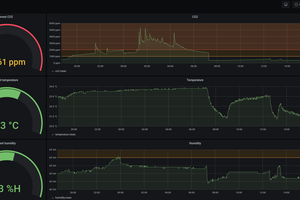
I've attached a screenshot of these working in from our loxone server.
@andrew.crockford Very clever idea! 9 years later would you still recommend the same approach or are there meanwhile better alternatives for “invisible” temperature (and ideally even humidity) sensing? And a small detail question: what’s the point of the wago connector if you need to solder anyway?
I haven't really thought much about these since they were installed, still working well. I guess there maybe better solutions by now but I haven't looked. I solder the sensor to the wago at my desk. And then install it at each light switch without needing to bring the solder station to each light switch. And you can change a sensor without solder/unsoldering if needed. Soldering cat-5 or 6 cable standing next to each light switch would not be fun.
I must be missing something -- what is the sensor connected to? Is that switch a smart switch with available GPIO pins or something? What is actually reading the sensor and sending the data to the smart home system?
Sorry for not making it clearer, and only just noticing your message 3 years later! My home automation server is loxone, and all my projects relate to it. These sensors are all connected star-wired to the loxone 1-Wire interface
Many thanks for reply. I'l try them in the switch then. I thought hot air rises up so sensors in the ceiling (incorporated in PIR) would have made more sense with more accurate reading.
Yep seems to be. I bought some little digital room temp sensors, and balanced them on top of the light switch & compare readings. They are within +/- 0.3 or 0.4 of a degree- although I think the digital sensor I bought is not very accurate. I was told by a home automation specialist that the light switch is the best place, as room temperatures vary from the floor to the ceiling, and our perceived temperature at light switch height is the best.
It maybe that they are slightly slower to respond to temp changes behind the light switch, but only by a factor of minutes- not hours.
@andrew.crockford Very clever idea! 9 years later would you still recommend the same approach or are there meanwhile better alternatives for “invisible” temperature (and ideally even humidity) sensing? And a small detail question: what’s the point of the wago connector if you need to solder anyway?