 Samrath

DIPblocks will make prototyping easier by creating breadboards that can be referenced off of the pins of the chip itself, rather than having to follow a paint-by-numbers lesson to assemble a circuit on a typical breadboard. Individual breadboards can be slotted in and out on a lego board as needed. You can expand your prototyping space to cover an entire room, or build it up into 3 dimensions, with distinct layers.
0%
0%
DIPblocks
DIP Integrated Circuit to Lego Adaptor Blocks.
Become a Hackaday.io member
Already have an account? Log in.
Just one more thing
To make the experience fit your profile, pick a username and tell us what interests you.
Pick an awesome username

hackaday.io/
Your profile's URL: hackaday.io/username. Max 25 alphanumeric characters.
Pick a few interests
Projects that share your interests
People that share your interests
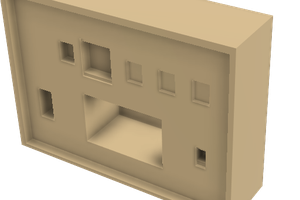
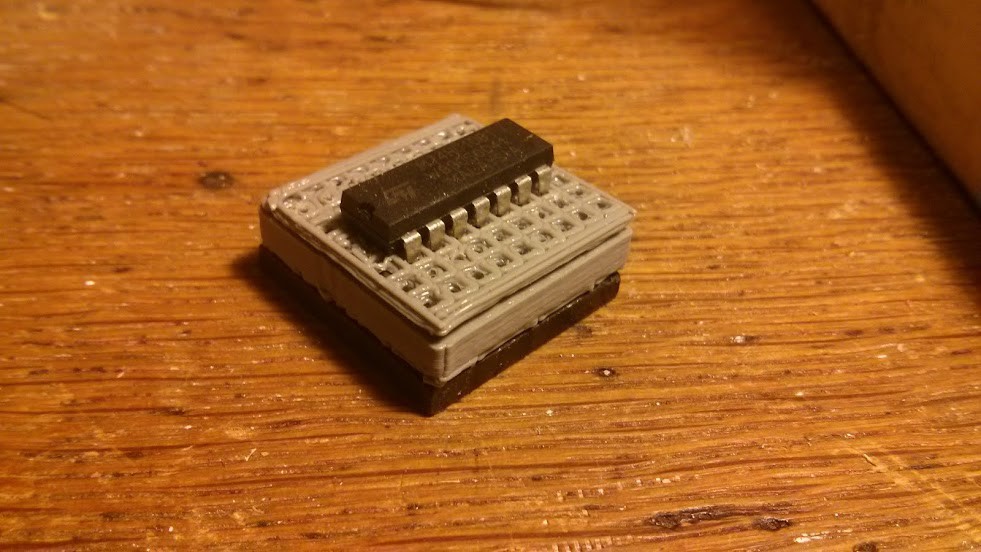 The third prototype is designed to print as good as a CubeX Pro 3d Printer can produce at this small of a detail. I will post a sketchup file and a .stl file for the top and middle portions of this prototype. The bottom layer is a lego board with the pins sliced off (x-acto knife and concentration).
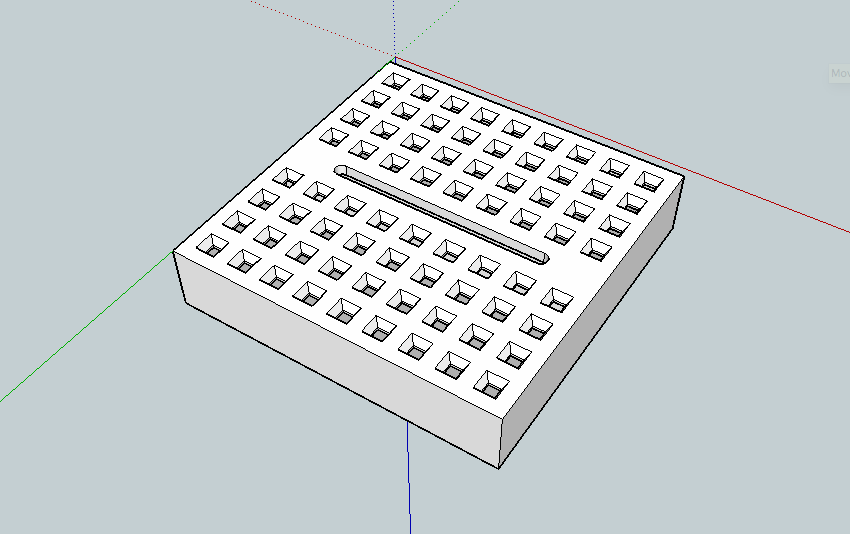
 The Second prototype was designed to be 3D Printed. This was more or less successful. Some reaming of each hole was required to make sure they are large enough to work. This design has the wrong pin spacing, because I designed it without a chip at hand, right before I printed it, just to get the idea into the physical world.
 This first prototype is made of a wooden block with 0.1" slots cut with a bandsaw by eye. The rails are cut from aluminum can material, and fatigue quickly, but these have held up to many insertions of the chip. This prototype was primarily to figure out the best way to construct the breadboard component. I was not focusing on Lego integration at this point.



 Eric Boyd

 Alain d'Espaignet

 Madaeon


 Audrey Robinel