Hackaday.io Hackaday.io
Projects
Discover Contests Courses Stack
More
Courses Tutorials Events Hackerspaces Hackaday.com Tindie Marketplace
Sign up Log in
Close
0%
0%

Clean water for Africa

A solar powered system for filtering and Ozone disinfecting rural water supplies for communities

paul-scottPaul Scott
Following Follow project
Liked Like project

Become a Hackaday.io member

Not a member? You should Sign up.

Already have an account? Log in.

Sign up with Github
Sign up with Twitter
OR
Forgot your password?

Just one more thing

To make the experience fit your profile, pick a username and tell us what interests you.

Pick an awesome username
hackaday.io/
Your profile's URL: hackaday.io/username. Max 25 alphanumeric characters.
Pick a few interests
Projects that share your interests
People that share your interests


We found and based on your interests.

Choose more interests.

OK, I'm done! Skip
Join this project
Similar projects worth following
1.6k views
6 comments
37 followers
13 likes
  • Description
  • Details
  • Files 0
  • Components 0
  • Logs 1
    • View all
  • Instructions 0
  • Discussion 6
View Gallery
1.6k
6
37
13

Team (1)

  • paul-scottPaul Scott

Join this project's team
hardware
ongoing project
community water rural ozone purification disease saving the planet upliftment

This project was created on 01/24/2015 and last updated 11 years ago.

Description

Using a combination of traditional water filtration methods, as well as generating purifying ozone via a solar source, water from just about any source can be turned into potable water for use in cleaning, cooking and drinking.

In Africa, especially, there are more than 350 million people, and over 750 million people around the world, with no access to clean water. Additionally, over 840 000 people die each year from water borne infections and disease.

This is, of course, highly preventable, but as water purification set ups are generally very expensive, and require large amounts of electricity to operate, I have decided to go a little lower tech, whilst still providing the highest quality water possible.

There should be very few moving parts, or complex electronics, to ensure that the units can be easily maintained by the community itself.

Project Logs
Collapse

  • Photo credit

    Paul Scott • 01/24/2015 at 13:49 • 3 comments

    Thanks

    to

    http://i.huffpost.com/gen/1292684/thumbs/o-CLEAN-DRINKING-WATER-AFRICA-facebook.jpg

    for the initial image. I am just borrowing it, as my wife is a pro photographer, and should supply me with images soon!

View project log

Enjoy this project?

Share

Discussions

Log In/Sign up to comment

Become a Hackaday.io Member

Create an account to leave a comment. Already have an account? Log In.

Sign up with Github
Sign up with Twitter
OR
Polymath8 wrote 04/10/2025 at 05:09 • point

This is excellent! I am working on a similar project myself as well. a looping system with easily sourced parts. Feel free to check out my Github repository. open source, DIY 

  Are you sure? yes | no

higorsantiago wrote 08/02/2022 at 11:11 • point

There are some very amazing things that you can check here on the wet wash house cleaning service where they have added the similar ideas in  their project.

  Are you sure? yes | no

menopausetea2020 wrote 07/08/2020 at 23:21 • point

This post is great 100%! If your looking for a trusted herbal tea, please check this website www.menopauset.com

  Are you sure? yes | no

mr.jb wrote 08/19/2015 at 05:16 • point

Biosand

http://www.cawst.org/resources/biosand-filter

+

UV light ....( natural ) and/or powered by solar cell

+

Active carbon to remove chemicals....

In some areas collecting water from the fog might be the best ...

https://www.allianz.com/en/about_us/open-knowledge/topics/environment/articles/110304-collecting-drinking-water-from-fog.html/


  Are you sure? yes | no

Paul Scott wrote 08/19/2015 at 11:42 • point

I have been experimenting with Ozone as well as UV light, after using a filtration system and then the activated charcoal filter method as on the biosand site that you posted. Ozone is good, but not great for potential accidents/leakages. Will look more into the UV systems though too.

Good thing about an ozone generator, is that you can make one in about 15 minutes... UV II suspect would take longer, and getting replacement lamps into the field may be problematic.

  Are you sure? yes | no

Mike Szczys wrote 05/29/2015 at 19:41 • point

This should totally be a Hackaday Prize entry!

  Are you sure? yes | no

Similar Projects

The 2015 Hackaday Prize
The Scipio project is based on the idea of combining the familiar SODIS method of purifying water with the latest, low-cost technology
Project Owner Contributor

SciPIo

theodor-hillebrandTheodor Hillebrand

A low-cost, solar-driven method of water purification for the developing (and developed!) world.
Project Owner Contributor

Vacuum Water Purification

ben-nitkinBen Nitkin

Energy Efficent Water Smart Filters sold philanthropically to address Water Crisis in Flint and America at large
Project Owner Contributor

Potable

jfolksjfolks

The 2017 Hackaday Prize
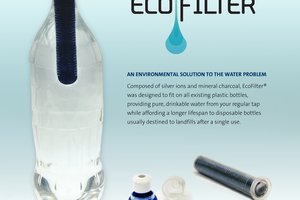
An environmental solution to the water problem.
Project Owner Contributor

ECOFILTER

pandoras9pandoras9

Does this project spark your interest?

Become a member to follow this project and never miss any updates

Going up?

About Us Contact Hackaday.io Give Feedback Terms of Use Privacy Policy Hackaday API

© 2026 Hackaday

By using our website and services, you expressly agree to the placement of our performance, functionality, and advertising cookies. Learn More

Yes, delete it Cancel

Report project as inappropriate

You are about to report the project "Clean water for Africa", please tell us the reason.

Send message

Your application has been submitted.

Remove Member

Are you sure you want to remove yourself as a member for this project?

Project owner will be notified upon removal.