 mit41301
Toei Subway First Introduces! Automatic Platform Door Control System Based on Denso Wave’s New QR Codes
that Toei Subway has adopted an automatic platform door control system based on Denso Wave’s new QR Codes (tQR™) developed jointly with Toei Transportation. The system was first introduced on the Toei Asakusa Line(1). Before this introduction, starting on November 24, 2017, the system was tested and verified on platform doors for approximately one month at Daimon Station. According to Toei Transportation, work on Platform 2 at Shimbashi Station to equip platform doors linked to the system will begin after the last train departs on June 8, 2019. The system is slated to become operational at the station around October 2019.
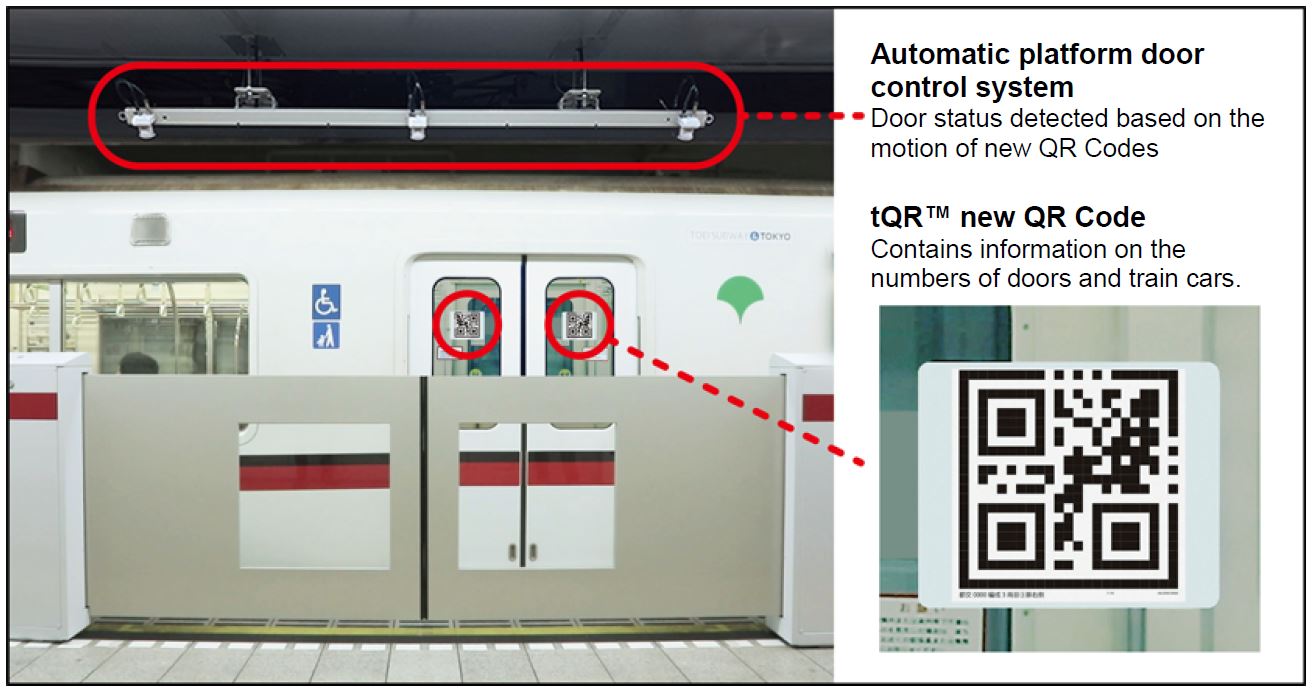
According to information released by the Ministry of Land, Infrastructure, Transport and Tourism,(2)to prevent falls from train and subway platforms, a goal has been set to install platform doors at 800 stations around the country by 2020. This system uses QR Codes and platform scanners in place of communication and control devices to be mounted on each train, resulting in lower costs and shorter work times for retrofitting train cars. The system implements the following features:
- Feature 1. Shorter work times for retrofitting train cars Affixing labels printed with tQR Codes to train car doors is all that is required, allowing installation of the control system without major work on the train cars.
- Feature 2. Allows train conductors to open and close platform doors with a single action Platform doors linked to the system can be opened and closed only by operating the train doors, eliminating delays caused by trains forced to stop and wait for platform doors to open and close.
Plans call for the system to be installed by Toei Transportation at Shimbashi, Daimon, Mita, and Sengakuji Stations on Toei Subway’s Asakusa Line ahead of the Tokyo 2020 Olympics and Paralympics. The company is targeting installation at all Asakusa Line stations by 2023.
kikuchan/libqrean: A portable QR and Barcode generation / manipulation library written in C.

World’s First Platform Doors Using 2D Codes Installed at Toei Subway Stations
2024 marks the 30th anniversary of the 2D code developed by the Japanese firm Denso Wave Inc. The Tokyo Metropolitan Bureau of Transportation (Toei Transportation) has now collaborated with Denso Wave to develop the world’s first 2D-code system for opening and closing platform doors at stations on the Toei Subway Asakusa Line in Tokyo. The two are now offering the technology to other rail operators free of charge.
Platform doors installed at railway stations prevent passengers from falling on or entering the tracks. Transporting on average about 2.2 million people a day on all four of their Tokyo lines, Toei Subway first introduced platform doors on the Mita Line and quickly saw a sharp decrease in the number of platform accidents. Platform doors were subsequently installed on other lines as well. To operate the doors properly, all train carriages require sensors to allow synchronization of the opening and closing of the train and platform doors. Installing sensors across all trains, however, requires a significant amount of money. On the Asakusa Line, which is run by five different railway operators, including Toei Subway, the prohibitive cost of installation caused difficulties in reaching an agreement on implementation of the doors.
To solve this problem, OKAMOTO Seiji of the Tokyo Metropolitan Bureau of Transportation, who has worked in railways for about 40 years, turned to the two-dimensional QR code, a Denso Wave Inc. registered trademark. “2D codes hold up well against dirt and can carry a lot of data. I thought we could make good use of these codes, so I approached the company and asked if we could work together,” recalls Okamoto. Sensing the social impact of such a move, Denso Wave agreed to the collaboration.

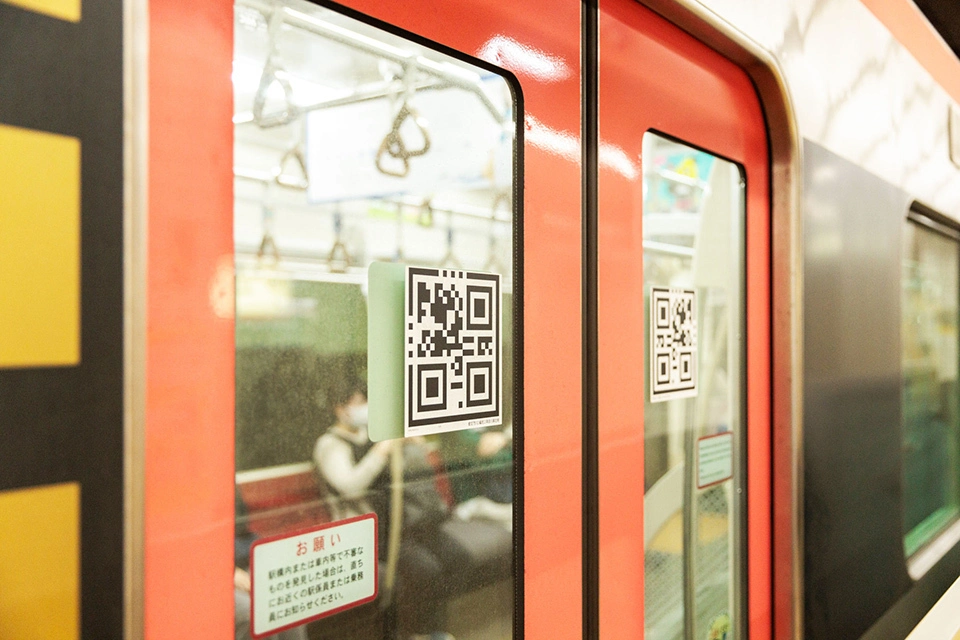
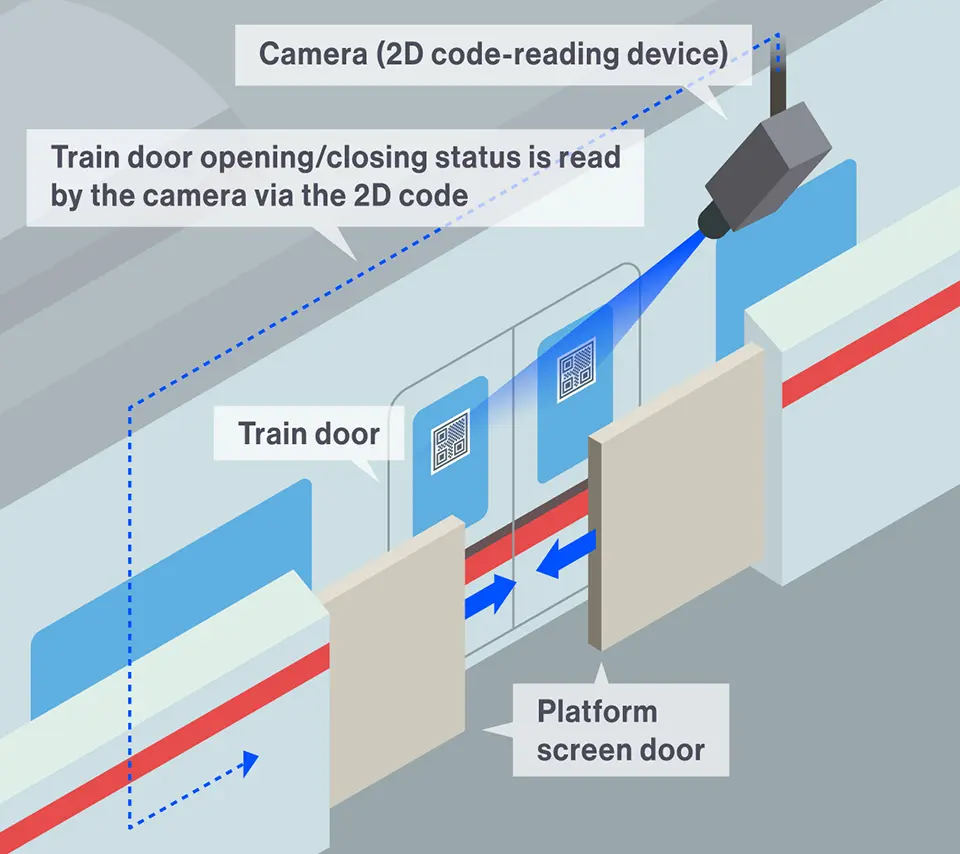
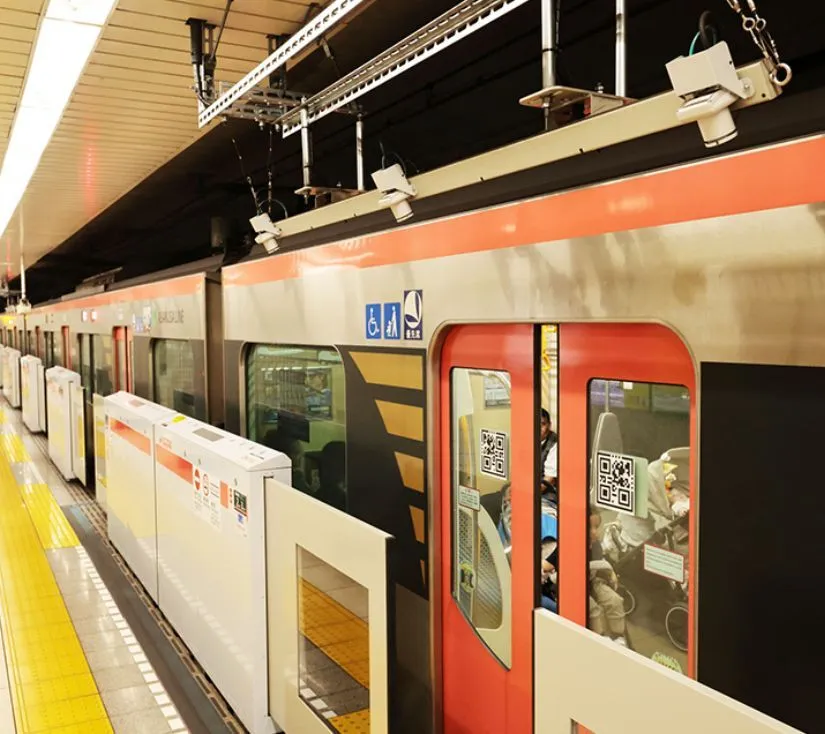
What was developed after much trial and error was the world’s first system that uses multiple cameras installed at the top of the station platform to capture the 2D codes applied to the glass of the train doors, thereby automatically opening and closing the platform doors.
The 2D codes contain such information as the number of train cars and total number of doors. The cameras read this information and the movement of the codes. For example, by reading the codes, the cameras can recognize whether the train is moving or stationary, and whether the train door is open or closed. The platform doors can then be opened or closed accordingly. Numerous experiments were carried out during the development stage. These included adjusting the way the cameras and codes were set up so they could be read even in an outdoor environment, such as when wet with rain or reflecting sunlight. “Even if up to half of the code cannot be read, it will not hinder the system’s operation,” asserts Okamoto.
The benefits brought about by the development of this system are immeasurable. The cost of refurbishing the train cars, originally estimated to be about 2 billion yen alone for the trains managed by the Bureau of Transportation was reduced to about 2.7 million yen. Not only have costs been reduced, but as a result of installing the platform doors, the number of passenger accidents at all Toei Subway stations has also drastically decreased from 70 in fiscal 2011 to just two in fiscal 2022. With platform-door construction on the last station of the Asakusa Line completed in February 2024, all 106 Toei Subway stations now have them installed. Okamoto says, “I’ve heard that for the visually impaired, walking on a station platform is like walking on a bridge without railings. In developing this system, we focused on safety above all else.”
Toei Transportation and Denso Wave share the same passion inherent to Japanese manufacturing, namely a desire to deliver safe, quality products far and wide. Although the two companies have obtained a joint patent, they are providing this technology without charging royalties. In response, other railway operators are also using this technology to install platform doors.
“I’m sure the technology will be useful for railway operators around the world, given that they may have been hesitating about installing platform doors for some reason or other,” says Okamoto. No doubt both Toei Transportation and Denso Wave will respond effectively to any interest from overseas.
ホームドア開閉制御システムのための新型QRコード─“tQR”による安定したホームドア開閉検出─|情報処理学会・学会誌「情報処理」
Discussions
Become a Hackaday.io Member
Create an account to leave a comment. Already have an account? Log In.